Temeraire, Harry Potter, and Some Thoughts on Ambiguity
 I’ve been in unwilling low-content mode for the past couple of weeks (question: what’s worse than getting the flu at Christmas? Answer: getting the flu along with a sinus infection). That’s meant I’ve had some time to read, which is good for a number of reasons. As it happens, though, one of the things I picked up to read left me wondering something I’ve wondered several times before: why do certain books pull me along, and compel me to read them, even when I think they’re not particularly good?
The best example of what I mean is the Harry Potter books. I don’t dislike them, but I’ve never understood the way they absorb me when I read them. They’re tightly-plotted, yes, and the world is carefully-built — but these things together only create an odd video-game feel, where every riddle has its designated solution, and the lead characters wander around finding clues to unlock new areas or gifts or side quests, until everything’s resolved in a climactic scene. The characters are flat, the dialogue’s occasionally funny but not especially memorable, and the prose is bland at best. Yet the fact remains that when I read a Potter book I find it easier to move my gaze along the text on the page rather than turn away. It’s like being on a railway train, being carried over a fixed track, with no way to disembark except by something like an act of force, jumping to the ground while the thing’s moving at speed.
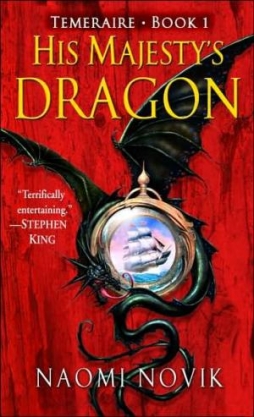
Over Christmas — just before, actually — I found another example of this phenomenon, when I read His Majesty’s Dragon, the first of Naomi Novik’s Temeraire series. It’s a story about the Napoleonic Wars, in a world where intelligent dragons exist and bond with human riders. I’d had it in mind to look into the series for a while, so when I found a used copy of the first book I grabbed it. And then found it had grabbed me. It’s unusual for me these days to find that I literally can’t put a book down; but that’s what happened with His Majesty’s Dragon. And I’m not sure why.
 Conspirator
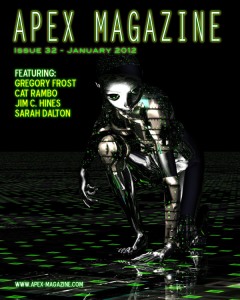 This month’s Apex Magazine features new fiction from Cat Rambo (“So Glad We Had This Time Together”) and Sarah Dalton (“Sweetheart Showdown”), as well as a reprint of “The Prowl” by Gregory Frost, who is also the featured interview. Stephan Segal provides the cover art and John Hines discusses “Writing About Rape.”

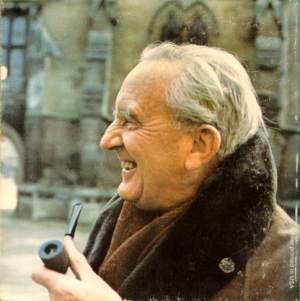 The 1961 nominations for the Nobel prize in literature apparently included The Lord of the Rings,
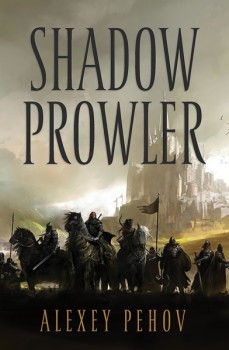 Shadow Prowler