Black Gate Goes to the Summer Movies: Brave
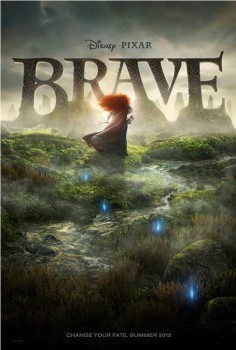 Who would think at the start of the summer that Brave was concealing more of its plot and themes than Prometheus? Strange days, my friends.
Ninety percent of the trailer for Brave comes from the first twenty-five percent of the movie. And to continue with percentages, fifty percent of Brave is a great film, and worthy to stand beside earlier Pixar classics. But except for a few flashes in the trailer, Disney and Pixar have revealed nothing of this later-running time greatness to you. The marketing department and directors Andrew Jones and Brenda Chapman have even specifically asked reviewers to hide what the center of the movie is about.
This is not a case of concealing a twist ending or a mid-movie shocker, but disguising the core of the film. Imagine a trailer for Pinocchio that never reveals that the puppet comes to life: it’s the story of a sad woodcarver and his pets who meet a blue fairy, and later on an enormous whale may peep into the plot. Or a trailer for King Kong that not only never shows the eighteen-foot gorilla, it never hints that there might be a giant monster of any sort in the film. According to this trailer, King Kong looks like the tale of a young woman who goes on a voyage with a film crew, possibly to find (dinosaur- and gorilla-free) adventure and romance away from dreary Depression Era New York.
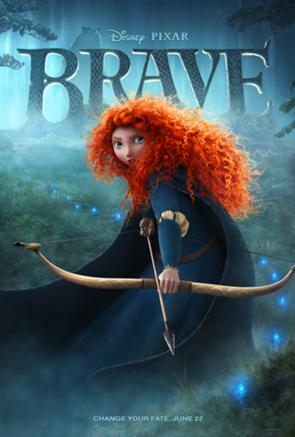
Brave is the story of Merida (voice of Kelly Macdonald), a Scottish princess who hates that her parents King Fergus (Billy Connolly) and Queen Elinor (Emma Thompson) are trying to marry her off to a dullard in a political alliance when all she wants is her freedom — like any good Disney Princess™ — and the chance to choose her own destiny. While exploring, Merida discovers magic in the forest after following a trail of Will-‘o-the-Wisps. The rest of the story follows the standard princess adventure: she’ll go out on her own, fight some monsters, discover a handsome and roguish fellow who likes her for who she is, and her parents will finally let their daughter be herself and marry the man she loves.
Except, after the words “The rest of the story…” that is not actually the plot of the film. At all. It isn’t the main character conflict or the thematic center. I made it up. Don’t expect some sort of Sixth Sense twist, such as Merida discovering she’s actually trapped inside a giant video game or Mars invading medieval Scotland, but the story does pick a different and better way than the second half of my Disney-influenced outline. A very average opening gives way to a film that has much more to say, in the vaunted Pixar fashion.
I will reveal at least this: expect a helluva a lot more “bear” than you’ve seen in the trailers. This is a good thing. I like Big Bears and I cannot lie!
 The Disney/Pixar partnership has always been willing to take some risks. Let’s face it, these are the people who turned a lost fish, talking cars, and Ed Asner in a floating house into deeply rich character-driven stories about the human condition. It’s really a wonder if there’s anything they can’t do well!
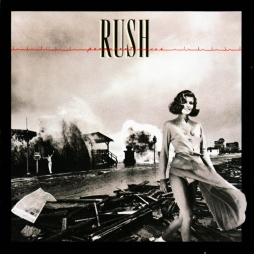 This is the second part of a look at Rush, whose new steampunk epic Clockwork Angels came out earlier this month. I think it’s a wonderful album, but to explain why it seemed to me worth looking at their earlier work — I looked at what they’ve accomplished as a band, and what drummer and lyricist Neil Peart has become as a writer. Last time, I looked at their records up through 1978’s Hemispheres; I therefore begin here in 1980, with the next album, Permanent Waves. (You can find that first post
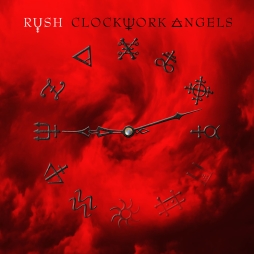 On June 12 the new album by veteran Canadian power-prog-rock trio Rush was released. I went out in pouring rain to buy a copy because I had to have it that day. In reading what follows (the first of three posts, with part two
 A Prince of Mars