Goth Chick News: Norman Bates You’ve Been a Very Bad Boy…
 Normally, I’d be prone to bust on this, but either the holiday season has taken a little edge off my snark, or this is actually kind of a cool idea.
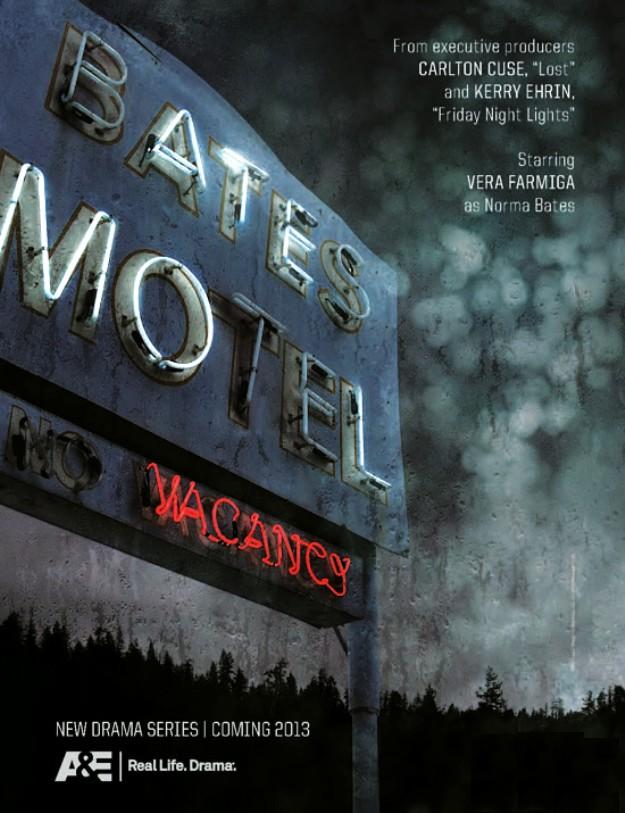
This week, A&E released a featurette to promote its upcoming mini-series / prequel Bates Motel. Looks like we’re finally going to find out how Norman became psycho and got his mother fixation.
Freddie Highmore, the adorable little moppet last seen in Finding Neverland and Tim Burton’s Willy Wonka and the Chocolate Factory, has grown up quite a bit and takes on the role made famous by Anthony Perkins, as a teenager this time; with Vera Farmiga (George Clooney’s love interest in Up In the Air) portraying Norman’s eventually-mummified-Mom, “Norma.”
Hot Mom with an only son who she named after herself…yes the creep-factor is mounting…
A&E joins NBC in bringing another monstrous movie murderer to the small screen to more closely examine what makes him tick. Similar to what Bryan Fuller’s upcoming Hannibal series plans to do with Hannibal Lecter, A&E’s Bates Motel will focus on young Norman’s serial killer psyche and how his backstory turned him into what he’s most known for cinematically.
“Norman has been through a lot. He’s a sensitive boy,” Norma Bates can be heard to say in the new promo. We get a glimpse of Norman fraternizing with some of his female classmates (before Mother put a stop to that) and displaying an early eeriness.
It also looks like we discover where Norman got the idea to hide bodies in the lake behind the hotel. The cast seems especially enthusiastic about the writing talking about crazy turns, suspense and emotional characters, and the music sets a sufficiently ominous mood.
See for yourself with the full trailer, after the jump.
 I commanded my first students to revise, as I had been commanded by my own mentors. Had I ever revised–not just proofread and fiddled, but actually revised–anything in my life before I started teaching? No. When I was a student, my first drafts were clean enough and clever enough, I could get away with handing them in for all my classes. Some of my teachers called me on it, but nobody insisted I do anything differently. When I took the helm of a writing class for the first time, at the absurd age of 24, I could tell my students all the steps of a beginner’s revision process. I knew the platitudes, and for me, that’s all they were. I could not have followed those steps to save my life. My first drafts, while in progress, were plenty messy, but once I finished them, the prose style was smooth as glass. I feared what might happen if I broke it.

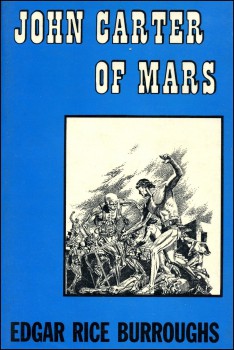 So it ends here, not with a climatic epic, but with a bit of house cleaning almost fifteen years after the author’s death. The final book in Edgar Rice Burroughs’s career-spanning Barsoom saga is a slender volume containing two unrelated novellas.
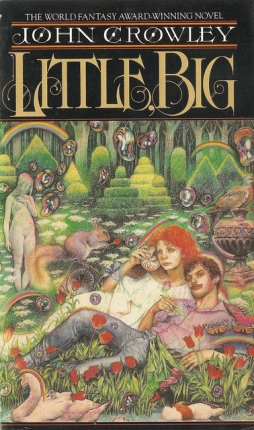 I’ve been thinking a fair bit lately about how I read what I read, and how I enjoy it. Or, what’s in it that I enjoy. It seems to me that much of the pleasure in my reading comes about from bad habits. Which is to say, habits that I can’t help but think ought to be bad, but which nevertheless feel central to the act of reading. Maybe that feeling’s an illusion; maybe it’s the secret why bad habits become habits. At any rate, I thought I’d be self-indulgent this week and throw out what I’ve come up with, as I’d love to hear if any of it resonates with anyone else’s experience of reading.