Is This Still a Thought?

Goodafterevenmorn, Readers!
I had an interaction online that took me aback a little bit, and I really need to talk about it. I realise that I’m largely preaching to the choir here, but I am feeling a little like I need a sympathetic ear, so apologies. But I must give some context, so here we go:
As part of my effort to make of my writing a viable source of income, I have joined a number of new social media sites that are, by and large, similar to but a much better experience than Facebook. I’m not going to tell you which one of these this happened in, largely because I’m not sure that some greater drama might result. I doubt anyone here is foolish enough to start a dogpile, but I’d much rather err on the side of caution.
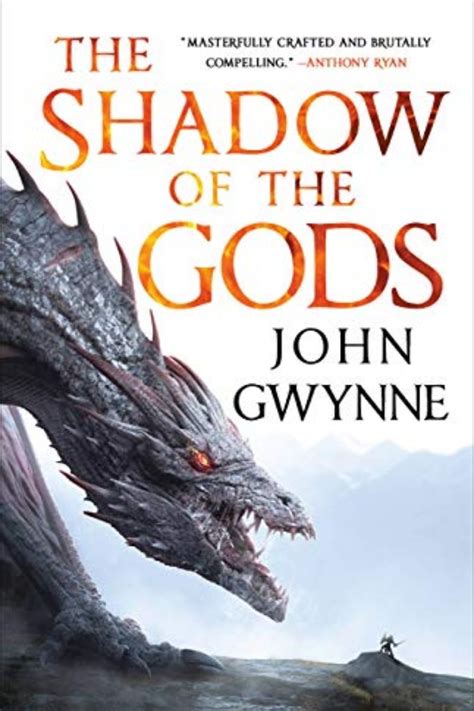
On one of these sites, I posted a brief review of a book I had recently read — The Shadow of the Gods by John Gwynne. For those who have not yet read this, it is the first book in a trilogy, and it is heavily based on dark age Scandinavian life and myth (what we’d consider ‘Viking’ in its most populist understanding). It is dark, and gritty, and really interesting. It really enjoyed this read (it didn’t make me cry, though, so I knocked off a few points in the review). Here is what I wrote about the book:
Meant to note that I’d finished reading this last weekend. A gripping read that’s very clearly been well-researched. I really enjoyed it.
And then, rather oddly (to me), I received this reply:
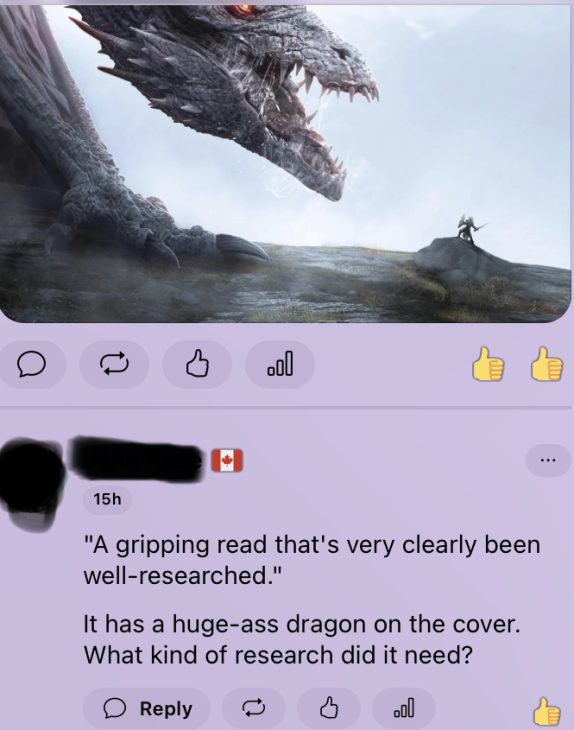
Now, I’ll be the first to admit, it got my hackles up right away. I write genre; mostly fantasy. And I’m usually in amongst people who also write the same, or adjacent, so I forget what opinions are outside of these circles. This slammed it in my face, and I wasn’t prepared. So my reply might have been equally as blunt, and perhaps a little tart as well. Perhaps I struck a nerve, as I received a reply to it, but it had been deleted before I could read what it actually said.
Probably for the best. I have a short fuse sometimes, and find myself in fights more often than I’d like, no matter how futile my brain knows it is. Besides the point. The point is, I had forgotten how some people outside of the genre view fantasy as a genre; primarily that because it is couched in distant allegory and magical worlds, and is a product of wild (also see: brilliant) imaginations, it clearly must not have much actual thought or “real work” (read here: research) behind it.
That is wildly offensive to me.
There are some things that even fantasy worlds and fantastical stories require in order for the reader to engage their suspension of disbelief, things must make sense. Things that are familiar must work more or less the same in the real world (unless its important to the world or plot that they don’t). If someone is fighting near a lava pool, there must be heat. If they are fighting with a spear, a strike with the shaft of the weapon will bludgeon, not cut. These kinds of things.
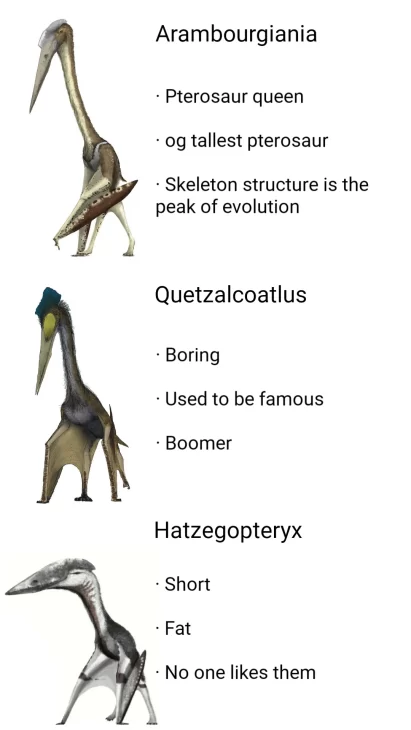
Are many things made up? Absolutely! Magic? That doesn’t exist in the real world, not at least like it does in fantasy stories (technology is a magic of a sort). Shape changers? Giant flying reptiles (this one did once exist, though. Have you seen arambourgiania, hatzegoteryx or quetzalcoatlus? Holy giant pterosaurs, Batman!)? Talking weapons? Talking animals? Talking plants? These things don’t exist in real life. Fun and completely made-up. But in order for them to work, the rest of the world must be believable. And often times, that requires a whole lot of research.
I will take The Shadow of the Gods as an example here. Set in a world that is analogous to Scandinavia of the (wrongly called) Dark Ages, but one in which myth and magic is real and exists, and the gods are not all that familiar in name or manner as the “Viking” pantheon we’re familiar with. It’s much more primal, with gods taking on bestial forms that are perhaps more familiar to folks who have studied various shamanic traditions.
That in an of itself requires a fair amount of research. As someone who has done that research, the execution of the world mythos was really well done. The tales have enough of a familiar ring to them that they do feel like a real life tradition made “real,” as it were. The hallmarks of many ancient myths are there – the all-being/first being was killed by his own progeny, and from his parts the world was made. We see it or its aspects in many traditions; particular those of Europe. In Viking myth, we see this in Odin and his siblings slaying Ymir, and making the world from the corpse.
It happened very similarly in this iteration, though the names Odin, Ymir and other names we might recognise are not used. This is a little out of my area of expertise (having studied much earlier up until the rise of the Roman Empire), but even those of us with a little passing knowledge would recognise the story, and those of us without would at least recognise the bones of it… pun unintended.
But there’s more to it than just the mythology of the world feeling familiar and plausible as an origin story in the world (that turns out to be probably very true). There’s so much in this book that benefitted from the author doing his research. A short list:
- Life in a world of snow and volcanoes, where night can last several weeks in mid-winter and day several weeks in high summer.
- Life on a raiding vessel; including division of labour, storage of armour and weapons, and beaching, disembarking and the actual act of raiding.
- Art and architecture in a world of frost and fire.
- Life in a settlement.
- Navigation
- Social structures and hierarchies in Late Iron Age/Early Middle Ages northern Europe.
- Fighting styles required of round shields and spears as primary weapons.
- Strategy in which shield and spear are the primary weapons in engagements.
- Anatomy (a femoral artery was cut in one scene that I recall, which anyone who knows anything about anatomy knows that’s as much a death sentence as if it was a carotid (particular in the time period represented)).
All of this and more was obvious in John Gwynne’s writing. It was very clear to me that a great deal of background research and knowledge was poured into this book.
And the most oblique suggestion that it wasn’t still really grated on my nerves.
Again, I know I’m preaching to the choir, so this rant is going to change nothing, but still. I am getting quite fed up with people pretending that simply because a piece for writing is fantastical means that there was no research or work done behind the scenes to make it come to life. A good story well told will always have a lot behind it, whether or not magic is part of the tale. And I, for one, really appreciate it when you can tell it’s there. I’m just being a grump, I supposed, but I received that comment nearly two weeks ago, and it’s still bothering me.
So… thanks for listening to my rant. I needed to get that off my chest without starting a genre war. I feel better now.
Anyway, if you haven’t yet, do read The Shadow of the Gods, do. It’s a really great read.
And very well researched.
Ciao for now!
When S.M. Carrière isn’t brutally killing your favorite characters, she spends her time teaching martial arts, live streaming video games, and sometimes painting. In other words, she spends her time teaching others to kill, streaming her digital kills, and sometimes relaxing. Her most recent titles include Daughters of Britain, Skylark and Human. The Timbercreek Incident is free to read on Wattpad.
You are preaching to the choir, but that’s okay. The choir nods appreciatively.
Thanks. I need it.
The “who needs research? It’s fantasy” comment reminds me of a comment a “hard science fiction” luminary once made in an article I read. Something like “it’s easier to write fantasy than sci fi because there are no (less) restrictions.” I think fantasy readers expect coherent worldbuilding along with their elements of wonder (dragons, magic).
I think, perhaps, many people really don’t know what work goes into writing anything (fantasy or otherwise), and speak from ignorance. That doesn’t make it any less insulting.
Many years ago, I was a bit annoyed by a noted sf author (whom I shall only identify as “Dr. Isaac A.”) offering the opinion that fantasy was “tennis without a net”. What I found amusing was the irony that you can, in fact, play tennis without a net; it is just harder to do without accessory. And the adjacent irony that sf itself is often accused of “just making stuff up” (cf. Verne complaining about Wells: “Il invente!”).
Right?! I have nothing else to offer but an indignant snort, honestly.
This is a classic example of the petty shittines that has kept me off social media platforms. I’m sorry you had to deal with it. I’d be tempted to respond with the reasons you articulated here and begin my reply with: “You know, saying stupid things doesn’t make you sound smart.”
I’m glad you vented at them and I hoped it felt good. I myself just don’t have the energy for it and refuse to allow these people any space in my head. Feel free to write a few extra articles here and I for one will shower you with the respect and affection you deserve.
Don’t let the bastards get you down.
I was in a fighting mood, to be sure, but stopped short of vitriol… which is probably why I needed to come to a friendlier place to complain!
I shan’t. And thanks!
Some people post just to show how ‘superior’ their snarkiness (they think it’s insight) is. I thought about the remark in question. studied the cover. My answer to the ‘research’ would have been something like this. Open the book and read the linear notes or back cover. Is the setting for instance in Japan with samurai or an homage to King Arthur let alone Prince Valiant in the 1930s. Let alone a cousin to Tolkien. My first guess of cure would have been fantasy. Reviews that do not inspire but settle for only tearing it down is of value to an author should be ignored. Rider Haggard once told the tale of Thomas Hardy reading of review of his latest book and was so incensed he swore never to write another book. (Guessing that made it Jude the Obscure I believe.) Hope this helps.
You are dealing with Randos on the internet and most of them just insult others for the thrill of doing it with the illusion of anonymity the internet gives. Others are afraid to speak for you because these Randos do things like try to find out where you work and call in complaints about you. The other day I got called a “Thirder” because on one so-called “Social Media” platform I routed my trace email through India…And somebody tried to trace me and immediately started spewing insults based on it over disagreeing with something I said… Maybe. Maybe just wanted to insult someone…? Nowadays with that guy from the Simpsons gone the public image of people from that region…I’d better not hint at some of the stuff posted, said… There is a point though – not that I think the persons saying this to me or to you had any goal other than to try to bring someone down for its own sake and couldn’t care less otherwise.
Remember Poul Anderson’s “On Thud and Bludner”? Or for a more expansive thing on SciFi the miracle element called “Bolognium” from Larry Niven’s usage advice? The brutal reality is that for all the attention to detail in the hands of a good storyteller ol Gnorts the Barbarian could wield a 50lb Wet NOODLE and there’d be a movie with a Nordic bodybuilder and comic books about him. Likewise, anything “Real” or Plausible for scifi is nothing compared to what people want – that’s why adventure scifi is so popular and in an era where very educated and talented and experienced “Hard” science fiction writers Star Wars burst on the scene like an Atomic Bomb and all the more intellectual and realistic stuff like “Alien” struggled in its shadow.
A little good writing and research is needed – but that’s to limit the Kessel Runs to Parsecs so if its GOOD writing/storytelling the fans in legions love it so much they fill in the gaps not caring if its a blatant “Aaaarrrggg!” mistake. However, in mediocre writing the best researched story is doomed as if it was nothing BUT that kind of gaffe. IMO it’s kind of like you’ll do a TON of research and thinking on the plot, plausibility of the story – AND then try to make a good, exciting story ON TOP of it… For one of my characters (historical fantasy) before I wrote out fully the first story I read like mad some 1600s, 1700s lore for months…AND I only changed TWO minor details after all that research… I’m glad I did it and most of the time a good bit of research on anything you’d want to carry on beyond a short story is needed – then it will seem VERY unnecessary, and nobody will appreciate it.
Whoever reads the reply probably reads/writes like slice-of-life or non-fiction, probably has a book out there that’s not going anywhere and can’t understand why, or is just started reading genre fiction.
I get the general impression that people who think like that guy don’t actually read genre much at all, to be honest.