Fantasia 2018, Day 7: Cam
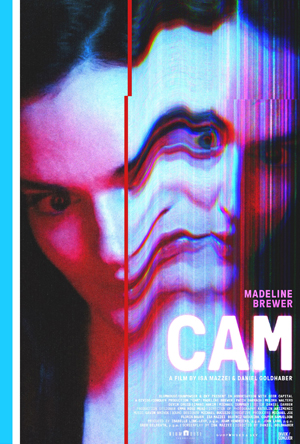 The only film I planned to see on Wednesday, July 18 was called Cam. Directed by Daniel Goldhaber from a script written by Isa Mazzei, it tells the story of a woman named Alice (Madeline Brewer, of The Handmaid’s Tale and Orange is the New Black) who works as an erotic webcam performer under the name of Lola — until she finds her account stolen by parties unknown. As Alice investigates she finds it’s more than just her financial information or identity that’s been stolen; someone who looks and sounds exactly like her is performing as Lola in her place, and this Lola is breaking all the rules Alice established for herself as a performer. Alice investigates and tries to regain control of her life, driving the story toward a brutal conclusion.
The first thing that must be said about this film is that it is structured perfectly. It’s only 94 minutes long, but it gets across a lot of information and introduces us to a lot of characters — Alice’s friends and rivals among her co-workers; some of her customers; and her family (who don’t know what she does for a living). The plot’s laser sharp: we spend the first third learning about Alice’s life as a performer, getting to understand the environment, and seeing how she plans her shows for the sake of getting her clients to give her tokens which move her up the ranking of women on the webcam service. Then she loses control of her account, and has to find out what’s going on, and her actions are exactly what you’d expect — talking to her friends, suspecting her rivals, trying to deal with the company, trying to report her problems to the cops (who don’t understand, and one of whom tries to hit on her). This is a mystery, and her investigation gets more and more desperate, setting up the final third of the film in which there’s another slight shift of genre as Alice finds out what’s happening and tries to deal with it. The ending’s unexpected, tense, and thoroughly solid.
It is probably worth noting — as it was in the Fantasia program — that Mazzei’s a former camgirl, meaning that she’s writing from a place of knowledge. Issues relevant to sex workers (as when Alice’s family finds out what she does, and the consequences that follow from that) are used well, and the depiction of Alice’s job is appropriately everyday: it’s a job, with things she likes and things she doesn’t, and some co-workers she gets along with and some she doesn’t, and regular customers good and bad, and all the rest of it. I don’t think the film’s especially celebratory of the work, but one does get a bit of a sense of why Alice keeps at it: she has an outlet for her creativity and performative drive.
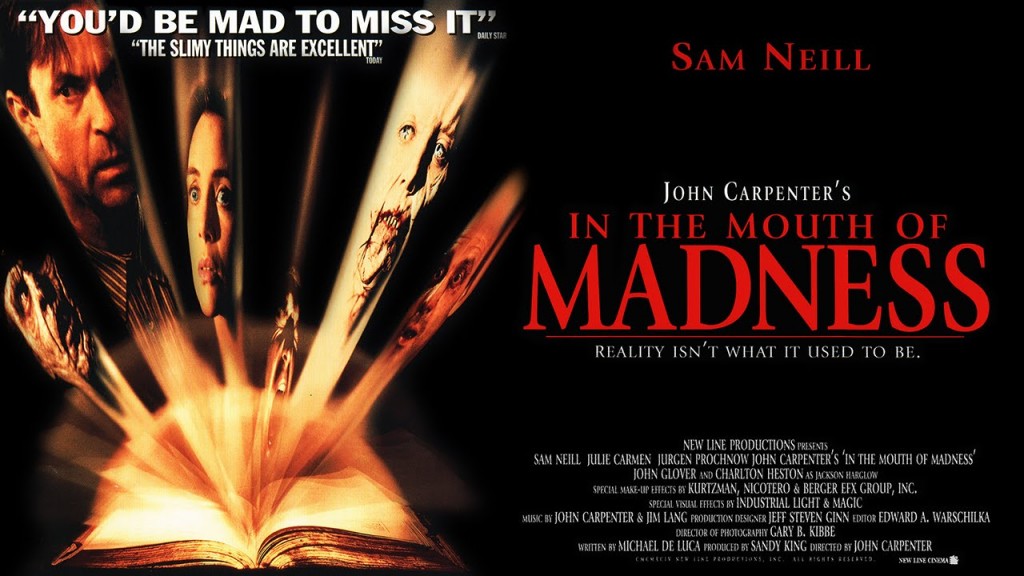
 I had one film on my schedule for Tuesday, July 17. It was a Japanese movie called Room Laundering, which looked like an odd fusion of comedy and horror. I wasn’t too sure what to make of it from the program description, but sometimes it’s the films that don’t lend themselves to easy description that’re the most rewarding. And so here.
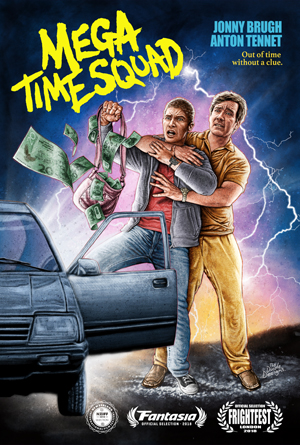 Monday July 16 was an odd day, beginning with the neorealist neo-noir
 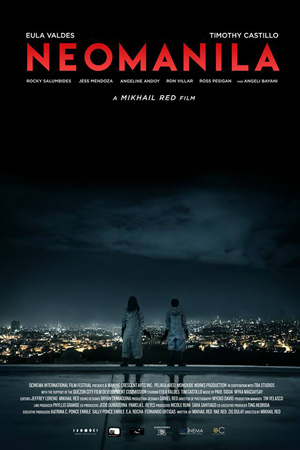 You can tell a bit about an audience at Fantasia just from how they react to what goes on screen before the movie starts. You don’t get trailers before a movie, though sometimes you see a trailer for that year’s festival, using brief clips of several of the films playing that edition of Fantasia; this year’s trailer often drew cheers. You get a couple commercials, from a very limited selection; there’s one particular commercial for Nongshim noodles that’s played for several years and often draws warm applause for its earnestness. And of course there’s the meowing, an audience tradition — after the light goes down and before the movie starts, people in the audience meow, others shush them, still others make other animal noises. How much of any of this you get depends on how playful the audience is, and how excited they are for a crowd-pleasing thrill-ride. Which means, from the noise an audience makes before a film begins, you can tell what kind of a film you’re about to see.
 My last movie of Sunday, July 15, was a film I knew little about going in. It was The Scythian (Skif, Скиф), a Russian film directed by Rustam Mosafir from a script he wrote with Vadim Golovanov. It started late, and for most of the day I’d been unsure whether I’d stick around to watch it; in the 11 hours between leaving my house and the time it started, I’d ingested a few handfuls of peanuts, one (1) tin of off-brand cola, and a few mouthfuls of water. Still, I took my seat, the movie started, and then I quit paying attention to my physical body for one hour and forty-seven minutes. The Scythian is one of the best action films I’ve seen in years. It’s engagingly violent, and the violence is done well — but more than that, it’s filled with cleverness and unexpected twists. If you’re a fan of sword-and-sorcery or sword-and-sandal movies, you owe it to yourself to see this movie, and as soon as possible. (And I note it’s being released August 14 under the title The Last Warrior on VOD, Blu-Ray, and DVD.)
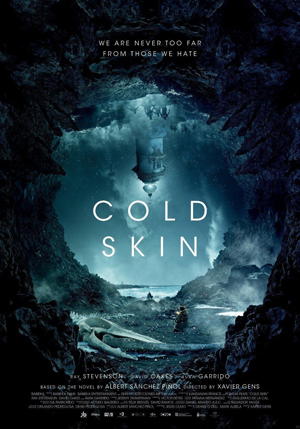 My third movie on Sunday, July 15, was a France-UK co-production called Cold Skin. It was scheduled to start at 5:10 in the Hall Theatre, and ran 107 minutes. At 7:15, across the street at the De Sève, there’d be a showing of the 1911 Italian film L’Inferno, an adaptation of the first part of Dante’s Divine Comedy. Musical accompaniment to the silent film would be provided by Maurizio Guarini of Italian prog band Goblin, well-known for providing the soundtrack to Dario Argento’s
 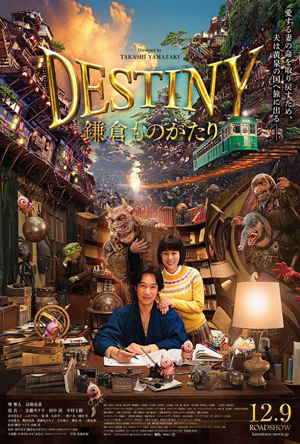 Sunday, July 15, was going to be my first really busy day of the Fantasia Film Festival. There were four movies I planned to see, with a chance of a fifth, depending on how things worked out. The day’d begin at the Hall Theatre; first, I’d see Destiny: The Tale of Kamakura, a lighthearted Japanese urban fantasy. Then would come Aragne: Sign of Vermillion, also from Japan, a horror anime.