Things Your Writing Teacher Never Told You: No TV for You
 So you’ve got a new book out, and despite all attempts at humility, you secretly believe it is the coolest thing invented since smart phones. The whole world would love to read it – if you could only get those jaded, cynical, world-weary, keepers-of-the-gate to give you a little television air time. Forget it.
I briefly worked as a newspaper reporter, and I married a television news producer. I made a side trip through the land of promotion, working as a publicist for a couple of authors, for a few years.
So, believe me when I tell you, forget what the perky little “You can do it!” how-to promotion articles tell you – unless you are Stephen King, Anne Rice or a celebrity already – you are NOT going to get television coverage for your magnum opus of fiction.
Let me explain why you aren’t going to get television coverage, and so, should not waste your valuable and probably-limited personal publicity funds on it.
Look at the word Tele-vision. The Vision part is key – there must be something to see. No matter how pretty your cover art; there’s no movement, no action to it. And there’s no way to change that fact. Therefore, your book is of no interest to the television reporter – or to the television station’s viewers. Even if those viewers read ten books a month, when they turn on the television, they expect to see something visually entertaining.
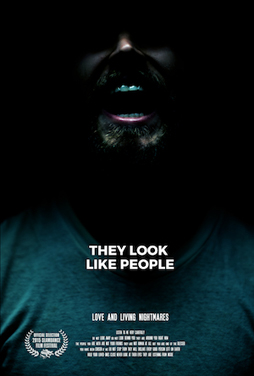 Concluding my discussion of films I saw courtesy of the Fantasia screening room, I’ll be writing today about three movies: a drama with elements of horror called They Look Like People, the horror-comedy called Nina Forever, and one of the purest horror movies I’ve ever seen, Nathan Ambrosioni’s Hostile. I’ll begin with They Look Like People, written and directed by Perry Blackshear. It’s about two men, one of whom, Wyatt (MacLeod Andrews), appears to be falling into insanity; he believes aliens are giving him messages. He happens to cross paths with his old friend Christian (Evan Dumouchel). They’ve both recently had long-term relationships fall apart — Wyatt’s fiancée in fact cheated on him and then broke up with him. Christian offers Wyatt a place to stay, and Wyatt accepts.
 By this point I’ve discussed all the movies I saw in theatres at the Fantasia film festival, but there remain a half-dozen more that I saw courtesy of the Fantasia screening room. I’m going to write about them over two posts, for ease of reading. And then I’ll have a coda wrapping up my Fantasia coverage with thoughts on what I saw, and the value of the festival. For now: reviews of the psychological romance comedy Poison Berry in My Brain, the metafictional satire Anima State, and the suspense movie The Interior. All of them, one way or another, directly to do with what happens inside the head.
 Tuesday, August 4, was my last day at the Fantasia Festival. It was the official closing day of Fantasia; they’d added a few screenings on Wednesday, but nothing that looked compelling to me. I have some more films to write about after this, thanks to the festival’s screening room. But since I’ll be writing here about the last three movies I saw in a theatre at the 2015 Fantasia Festival, in this post I want to make a point of acknowledging the crowds.
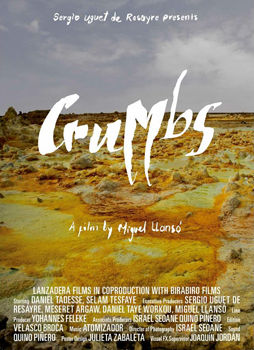 Fantasia was beginning to wind down. After seeing five movies on Sunday, August 2, I only saw four on Monday the 3rd: an Ethiopian post-apocalypse quest called Crumbs; a Spanish crime movie called Marshland; an American suspense movie called The Invitation; and a French science fiction comedy called Cosmodrama. I’d heard good things about each of these movies, and I had cautiously high hopes. Which were mostly fulfilled.
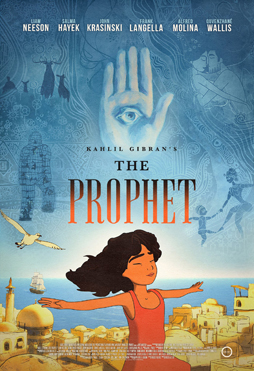 Sunday, August 2, was a day I’d been waiting for and slightly dreading. I was planning to see five films, one after the other. All of them at the large Hall Theatre, except for the second, a presentation of short animated films at the De Sève. It would kick off at 12:30 with Kahlil Gibran’s The Prophet, a cartoon adaptation of the classic book. The Outer Limits of Animation 2015 showcase would follow. Then Experimenter, a biopic about controversial psychologist Stanley Milgram, he of the notorious fake electroshock experiments. Then Ninja the Monster — as its title suggests, a film about a confrontation between a ninja and a monster. Finally would come Strayer’s Chronicle, a novel adaptation about a group of alienated teenagers with strange powers fighting to protect a world that hates and fears them. I was fairly sure it was possible to make a good movie out of that sort of material. But I had a lot of film to watch before I’d get to see it.
 Saturday, August 1, would start early for me at Fantasia. At 12:30 I was seeing a Chinese fantasy adventure called Snow Girl and the Dark Crystal. Then I’d head over to the screening room, where I planned to watch a documentary about the Turkish film industry, Remix, Remake, Ripoff: About Copy Culture and Turkish Pop Cinema. Then I’d go to the De Sève Theatre for a pair of films, the post-apocalypse art-house movie Orion and then the Korean drama Socialphobia. Once again, a nice varied day.
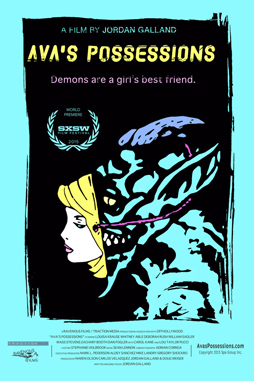 Friday, July 31, started late for me at Fantasia. My first movie, a horror-comedy called Ava’s Possessions, screened at the Hall Theatre at 5:15. After that I decided to watch the Indonesian wuxia movie The Golden Cane Warrior. Then I’d go across to the De Sève Theatre to catch the surreal science-fictional American-Argentinian movie H. before returning to the Hall for the Friday midnight movie, a Quebec-made tribute to 80s post-apocalypse action movies called Turbo Kid. That would carry me through to something like 2 AM. So if things started late, at least it looked like I had a lot on the agenda.
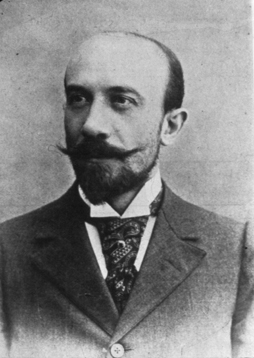 Thursday, July 30, looked like one of the odder days I had lined up at the Fantasia Festival. I’d head down to the De Sève Theatre early on to catch a new American science-fiction film called Synchronicity, then go to the screening room to watch a dialogue-free horror film called The Dark Below. After that, I’d go back to the De Sève to catch the Irish black comedy Traders, and finally wrap up with an event called Méliès et magie, an event presenting some of the classic short films by the first master of fantasy cinema. It looked like a varied day, though in the end it was less so than I’d expected.