Worlds Within Worlds: The First Heroic Fantasy (Part III)
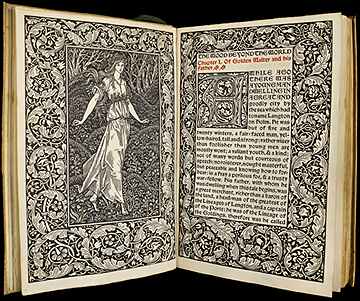 This is the third in a series of posts looking at the question of who wrote the first otherworld fantasy: that is, the first fantasy to be set entirely in its own fictional world, with no connection to conventional reality at all. It’s an innovation traditionally ascribed to William Morris, but I think I’ve found an earlier writer who deserves that honor.
In the first post, I considered how to identify a fictional otherworld. I suggested four characteristics, of which a story’s fictional world needed to have at least three to be a true otherworld: its own logic (which might involve, say, the existence of magic), characters who we identified as residents of another world than our own, a coherent history, and a coherent fictional geography. In the second post, I considered ways in which older fantasies were linked to reality — by being set in the past, or in a place beyond contemporary knowledge, or being established as a dream, or as a story within a story, or as a myth. I concluded by discussing what I felt was significant about the idea of otherworld fantasy.
Before going on to present my suggestion for the writer of the first otherworld fantasy, though, I’d like to take a closer look at some past fantasies I thought came very close to presenting self-contained otherworlds. These are works which I don’t think are true otherworld fantasies, but which other people might choose to see as such.
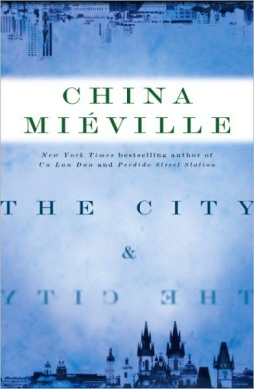 The City and the City
 I said a few words about Dragon*Con itself in
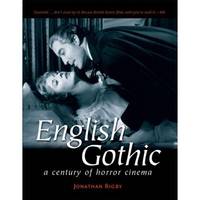
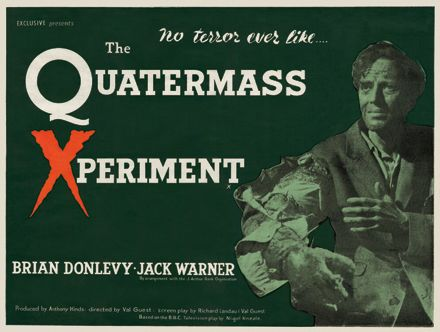
 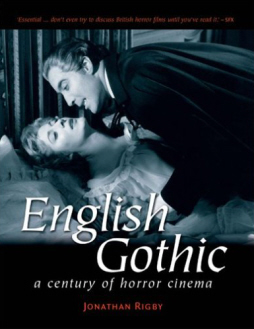 Jonathan Rigby’s ENGLISH GOTHIC (2000) is an excellent survey of British horror and science fiction films. Misleadingly subtitled A CENTURY OF HORROR CINEMA; the book focuses instead on the 20 year period from THE QUATERMASS XPERIMENT (1955) through TO THE DEVIL, A DAUGHTER (1976) when British production companies like Hammer, Amicus, and Tigon consistently outperformed the Hollywood majors in producing the finest and most influential genre films.
 Well, I’m back from Dragon*Con, and my head is still spinning. It would take me weeks to jot down even a partial record of all the events we attended and the great people we met (not to mention the jaw-dropping costumes I was constantly gawking at) — so I think I’ll leave that to Howard, who’s already posted Part I of a splendid
 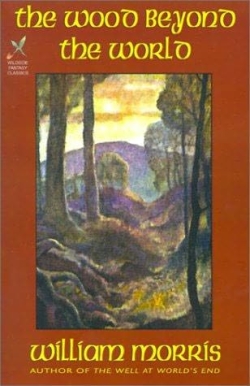 This is the second post in a series trying to answer what looks like a simple question: who wrote the first fantasy set entirely in another world? As I found in my
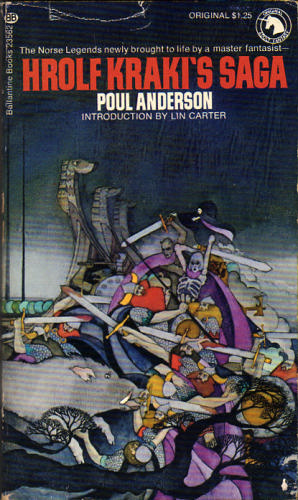 Let us die in the doing of deeds for his sake;
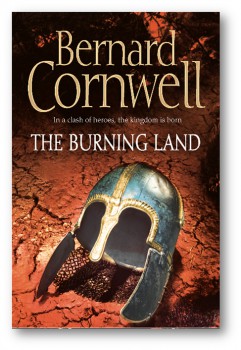 3. The Saxon Stories, Bernard Cornwell. Uhtred of Bebbanburg is a Saxon youth captured and raised among the Danes, who then proceeds to spend the next several books in this yet-unfinished series fighting alternately for both sides in war-torn 9th century England. The Saxon Stories features Cornwell, a brilliant historical fiction writer, at his near-best (though I still prefer his Warlord Trilogy) with Viking raids, shield walls, axes, dark ages combat, hall-burnings, and general mayhem galore. Great stuff.
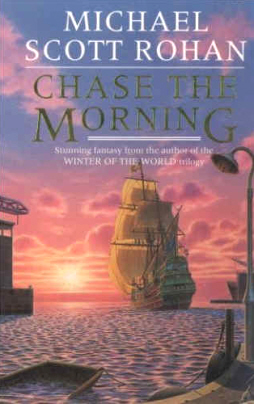 Steve is a very normal man, perhaps even a bit boring. He works at an English shipping company, handling inventories and looking forward to a career in politics once he climbs the business ladder as far as it will take him. One day, for no particular reason, a sudden fit of discontent sends him down to the docks looking for something different, perhaps a restaurant he hasn’t visited. In an alley, he sees a man being attacked . . .