Greer Gilman and Cloud & Ashes
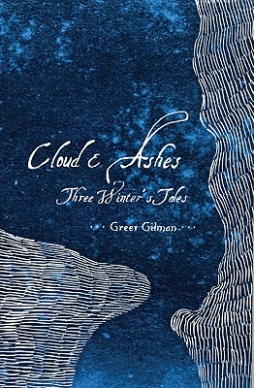 I recently finished reading Greer Gilman’s second novel, 2009’s Cloud & Ashes. I’ve never come across Gilman’s first book, Moonwise, but I’m now looking forward to tracking it down.
Cloud & Ashes is a complex, powerful work. It repays careful attention, attentiveness to patterns of imagery, and readiness to work out unknown words from context (this is less a book to read alongside an open dictionary than alongside an open internet connection, which can find obscure, archaic, and dialect words). It demands rereading, and I won’t claim to understand all of it. But I think I can say a few things with confidence — to start with, that it’s a stunning, compelling work of language, and that the apparent occasional difficulty of the text is not only necessary but part of the novel’s overall effect.
In a world much like our own, in a time and place that resembles Scotland or northern England around 1600 in its culture and language use, a generational story of mothers and daughters is played out which derives from and intersects with the seasonal myths of the land. Witches are a real and powerful presence. Companies of guisers travel about, presenting dramas of archetypal powers. And at crucial points of the year, as summer goes out or comes in, everyone takes part in rituals of death and rebirth; a woman must play the part of Ashes each winter, in order to bring in a new spring.
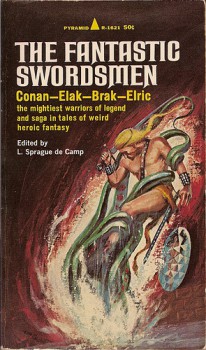

 Next year brings the hundredth anniversary of Edgar Rice Burroughs’s first two published novels:
 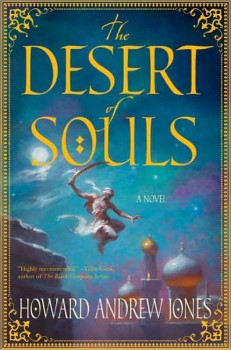 Sohaib Awan at Fictional Frontiers interviews Black Gate Managing Editor Howard Andrew Jones on his first novel The Desert of Souls, non-Western fantasy, juggling modern expectations in historical fiction, and much more: