Browsed by
Category: Books

New Treasures: Robert Silverberg’s Tales of Majipoor
New Treasures: Robert Silverberg’s Tales of Majipoor

Tales of MajipoorRobert Silverberg’s last post at Black Gate was “Are the days of the full-time novelist numbered?” (which, as I recall, generated a lot of debate, including an intriguing counter-argument by Jerry Pournelle.)

His post seemed like a good excuse to finally get around to reading Lord Valentine’s Castle, the first novel in his Majipoor Cycle. It’s one of the few major fantasy series I haven’t tried, and I’ve long been intrigued by its science fantasy setting. Majipoor is a vast world, much larger than Earth (but much less dense, hence with a comparable gravity), settled by a host of bizarre alien races who co-exist more-or-less peacefully with the shape-changing natives, the Piurivar. It’s is a low-tech planet where agriculture is the main occupation, but numerous artifacts of a space-faring culture dot the landscape, some of them quite mysterious — the perfect stage for some grand adventures.

Lord Valentine’s Castle was highly acclaimed when it first appeared in 1980, garnering a Hugo nomination and winning the Locus Award for Best Fantasy Novel. Five more novels followed, including Valentine Pontifex (1983) and Sorcerers of Majipoor (1997), and one collection, Majipoor Chronicles (1982).

In the two decades since that last collection, Silverberg has published some major short work set in Majipoor, including:

  • “The Seventh Shrine,” a murder mystery from Legends: Stories By The Masters of Modern Fantasy
  • “The Book of Changes,” a novella of Majipoor’s early history from Legends II
  • “The End of the Line,” a novelette featuring Lord Stiamot from Asimov’s Science Fiction (read an excerpt here)
  • “The Tomb of the Pontifex Dvorn,” from online magazine Subterranean (read the complete story here)
  • “The Sorcerer’s Apprentice,” a novelette from Flights: Extreme Visions of Fantasy
  • “Dark Times At The Midnight Market,” from Swords & Dark Magic
  • “The Way They Move the Spells at Sippulgur.”

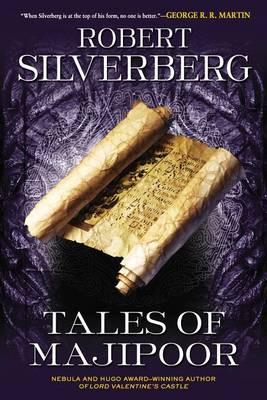
All seven of these tales are collected in Tales of Majipoor, the new collection from Roc that goes on sale this month. I found Lord Valentine’s Castle buried under review notes, still unopened, only a few weeks after I took it down to read it. But that’s okay, because Tales of Majipoor looks like an even better way to take my first steps unto this vast planet.

Tales of Majipoor was published on May 7 by Roc. It is 320 pages in trade paperback, priced at $16 ($9.99 for the digital edition).
It’s Dark Inside by Karen Heard

It’s Dark Inside by Karen Heard

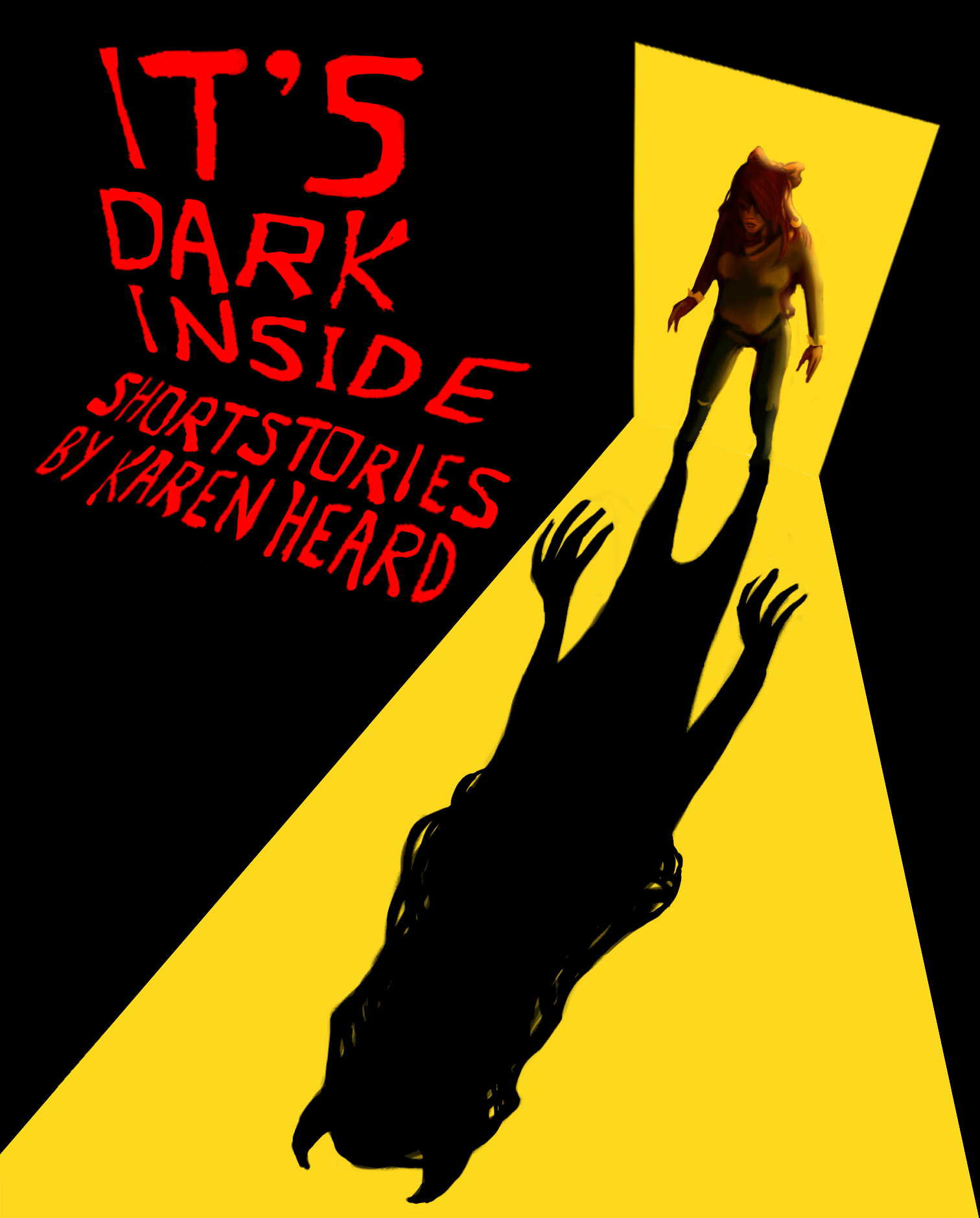
It's Dark Inside by Karen HeardThere’s a sub-genre known as “quiet horror,” an alternative to the explicit gore or overtly supernatural fare that’s been prevalent in horror since the eighties. Charles Grant’s much-praised Shadows series is one of the best examples you’ll find of this type of writing. There aren’t a lot of writers today who try this type of story and even fewer who succeed. Karen Heard is one of those rarely talented authors who can unsettle a reader without ever explicitly stating what has happened. It’s Dark Inside is her first collection and these six stories are hopefully only the beginning of many more to come.

The collection begins with “The Lighthouse,” a tale of isolation in the wake of some manner of unspecified disaster. “Snap” is set in what may be a not-too-distant future, wherein a photo-journalist is on a quest to find and photograph the last living elephant. “The Picture” is a different type of ghost story, where we learn about the things that can scare a man who is already dead. “Out of Order” surprises the reader by starting as one type of standard horror story before shifting into something very different as the reader is left unsure of not only what the “monster” is, but where exactly it is hiding. “The Promise” was a bit frustrating, as it depends on the protagonist not figuring out what is fairly obvious to the reader, but makes up for it with a wonderful twist ending. The collection wraps up with “Inside,” a story that leaves the reader unsure if the protagonist is beset by a supernatural menace or merely losing her mind, still managing to surprise with an unexpected (yet in retrospect completely logical) solution.

It’s Dark Inside is available in paperback for the low price of $6.50. For those of you on a budget, there’s the even lower-priced e-book edition for only 99 cents. For those of you on an even tighter budget (come on, already), you can preview one of the stories, “The Lighthouse,” on Ms. Heard’s blog, Misheard Fiction. Check it out and then decide if one of the best quiet horror story collections you’ll read this year is worth the cost of half a cup of coffee.

Vintage Treasures: Robert E. Howard’s Cthulhu: The Mythos and Kindred Horrors

Vintage Treasures: Robert E. Howard’s Cthulhu: The Mythos and Kindred Horrors

Robert E Howard Cthulhu The Mythos and Kindred HorrorsOn April 27, I wrote a Vintage Treasures article about Robert E. Howard’s The People of the Black Circle, one of the first fantasy books I ever owned.

The Comments section quickly became a discussion of REH collecting, with readers swapping photos of their favorite Howard books. Joe H. shared a LibrayThing catalog of his Howard collection, noting the hardest title to find had been Cthluhu: The Mythos and Kindred Horrors. “It took me years to track down a copy,” he said.

Well, that’s exactly the kind of thing that perks up a collector’s ears. Intrigued,  I went on a quest to find my own copy of Cthluhu: The Mythos and Kindred Horrors, a collection of Robert E. Howard’s Cthulhu stories.

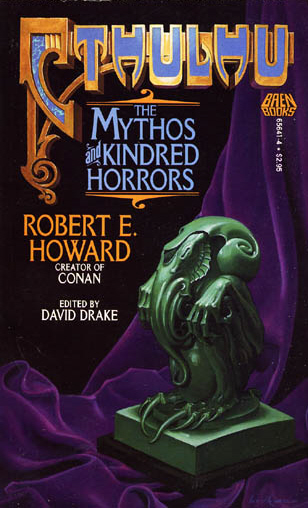
I finally succeeded this week, after a two-week search. I settled in with my new copy today. First thing I noticed is that the cover, by Stephen Hickman, depicts a treasured artifact from my own collection: the Hickman-designed Cthulhu statute by Bowen Designs — a prized collectible these days. Now that it’s worth something, maybe my wife will let me bring it up out of the basement.

The other thing I noticed is that this is a sizable collection: 250 pages. While I knew Howard had made some minor contributions to Lovecraft’s famous milieu before his death, I had no idea he’d written so many stories that could be categorized as part of the Cthulhu Mythos.

Perhaps editor David Drake has been fairly liberal with his selections. I note that “Pigeons from Hell” is included, and that’s only peripherally a Cthulhu story — but it’s a damn good tale, so I’m not complaining.

Read More Read More

J.G. Ballard’s The Drowned World

J.G. Ballard’s The Drowned World

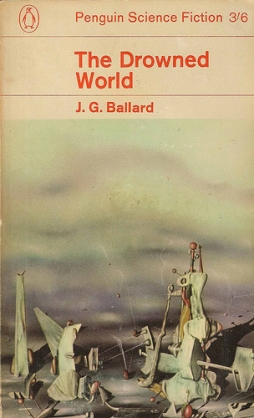
The Drowned WorldMy copy of J.G. Ballard’s The Drowned World has an about-the-author section that describes the 1962 book as “a brilliant first novel that won him instant acclaim and had a dramatic effect on the state of science fiction.” Even allowing for the typically excessive claims of PR text, this is inaccurate: Ballard’s first novel was actually The Wind From Nowhere, published in 1961 and written in two weeks. Still, Ballard’s consistently downplayed and even disowned the earlier book, so let’s take him at his word. How does The Drowning World look fifty years on?
It has to be said that it’s one of those science fiction books that would seem at first glance to be strikingly relevant, if not prophetic — dealing with an idea become disturbingly significant in the years since the story’s first publication. In this case, the book’s set in a future sometime in a mid-21st-century suffering from extreme global warming due to a series of solar storms. The sea levels have risen; the world has drowned. The lead character has no memory of any civilisation we recognise, living with a few million other human beings in the polar latitudes. Reading this book on the heels of news that atmospheric carbon dioxide has passed the 400 parts per million threshold, it’s impossible not to feel a sharpening of one’s interest.

But, like much of the best science fiction, the core of the book is not the science but the fiction. Ballard uses his setting — a flooded tropical London claimed by iguanas and marmosets, totally lacking human life but for a visiting scientific and military expedition and one woman who grew up in the drowned city — to explore strange psychological effects of this particular future. It’s a kind of exploration of depth psychology, of dreams and a collective unconscious. Individual ontogeny is affected by global phylogeny; human identity is affected by a return of the climate and fauna of the Mesozoic era. The book becomes more fascinating as it goes on, increasingly moving away from the science of climate change and using the drowning of the world as a mirror for the submerging of rationality. It is, ultimately, truly concerned with apocalypse: not merely the erasure of the old world, but the making of the world into something new.

Read More Read More

New Treasures: Dead Boys by Michael Penkas

New Treasures: Dead Boys by Michael Penkas

Dead Boys Michael PenkasI first met Michael Penkas in 2010 at the Top Shelf Open Mic in Palatine, Illinois, a friendly local reading event hosted by C.S.E. Cooney.

The Top Shelf Open Mic has attracted some extraordinary talent over the years. Gene Wolfe read chapters of his upcoming novel The Land Across, Joe Bonnadonna shared early drafts of Waters of Darkness, David C. Smith read from his supernatural thriller Call of Shadows, and of course C.S.E. Cooney regularly entertained us with boundless energy, reading from The Big Ba-Ha, Jack o’ the Hills, and other acclaimed publications.

But I don’t think it’s an exaggeration to say that Michael Penkas has become the unexpected true star of our local reading group. His creepy and electrifying short stories have mesmerized us month after month.

Michael has an uncanny ability to pry open your heart with sparkling prose, humor, and warm and genuine characters… and then drive a cold spike through it with relentless and diabolical twists. All with some of the most compact and economical prose I have ever encountered.

Michael has published over a dozen stories since 2007. While he’s best known for his extremely effective horror and dark fantasy, he’s equally at home with mystery, science fiction, and gonzo humor — as his upcoming story for Black Gate illustrates. “The Worst Was Yet to Come,” a chilling retelling of Moses’s unexpected conversation with God immediately after the Ten Plagues of Egypt, will appear here this Sunday. It’s sure to win him many more fans, or possibly get him strung up — or both.

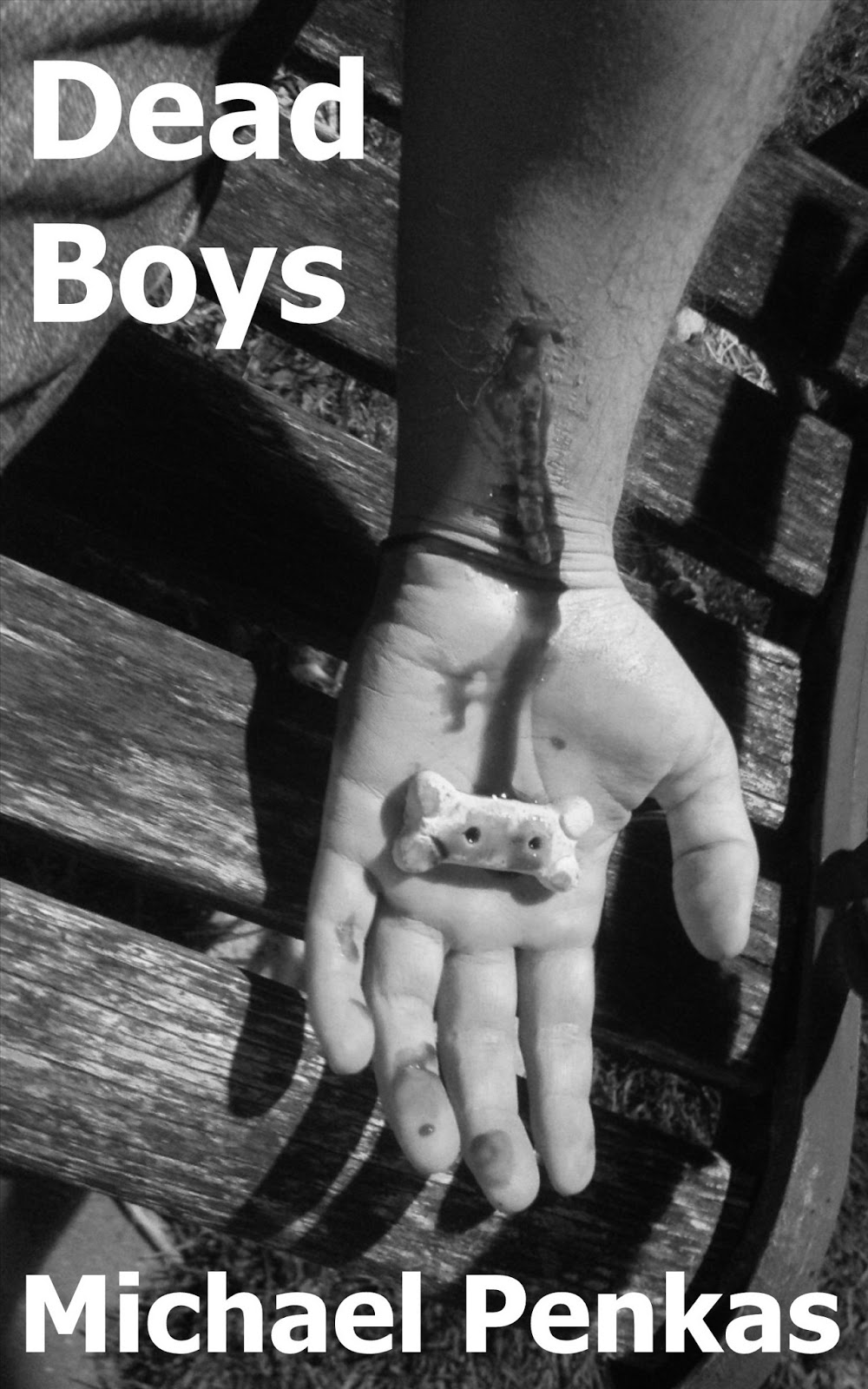
Michael has just released his first — and long awaited — collection, assembling four of his earliest published stories. It’s a delightful sampling of some of the best work of a fast-rising dark fantasy and horror author.

Read More Read More

Get a Random SF or Fantasy Book Cover from The Encyclopedia of Science Fiction

Get a Random SF or Fantasy Book Cover from The Encyclopedia of Science Fiction

Into the Slave NebulaOh, Internet. Will you ever cease to come up with new ways for me to waste time?

So the latest thing I’ve been doing is hitting the Lucky Dip button in the Picture Gallery section of the online Encyclopedia of Science Fiction. It generates a random book cover from their massive archives:

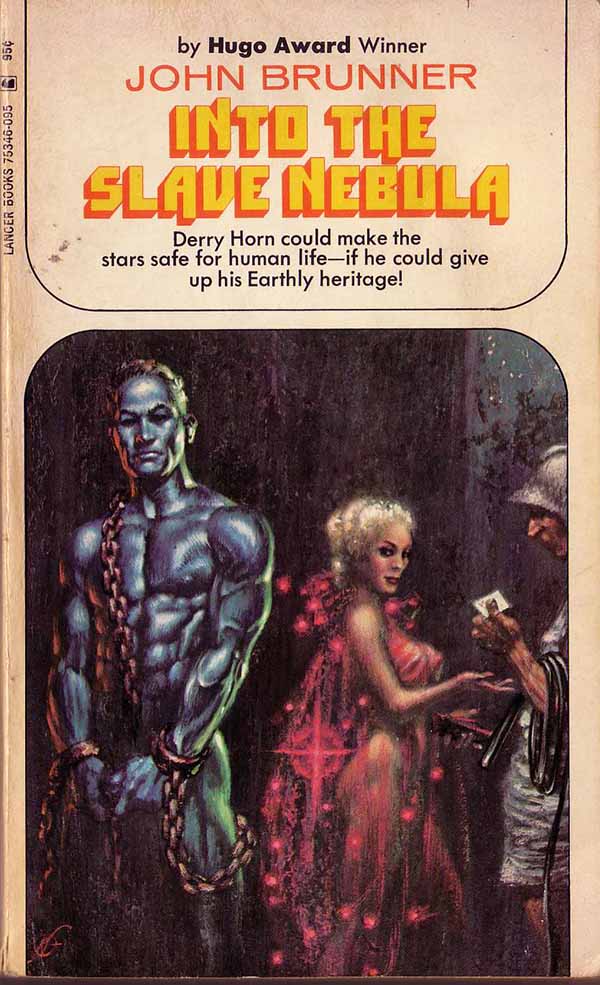
So far, I’ve seen a few hundred vintage hardcovers and paperbacks, from a 1951 Lord Dunsany hardcover I never knew existed (The Last Revolution) to Samuel R. Delaney’s 1977 collection of critical essays on science fiction (The Jewel-Hinged Jaw); from John Brunner’s 1968 Lancer paperback Into the Slave Nebula to the 1954 Gnome Press edition of C. L. Moore’s Northwest of Earth. And many hundreds in between.

It’s a fascinating kaleidoscope (I can’t really call it a tour) of our genre — and a great launching point to ignite your interest. I ended up reading about UK author M. John Harrison after seeing the cover to his 1975 Panther paperback collection The Machine in Shaft Ten and Other Stories. Plus, doing about a dozen Google searches on the words “Slave Nebula.”

Of course, there’s a powerful search function as well, in case you want to leap directly to a specific book or author. The Encyclopedia of Science Fiction, the new online incarnation and third edition of the classic reference book edited by John Clute and Peter Nicholls, indexes some 54,000 individual titles, with 113,500 internal hyperlinks and over 4,000,000 words. It builds massively on the text of the (already massive) 1995 CD-ROM edition, and is produced in collaboration with British SF publisher Gollancz and the SF Gateway. And it is, as the introduction points out, still a work in progress.

The only thing that’s missing? The back button. I tried to scroll back to some of the earlier samples, but no dice. Looks like the Lucky Dip is powered by a Javascript app of some kind that doesn’t allow you to page back through prior selections — so if you see something interesting, be sure to write it down!

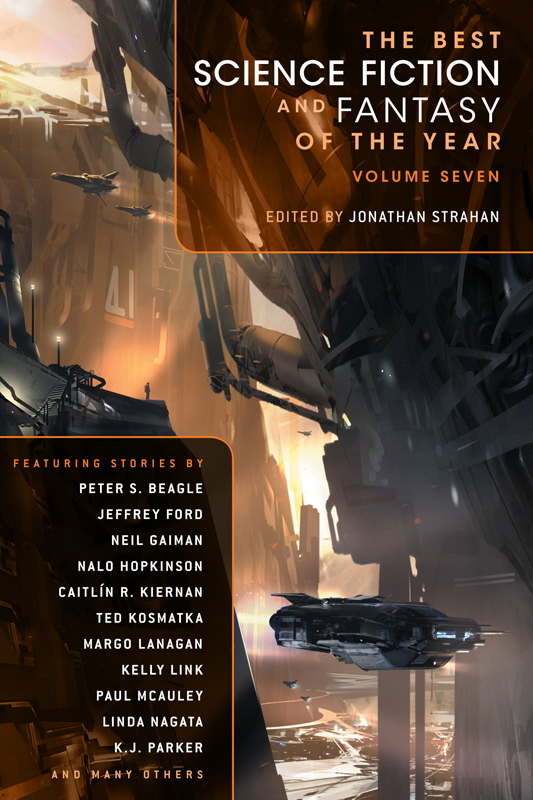
New Treasures: The Best Science Fiction and Fantasy of the Year, Volume Seven, edited by Jonathan Strahan

New Treasures: The Best Science Fiction and Fantasy of the Year, Volume Seven, edited by Jonathan Strahan

The Best Science Fiction and Fantasy of the Year Volume Seven StrahanI always look forward to the Best of the Year anthologies. It’s an annual ritual, like the arrival of spring, heralding new hope and rebirth for the land. Or something.

Over the next few months, we’ll see several of them, from Rich Horton, David Hartwell, Gardner Dozois, Stephen Jones, and Paula Guran, just to name a few. But the season kicks off every year with Jonathan Strahan’s Best Science Fiction and Fantasy of the Year, certainly one of the most interesting volumes for fantasy fans.

Like the preceding six volumes, it is published by Night Shade Books, who are experiencing difficulties. Likely this will be the last one, at least in this format.

In short: if you’re at all interested in a generous collection of some of the finest SF and fantasy from the best writers in the genre, do what I did and buy it now while it’s still available.

Here’s what we know about the stories:

Four artificial intelligences struggle towards life on the icy moon of Callisto; insect love means something deeply disturbing in a world of mantis wives; an elderly woman matches wits with Death in a battle for her life; a birthday party on a spaceship is haunted by ghosts from afar; a UFO researcher finds far more than she’s looking for in the backwoods of Missouri; a grand tour of the solar system ends in an unexpected discovery; a researcher strives to make one last grand discovery before the stars wink out a final time…

And here’s the complete table of contents.

Read More Read More

James McGlothlin Reviews Writing Fantasy Heroes: Powerful Advice From the Pros

James McGlothlin Reviews Writing Fantasy Heroes: Powerful Advice From the Pros

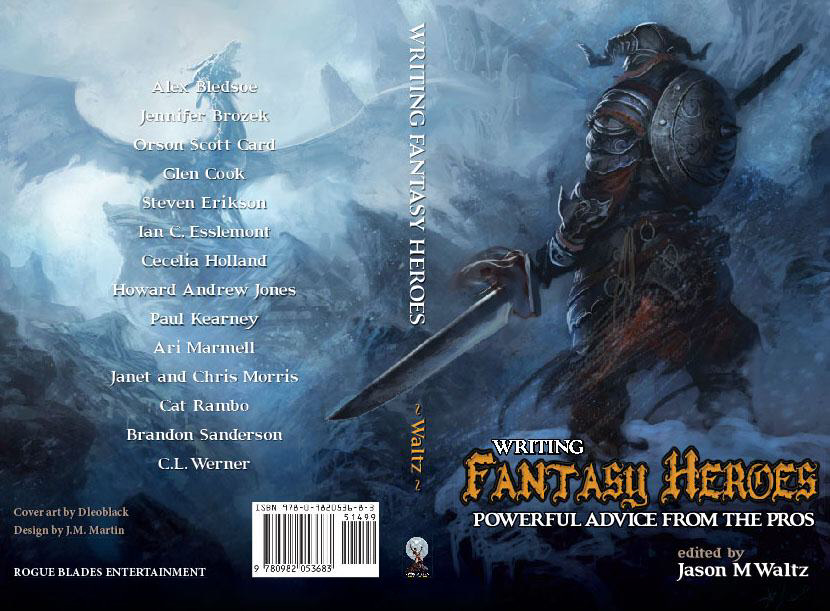
Writing Fantasy HeroesWriting Fantasy Heroes: Powerful Advice From the Pros
Edited by Jason M. Waltz
Rogue Blades Entertainment (202 pp, $14.99, trade paperback, February 2013)

In recent days, Sarah Avery has been doing some excellent in-depth posts reviewing Writing Fantasy Heroes, a collection of essays from some of the best fantasy practitioners in the field. Having recently been one of the winners of a contest for this book, Black Gate has allowed me the opportunity to give my two cents concerning the book as well. I won’t pretend to improve on any of Avery’s review here. Rather, I’ll offer some comments on just a few of the essays that I reacted most strongly to.

For me, hands down, the chapter by Howard Andrew Jones concerning character development through dialogue was the best essay in the book. Jones, along with Saladin Ahmed and Ari Marmell (who also has a chapter in this volume), is part of a small but seemingly growing band of authors who are writing fantasy fiction in a Middle-eastern milieu — think 1001 Arabian Nights! In his essay, Jones shows how the discussions among characters in a story can go a long way towards fleshing out these characters. His examples were quite apt and I especially enjoyed the McCoy and Spock dialogue taken from the original Star Trek series.

Jones’s discussion reminded me of at least one reason why I enjoy books like George R. R. Martin’s A Song of Ice and Fire series as well as, say, Quentin Tarantino screenplays. Both artists do an excellent job of making their characters multi-faceted, and thus compelling, by the use of dialogue in their stories. I think Jones’s essay shows how poor interchanges among characters do more to make a story feel artificial than the use of fantasy tropes!

Read More Read More

Vintage Treasures: The Girl With the Hungry Eyes by Fritz Leiber

Vintage Treasures: The Girl With the Hungry Eyes by Fritz Leiber

The Girl With the Hungry EyesSometimes it seems that every time a new sword & sorcery novel appears, a publicist automatically slaps “comparable to Fritz Leiber!” on the cover.

I’ll tell you why: it works. When Karen Burnham at SF Signal noted that Tim Pratt’s latest Pathfinder novel Liar’s Blade had done “an excellent job of capturing the spirit” of Fafhrd and the Grey Mouser, I bought it immediately. A fantasy novel with the charm and style of Fritz Leiber’s great adventures? Where’s my credit card.

I think publicists must get tired of comparing new sword & sorcery to Fritz Leiber and Robert E. Howard. I know it’s annoying to their fans, and I don’t think it does a genuine service to most new writers — not in the long term, anyway.

And frankly, all the focus on Fritz Leiber as the poster child for exemplary S&S overlooks his success in a broad range of genres: science fiction, mystery, dark fantasy, supernatural horror, plays, and even a 1966 Tarzan novel. Ask anyone who’s read his 1965 Hugo Award-winning novel The Wanderer, about a rogue planet that drifts close to Earth — or his brilliant short story “A Pail of Air,” a post-apocalyptic tale of a family fighting to survive on a world grown so cold that oxygen has condensed out of the air, and the strange things they discover when the world has gone completely still — and you’ll find that Leiber’s Fafhrd and the Grey Mouser tales, as important as they are to the Sword & Sorcery canon, stand as only a small sample of a stellar writing career that spanned over 50 years.

As a paperback collector, it’s hard to pick my favorite Fritz Leiber book. I love Michael Whelan’s cover for Swords and Ice Magic (1977), and of course The Big Time (1961), Gather, Darkness! (1975), and the creepy Our Lady of Darkness (1977). But I think it would have to be a collection, possibly The Mind Spider and Other Stories (1961), Ship of Shadows (1979), or The Ghost Light (1984).

But I might just cheat and make it the 1949 Avon paperback The Girl With the Hungry Eyes.

Read More Read More

The Hunger Games and Kids: When to Say When?

The Hunger Games and Kids: When to Say When?

Mockingjay_PinOn a recent visit, my sister was shocked to discover that my boys had with them a copy of Mockingjay. At first, she assumed it was Corey’s (Corey is nearly thirteen), and was therefore even more horrified to learn that it was Evan’s book. Evan is eight.

My sister accosted me later that night (with my boys and hers all tucked up in various beds, visions of Minecraft dancing in their heads) and asked how I had come to the decision to let Evan tackle The Hunger Games books. She did not approach on an attack vector ––“How dare you let him read this trash!” No, no. Opinionated my sister certainly is, but she’s a smart (and tolerant) cookie.

Even so, my answer took the better part of twenty minutes to deliver, because I myself am puzzled by why Evan is reading The Hunger Games and why I (having viewed The Hunger Games and read Catching Fire) am at least tacitly condoning his choice.

Read More Read More