Browsed by
Category: Books

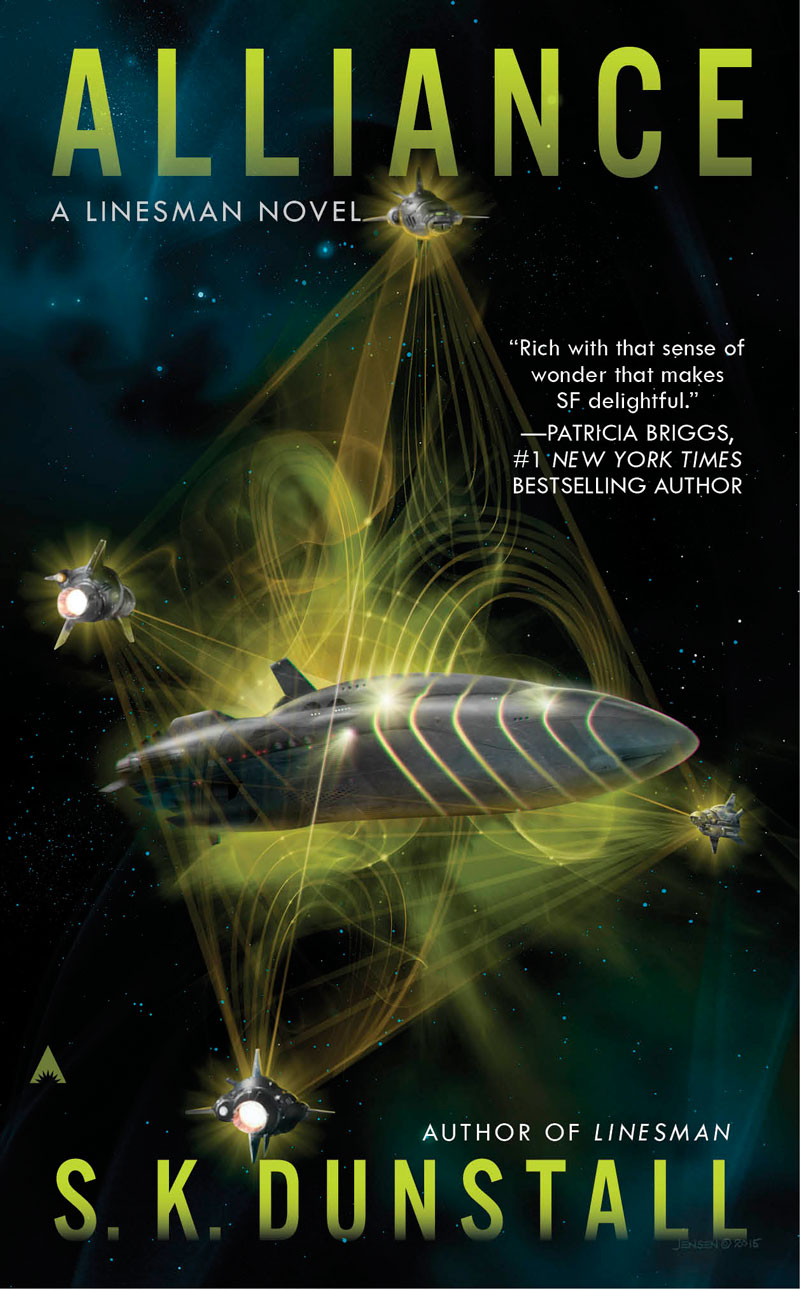
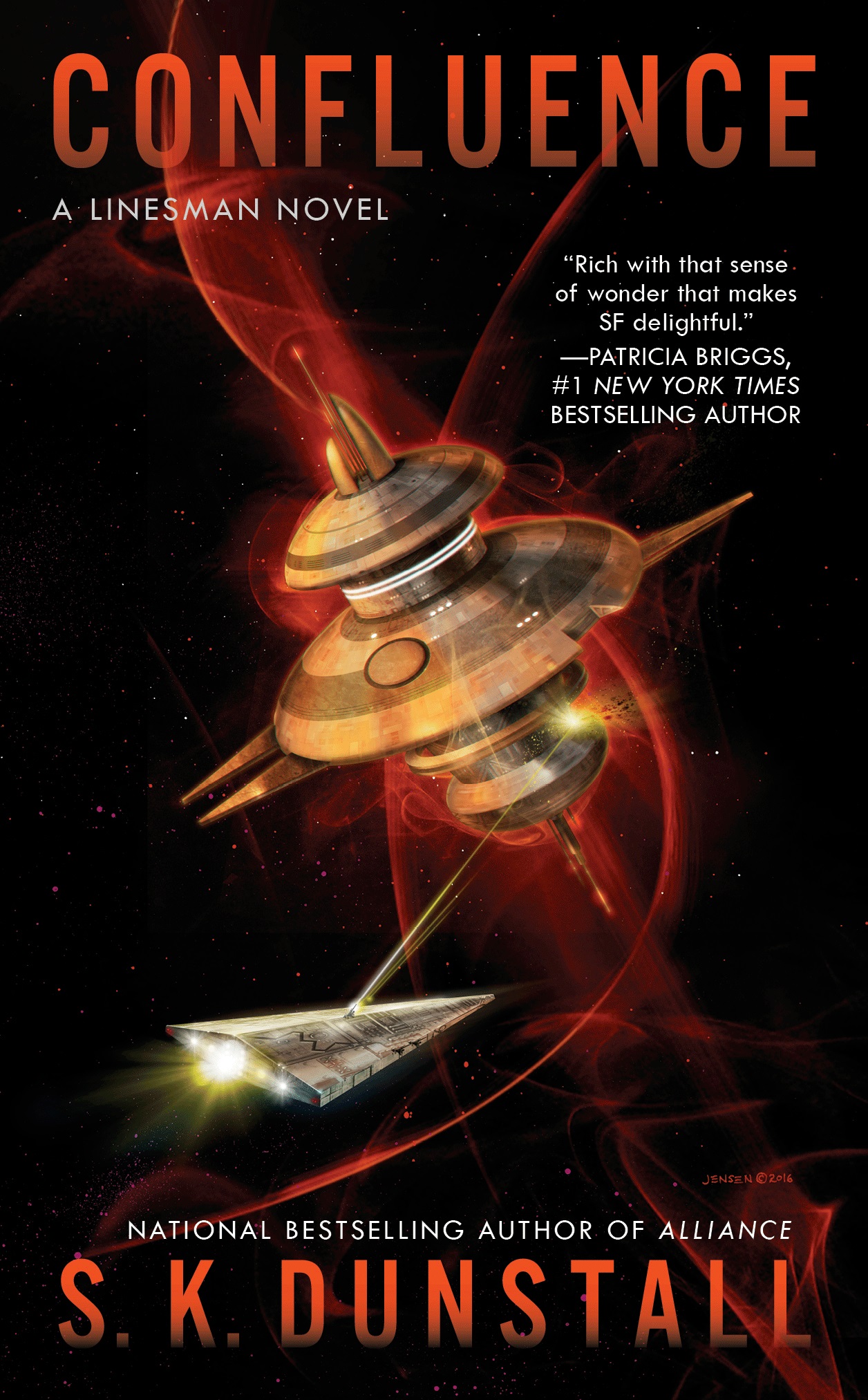
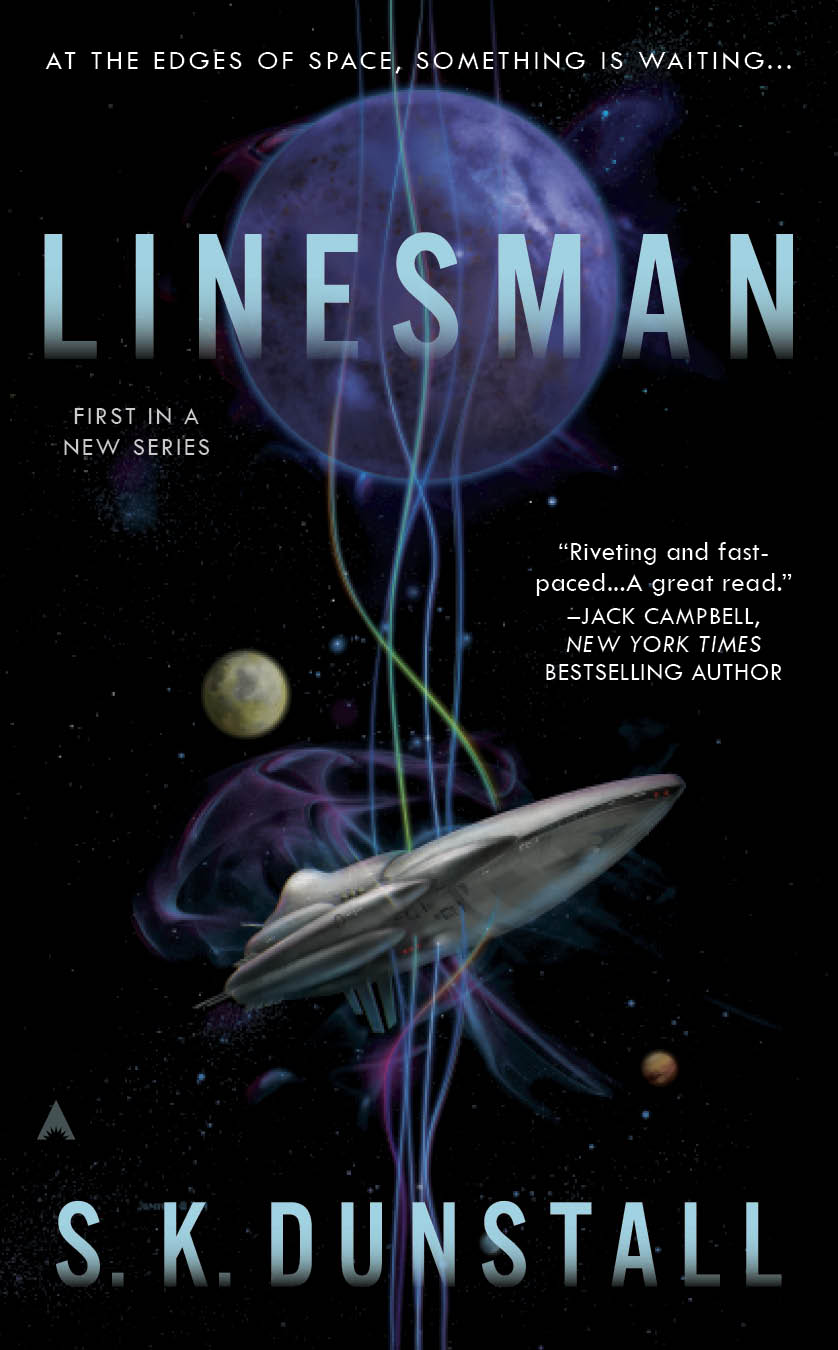
Sentient Spaceships, Alien Derelicts, and Warring Empires: S.K. Dunstell’s Linesman Trilogy
Sentient Spaceships, Alien Derelicts, and Warring Empires: S.K. Dunstell’s Linesman Trilogy

linesman-dunstall-small alliance-dunstall-small confluence-dunstall-small

I know a few collaborative writing teams who publish under a joint pseudonym (Daniel Abraham and Ty Franck, for example, who publish the Expanse novels under the name James S. A. Corey), and I even know a few husband and wife writing teams (like Ann & Andres Aguirre, who write urban fantasy under the name A. A. Aguirre, and bestselling fantasy authors Ilona and Andrew Gordon, who write under the name Ilona Andrews). But I’d never heard of a pair of siblings writing under one name — or at least I hadn’t, until I came across Sherylyn and Karen Dunstall, who write together under the name “S.K. Dunstall.”

Their first book was Linesman, published in paperback by Ace in June of last year. My friend Sharon Shinn called it “Full of fast action, interplanetary intrigue, appealing characters, and a fascinating new take on the idea of the sentient spaceship.” My son Tim, who’s currently studying physics in college, read it in virtually one sitting, and loved it — so much so that when I gave him an advance proof of the second volume, Alliance, for Christmas last year, he happily disappeared for hours.

The third volume in what’s now being called the Linesman series, Confluence, arrives in paperback from Ace at the end of this month. Great timing! That’s my Christmas shopping for Tim done.
Read More Read More

New Treasures: The Best American Science Fiction and Fantasy 2016, edited by Karen Joy Fowler and John Joseph Adams

New Treasures: The Best American Science Fiction and Fantasy 2016, edited by Karen Joy Fowler and John Joseph Adams

the-best-american-science-fiction-and-fantasy-2016-smaller the-best-american-science-fiction-and-fantasy-2016-small

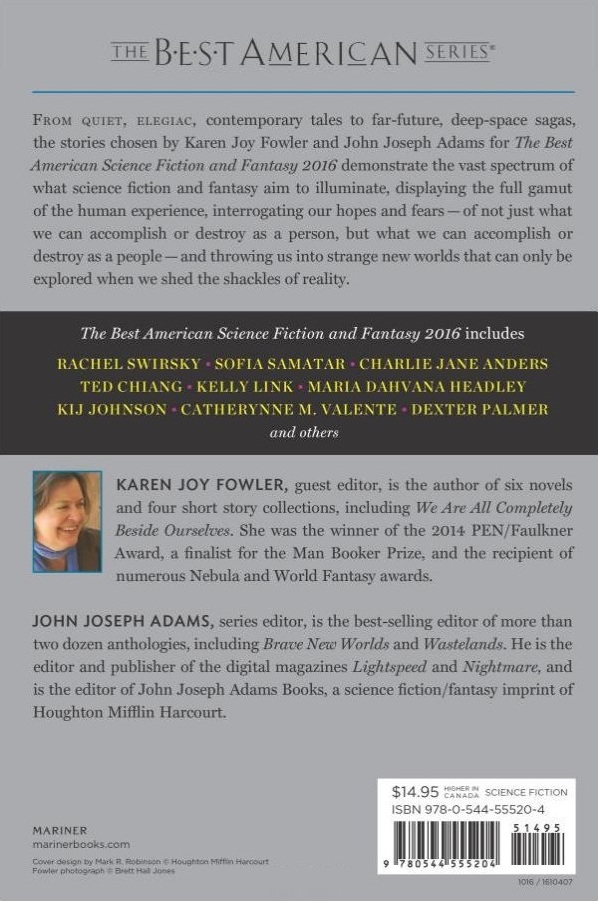
Last year Mariner Books added an inaugural SF and fantasy volume, The Best American Science Fiction and Fantasy, to their highly regarded annual anthology series, which includes Best American Short Stories, Best American Mystery Stories, Best American Science and Nature Writing, and others. John Joseph Adams is the series editor; the 2015 edition was edited by Joe Hill and was one of the stronger Best of the Year anthologies from last year. (Check out the compete TOC for that first volume here.)

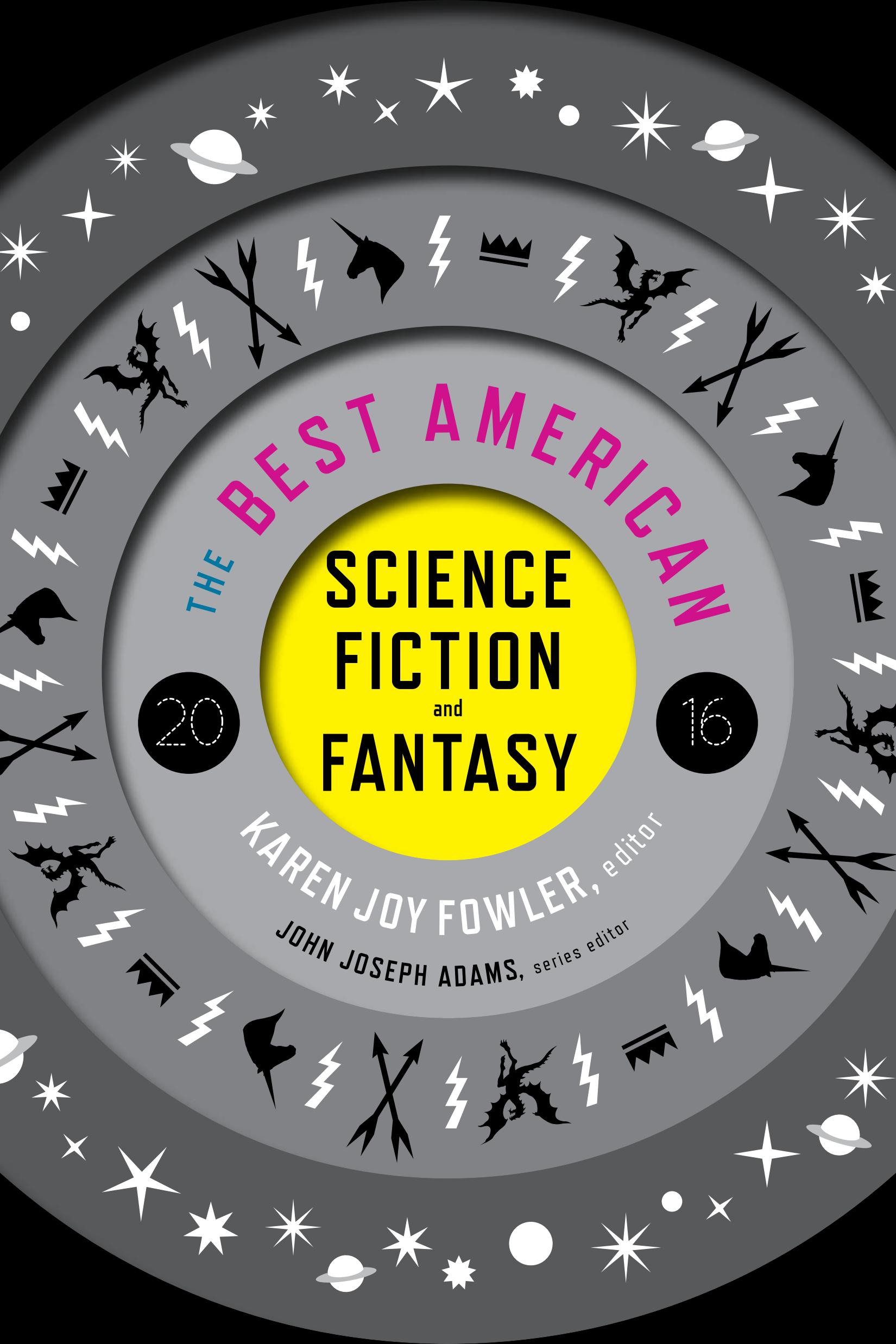
This year’s volume is edited by Karen Joy Fowler. It includes fantasy tales by Sofia Samatar, Rachel Swirsky, Salman Rushdie, Maria Dahvana Headley, Sam J. Miller, and others, and science fiction by Kelly Link, Catherynne M. Valente, Dale Bailey, Charlie Jane Anders, Ted Chiang, and many others.

It was published in trade paperback in October, and includes a foreword by John Joseph Adams, and an introduction by Karen Joy Fowler. It’s the eleventh and last of the major Best of the Year anthologies to appear this year, and it brings to a close the publishing season that began with Nebula Awards Showcase 2016 back in May.

Here’s the complete Table of Contents for The Best American Science Fiction and Fantasy 2016.

Read More Read More

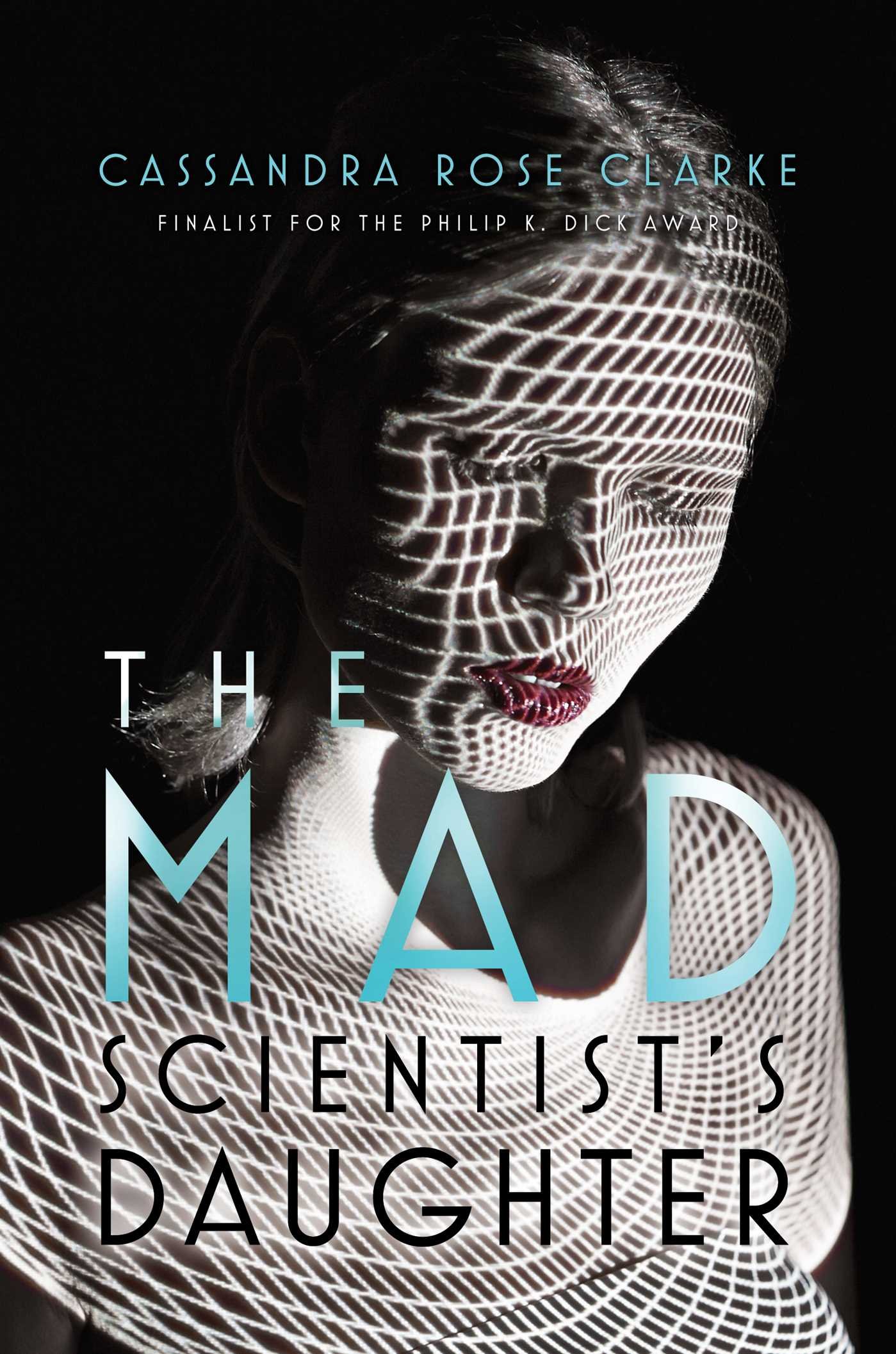
Fathers, Don’t Let Your Daughters Date Androids: The Mad Scientist’s Daughter by Cassandra Rose Clarke

Fathers, Don’t Let Your Daughters Date Androids: The Mad Scientist’s Daughter by Cassandra Rose Clarke

the-mad-scientists-daughter-smallCassandra Rose Clarke is the author of The Assassin’s Curse series and the very intriguing Our Lady of the Ice, which features a female PI, ruthless gangsters, and robots agitating for independence in an Argentinian colony in Antarctica.

But her biggest claim to fame was her first novel for adults, The Mad Scientist’s Daughter, which was originally published in the UK and the US by Angry Robot in 2013. It was nominated for the Philip K. Dick Award for distinguished science fiction novel published in paperback in the United States (although it lost out to Ben H. Winters’s Countdown City).

Now Saga Press has returned the book to print in an attractive new edition, in both hardcover and trade paperback. An SF fairy tale set in a collapsing future America, about a girl and the android she falls in love with,, The Mad Scientist’s Daughter was called “One of the most realistic science fiction stories ever told” by io9.

When Cat Novak was a young girl, her father brought Finn, an experimental android, to their isolated home. A billion-dollar construct, Finn looks and acts human, but he has no desire to be one. He was programmed to assist his owners, and performs his duties to perfection.

His primary task now is to tutor Cat. Finn stays with her, becoming her constant companion and friend as she grows into adulthood. But when the government grants rights to the ever-increasing robot population, Finn struggles to find his place in the world. As their relationship goes further than anyone intended, they have to face the threat of being separated forever.

The Mad Scientist’s Daughter was published by Saga Press on November 8, 2016. It is 327 pages, priced at $26.99 in hardcover, $14.99 in trade paperback, and $7.99 for the digital edition.

See all of our recent New Treasures here.

Win a Copy of Sarah Avery’s The Imlen Brat

Win a Copy of Sarah Avery’s The Imlen Brat

The Imlen Brat-small

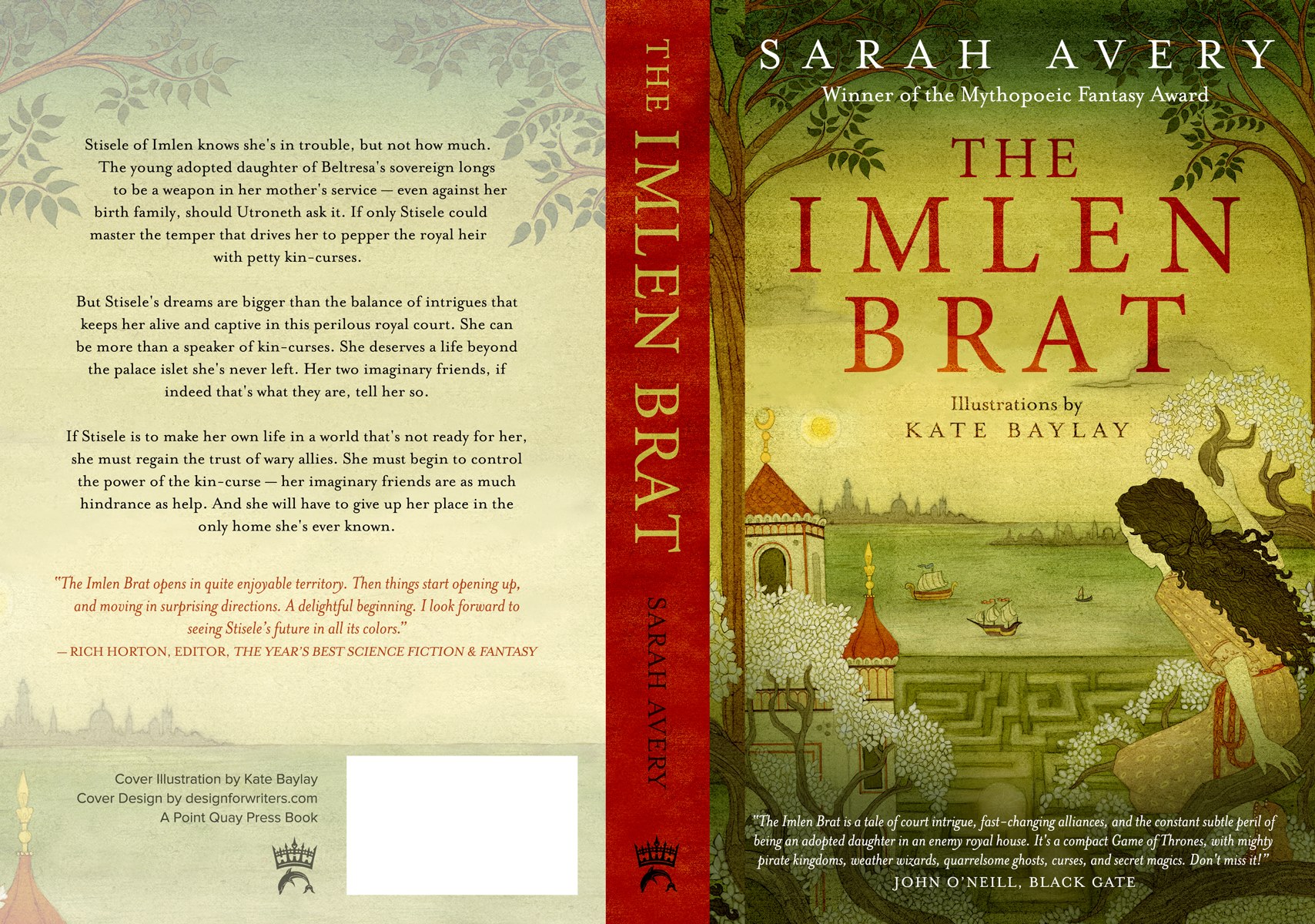
In early October I received a bundle from Sarah Avery. Inside were several copies of her beautiful new novella The Imlen Brat — a story I’d dearly wanted to publish in Black Gate, but was unable to before the print version of the magazine died.

It was enormously satisfying to finally see this book out in the world, and to hold a copy in my hands. And what a book! The gorgeous cover by Kate Baylay, and the delightful design and back cover blurb by Rich Horton, almost made it worth the wait (almost). And on top of it all, the dedication page touched my cold publisher’s heart.

To the whole Black Gate crew — writers, readers, artists, editors, all of you. You will always be this story’s first home.

Tucked in with the bundle was a note from Sarah, who generously offered two additional copies as to give away to Black Gate‘s readers. And that’s exactly what we’re here to do today.

Read More Read More

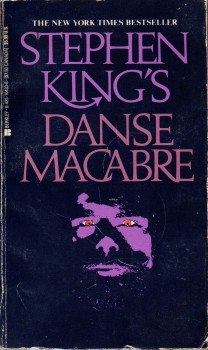
Oz’s Bag of Holding: Stephen King Edition featuring A Brief Guide, Fear Itself (with an essay by Fritz Leiber!), and Danse Macabre

Oz’s Bag of Holding: Stephen King Edition featuring A Brief Guide, Fear Itself (with an essay by Fritz Leiber!), and Danse Macabre

danse-macabre-originalI have here a bag of holding. I am going to pull some things out of it now…

First up is:

A Brief Guide to Stephen King: Contemporary Master of Suspense and Horror by Paul Simpson (2014)

Funny how I came across this one. I was perusing the bookshelves in The Dollar Tree — all those overstocks and remaindered copies now relegated to the fate of being sold for a dollar.

Every once in a while I make a “find,” but on this occasion, it was looking like there was good reason none of these books had sold for their original double-digit cover prices. The thought actually went through my head, “Too bad you never come across a book by Stephen King in here.” A moment later, King’s name caught my eye! Turns out it was a book not by but about King. Still, it was too much of a sign to ignore, so I bought it.

A Brief Guide is as advertised: a brief, workmanlike bibliography of all King’s work through 2014, with synopses of each. Opens with a short bio. Not a must for shelves of diehard King fans, but I actually found I had plowed through the whole book in two sittings — so it succeeded in its professed purpose as a succinct overview of the author’s career. Every King book, film and TV adaptation, and comic book is covered (indeed, even tie-ins like video games are included). While the synopses are quite short, the author livens it up a bit by including tidbits here and there relating a work to events in King’s own life at the time or King’s opinion or the reaction of critics.

Read More Read More

A Vertigo-Inspiring Fantasy of Pain Magic, Corruption, and Murder: Francis Knight’s Rojan Dizon Trilogy

A Vertigo-Inspiring Fantasy of Pain Magic, Corruption, and Murder: Francis Knight’s Rojan Dizon Trilogy

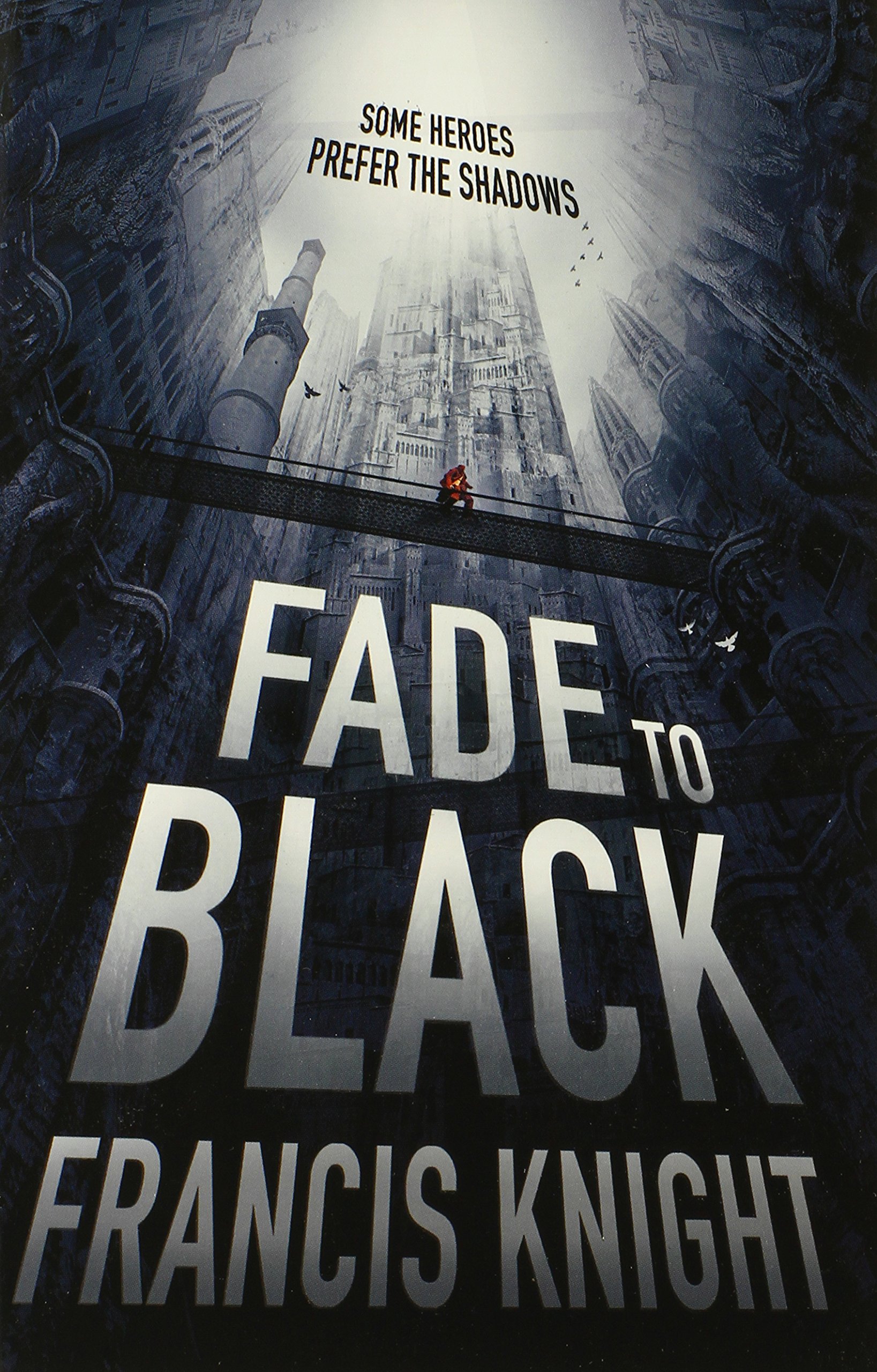
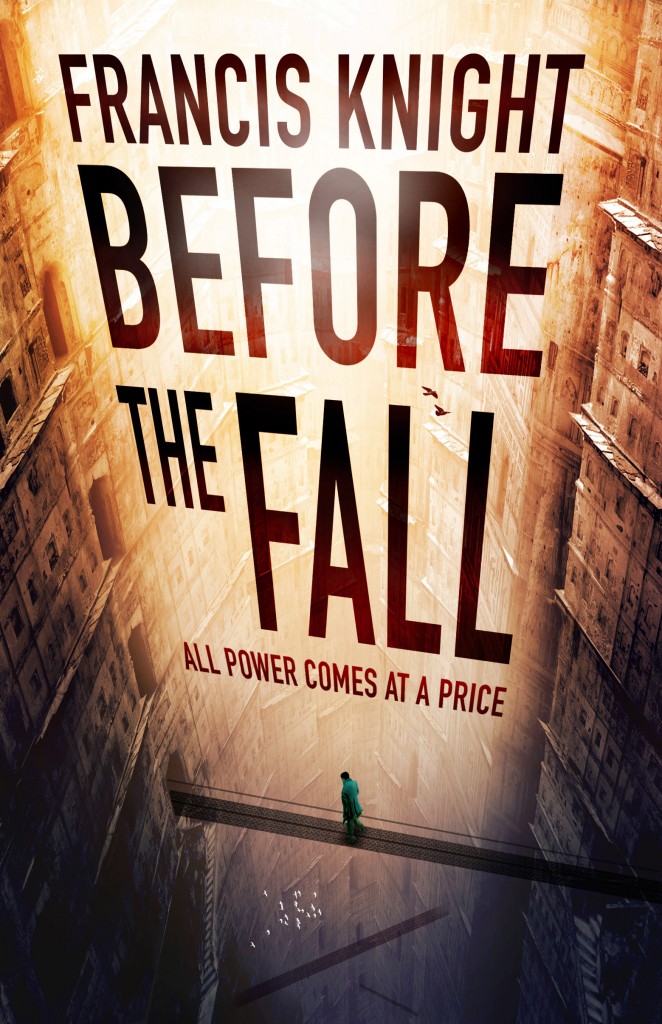
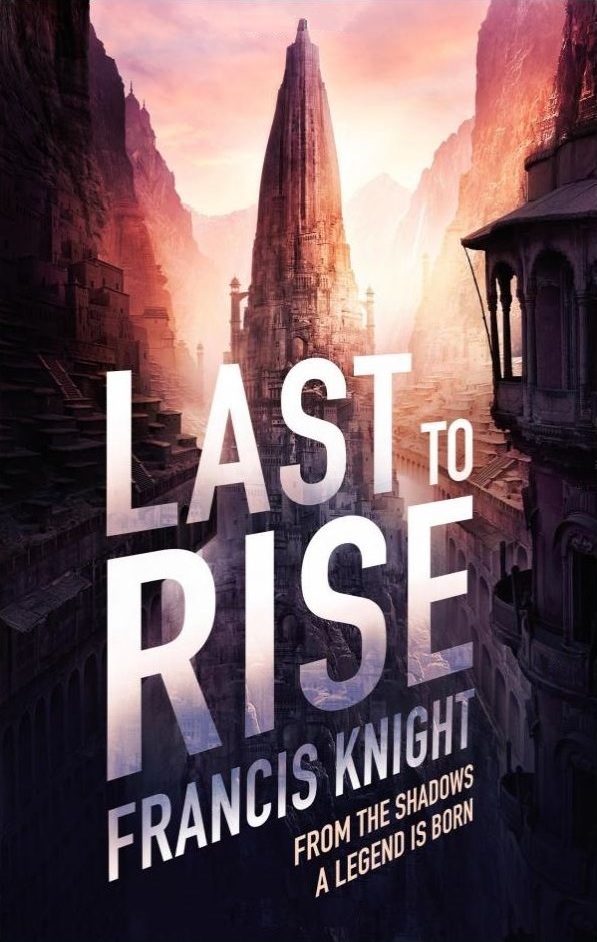
francis-knight-fade-to-black-small francis-knight-before-the-fall-small francis-knight-last-to-rise-small

I’m a sucker for a great setting, and Francis Knight’s Rojan Dizon trilogy — which takes places in a towering city built layer upon layer, ascending to dizzying heights and ancient, shadowy depths; a city in the grips of a strange magic system based on pain — has a great setting. Knight has used the city of Mahala, which Library Journal says “recalls the vibrant, urban-based fantasies of China Miéville, Jay Lake, and Glen Cook,” as the setting for a complex and ambitious fantasy noir trilogy. It was published in trade paperback by Orbit in 2013, and I’ve been picking up the entire series for a couple bucks each at online remainder outlets this month.

Fade to Black (349 pages, $14.99 in trade paperback, $9.99 digital, February 26, 2013)
Before the Fall (384 pages, $15 in trade paperback, $9.99 digital, June 18, 2013)
Last to Rise (351 pages, $15 in trade paperback, $9.99 digital, November 26, 2013)

All three covers are by Tim Byrne.

The trilogy grew in acclaim as it progressed. Kirkus Reviews called the opening volume “Intensely realized and gripping,” and Booklist said it was “powerfully written, with a beautifully realized dystopian world and some thoroughly engaging characters.” And Publishers Weekly praised the closing volume, saying “The series, which has grown in complexity since the beginning, reaches a profoundly moving conclusion that is both unexpected and entirely satisfying.”

Read More Read More

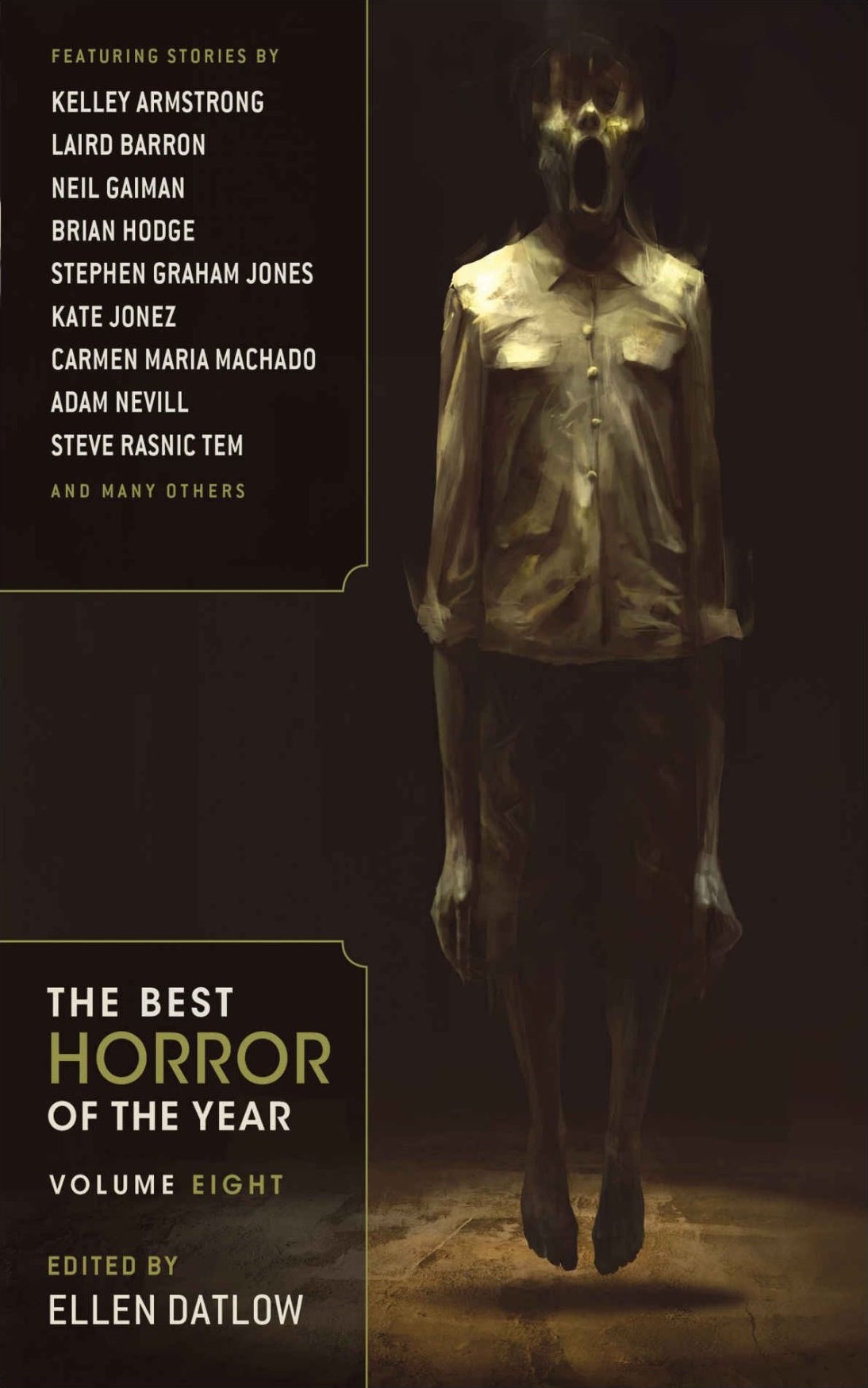
Reading Ellen Datlow’s The Best Horror of the Year, Volume Eight

Reading Ellen Datlow’s The Best Horror of the Year, Volume Eight

the-best-horror-of-the-year-volume-8-smallDespite me not being a horror writer (or much of a reader, or a movie watcher), it surprises me that about a quarter of my posts end up touching on horror in some way. That being said, I am trying to crack to horror code, to see what makes it work, mostly because I’d love to have additional tools in my writerly toolbelt, and partly because I just like to figure stuff out.

I recently finished reading Ellen Datlow’s The Best Horror of the Year, Volume 8 and thought I’d put my musings to paper (or electrons). In the interests of full disclosure, I appeared in her Best Horror of the Year, Volume 6 and may have gotten an honorable mention in Volume 2. That being said, I’ve got no other interest in this book — I just wanted to read the anthology and talk about it. Make of that what you will.

Now, it doesn’t take much of a definitional search to find the totally intuitive statement that horror fiction seeks to provoke shock, fear, repulsion or loathing. A bit more searching unearths the definition of weird fiction, the cousin of horror, which blends horror, fantasy and science fiction. I’m not trying to be academic or coy with my thoughts on Datlow’s 8th Best of the Year. This kind of grounding was necessary (for me) to fully take in what I was reading.

Why’s that? Ask most anthologists (or for that matter magazine editors who put 8-12 stories per month in an issue) what their concerns are, very often you’ll hear balance.

When I read a Gardner Dozois Year’s Best SF, I know he will balance space opera, with near future, with far future, with alternate history, with literary SF, with military SF, etc, etc. That is to say, like SF, horror has its own sub-genres and each one comes with its own conventions. You may be very disappointed if you read a literary SF story expecting to apply the conventions of military SF to your reading. I didn’t want my inexperience with the horror field to detract from my read of this year’s best.

Read More Read More

New Treasures: The Gates of Hell by Michael Livingston

New Treasures: The Gates of Hell by Michael Livingston

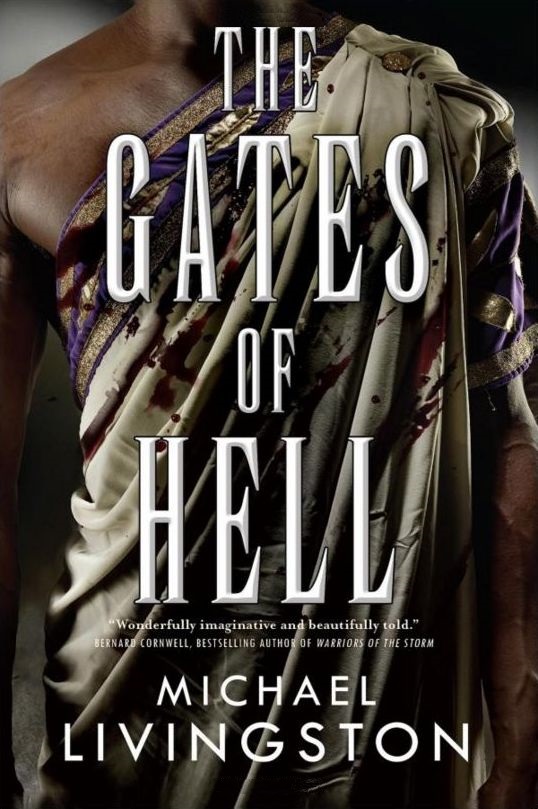
the-gates-of-hell-michael-livingston-smallMichael Livingston’s stories for Black Gate made him a favorite among our readers, so I was looking forward to seeing how the wider world would react to him with the publication of his first novel, The Shards of Heaven, a historical fantasy that reveals the hidden magic behind the history we know. I was not disappointed. Library Journal called it “Top-noth,” and bestselling writer Bernard Cornwell called it “A brilliant debut.” And Sam Reader at the B&N SF Blog gave it this rave review:

The Shards of Heaven is breathtaking in scope. With the first volume of a planned series intertwining Roman history and myth with Judeo-Christian mythology, Michael Livingston has created something truly epic… He uses real events and characters as the backbone for a truly inventive epic fantasy like novel, a massive undertaking that launches a tremendously ambitious series.

The Gates of Hell is second volume in the series; it’s available in hardcover from Tor on Tuesday.

Alexandria has fallen, and with it the great kingdom of Egypt. Cleopatra is dead. Her children are paraded through the streets in chains wrought of their mother’s golden treasures, and within a year all but one of them will be dead. Only her young daughter, Cleopatra Selene, survives to continue her quest for vengeance against Rome and its emperor, Augustus Caesar.

To show his strength, Augustus Caesar will go to war against the Cantabrians in northern Spain, and it isn’t long before he calls on Juba of Numidia, his adopted half-brother and the man whom Selene has been made to marry — but whom she has grown to love. The young couple journey to the Cantabrian frontier, where they learn that Caesar wants Juba so he can use the Trident of Poseidon to destroy his enemies. Perfidy and treachery abound. Juba’s love of Selene will cost him dearly in the epic fight, and the choices made may change the very fabric of the known world.

Michael Livingston’s most recent blog post for us was his 2015 article on the challenges of writing longer fiction.

Read More Read More

Saga’s The Starlit Wood Sings!

Saga’s The Starlit Wood Sings!

Hardcover: 400 pages (October 18, 2016)

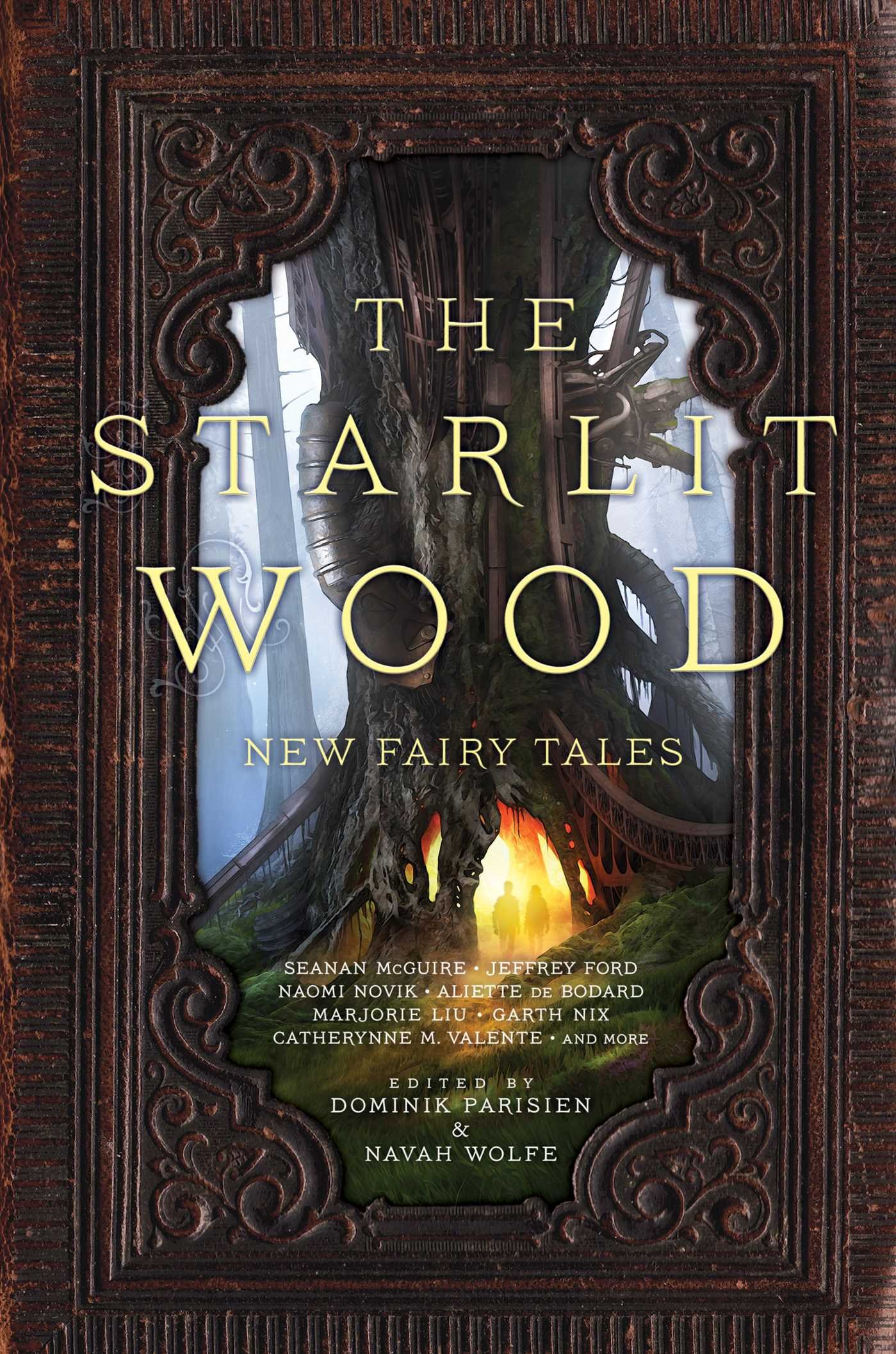
The Starlit Wood is an anthology of new fairy tales edited by Dominik Parisien and Navah Wolfe, and published by Saga Press.

It is, first of all, beautiful.

Beautiful to look at (just LOOK!), yes, but also to touch. So much care was poured into the initial aesthetics here; it is a book to fall in love with on sight. It has the appearance of both a very ancient — possibly magical — tome in a wizard’s tower, and of a peculiar stained glass window.

Is the image in the glass a tree that is also a doorway? Or is it that, on the other side of the window, there is a tree that is a doorway? And through that doorway, gold and flame.

The people who will love this book will love it before opening it, for the cover keeps its promises.

It begins with the Introduction. They wanted, wrote editors Wolfe and Parisien, for their authors to “move beyond the woods” of a traditional fairy tale. Now, in some stories this means “removing a piece traditionally viewed as integral to the story,” and in others, “putting a character as geographically far as possible from his or her original setting, as Little Red Riding Hood in the desert.” Perhaps most exciting of all (to me, anyway), it still other stories it means “exploring lesser-known or even newly discovered fairy tales.”

What they invite you into — that doorway through the tree, into flame? — is “an adventure that’s strangely familiar, and startlingly different.” And like the cover’s promises, Wolfe and Parisien make good their welcome.

Read More Read More

The Grim Repercussions of Brotherly Love: Cornelia Funke’s The Petrified Flesh

The Grim Repercussions of Brotherly Love: Cornelia Funke’s The Petrified Flesh

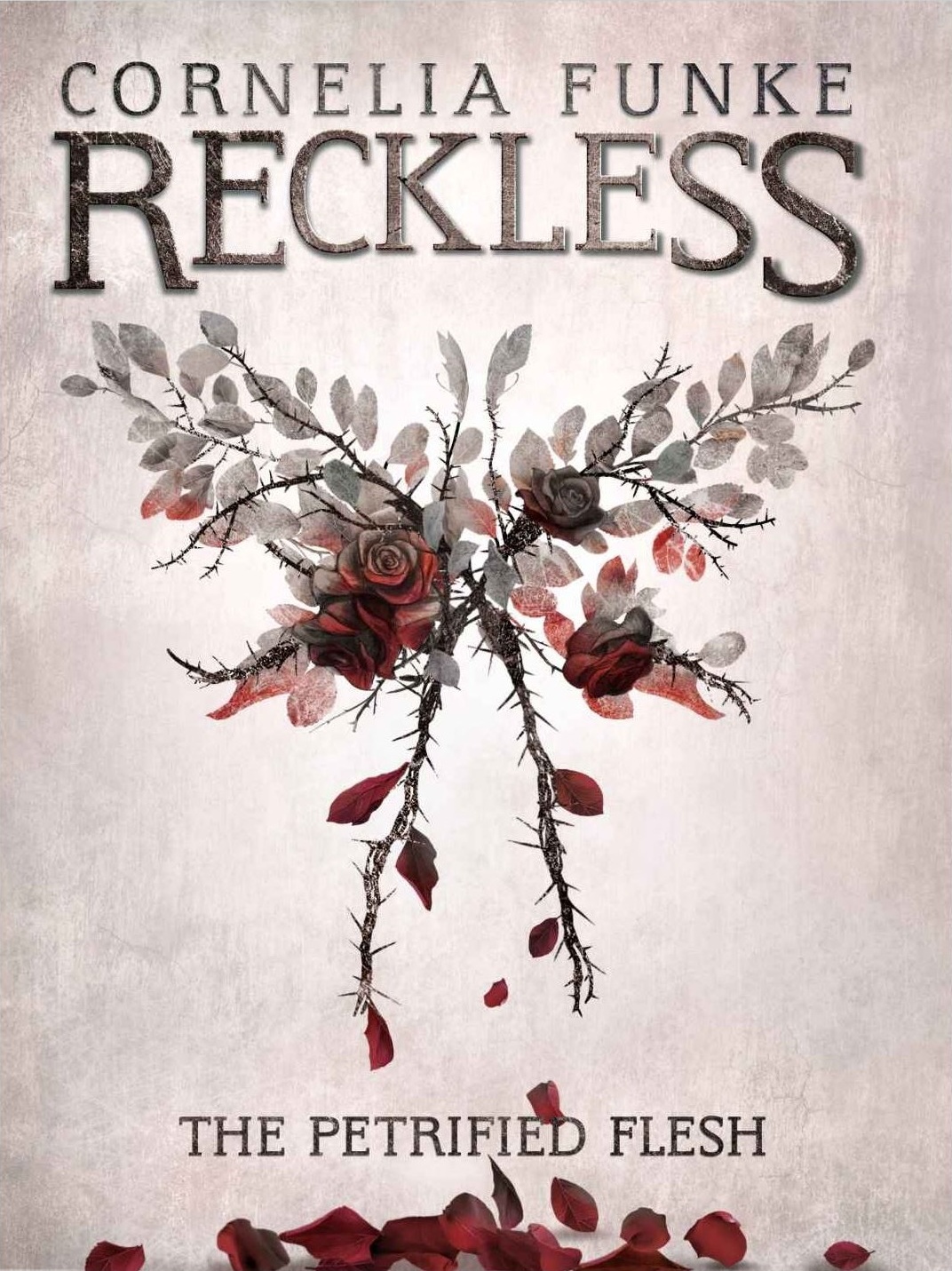
reckless-the-petrified-flesh-smallAs you plunge into the into the depths of The Petrified Flesh, Cornelia Funke’s newly revised and updated first volume of her Mirrorworld trilogy, you start noticing things. Like that the two protagonists are named Jacob and Will and that they’re brothers with an undying love for one another. Unfortunately, that love has been thwarted by Jacob, the older of the two. For much of the time, he journeys through a treacherous and magical world which he inhabits with the help of a mirror located in their father’s study.

A shapeshifting vixen named Fox accompanies him on his journeys. His mother dies during one of his long forays into the world their father began calling home. When Will and his girlfriend, Clara, decide to follow Jacob into the unknown, a notorious Dark Fairy captures Will and leads Jacob’s band of friends into a perilous landscape conjured from the bubbling cauldrons of fairy tales. All the while, Jacob wrestles with his guilt over making his brother go through the same agonizing separation that he and his friends experience.

Funke does a masterful job at embedding her characters’ dark inner conflicts into the story. We feel for Jacob as he ruminates over his abandonment of his mother and brother. We feel for Fox, his shapeshifting companion, as she suffers through the agony of realizing she loves Jacob, while knowing he has nothing tying him down to her world. And we feel for Clara, who has her boyfriend torn away from her by a fearfully beautiful fairy for reasons beyond her comprehension. The fairy transforms Will into a jade goyl, which petrifies his flesh. The stone creature comes from a fairy tale, many of which are nestled into the story.

Fairy tale lovers will relish the generous references to beloved stories and the appearance of their characters. That the plot moves in the manner of a gorgeously realized fairy tale will not go unnoticed, either. Issues bigger than thwarted romance and revenge, such as prejudice, appear as well. The goyl and their struggle against humans comes off the page with a refreshing intensity and authenticity.

Read More Read More