Browsed by
Category: Blog Entry

William Goldman’s Hollywood Adventures

William Goldman’s Hollywood Adventures

Goldman_PrincessBrideEDITED

Today, I’m going to take a week off from A (Black) Gat in the Hand. And no, not to dust off The Public Life of Sherlock Holmes. I constantly read. Often related to my weekly column here at Black Gate. A thousand words every Monday morning takes some research. And I like to ‘read now’ to start future projects. And I read ‘how to’ books to try and bolster my fledgling attempts at writing fiction. And I do Bible study. So, I don’t read ‘just to read’ that much these days. Which is fine. I like reading the stuff I do. But sometimes, I just want to pull something off of the shelves solely for enjoyment’s sake. And it’s often something which I’ve read before.

I read two books just for fun last week. And since a big part of why I write for Black Gate is to introduce people to things I think they might be interested in, I’m going to talk about those two books. William Goldman, who passed away in 2018, was a very successful screenwriter (that’s short for ‘screenplay writer’ – Nero Wolfe would not approve!). Harper, Butch Cassidy and the Sundance Kid, All the President’s Men, Marathon Man, A Bridge Too Far, Misery, Maverick, Absolute Power: the guy knew what he was doing. And he was a novelist first – not only did he write the screenplay for The Princess Bride, he adapted it from his own novel.

In 1983, Goldman published the best-selling Adventures in the Screen Trade. It is simply a FANTASTIC book. It is an honest, compelling memoir from a Hollywood insider who remained an outsider (he never lived in California. He would go there to work, but he always returned to NYC). And the book contains insights into screenwriting, as well. I read it about twenty years ago when I decided to teach myself how to write screenplays (I’ve written a couple. That’s all we need to say about that). I really liked it.

And last week, re-reading it, I liked it even more. In 2000, there was a followup: Which Lie Did I Tell?. And it is also a fun, absorbing read. Anybody who enjoys movies should read these books.

Goldman was sure The Great Waldo Pepper was going to be huge. And as he’s sitting in a screening, he realizes why it didn’t fly (see what I did there? Helps if you actually saw the movie). He dishes the inside scoop on the battle over the hobbling scene in Misery (if you haven’t read King’s story, the source material is brutal). We learn that Clint Eastwood stood in line to get his lunch at the cafeteria while filming and producing Absolute Power. Just like a normal person. Goldman explains why he walked out on The Right Stuff (the only time he quit a project).

Read More Read More

Rogue Blades Author: 1975: The Year of the Cormac

Rogue Blades Author: 1975: The Year of the Cormac

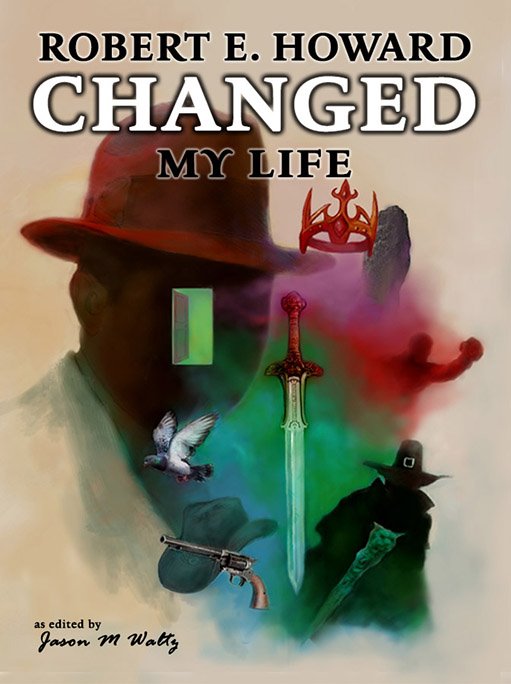
Howard changed my lifeThe following is an excerpt from Keith J. Taylor’s essay for Robert E. Howard Changed My Life, an upcoming book from the Rogue Blades Foundation.

It has often been said that Robert E. Howard’s main heroes were largely cut to the same pattern — tall, powerful Gaels or proto-Gaels, black-haired, blue-eyed, mighty in combat, scowling and somber. Conan himself fits that description, as does Kull of Atlantis, Turlogh Dubh O’Brien, the less-than-idealistic Norman-Irish crusader Cormac FitzGeoffrey — and Cormac Mac Art, though the latter has “narrow eyes of a cold steel-grey” rather than blue ones.

There are other types, certainly. James Allison’s former incarnations are all Nordic. Bran Mak Morn, the dark, compact Pict committed to a losing fight for his people, is of Mediterranean race. Solomon Kane, though he has black hair and pale, icy eyes, is not particularly Celtic.

The black-haired, blue-eyed Gaels, much alike as they are physically, show greater variation in character and personality than they sometimes receive credit for. Kull seems asexual (“He had never been a lover”) and although a great fighter, he often broods on the nature of existence and reality, the difference between appearance and what truly is, even whether anything truly is.

Conan is decidedly not asexual! His interest in lovely women is active and frequent. Nor is he concerned with the difference between seeming and reality. “If life is illusion, I am no less an illusion, and so it is real to me,” he says to Bêlit, and leaves it at that, untroubled. Although, like Kull, he becomes a king who was once an outlaw barbarian, he does not constantly feel like a misfit in the civilized kingdom he rules, and even acquires a sense of responsibility and loyalty to his adopted land. Turlogh O’Brien, who flourishes in the early 11th century after the battle of Clontarf, doesn’t have much of a love life, but then he spends most of his time as an outcast from his clan, fighting for bare survival, outlawed on false charges. Nevertheless, he remains loyal to his people when, for instance, one of them is kidnapped by Vikings — for whom he feels an “almost insane hatred.”

Read More Read More

A (Black) Gat in the Hand: Steven H Silver Asks ‘Can You Name This Hardboiled Flick?’

A (Black) Gat in the Hand: Steven H Silver Asks ‘Can You Name This Hardboiled Flick?’

SilverMarx_Todd2EDITEDA hallmark of my success here at Black Gate has been to get other writers, with actual talent, to write for my column. I accomplish that feat again today as fellow Black Gater Steven H Silver takes a look at a classic film and gives it a hardboiled review. You may not immediately guess what film he’s looking at, although I’d bet you’ve heard of it before. Take it away, Steven!

I’m going to look at one of the stranger “Gat” films. With action taking place in a variety of places, ranging from a state room on an ocean liner to a swanky long island party to a rousing conclusion in a barn.

Rockliffe Fellows plays “Big Joe” Helton, an older mob boss who is returned from Europe aboard an ocean liner with his daughter, Mary, played by Ruth Hall. Also on board the ship is Alky Briggs, played by Harry Woods, Briggs is accompanied by his wife, Lucille, portrayed by Thelma Todd, right at the midpoint of her career. Oddly enough, aside from these women, both of these men seem to be traveling without any members of their gangs, although they both are able to rectify that oversight.

We’re first introduced to Briggs in his cabin, where his wife, Lucille is complaining that he has been ignoring her on the voyage. Briggs makes it clear that he isn’t making a play for any other woman, rather his purpose for being on the ship is because he has determined that being alone on the ocean is the perfect time to attempt to muscle in on Helton’s territory. Here is a huge difference between Lucille’s language and Briggs. The writers have given Thelma Todd natural dialogue and she delivers it well. Briggs’ lines are written almost as a parody of a movie gangster, with no recognition that he and Lucille are in an actual relationship and Woods delivers them in a such a stereotypical manner that the only conclusion a viewer can have is that he’s decided to play tough-guy Briggs as a satire.

Read More Read More

Today is Jack Vance’s 104th Birthday

Today is Jack Vance’s 104th Birthday

Jack Vance-smallToday, just 104 years ago, Jack Vance was born in San Francisco. Or, actually, John Holbrook Vance. He grew up to live on a farm, suddenly become almost destitute and have to leave junior college, work in a cannery, as a bellhop and on a gold dredge. Later, at UC Berkeley, he studied mining engineering, physics, journalism and English, and wrote his first science fiction stories. Still later, he worked as an electrician in the naval yards at Pearl Harbor, but left a month before the Japanese attack. During the war he worked as a rigger and a merchant seaman, after faking his eyesight test. A jazz musician, a carpenter, a surveyor and a ceramicist he was a sailor throughout life, building his own boats and dreaming of vast oceans and rivers on distant planets.

He began publishing science fiction in 1945, had his breakthrough with The Dying Earth in 1950, became a staff writer for the Captain Video TV show in 1952, had further breakthroughs when his first crime novel under his own name, The Man in the Cage, had a 1961 Edgar Award for best first novel, and again when his novellas “The Dragon Masters” and “The Last Castle” won Hugos and Nebulas in 1963 and 1966. But his real and lasting breakthrough was as one of the finest, most bitingly satirical and ironic, most stylistically intransigent and most unforgettably original science fiction (and, by all means, also fantasy) authors of the 20th century.

In 1976 I and Per Insulander, who co-chaired that year’s Swedish national SF convention, invited Jack to be our guest of honor. He accepted, stayed for a week in Stockholm, and called us his friends; I think we were. A year later we sailed with him in San Francisco bay and stayed at his house in Oakland; for many years, I kept in touch with him and continued to publish him in Sweden. When Jack grew almost totally blind in the 1990s, he kept writing. If you haven’t already read his work, you must. It is sui generis; nobody else has written science fiction as Jack did, and you either love it or just can’t see what he was doing. Nobody else has written science fiction that to the same extent bares our souls, satirizes our most cherished idiocies, heckles the hypocrisies and nonsensicalities of our religions, social codes, moral codes and pointless squabbles. Read the five novels in his Demon Princes series; read his wonderful and absurd Tschai novels (published in the US as the Planet of Adventure books); read his subversive Lyonesse fantasy trilogy; read him. Thanks to his son, John Vance, all of Jack’s books are in print. I hope they remain so. Jack Vance was a writer for the ages, and of the enlightenment.

Jack died on May 26, 2013. I mourn him still, but more importantly I still read him. So should you.

Fans Can Be Scary

Fans Can Be Scary

fantasy-2847724_1920

They’re watching. Always watching. Image by Stefan Keller from Pixabay

Good morning!

I hope you’re all well, given how everything is still, well, 2020. I’m writing this rather hesitantly, for many reasons (not least of all because I promised at the end of my last post that I would stop publicly obsessing about InuYahsa, and this is the only other topic I had on my list), but I do feel like this is something worth discussing.

I am an unknown author, I’m sure you’re sick of me saying so, and I bemoan the fact a little too often, if I’m honest with myself. Sorry about that. I would love to be widely read and have my books celebrated, hell, even discussed! I mean, obviously. That is the dream of every writer. Yet, I balk at the idea of becoming famous. I don’t ever want to be famous. My books? Sure! Me? Absolutely not. Fame is terrifying, and the thought of being recognized while I’m going about my business on any given day turns my stomach and cranks my anxiety up to eleven. When I hear stories from others about what their life is like after celebrity, the fear sharply intensifies. When I hear stories about what fandoms have done to creators for perceived miss-steps, I want to burn my entire ambition to the ground and retire to the country to embroider and milk cows.

Okay, I would retire to the country to embroider and milk cows… and ride horses… and open a martial arts school… if my books got big and I ever acquired any kind of wealth. That’s kinda my dream. Not the point!

Read More Read More

A (Black) Gat in the Hand: Talking about Philip Marlowe

A (Black) Gat in the Hand: Talking about Philip Marlowe

Marlowe_MitchumLovely2EDITED

“You’re the second guy I’ve met within hours who seems to think a gat in the hand means a world by the tail.” – Phillip Marlowe in Raymond Chandler’s The Big Sleep

(Gat — Prohibition Era termsp for a gun. Shortened version of Gatling Gun)

I got in a bit of a Philip Marlowe mood when I wrote that A (Black) Gat in the Hand post on Powers Boothe’s excellent HBO series a few months ago. Now, I normally did pretty deep when I pick a subject for a Black Gate post. Which is why more than one never actually gets written. Yet, anyways. I’m going to try a different tack and write less in-depth on several different Marlowe projects. We’ll see how that goes.

Robert Mitchum’s Farewell My Lovely.

In 1975, two years after Eliot Gould’s The Long Goodbye (which I do NOT like), Mitchum was an older, world-weary Philip Marlowe. In 1978, he followed it up with The Big Sleep. It was a mess and his first movie as Marlowe is definitely the better of the two.

I’ve not been much of a fan of his Marlowe . It’s a combination of his age, and him seeming too stiff. Kinda like watching Charlton Heston play Sherlock Holmes in Crucifer of Blood (which isn’t actually too bad, overall). Re-watching Farewell My Lovely on WatchTCM, I did like him a bit better this time. I think his voice-over narration is the strength of his performance.

Charlotte Rampling is Velma/Mrs. Grayle. She played Irene Adler opposite Roger Moore in Sherlock Holmes in New York. And she was a regular for season two of Broadchurch a couple years ago. Velma’s inner nature really comes through in the showdown on the boat.

Jack O’Halloran plays Moose Malloy. Now, I have a hard time picturing anybody being Moose Malloy better than Mike Mazurki was in 1944’s Murder My Sweet. But O’Halloran is pretty darn good. He went on to be Emil Muzz, the goon in the Tom Hanks/Dan Akroyd Dragnet (which I love). He also played villain Non in Christopher Reeve’s first two Superman movies.

Read More Read More

Rogue Blades presents: In Defense of the Heroic

Rogue Blades presents: In Defense of the Heroic

henry david thoreau
Henry David Thoreau

This article originally appeared last year on the Rogue Blades Web site, but I thought readers of Black Gate would appreciate it.

“The heroic books, even if printed in the character of our mother tongue, will always be in a language dead to degenerate times…”

Henry David Thoreau wrote those words in the mid-19th Century for his distinguished book, Walden. They rang true then and they ring true today. Of course there will be those who say we do not live in degenerate times, that we live in the greatest of all ages, that our technological and social achievements are pressing us towards some utopia, but those who are true students of history and have open eyes might argue otherwise, or at least they might hold more than a little skepticism about the potential greatness of the immediate future.

Whether or not we live in a degenerate age, we are in need heroes more than ever. The Thoreau quote above concerns heroic books and not specifically heroic individuals, but I still believe it is appropriate to our current age.

But why do we need heroes? What do they bring to the table? After all, haven’t we shattered the myths of all our heroes from the past? Haven’t we discovered all the dirty little secrets about our real-world heroes? Haven’t we become so modern and avant-garde that the very idea of a fictional hero is quaint? Was not Tina Turner correct in her 1985 hit song, “We Don’t Need Another Hero?”

Read More Read More

Fantasia 2020, Part I: Introduction and Preview

Fantasia 2020, Part I: Introduction and Preview

Fantasia 2020Usually by this point in the year I’ve begun posting reviews of films I saw earlier in the summer at Montreal’s Fantasia International Film Festival. Here as elsewhere, things are different in 2020. When the coronavirus pandemic hit, Fantasia was postponed to the end of August. It looked like this year’s Festival was in danger of not happening at all. But the wonderful and dedicated people behind Fantasia have made it work; the 24th edition of Fantasia begins today and runs through September 2, with no theatrical showings but over 100 feature films streamed online.

That’s a lot of movies, a bit less than the 130 or so features Fantasia usually hosts, but a lot more than you might expect under the circumstances. Last year’s Toronto International Film Festival had 245 feature-length films; this year’s will have 50. So the amount of movies at Fantasia suggests a lot of work by the organisers, as well as a healthy level of activity in genre film production worldwide.

Some of the movies at Fantasia are scheduled to play at specific times, while a number of others are available on demand at any point during the festival. Anyone in Canada can buy a ticket to a movie at this year’s Fantasia for CAN$8. Rights issues mean the films have to be geolocked to Canada — but the festival’s also hosting special events available free worldwide to anyone who wants to watch them, including a masterclass with John Carpenter, a presentation on Afrofuturism, and a panel in resistance in folk horror.

Usually when I write about Fantasia I try to get across the experience of being at a film festival. There’ll be less of that in 2020, though I do want to reflect on how different I find the feel of this year. (Will horror films be less overwhelming on the small screen, or more threatening because they’ve invaded my home?) I don’t really know what it’ll be like. But I’m eager to find out.

Find the rest of my Fantasia coverage from this and previous years here!


Matthew David Surridge is the author of “The Word of Azrael,” from Black Gate 14. You can buy collections of his essays on fantasy novels here and here. His Patreon, hosting a short fiction project based around the lore within a Victorian Book of Days, is here. You can find him on Facebook, or follow his Twitter account, Fell_Gard.

A (Black) Gat in the Hand: Norbert Davis’ ‘Have One on the House’

A (Black) Gat in the Hand: Norbert Davis’ ‘Have One on the House’

DimeDetective_March1942EDITED“You’re the second guy I’ve met within hours who seems to think a gat in the hand means a world by the tail.” – Phillip Marlowe in Raymond Chandler’s The Big Sleep

(Gat — Prohibition Era termsp for a gun. Shortened version of Gatling Gun)

I’ve said many times that Norbert Davis is on my Hardboiled Mt. Rushmore. He’s not the first face carved in hardboiled stone, but he’s one of only four that are. Max Latin is my favorite Davis character, and he appeared in five issues of Dime Detective. There were five Benjamin Martin stories – all in Detective Tales. It was William (Bail Bond) Dodd that was Davis’ frequently recurring character. There were eight stories in Dime Detective between February, 1940 through December, 1943.

Dodd is a physically unprepossessing bail bondsman. He doesn’t actively seek out trouble. You can’t even call his adventures cases. “Have one on the House” was in the March, 1942 issue of Dime Detective. That issue also included a Steve Midnight story from John K. Butler. Midnight was a broke former playboy who found adventures as a night shift cabbie. There was also a Bookie Barnes story from Robert Reeves. Reeves broke into Black Mask in 1940 at the age of 28. He was serving with a bomber unit in the Philippines when he died in 1945, only one month before the war ended. He had continued to write while in the service. His budding career was cut tragically short.

Back to Dodd! Norbert Davis is remembered as perhaps the best at screwball hardboiled. However, then and now, that carries a stigma and he is generally dismissed because of it. And it’s both inaccurate and unfair. He could write straight hardboiled, like “The Red Goose,” which Raymond Chandler praised as influencing him when he decided to become a writer. But what Davis did so well was inject humor into his hardboiled stories, without overwhelming them with it. That’s the case with the Bail-Bond Dodd stories. It’s not that the characters are funny – it’s the situations that Dodd (and his assistant, Meekins) find themselves in.

Read More Read More

A (Black) Gat in the Hand: Norbert Davis’ Don’t You Cry for Me’

A (Black) Gat in the Hand: Norbert Davis’ Don’t You Cry for Me’

Davis_Don'tCry“You’re the second guy I’ve met within hours who seems to think a gat in the hand means a world by the tail.” – Phillip Marlowe in Raymond Chandler’s The Big Sleep

(Gat — Prohibition Era term for a gun. Shortened version of Gatling Gun)

On my Hardboiled Mount Rushmore, it’s Dashiell Hammett, Frederick Nebel, and then Norbert Davis. The fourth spot is a bit fluid, though the Jo Gar series often has Raoul Whitfield in that fourth spot. But today, we’re going to look at a Davis short story.

Davis was in law school at Stanford when he wrote his first story and sent it to Joe ‘Cap’ Shaw, the legendary editor of Black Mask. It was accepted, and by the time he graduated law school, he was successfully writing for the pulps. In fact, he was doing so well, he never sat for the bar, and spent the rest of his life as a writer, moving from the pulps to the higher-paying slicks. Sadly, took his own life at only the age of 40.

I’ve already written an essay on his Ben Shaley stories, which constituted two of the five Davis tales Shaw printed in Black Mask under his watch. After Shaw left, Davis appeared in Black Mask eight more times. I’m working on what I hope will be THE definitive essay on his Max Latin stories. I absolutely love that five-story series. They’re fantastic.

Between May 1942 and May 1943, Black Mask ran three stories featuring John Collins. Collins was a piano player who had done some investigation work on the side in Europe before World War II. “Don’t You Cry for Me” was the first of the three stories.
Picking Iron (trivia) – In May, 1942, Give the Devil His Due” ran in Dime Detective.

Of course, America was drawn into World War II on December 7, 1941.The story blurb for this one reads, “The brawny piano-player had had his run-ins with the ghoulish Gestapo in the beer halls of Europe, but when he promised Myra Martin’s mother to find the girl in the Mecca of the movie-struck, he ran foul of a plot as fantastic as any Hitler pipe-dream.” Pulp magazines used bombast long before Donald Trump did.

“John Collins was playing the Beale Street Blues and playing it soft and sad because that was the way he felt. The notes dripped through the dimness of the room like molasses and provided an appropriate accompaniment to his thoughts. He had a hangover.”

Read More Read More