Browsed by
Category: BG Staff

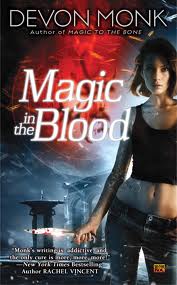
Charlene Brusso Reviews Magic in the Blood

Charlene Brusso Reviews Magic in the Blood

magic-in-the-bloodMagic in the Blood
Devon Monk
Roc (360 pp, $6.99, May 2009)
Reviewed By Charlene Brusso

Urban fantasy walks a fine line between engaging the reader with magic that feels real, while operating in a gritty modern setting that seems as far from magical as possible. Devon Monk’s series (starting with Magic to the Bone) is set in gray, yet somehow inviting, Portland, Oregon, offering many repurposed old buildings, and lots of colorful characters in addition to the incessant rain.

Our heroine, Allie Beckstrom, is a Hound, a magically gifted person who can sniff out the caster of any spell: really sniff, that is. Hounding can be a good way to make a living, but magic has its price since “using magic means it uses you back.” Cast a spell without deflecting the painful backwash means aches, pains, exhaustion, and worse, depending on the strength of the spell. There are rules. Legally, spells can only be cast on a person with their consent. And “Offloading” the bad side effects of magic onto another is strictly forbidden.

Read More Read More

A Critical Appreciation of James Enge

A Critical Appreciation of James Enge

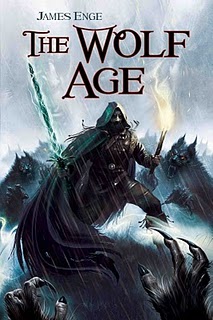
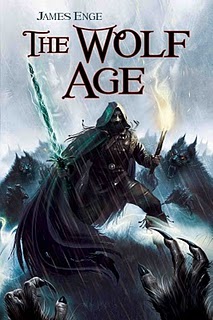
thewolfageNo sooner does our man James Enge — World Fantasy Award-nominated author, Black Gate blogger, and international man of mystery — appear on the scene with his third novel The Wolf Age, than Western Civilization finally begins to acknowledge his genius. The latest accolades are courtesy of John H. Stevens at SF Signal:

Enge has described in his Black Gate interview how he “took a big hammer” and smashed away at Morlock to transform him from a “mopey Byronic wish-fulfillment self-image” into a more flawed character. He did this to a large extent to get away from what he saw as the “wish-fulfillment” in much of fantasy fiction. But after reading Enge’s work it is clear that he has continued hammering away at fantasy to bend it into spooky and unconventional shapes…

His third novel has a richer texture to its plot, and this makes it the most enjoyable, and in some ways the most profound, of his major works to date… There is a surer hand at work here, and a smoother progress in the story than in the first two novels.

Stevens links to much of the recent coverage of James, and includes what is already my favorite quote of the year, from an interview with James at Civilian Reader:

I like Zelazny’s description of his masterwork, the original Amber series: ‘a philosophical romance shot through with elements of horror and morbidity.’ That’s what I try to write: philorohorrmorbmance.

Sample chapters from The Wolf Age are available here.

The complete Critical Appreciation of James Enge is available here.

Bud Webster Joins Black Gate as Poetry Editor

Bud Webster Joins Black Gate as Poetry Editor

bud-websterGenre historian and poet Bud Webster, author of Anthopology 101, joins the Black Gate team as our first poetry editor, effective immediately.

Bud Webster is a prize-winning epic poet, and served as poetry editor for the online magazine HELIX SF. During his tenure there, eight of the poems he published were nominated for the Rhysling Award, with one taking first place in the Long Poem category. He was co-editor of SFPA founder Suzette Hadin Elgin’s The Science Fiction Poetry Handbook (Sam’s Dot Publishing, 2005), and has been nominated for the Rhysling himself a couple of times.

Bud has gained considerable renown over the past decade for his Past Masters columns, examining and promoting the work of some the finest of science fiction and fantasy authors of the 20th Century. He continues that theme with his Who? columns for the print edition of Black Gate magazine. The first Who? column, on author Tom Reamy, appears in the upcoming Black Gate 15.

Bud’s first online article for us was What I Do and Why I Do It in December of last year; his most recent was What I Do It With. His enthusiasm for — and encyclopedic knowledge of — classic SF and fantasy, and the tireless energy with which he promotes neglected authors, are a welcome addition to the Black Gate team.

Bud will be purchasing 6-10 original fantasy poems for each issue of Black Gate magazine. The first issue to feature his selections will be BG 16.

For a complete list of the folks responsible for Black Gate, visit our Staff Page.

A Talk with Amal El-Mohtar

A Talk with Amal El-Mohtar

bghoneyWhen you taste honey, do you think of ravenfolk, the wicked and the lovely? Do you find sex, death and trickery on your tongue? Ms. Amal El-Mohtar does. Amal was given 28 vials of honey. She tasted one vial per day over the course of one month and wrote down her impressions – some days in prose, others in poetry. These writings have been published as The Honey Month.

Seriously, you should buy the book for “Day 27: Leatherwood Honey” alone. It made me gasp. Never mind “Day 11: Blackberry Honey” wherein the universe reminded me what it’s like to have a poem bust open a heart ventricle and fill it with breath-catching melancholy.

Black Gate found Amal wandering in our godswood. We yelled, “HALT, TRESPASSER!” not knowing who she was. As we ran at her ready to tackle, she pulled an ancient blade from behind her back and, well, hmm, embarrassing though it be, we were unarmed. As it’s our swindling nature to distract folks with words we sat down and began to ask her questions. Ms. El-Mohtar very kindly answered these instead of chopping off our heads and we forgave her for trespassing in our godswood.

Here is our chat with Amal El-Mohtar:

Read More Read More

Cloning Mammoths — Will Neanderthals be Next? (We hope so)

Cloning Mammoths — Will Neanderthals be Next? (We hope so)

hey-a-mammothCNN is reporting that a team of Japanese, Russian and American scientists are attempting to clone a mammoth, an extinct beast from the ice age. Apparently, they’ve achieved recent breakthroughs by combining the genetic code of an elephant with the DNA of a shag carpet. The researchers hope to produce their little cloned bundle of joy within six years, which is just about as long as it took my wife Alice and I to produce a baby (if you count the three years it took to convince her to go out with me).

Mammoths are big.  Big big big. Hence, the name “mammoth.” The word comes from the Russian mamont, meaning “humongous,” or something like that. Probably. Anyway, Wikipedia reports the largest known species reached heights of 16 feet at the shoulder, and may have exceeded 12 tons. That’s four times as much as my Uncle Phil’s Hummer. Wherever they’re doing the cloning, I hope it has vaulted ceilings.  And maybe a fenced yard, so the little tyke can go outside to do his business.

Incredibly, Wikipedia also reports an 11-foot long mammoth tusk was discovered north of Lincoln, Illinois in 2005, about three hours from where I live. Can you get enough DNA to clone something from a tusk? [Hey Alice — road trip!!]

Contrary to everything I learned in eighth grade, mammoths are not dinosaurs. They’re giant gorilla elephants. They’re also mammals, like that other famous extinct not-a-dinosaur, the saber-tooth tiger.  Scientists have chosen to clone the mammoth first, rather than the saber-tooth tiger or the Tyrannosaurus Rex, because they’re unimaginative losers.

As every well-read science fiction fan knows, cloning mammoths is just the first step on the slippery slope towards cloning people, cloning cats, Clone Wars, and the inevitable zombie apocalypse. I hope that in the interim, we get around to cloning Neanderthals. Because let’s face it — that’s what cloning is for.

Feature Excerpt: Rich Horton’s “Back to the Future: Modern Reprints of Classic Fantasy”

Feature Excerpt: Rich Horton’s “Back to the Future: Modern Reprints of Classic Fantasy”

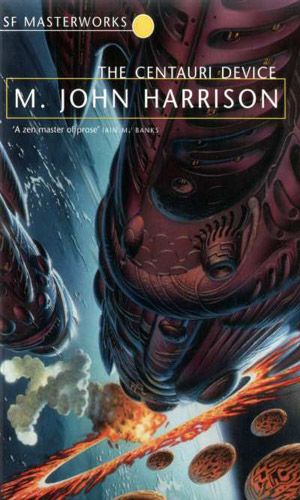
centaurideviceContributing Editor and SF historian Rich Horton’s article for Black Gate 14 was on modern reprints of the best in classic fantasy and science fiction:

Orion, via their imprints Millennium and later Gollancz, took a different tack in keeping important SF in print. The SF Masterworks series, beginning in 1999, undertook to reprint the very best science fiction novels of the past century or so… a couple of story collections slipped in, including most significantly (to my mind) The Rediscovery of Man, by Cordwainer Smith, the complete stories of one of the oddest and most intriguing SF writers ever. Other interesting works… include what may be Jack Vance’s best singleton novel, Emphyrio; M. John Harrison’s cynical take on Space Opera, The Centauri Device; Michael Moorock’s colorful and louche science fantasy, The Dancers at the End of Time (always my personal favorite among his works); one of the most significant works from Russia: Roadside Picnic, by Arkady and Boris Strugatsky; and the complete “Roderick” novels by John Sladek, brilliant satire from one of the field’s best and darkest satirists.

As we wrap up the Sneak Preview of the massive 14th issue of Black Gate we’ve posted a lengthy excerpt from Rich’s article, in which he covers titles from Baen Books, the SF and Fantasy Masterworks lines from Orion, the Science Fiction Book Club, Wildside Press, and NESFA Press.

Rich’s previous feature articles for us include “Fictional Losses: Neglected Stories From the SF Magazines,” (Black Gate 11) “The Big Little SF Magazines of the 1970s,” (BG 10) and  “Building the Fantasy Canon: the Classic Anthologies of Genre Fantasy(BG 2).

The complete “Back to the Future: Modern Reprints of Classic Fantasy” appears in Black Gate 14.

C.S.E. Cooney promoted to Black Gate Website Editor

C.S.E. Cooney promoted to Black Gate Website Editor

claire-254Effective January 1st,  blogger and contributor C.S.E. Cooney has been promoted to Black Gate website editor.

C.S.E. (Claire) Cooney is one of the most talented new writers we’ve had the pleasure to be associated with. Her fiction and poetry have appeared in Clockwork Phoenix 3, Book of Dead Things, Subterranean magazine, Goblin Fruit, Ideomancer, Doorways, Strange Horizons, Mythic Delirium, and Apex, among many others, and her novella The Big Bah-Ha was recently published by Drollerie Press.

She has sold several long connected pieces to Black Gate, the first of which, “Godmother Lizard,” will appear in BG 16. Her short story “Braiding the Ghosts” was selected for inclusion in Rich Horton’s upcoming The Year’s Best Science Fiction & Fantasy 2011 Edition.

Claire’s first contribution to the BG blog was her review of Last of the Dragons in January, 2010. Since then her posts have been among the most popular features we’ve offered, including her 3-part examination of Fantasy in Metal, her detailed looks at Goblin Fruit and Ideomancer, and her lengthy interviews with S.J. Tucker, Gene Wolfe and Ysabeau Wilce.

For the last several months Claire has been coaxing and recruiting terrific new writers to the BG blog, including Mike Allen, Amal El-Mohtar, Magill Foote, Erik Amundsen, and others, and in October she assembled a crack team to create the first Epic Black Gate Trailer of AWESOMENESS! In between, she’s been editing behind the scenes, quietly helping other contributors get their articles posted, and generally cleaning up the place.

Claire’s enthusiasm and commitment have been infectious, and she’s brought a whole new level of energy to the Black Gate blog. We are pleased and extremely proud to have her as our new Website Editor.

For a complete list of the folks responsible for Black Gate, visit our Staff Page.

Solitaire Gaming

Solitaire Gaming

island-of-lost-spells
Another great adventure from Dark City Games.

I blame the whole thing on John O’Neill.

A few years back I asked him about the solo Dark City Games adventures that Andrew Zimmerman Jones and Todd McCaulty had reviewed so favorably for Black Gate. John happens to have a larger game collection than most game stores, so I’d come to the right person.

Solo games were great fun, John told me. “Here’s an extra copy of an old game you’ve never heard of that’s really cool. Go play it.”

That was Barbarian Prince. And yeah, it was pretty nifty (you can try it out yourself with a free download here, along with its sister solitaire product, Star Smuggler).

I started playing and enjoying the products created by Dark City Games, which the rest of the staff and I have continued to review for the magazine.

barbarian-prince3But what are these solitaire games like?

The most obvious analogy is to say that solitaire games are a little like computer adventure games played with paper, with dice and cards taking the place of a computer game’s invisible randomization of results.

My first thought was something along the lines of “how quaint,” but it turns out that while the play experiences are similar, the flavors are slightly different, even if playing them stimulates similar centers of the brain.

It’s like switching off orange pop to try some root beer, or vice versa. You may not drink one or the other exclusively, but they both sure are sweet on a hot day.

zulus-on-the-ramparts
"You mean your only plan is to stand behind a few feet of mealie bags and wait for the attack?"

While playing a solitaire game you may not see any computer graphics, but your imagination will paint some images for you.

And there’s the tactile pleasure of manipulating the counters and looking over the game board and flipping through the booklet and rolling the dice.

Solitaire in no way means that you will get the same game play each time, and to my surprise I’ve discovered that a well designed solo board game has better replay value than many computer games.

Read More Read More

“Jirel, Ma Joie!” (In Which I Encounter My First C.L. Moore)

“Jirel, Ma Joie!” (In Which I Encounter My First C.L. Moore)

jirel21Due to an unfortunate (or perhaps I should say, “fortuitous”) comment I let slip in an email, Howard Andrew Jones discovered I had no idea who C.L. Moore was.

My comment was something to the effect of, “C.L. Moore? What did he write?”

I met Howard in person once, about a billion years ago at World Fantasy in Saratoga Springs. I retain no clear picture of him in my head, except from images I’ve gleaned off of his Facebook profile page, but from his quick reply, I could so clearly see the bare patches on his skull where he had just torn out huge clumps of hair in rage and frustration.

But he was quite polite about it all.

In his email, he linked me right to Ryan Harvey’s thorough and passionate overview of Herself, Catherine Lucille Moore, Mighty Sorceress of the Pen, Queen Mother of the First Female Sword-Swinging Spit-Fire Protagonist in Fantasy and Science Fiction. This article I happily read, promising myself I would devour some C.L. Moore books the first chance I got!

And then I promptly forgot all about it.

But Howard Andrew Jones and John O’Neill, undaunted by my insouciance, both earnestly strove to further my education in this, our beloved genre. By hook, crook and conspiracy, they contrived to smuggle me a copy (through dangers untold and hardships unnumbered) of C.L. Moore’s Jirel of Joiry for my birthday.

Read More Read More

Portals: A Writer Blogs About Process

Portals: A Writer Blogs About Process

Dangerous Doorways
Dangerous Doorways

According to the powers that be, Black Gate will be publishing a trilogy of mine starting in the fall of this year (2011). Please note that I do not say “fantasy” stories, or “high fantasy” or “heroic fantasy” or “sword and sorcery,” although all apply, and accurately enough.

Indeed, precisely because those identifiers fit, my three stories, “The Trade,” “The Find,” and “The Keystone,” would find a poor welcome in almost any current venue except for Black Gate.

Why, then, do I chafe at these terms, and why do they cause me such angst as I dash toward the finish line of the novel, The Portal, that succeeds the stories?

If I must answer at all, let it be to say that I am, like Arlecchino in traditional commedia, the servant of two masters, and that these two masters are at war, they truly are. If I had to reduce them to their simplest, most essential forms, I would call the first Story and the second Style. The first is simple, direct, goal-oriented; the second is impulsive and flighty, the filigree on story’s solid cake. Both have value. Both, indeed, are essential for creating solid, timeless fiction.

Read More Read More