The Time is Out of Joint: The Silver Skull, A Review
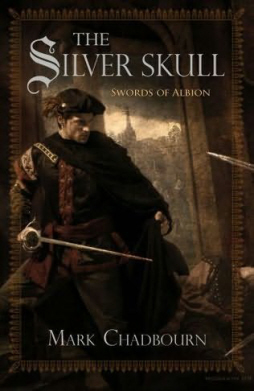 The Silver Skull is the first book in a new series by Mark Chadbourn, Swords of Albion, following the adventures of Will Swyfte, spy for Queen Elizabeth the First of England, as he fights a secret war against the faerie-folk of the Unseelie Court. That’s a brilliant hook for an ongoing series of adventure novels. And in fact Chadbourn’s new book is best described as modern-day pulp, with all the strengths and weaknesses that implies.
It’s a swashbuckling tale of adventure, filled with sword-fights, melodrama, action set-pieces, heroes, and villains. But its characters are flat and uninteresting. And, ultimately, its depiction of its setting is gravely disappointing.
Let’s look first at what the book does well. The plotting is strong and sure, and builds nicely through a series of action sequences. Tension is manipulated skillfully, and the staging of events is imaginative and clearly described. Chadbourn moves his story through a number of interesting places in the Elizabethan world, filling those places with cloak-and-dagger suspense, mysterious riddles, ancient Indiana-Jones-style deathtraps, and the like.
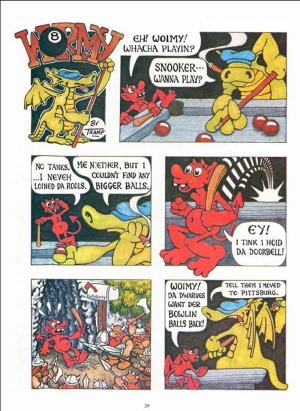 It begins with an imp, some dwarves, a stolen set of bowling balls, and a cigar-smoking dragon in a flat newsboy cap. It gets stranger from there, sprawling through an epic of long-jawed mudsuckers, oddly literate stonedrakes, bad puns, bounty hunters, and some of the most spectacular color comics pages you can imagine.
 In one of my first posts here, I mentioned that I was hoping to figure out what it is, exactly, that I like about fantasy fiction; what it is I get from fantasy that I get nowhere else.
 One of the characteristics of a great book is that you can go back to it at different times in your life and get different things out of it. But then sometimes the reverse happens: you read a book before you’re ready. If you’re lucky, though, the book hangs around in the back of your mind, and eventually you pick it up again and find out what you weren’t able to grasp the first time around.
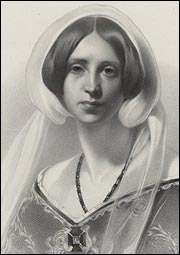 This is the fourth in a series of posts investigating the question of who wrote the first otherworld fantasy (you can find the first part
 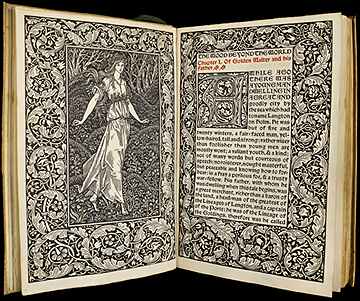 This is the third in a series of posts looking at the question of who wrote the first otherworld fantasy: that is, the first fantasy to be set entirely in its own fictional world, with no connection to conventional reality at all. It’s an innovation traditionally ascribed to William Morris, but I think I’ve found an earlier writer who deserves that honor.
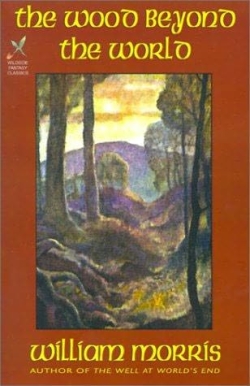 This is the second post in a series trying to answer what looks like a simple question: who wrote the first fantasy set entirely in another world? As I found in my
 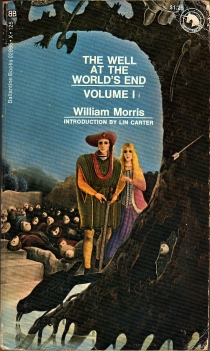 Who was the first person to write high fantasy?
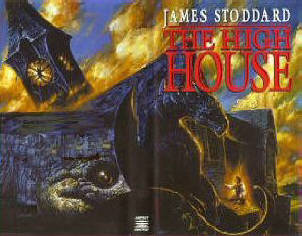 In 1998, American writer James Stoddard published his debut novel, The High House, and two years later followed it with a sequel, The False House. They’re two of the more remarkable fantasies I know.
 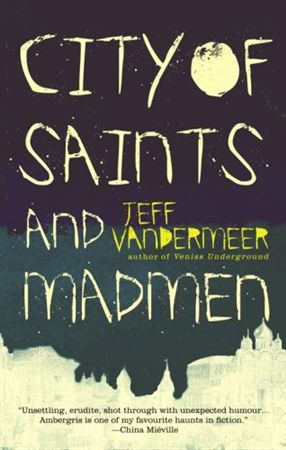 I don’t know what makes a novel great. Maybe every great book is great in its own way. I suspect, though, that a novel’s greatness resides most often either in its structure (not just its plot, but its balancing of themes and elements, its division into units like chapters, and its decision of what to describe and when) or its prose (its ability to make every word count, not only in depicting character and setting, not only in moving forward story, but in advancing the theme of the book, what it’s about, the idea that prompted the telling of the tale in the first place).