Romanticism and Fantasy: The Neoclassical Background
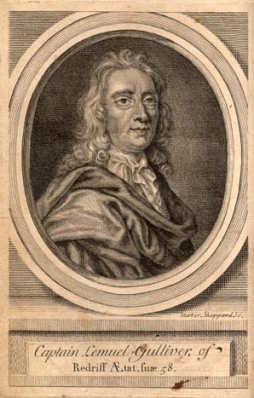 By way of beginning a discussion about Romanticism and fantasy, I’d like to take a quick look at where the Romantics came from. If Romanticism was a revolt against Reason, what was Reason understood to be? If Romanticism, as I feel, is essentially fantastic, is Reason opposed to fantasy? To know Romanticism is to know the Enlightenment which it was reacting against, so in this post I’ll try to describe some characteristics of the 18th-century Enlightenment in England that seem relevant to the development of fantasy. I’ll go up to about 1760, and then in my next post point out some of the counter-currents and proto-Romantic elements that were developing at the time and after.
A few broad statements to start with: The Enlightenment, or the Age of Reason, started in the mid-seventeenth century, viewed by thinkers at the time as a reaction against the wars of religion that had rocked Europe up through the Thirty Years’ War (which ended in 1648). Reason was considered the fundamental human faculty, and human beings were thought to be fundamentally rational actors. Deism, particuarly prominent in England, was a religious philosophy which suggested that God had created the world and left it to develop according to its own laws, without the intervention of miracle and revelation. Free speech, freedom of thought, and humanism were natural, because rational: in a free market of ideas, reason would naturally turn to the true and shun the false. Human rights as we understand them today derive from Enlightenment virtues.
This wasn’t simply a philosophical movement. This was a change in habits of thought across Europe. The scientific method became broadly diffused and rational thinking became an ideal. Isaac Newton developed new theories of physics and optics; he and Gottfried Liebnitz simultaneously developed calculus. The Royal Society was born in the late seventeenth century, helping to systematically spur the development of science. Europeans discovered the secret of making porcelain; clockwork reached new levels of sophistication; mercury thermometers were introduced.
 I was planning to start the series of posts on Romanticism and fantasy this week, but something came up in the last few days that I’d like to write about; particularly since it seems to resonate with
 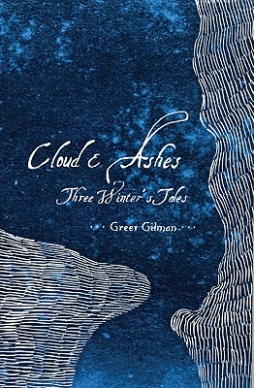 I recently finished reading Greer Gilman’s second novel, 2009’s Cloud & Ashes. I’ve never come across Gilman’s first book, Moonwise, but I’m now looking forward to tracking it down.
 Before continuing the series of posts on Romanticism that I talked about last week, I’d like to write about a couple of subjects I’ve had on my mind for a while. First up is Q.D. Leavis, and her book Fiction and the Reading Public.
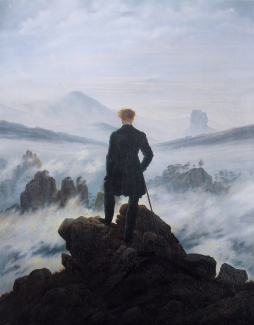 I’ve been thinking over the past few days about last week’s post on
 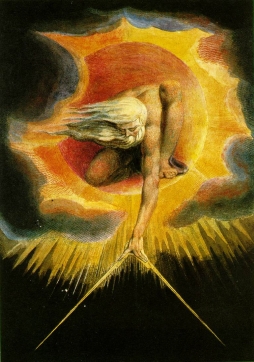 Perhaps my favourite fantasy writing is arguably not fantasy at all. The epics and prophecies of William Blake certainly read like fantasy to many people, I think, albeit fantasy in a distinctive, unfamiliar form. But is the word appropriate? Blake himself was a visionary — he literally saw visions — and may well have believed that some at least of his writing was literally true. Does the definition of fantasy reside in the writer, or the reader? And how would Blake himself want his writing to be viewed?
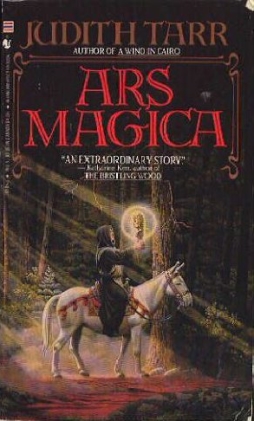 Fantasy fiction is very often set either in the European Middle Ages, or in lands that are intentionally highly reminiscent of the Middle Ages in terms of technology and social structure. It is true that the use of European medieval settings is less common now than it has been, and also true that there have always been counter-examples. But it seems that much fantasy still relies on the European Middle Ages to define itself, one way or another. Sadly, one often has a sense that these backgrounds are not wholly thought-through; not realised as completely as they might be. The setting in a lot of fantasy, particularly I think in commercial fantasy fiction, seems to be a very generic Middle Ages in which medieval stereotypes mix with unexamined modern assumptions.
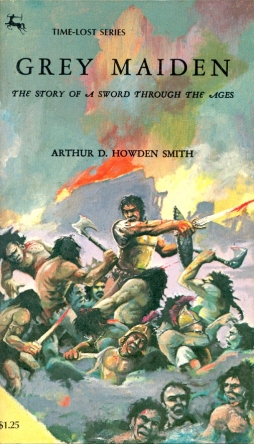 If I’m counting right, this marks my fifty-second post on Black Gate, which means this is effectively an anniversary. At any rate, it’s a good point to pause and reflect, I think. Writing here’s been a blast, from my first piece about Howden Smith’s collection of historical adventures Grey Maiden, up through last week’s essay on the origin story of Steve Ditko’s Doctor Strange. I’m eager to keep going, too; I feel like I’ve gotten better as a writer and critic from posting on this site, and I feel like I’ve begun to understand certain things about the nature of fantasy. I have to thank John O’Neill for inviting me to join his team, and Claire Cooney for her editing work; both John and Claire are accessible and generous with their time, and make posting here easy and fun. I also want to thank all the other bloggers who make this site, I feel, one of the best places on the web for fantasy fans. And especially I want to thank everyone who’s read and commented on my posts over the past year; I’ve been impressed with the level of responses I’ve seen, on my posts and others’, and fascinated by the conversations that’ve developed.
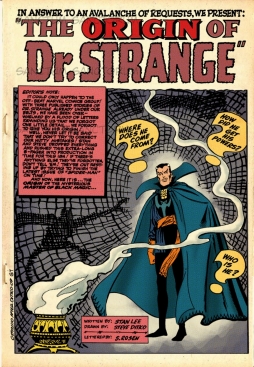 One of my favourite Marvel Comics characters, certainly my favourite of all their big names, is Doctor Strange. Like most established Marvel characters, he’s been handled a lot of different ways over the course of time. I’d like to look back, and look closely, at one of the early tales that defined him most clearly — specifically, his origin story.
 I recently