The Enjoyment of Fantasy: Open Letters to Adam Gopnik, Mur Lafferty, and John C. Wright
 I’ve been a bit under the weather the past couple of weeks, which has been annoying for a number of reasons. For one thing, I was unable to get my thoughts in enough order to respond adequately to three pieces of writing I came across several days ago. Each piece on its own seemed to pose interesting questions, and collectively they raised what seemed to me to be related issues about how one reads, and why; and how and why one reads fantasy in particular.
Well, my head’s cleared a bit over the past little while, and, however delayed, I’ve been able to frame responses (however wordy and inadequate) to the articles I had in mind. I present them here as open letters to the writers of the various pieces: Adam Gopnik, Mur Lafferty, and John C. Wright.
I: To Adam Gopnik
Dear Mr. Gopnik,
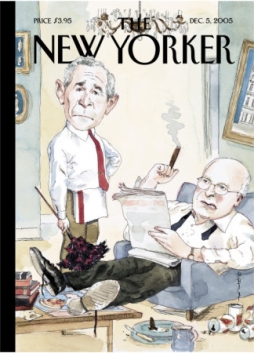
I read your recent article in The New Yorker, “The Dragon’s Egg,” with some interest. I haven’t read Christopher Paolini’s work; my interest is less in Young-Adult literature than in fantasy fiction. From that perspective I found your piece intriguing for what was left unsaid, or what you chose not to investigate. Specifically, I thought there were two major lacunae in the thinking underlying your approach to fantasy.
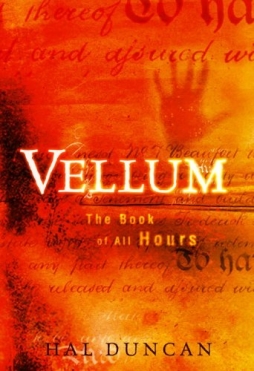 Hal Duncan’s The Book of All Hours is a dazzling, fascinating, frustrating work. A duology consisting of 2005’s Vellum and 2007’s Ink, it plays with structure and story in powerful ways, while also seeming to fall back too easily into black-and-white absolutes and traditional forms. The oddity of the book is that although in some ways it appears radically new, in other ways, as one reads further into it, it comes to feel more and more familiar.
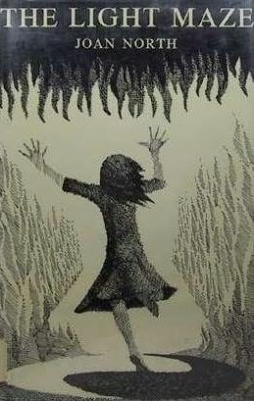 If you read a lot, you’ll soon find yourself drawn to writers who become personal favourites but who, unaccountably, go unrecognised by the wider world. A little while ago my girlfriend introduced me to a book by one of her own favourite writers, a woman named Joan North. I want to write about North here, because I was impressed by her work and I think she deserves to be better known.
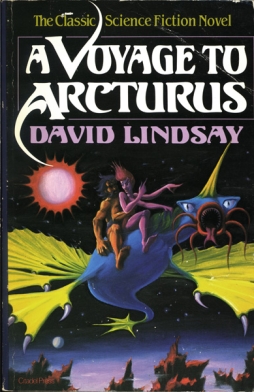 Writing about Romanticism has gotten me started thinking about forms, and conventions, and how we read a story. To some extent I’ve come to feel that contemporary ways of reacting to narrative are more classical than romantic; they’re more to do with structure and form than with trusting the individual genius. It seems to me that many readers, and critics, have become used to looking for certain things in a story, and have come to think of stories that function in a different manner as necessarily defective rather than distinct. And I feel this is a pity, since if we can’t accept the strange works of genius that succeed in defiance of everything we think we know about storytelling, then our experience of story becomes diminished.
 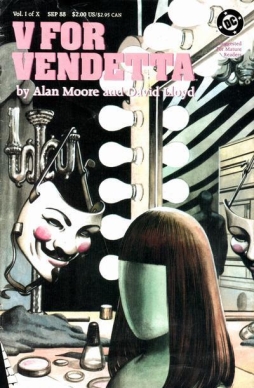 I’m taking a bit of a break from the Romanticism and Fantasy posts, as I’ve got a few other things I’d like to write about. To start with, since I discussed Alan Moore’s Marvelman a few weeks ago, I thought I’d take a look now at V For Vendetta. V started as a series that ran, like Marvelman, in the early 80s in the black-and-white anthology magazine Warrior. Though the story was left incomplete when Warrior folded, in 1988 the series was republished in colour by DC Comics, and Moore and artist David Lloyd were able to finish it as they’d hoped. (Some spoilers for the book follow; also spoilers for Watchmen, oddly enough.)
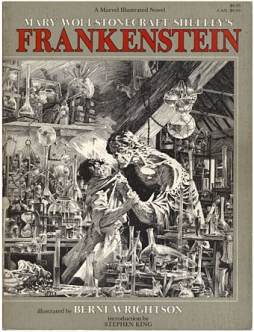 This is the fifth in an ongoing series of posts about Romanticism and the development of fantasy fiction; you can find previous installments
 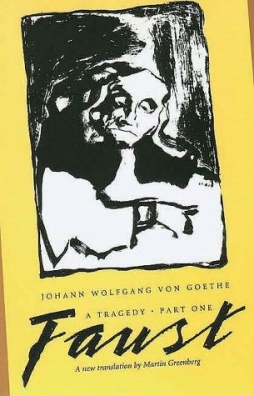 This is the latest in a series of posts about Romanticism and the development of fantasy. You can find prior posts
 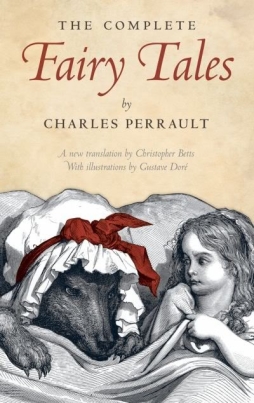 In my
In my 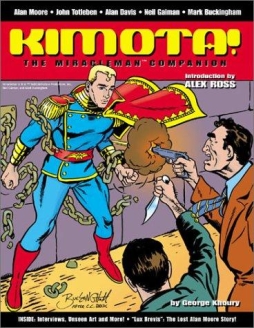 I’m going to take a break this week from the Romanticism and Fantasy posts, because I’ve just finished a fascinating book, and I’d like to talk about it. It’s not a new book, and it’s not a fiction book. It is in fact mainly a collection of interviews about a comic-book character who hasn’t seen print (officially) in almost twenty years. The book is called Kimota!, and the character has been known both as Miracleman and, originally, Marvelman.
 Last week,