My Fantasia Festival, Days 5 to 7: Cold in July, The Fatal Encounter, and Huntresses
 I’ve mentioned before that the Fantasia Festival has, logically enough, programmed what look to be their most popular movies in the big Hall Theatre. That often means unabashed genre movies — movies that aim at telling a certain kind of story a certain kind of way. A genre’s a set of conventions and a storyteller can play against those conventions or use them to get at whatever they want, as they see fit. And, especially as genres become better-known by audiences, there’s a natural inclination to mix conventions, to set genre against genre within a single story. The trick, of course, is that whichever angle you take, you should try to do it well.
Last week from Monday (the 21st) through Wednesday, I saw three genre movies at the Hall: Cold in July, directed by Jim Mickle from a prose story by Joe R. Lansdale; The Fatal Encounter (originally Yeok-rin), a dark, violent period piece from Korean director Lee Jae-kyoo; and The Huntresses (originally Joseonminyeo Samchongsa), a much brighter period piece from Park Jae-hyun. They all aimed at a certain target, and to various degrees hit what they were aiming at. They were all working in different genres, producing different effects. But they were all intensely conscious of how genre worked.
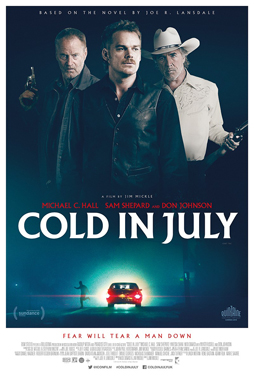
Monday was Cold in July, scripted by Mickle and Nick Damici from Lansdale’s 1989 novella. I haven’t read it, so I can’t speak to the faithfulness of the adaptation; but the story on screen did some interesting things, starting out as a certain kind of thriller, then changing tones, then changing tone again. It begins with a man in a small town in Texas in the late 1980s, a picture-framer named Richard Dane (Michael C. Hall), who surprises an intruder in his home and accidentally shoots him dead. This leads to the dead man’s ex-con father, Ben Russell (Sam Shepard) swearing revenge. But then Dane makes a discovery that throws into question what he thinks happened, and suggests that the authorities are lying to him and Russell. A private investigator (and pig farmer) named Jim Bob Luke (played with tremendous humour by Don Johnson) enters the picture. The plot thickens. Ultimately, things resolve in a violent third act mission.
 Last Sunday, June 20, I saw four movies.
 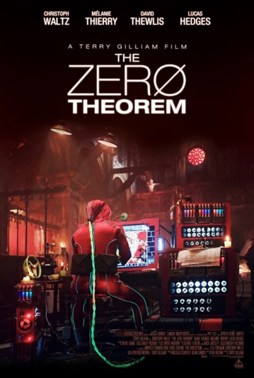 Before continuing my Fantasia diary with a look at the movies I saw last Sunday, I want to focus in on one specific film that struck me as an utterly brilliant piece of science-fiction satire. I think it divided the audience; I’ve heard and seen reactions from people who were left cold by it as well as from people who loved it as much as I did. Perhaps that’s not surprising. The movie is The Zero Theorem, directed by Terry Gilliam from a script by Pat Rushin, and it is as idiosyncratic and persistently individual as you’d expect from Gilliam.
 To my mind, if you’re a critic of any integrity, sooner or later the criticism you write will lead you to challenge your views of yourself as well as your views of the art you experience. That’s the nature of much truly effective art: it makes you look at yourself and think about yourself in new ways. If you’re trying to articulate your reaction and assessment of such a work, honesty will compel some self-examination as well. Powerful art requires an acknowledgement of one’s subjective response.
 Saturday was my first really big day at Fantasia. On weekdays, the festival usually starts its screenings at 5 or 6, with the occasional matinée at 3. Weekend days kick off around noon, meaning many more movies are on offer. Which also incidentally increases the risk of losing track of the need for a meal. I ended up seeing five movies last Saturday, with a dinner break after the first three. So this post will cover those first three films and I’ll have another up shortly looking at the next two. (In general it seems like I’m going to have more Fantasia posts than I’d thought, as I try to keep up with the films I’ve watched.)
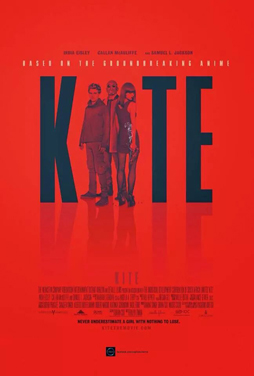 On Friday night, the cats came out at Fantasia.
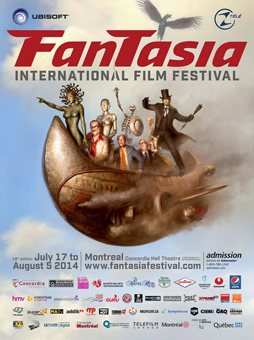 Last night’s opening film at the seventeenth
 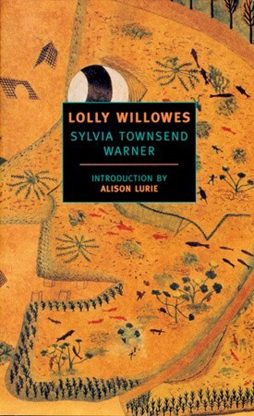 Sylvia Townsend Warner is probably best known in fantasy circles for The Kingdoms of Elfin, her collection of linked short stories from 1977. I’ve been looking for a copy of that book, but have yet to locate one (using the Internet, I firmly feel, is cheating). But I did recently come across her debut novel, 1926’s Lolly Willowes, or the Loving Huntsman. It’s been described as a deal-with-the-devil story in which a middle-aged Englishwoman makes a Satanic pact and becomes a witch. That’s accurate, but not necessarily the best description.
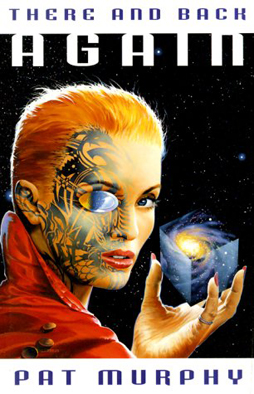 There was an extended period of time in the 1990s and the first decade of this century when I didn’t read much science fiction or genre fantasy. I started reacquainting myself with these fields a few years ago and I’m still in the process of learning what I missed. It’s not uncommon for me to only now find out about an author who established themselves during those years. Which brings me around to Pat Murphy.
 Browsing about the Internet recently, I stumbled on something that interested me. Several things, actually. Specifically, the results at the