Browsed by
Author: John ONeill

Roger Ebert, June 18, 1942 – April 4, 2013
Roger Ebert, June 18, 1942 – April 4, 2013

The Best of XeroHere in Chicago, the airwaves and local newspapers are thick with commentary about the life of Roger Ebert, who died of cancer yesterday at the age of 70.

Roger Ebert was born in Urbana, Illinois in 1942 and began writing for the News-Gazette at age 15, covering high school sports. While at the University of Illinois, he became a reporter for The Daily Illini in Urbana, eventually becoming editor in his senior year. I lived in Urbana for four years while completing my Ph.D, from 1987-1991, and can attest to the mark he left on the city. Ebertfest, the annual film fest he started in Champaign-Urbana in 1998, continues to this day.

Roger Ebert won renown primarily as the nation’s preeminent film critic, starting at the Chicago Sun-Times in 1967. His columns were syndicated in more than 200 newspapers, and he published more than 20 books and dozens of collections of reviews. His TV show Sneak Previews, co-hosted with Gene Siskel, was nationally distributed beginning in 1978. He became the first film critic to win the Pulitzer Prize for Criticism in 1975.

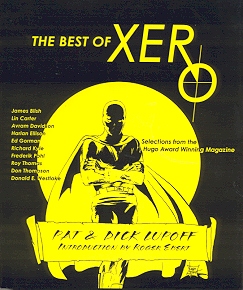
But Ebert left his mark on the genre as well, starting with early fanzines. A life-long science fiction fan, he wrote for some of the most famous SF fanzines of the 60s and 70s, including Pat and Dick Lupoff’s Xero. He provided the introduction to The Best of Xero, the 2005 Tachyon collection gathering many of its best articles (including some of his).

Ebert was diagnosed with thyroid cancer in 2002, and underwent multiple surgeries. On July 1, 2006, his carotid artery burst and he narrowly escaped death. He lost the ability to speak, and to eat or drink, taking all nutrition through a feeding tube. But he continued to write. He died on April 4th at the age of 70; the last sentence on his final blog entry, two days before he died, read “So on this day of reflection I say again, thank you for going on this journey with me. I’ll see you at the movies.”

Perhaps the best way to remember him is to sample his legendary wit. Several blogs have collected some of his finest critiques, including BuzzFeed’s Roger Ebert’s 20 Most Epic Movie Pans, and Inquisitr’s Our 20 Favorite Ebert Quotes. He will be missed.


An Open Letter from Jeremy Lassen at Night Shade Books

An Open Letter from Jeremy Lassen at Night Shade Books

Jeremy LassenThere’s been a great deal of debate among authors and editors over this week’s announcement from Night Shade Books regarding a sale to avoid bankruptcy.

SFWA sent an advisory note to members, advising them that the settlement is “likely in the best interest” of writers. Respected authors such as Michael Stackpole strongly disagreed, pointing out that the contracts offered by Skyhorse/Start cut ebook royalties in half and demand audio and second serial rights — whether or not NSB originally purchased them.

It’s a painful situation for all involved. For readers anxious to see Night Shade’s future releases — including several volumes of popular ongoing series — this sale is the only way to avoid the rights to those titles ending up in bankruptcy court (where the majority may well simply die).

There’s no question that Night Shade made mistakes and burned a lot of bridges over the past few years, and that this latest unpleasantness has brought out more than a few writers with an axe to grind. As a publisher who ran a fantasy magazine as a labor of love for over a decade, until the mounting losses simply became too great to bear, I know well the kind of pain owners Jason Williams and Jeremy Lassen are experiencing now. Night Shade was one of the most dynamic and exciting publishers in the genre, willing to take extraordinary risks buying and promoting work from many new writers, and it’s undoubtedly painful to see so many of those writers apparently delighted to dance on their corpse.

Jeremy Lassen has written an open letter to his writers, and the industry at large, articulating just what’s at stake with this offer from Skyhorse and Start. The complete text of Jeremy’s letter follows.

Read More Read More

Dominate Your Desktop with an Eye of Sauron Lamp

Dominate Your Desktop with an Eye of Sauron Lamp

Eye of Sauron Desk LampIt’s not that I need a new desk lamp. It’s just that, when you discover that there exists a desk lamp crafted as a scale model of Sauron’s fortress at Barad-dûr, your life is not complete until you have one.

ThinkGeek is offering these beauties, designed by Richard Taylor as 21-inch replicas of the 9-foot tall model used to film The Lord of the Rings.

The lamps are sculpted from polystone and finished with a protective layer of polyurethane. They weigh 22 pounds and, yes, include a roving eye mounted at the top. They are priced at $299.99.

You can order yours from ThinkGeek today.

One final detail: note that these went on sale on April 1, and be sure to click on the “Buy Now” button to see actual availability.

Night Shade Attempts to Avoid Bankruptcy with a Sale to Skyhorse Publishing

Night Shade Attempts to Avoid Bankruptcy with a Sale to Skyhorse Publishing

Night Shade BooksWord has begun to spread this morning that Night Shade Books is in negotiations with Skyhorse Publishing and Start Publishing in an attempt to avoid bankruptcy.

Night Shade has contacted authors to explain the situation, and excerpts from those letters have been posted online:

As you probably know, Night Shade Books has had a difficult time after the demise of Borders. We have reached a point where our current liabilities exceed our assets, and it is clear that, with our current contracts, sales, and financial position, we cannot continue to operate as an independent publisher. If we filed for Chapter 7 bankruptcy, or liquidation, the rights to your books could be entangled in the courts for years as could past or current unpaid royalties or advances. However, we have found an alternative, which will result in authors getting paid everything they are due as well as finding a future home for their books, subject to the terms and conditions stated in this letter.

The deal is not yet finalized and, in fact, hinges on how many authors approve changes to their existing contracts.

Some, including Jeff VanderMeer, have asked the publisher to revert rights back to authors prior to declaring bankruptcy. That’s not likely to be an option however, as its existing publishing contracts are Night Shade’s most valuable asset. As Harry Connolly points out on his blog, bankruptcy courts generally frown on publishers who do that, and such revisions are routinely overruled in court during bankruptcy proceedings.

The loss of Night Shade would be a real blow to the field. Known for taking risks on new writers, they’ve also published some of the most celebrated authors in the genre, including Paolo Bacigalupi, Iain M. Banks, Martha Wells, Manly Wade Wellman, Greg Egan, Glen Cook, Kage Baker, Jay Lake, Elizabeth Bear, Lucius Shepard, and many others. But there have been omnibus signs for the past several years, including a deep sale last April, authors leaving their stable, and others. Publishers Weekly has more detail on the potential sale here; io9‘s report is here.

New Treasures: Quintessence by David Walton

New Treasures: Quintessence by David Walton

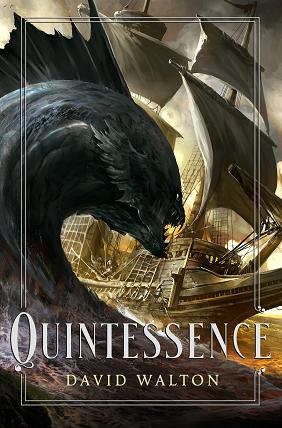
Quintessence David WaltonThere are few things as intriguing as an exciting new author. Maybe an all-you-can eat Indian buffet, or finding a mysterious note in a 10-year old jacket. And goliath birdeater spiders. Man, they give me the willies.

But back to exciting new authors. David Walton is an exciting new author. Back in 2008 he won the Philip K. Dick Award for his first novel, Terminal Mind, published by tiny Meadowhawk Press. That’s intriguing.

Even more intriguing is the arrival of his long-anticipated second novel: Quintessence. A slipstream counterhistory set in a fourteenth century featuring beetle-based navigation, alchemy, deadly storms, mutiny, sea monsters, and a trip to the edge of the earth, Quintessence promises to be a very different kind of fantasy, and the early buzz has been very favorable indeed.

Imagine an Age of Exploration full of alchemy, human dissection, sea monsters, betrayal, torture, religious controversy, and magic. In Europe, the magic is thin, but at the edge of the world, where the stars reach down close to the Earth, wonders abound. This drives the bravest explorers to the alluring Western Ocean. Christopher Sinclair is an alchemist who cares only about one thing: quintessence, a substance he believes will grant magical powers and immortality. And he has a ship.

Quintessence was published on March 19 by Tor Books. It is 320 pages for $25.99 ($12.99 for the digital edition). Check out the first three chapters on David Walton’s website.

The Top 50 Black Gate Blog Posts in February

The Top 50 Black Gate Blog Posts in February

DSC_1027February is cold here in Chicago. Stay-at-home-or-you’ll-die cold. A good time to gather inside with friends and family, put hot cocoa on the stove, slip a movie in the Blu-ray player, and then forget all of that because there’s something fascinating on the Internet.

We had plenty of fascinating things to offer here at the Black Gate blog in February. Scott Taylor took at serious look at the downside of collecting in “The Weight of Print,” Matthew David Surridge examined Shirley Jackson’s The Haunting of Hill House, Mark Rigney revealed the surprising results of the John Piece Experiement as applied to fantasy, author Violette Malan explained How to Put the Sword in Sword & Sorcery, and Sarah Avery offered up another installment in her popular Teaching and Fantasy Literature series with “Weird Things My Students Have Been Told About Writers.”

And that’s only the Top Five. The complete list of the Top 50 posts in February follows. Enjoy — but not so much that you neglect your houseguests, please. Or let hot chocolate overboil on the stove.

  1. Art of the Genre: The Weight of Print
  2. Shirley Jackson’s The Haunting of Hill House
  3. Genre 2013: The John Pierce Experiment
  4. How to put the sword in Sword and Sorcery
  5. Teaching and Fantasy Literature: Weird Things My Students Have Been Told
  6. Howard and Sandra Tayler discuss being mercenary…
  7. New Treasures: Wilderlands of High Fantasy
  8. Dungeon Board Game from Wizards of the Coast
  9. Echoes of the Goddess: Schweitzer’s Newest Classic
  10. Self-published books: Review of Noggle Stones the Goblin’s Apprentice


    Read More Read More

Gardner Dozois on the 2013 Hugo Nominations

Gardner Dozois on the 2013 Hugo Nominations

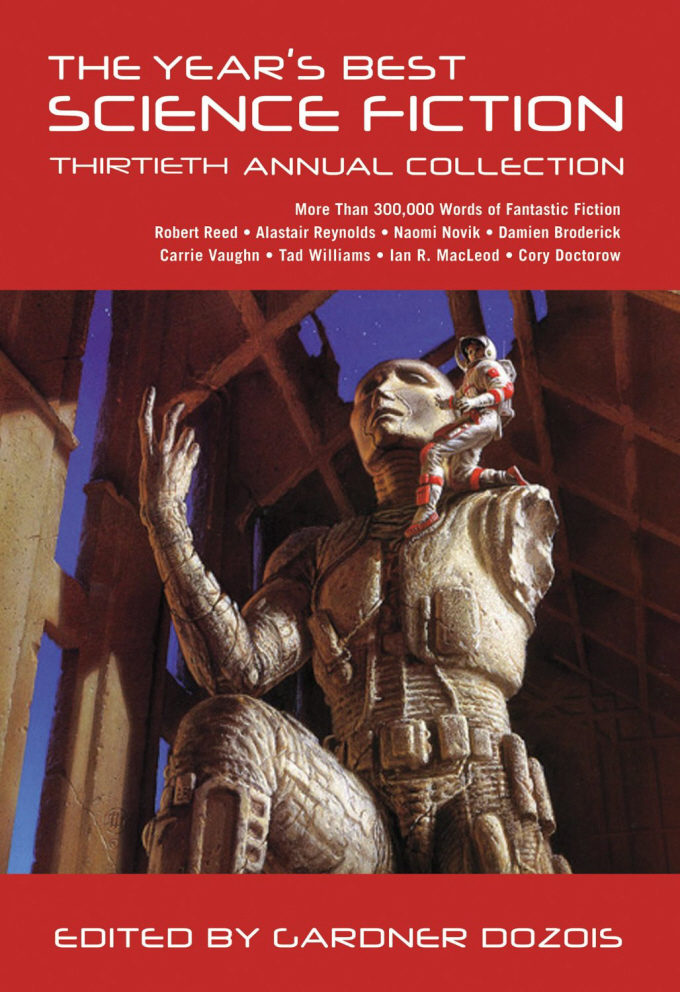
Year's Best SF 30Gardner Dozois, editor of the upcoming The Year’s Best Science Fiction: Thirtieth Annual Collection (and about a billion other science fiction and fantasy anthologies), offered some astute and telling observations on the 2013 Hugo Awards nominations this week.

In case you haven’t noticed, I thought that I’d point out that this year’s Hugo Award ballot represents a historic shift in demographics. This has been coming on for a couple of years now, but this year a tipping point has been passed.

In the fiction categories, only Nancy Kress, Pat Cadigan, Kim Stanley Robinson, and Lois McMaster Bujold come from the literary generation that came to prominence in the ’80s. Everybody else is from a younger literary generation (which doesn’t always mean that they’re younger, although that’s usually the way to bet it; literary generations are different from actual generations). There’s only one story, Jay Lake’s, from a traditional genre market, Asimov’s, and only one story from a trade SF anthology, Cadigan’s. Only six out of the thirteen shorter works even come from PRINT publications, and four of those were novellas published in chapbook form by small presses; all the rest are from online publications. Only two of the five people nominated for Best Editor, Short Form, work at traditional print magazines; the rest edit online publications. ALL of the nominees for Best Semiprozine are online publications.

This is not going to change back. This is the way things will be from now on.

We discussed the complete Hugo ballot here on Monday.

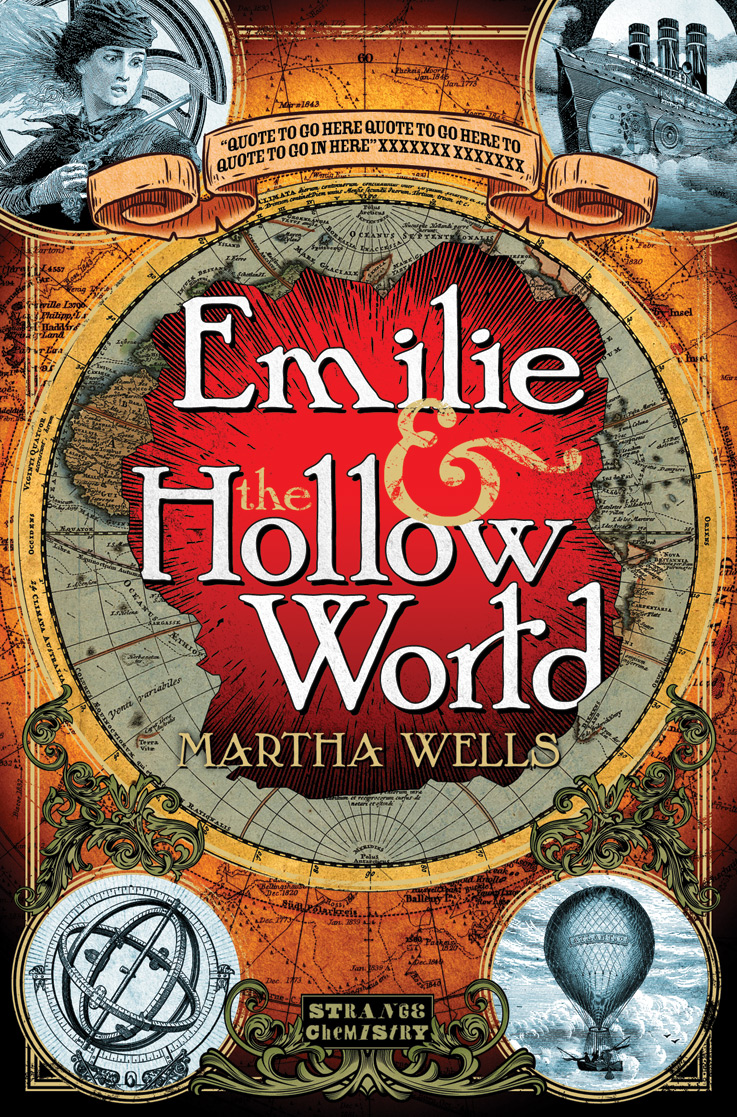
Martha Wells’ Emilie and the Hollow World On Sale Today

Martha Wells’ Emilie and the Hollow World On Sale Today

Emilie and the Hollow World-smallMartha Wells is one of our superstar contributors. In fact, it’s probably not an exaggeration to say that, in terms of raw ability to move sales, she was the superstar contributor to Black Gate.

Every magazine has authors who help sales. But it wasn’t until we published Black Gate 10, containing Martha’s Giliead & Ilias story “Reflections,” that I really saw what a single author could do. Subscriptions started to pour in, with letters from excited fans asking for “More Martha Wells!” We were happy to comply.

Novels are where she truly built her career, however — including The Fall of Ile-Rien trilogy, The Cloud Roads trilogy, and the Nebula-nominated The Death of the Necromancer. Today her first young adult novel, Emilie and the Hollow World, arrives in bookstores, and Martha discussed the ups and downs in her career that led her here with refreshing candor on her blog:

This is the third book I finished back in 2009, during my career crash that lasted from around 2006-2007 to 2010. A career crash for a writer is kind of like if you had a job where you’ve been going in to work every day and everything seems fine. But then gradually, over time, you realize you’ve been fired, and they don’t want you there and they aren’t going to pay you and everyone you work with knows this. It’s just that no one has told you.

The novel follows the adventures of young Emilie, whose clumsy attempt to run away and join her cousin in the big city lead her to stowaway on the wrong ship, where she’s quickly caught up in a grand adventure involving an experimental engine, an attempt to ride the aether currents, and a journey to the interior of the planet — not to mention sabotage, an encounter with the treacherous Lord Ivers, and the strange race of the sea-lands.

Emilie and the Hollow World was published today by Strange Chemistry. It is 304 pages in paperback for $9.99 ($6.99 for the digital edition). The only version of the cover we have is the pre-publication version (which still has a placeholder quote), but you can see all the detail on this handsome cover by clicking on the image at right.

Vintage Treasures: The Blind Spot, by Austin Hall and Homer Eon Flint

Vintage Treasures: The Blind Spot, by Austin Hall and Homer Eon Flint

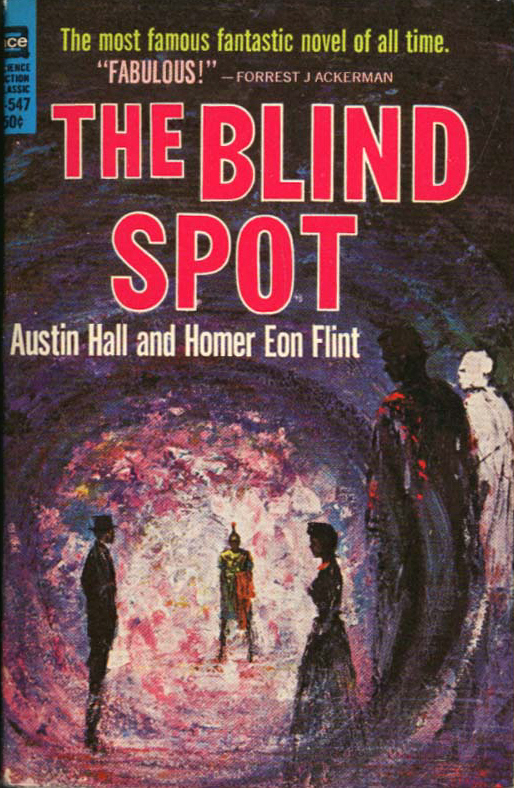
The Blind SpotAll right. Listen up, all you young fantasy punks. I know you’re out there, devouring contemporary fantasy by the truckload, while I’m trying to school you on the forgotten classics of the past. I know you’re not listening, because I rarely paid attention to the crotchety old-timers who tried to get me to read forgotten fantasy classics 30 years ago. I was too busy with Lord of Light, Bridge of Birds, Watership Down, and Swords Against Death.

Eventually, of course, I learned the error of my ways. I began to listen to my elders, and appreciate the glory of the pulp era of fantasy. I read the books they passed to me, and gradually became wiser, more worldly, healthier, and better looking, with fuller and more lustrous hair and better posture.

Mostly. I didn’t read, like, everything they foisted on me. Because Star Trek was on in the afternoon, and Dr. Who in the evenings (the Tom Baker episodes, naturally), and a lad needs some down time.

Now, these Vintage Treasures articles are my vehicle to pass along the accumulated knowledge and wisdom of a fabulously well-read generation (i.e. old people) to the eager and outstretched hands of the readers of tomorrow (you lot). That’s admittedly harder to do with the great classics of fantasy I haven’t read yet. Theoretically though, it might be possible to duck some of my personal responsibility by passing them along instead.

In short, skipping a generation and cutting out the middleman. Now pay attention, because this is where you come in.

I am tasking you with a sacred undertaking, upon which the very future of our beloved genre rests: to read, appreciate  and evangelize the great works of 20th Century pulp fantasy. The ones I never got around to, anyway. So I can get back to that Season Two Star Trek DVD which arrived last week. Appreciate it.

Let’s start with The Blind Spot, by Austin Hall and Homer Eon Flint. What’s it about? I have no idea. If you were paying attention, you’d have clued in to that. But right there on the cover Ace Books calls it “The most famous fantastic novel of all time,” and the esteemed Forrest J. Ackerman shouts out the word “Fabulous!” That should be good enough for you.

The Blind Spot was published in 1921 as a serial in Argosy-All Story Weekly, and reprinted by Ace Books in 1964, with a doubtlessly fascinating and informative introduction by Ackerman that would have made writing this post a lot easier if I’d known about it 15 minutes ago. It is 318 pages in paperback for 50 cents. Finding a copy is left as an exercise to the reader (I got my copy on eBay for under a buck.) And get a move on, the cultural heritage of fantasy is at stake. But no pressure.

2013 Hugo Award Nominees Announced

2013 Hugo Award Nominees Announced

Throne of the Crescent MoonThe nominees for the 2013 Hugo Awards were announced this weekend. There’s a lot of great reading on this list and, if you’re like me, you’re still planning to get to most of it.

It’s not too late — and if you finish your reading before voting closes, you can help decide the winners. Voting is open to all attendees of LoneStarCon 3, the 2013 World Science Fiction Convention, and the winners will be announced at the convention on Sunday, September 1, 2013.

One odd thing about this year’s ballot? There are only three nominees for short story (usually there are five). The adminstrators state this is “due to a 5% requirement under Section 3.8.5 of the WSFS constitution.” No, I don’t know what that means either. I’m sure it will be much discussed, and somebody will explain it to me.

The nominees for the 2013 Hugo Awards are:

Best Novel

2312 by Kim Stanley Robinson (Orbit)
Blackout by Mira Grant (Orbit)
Captain Vorpatril’s Alliance by Lois McMaster Bujold (Baen)
Redshirts: A Novel with Three Codas by John Scalzi (Tor)
Throne of the Crescent Moon by Saladin Ahmed (DAW)

Best Novella

After the Fall, Before the Fall, During the Fall, by Nancy Kress (Tachyon Publications)
The Emperor’s Soul by Brandon Sanderson (Tachyon Publications)
On a Red Station, Drifting, by Aliette de Bodard (Immersion Press)
San Diego 2014: The Last Stand of the California Browncoats, by Mira Grant (Orbit)
“The Stars Do Not Lie,” by Jay Lake (Asimov’s SF, Oct-Nov 2012)

Read More Read More