Browsed by
Author: John ONeill

Black Gate Online Fiction: “That of the Pit” by E.E. Knight

Black Gate Online Fiction: “That of the Pit” by E.E. Knight

EE Knight-smallWe last saw E.E. Knight’s hero, The Blue Pilgrim, in the acclaimed “The Terror of the Vale” — one of the most popular stories we’ve ever published. He first appeared in Daniel Blackston’s 2004 heroic fantasy anthology Lords of Swords; here’s Todd McAulty’s review from Black Gate 8:

The real payoff in Lords of Swords comes from three long pieces by three different writers, any one of which could stand alongside the work of the masters mentioned above — and all of which deliver on the promise of the best adventure fantasy: strong characters, fast action in colorful settings, and genuine flair and wit…

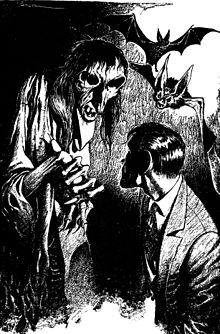
Finally, we have what may be my favorite piece: “That of the Pit,” by Vampire Earth novelist E.E. Knight. The Blue Pilgrim is a rebel against the cruel rule of the Sayhrae, and a practitioner of The Way, an ancient devotion that gives him considerable martial prowess and subtle mental arts. But he is virtually alone in his battle, and when he’s captured he discovers the dark sorceries of the Sayhrae are not all masquerades. The climax of this tale is one of the most effective I’ve read in a long time.

We’ve long been fans of “That of the Pit” and we are pleased and delighted to be able to present the story to you in its entirety online for the first time, as part of our Black Gate Online Fiction library.

E.E. Knight is the author of the Vampire Earth series, which began with Way of the Wolf, and the six-volume Age of Fire books. He is a frequent blogger for Black Gate.

The complete catalog of Black Gate Online Fiction, including stories by Vaughn Heppner,  Howard Andrew Jones, David C. Smith, David Evan Harris, Janet Morris and Chris Morris, John C. Hocking, Michael Shea, Peadar Ó Guilín, Aaron Bradford Starr, Martha Wells, Nina Kiriki Hoffman, C.S.E. Cooney, and many others, is here.

“That of the Pit” is a complete 6,300-word short story of heroic fantasy offered at no cost.
Read the complete story here.

Vintage Treasures: The Unknown, edited by D.R. Bensen

Vintage Treasures: The Unknown, edited by D.R. Bensen

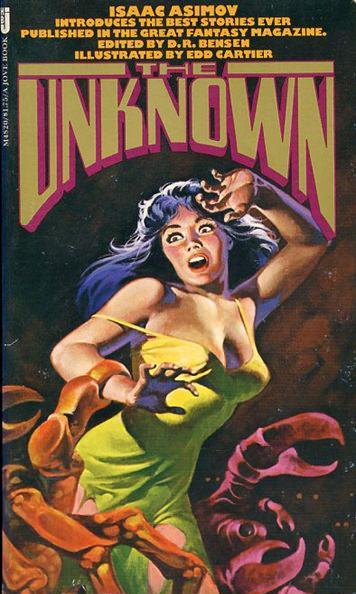
The Unknown edited by D R Bensen-smallIn all of our recent discussions of pulps, we have sorely neglected one of the greatest pulp fantasy magazines of all time: John W. Campbell’s magnificent Unknown. It wasn’t deliberate; we’ve just been focusing on Amazing Stories, Galaxy, and the pulp roots of Dungeons and Dragons of late.

So to do a little catch-up, I thought I’d talk about a splendid anthology I’ve been reading this weekend: The Unknown, a collection of ten short stories and one novelette from the pages of Unknown. If you’ll allow me, I’d like to quote from the Wikipedia entry on Unknown, since I think it does a fine job of summarizing the genesis and impact of Campbell’s great experiment in fantasy:

Unknown (also known as Unknown Worlds) was an American pulp fantasy fiction magazine, published from 1939 to 1943 by Street & Smith, and edited by John W. Campbell. Unknown was a companion to Street & Smith’s science fiction pulp, Astounding Science Fiction, which was also edited by Campbell at the time; many authors and illustrators contributed to both magazines. The leading fantasy magazine in the 1930s was Weird Tales, which focused on shock and horror. Campbell wanted to publish a fantasy magazine with more finesse and humor than Weird Tales, and put his plans into action when Eric Frank Russell sent him the manuscript of his novel Sinister Barrier, about aliens who own the human race… The magazine is generally regarded as the finest fantasy fiction magazine ever published, despite the fact that it was not commercially successful, and in the opinion of science fiction historian Mike Ashley it was responsible for the creation of the modern fantasy publishing genre.

The Unknown contains an excellent survey of Unknown magazine, with entertaining editorial comments and fiction contributions from Henry Kuttner, Nelson S. Bond, Theodore Sturgeon, L. Sprague de Camp, H. L. Gold, Manly Wade Wellman, Fredric Brown, and Anthony Boucher — plus a Fafhrd and the Gray Mouser tale from Fritz Leiber, and more.

It also reprints interior art from the magazine by the great Edd Cartier (see a sample here), who painted the covers for many Unknown issues. I wish more paperbacks from the era did this, as I found the artwork delightful.

Read More Read More

New Treasures: Black Blood by John Meaney

New Treasures: Black Blood by John Meaney

Black Blood-smallBritish writer John Meaney, author of The Nulapeiron Sequence (Paradox, Resolution, and Transmission), has been called “the most important new SF writer of the 21st century” by The Times of London. Impressive, but it was his turn towards gothic fantasy with Bone Song that really caught my attention. The sequel, Black Blood, has been described as a blend of futuristic noir, gothic fantasy, and thriller, all set in a lushly detailed necropolis where a cop must stop a conspiracy of killers whose power is fueled by spilling black blood.

He’s lucky to be alive. That’s what everyone tells him. Except Tristopolitan police lieutenant Donal Riordan doesn’t feel lucky and he isn’t really alive. In one horrific moment not even death can erase from memory, Donal lost the woman he loved even as her ultimate sacrifice saved his life. Now it’s literally her heart that beats in his chest and her murder that Donal “lives” to avenge.

While being a zombie cop has its upsides — including inhuman reaction time and razor-sharp senses — Donal’s new undead status makes him the target of Tristopolis’s powerful Unity Party, whose startling rise to power is built on a platform of antizombie paranoia and persecution. The Party is no friend, to be sure — but it’s the secret cabal known as the Black Circle and their stranglehold on the city’s elite that consume Donal’s black heart. For at the center of this ring of evil is the man responsible for his lover’s murder — a man Donal has already had to kill once before.

Now, with ominous reports of white wolf sightings throughout the city and a dangerous sabotage attempt at police headquarters, all signs indicate that the Black Circle is planning a magical coup d’état. And the terror will begin with a political assassination triggered by a necroninja already hidden… in a place no one expects. For Donal, it’s no longer a matter of life and death but something far more serious. How can he stop a killer who won’t stay dead and an evil that death only makes stronger?

Sounds like the beginning of a promising new series, especially if you like your fantasy blended with dark science fiction (and necroninjas!) Black Blood was published February 24, 2009 by Bantam Spectra. It is 384 pages, priced at $15 in trade paperback or $9.99 for the digital edition.

Vintage Bits: BattleTech: The Crescent Hawk’s Inception

Vintage Bits: BattleTech: The Crescent Hawk’s Inception

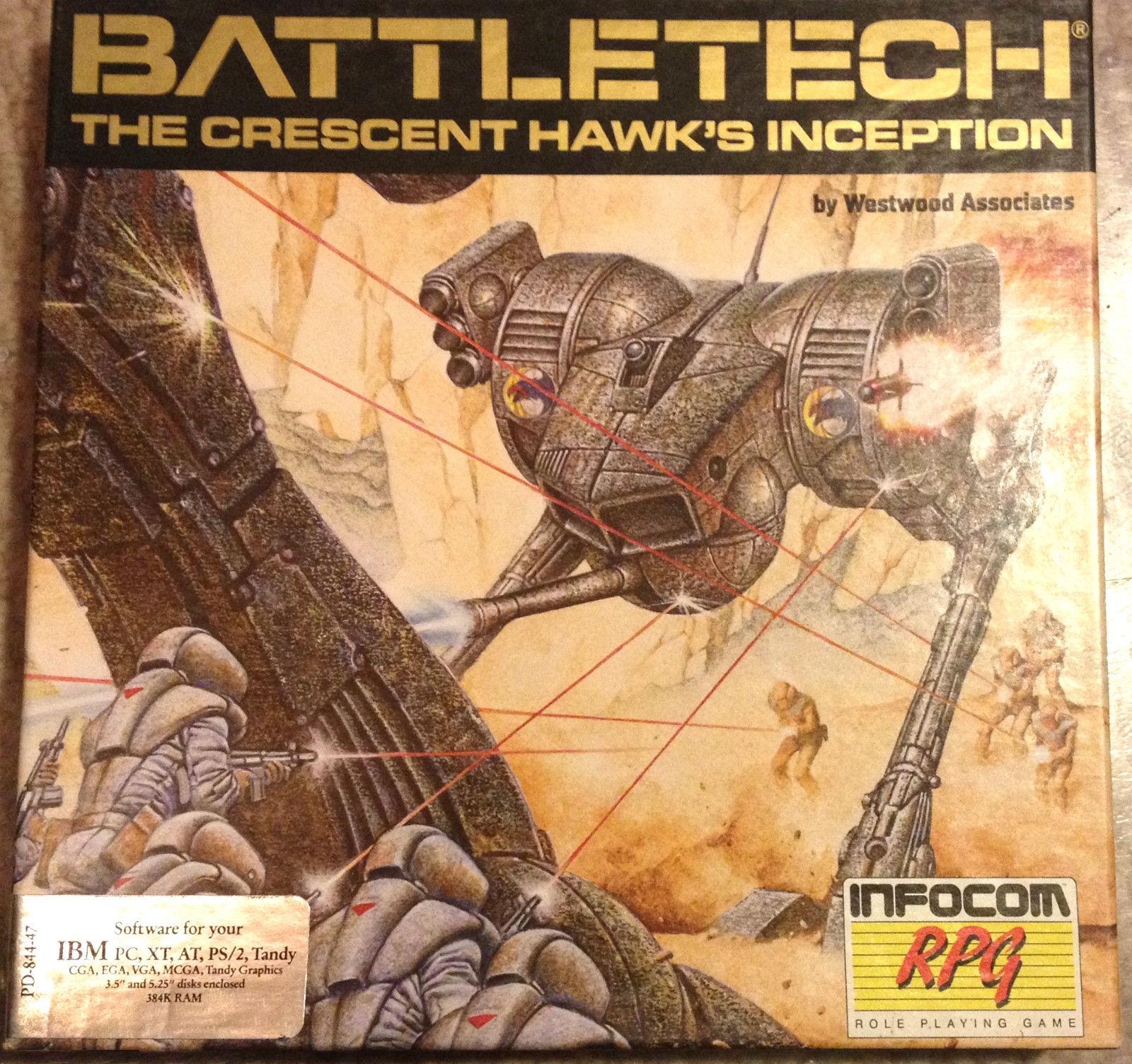
Battletech The Crescent Hawk's Inception-smallInfocom is one of the most revered names in computer gaming history. In fact, for serious collectors of PC games, there’s probably no other company that commands the respect of (or is as collectible as) Infocom.

Their heyday was the early 80s, when they released the most famous text adventure ever written, Zork (1980), alongside other classics like Enchanter (1983), Steve Meretzky’s Planetfall (1983), Brian Moriarty’s Wishbringer (1985), and Dave Lebling’s fabulously creepy Lovecraftian scarefest The Lurking Horror (1987).

But my favorite Infocom game came late in their history — indeed, after the company very nearly collapsed following the failure of their ambitious DOS database, Cornerstone, in 1986. By that time, over half of the employees had been laid off and the remnants of the company sold to Activision in a fire sale. For the first time in their history, Infocom turned to outside developers to help fill their production schedule.

It was a desperate move. Infocom had a nearly flawless reputation in the gaming industry, even as late as 1988, and expecting an untested development shop to deliver product that would meet the public’s exceedingly high expectations for an Infocom title was an exceptionally risky bet.

Fortunately, the outside developer they chose was Westwood Studios, who would later go on to develop some of the most successful games of the 90s, including Dungeons & Dragons: Eye of the Beholder (1990), Command & Conquer (1995), Blade Runner (1997) — and who virtually created the real-time strategy (RTS) genre with their groundbreaking Dune II (1992). Their first game for Infocom, and the one that really put them on the map, was one of the best titles Infocom ever released: BattleTech: The Crescent Hawk’s Inception (1988).

Read More Read More

Rejecting the Golden Age: Gareth L. Powell on Escaping Science Fiction’s Pulp Roots

Rejecting the Golden Age: Gareth L. Powell on Escaping Science Fiction’s Pulp Roots

The Recollection Garath Powell-smallOver at SF Signal, author Gareth L. Powell has issued a call to stop recommending classic SF and fantasy, and start putting newer works in the hands of readers curious about our genres. His comments apparently arise from his experiences talking to a reading group who hadn’t read any SF written in the last 50 years.

The only way we’ll escape the legacy of our pulp roots is to promote the innovation, literary merit, and relevance of the best modern genre writing. Some fans will always cling to the ‘golden age’ works of the 1950s, 1960s and 1970s, and I can understand why. They provide a magic door back to the simple pleasures of a simpler world – a world before global warming, oil shortages, terrorism, and economic uncertainty; relics of a world where the future was easily understood, and (largely) American, middle class and white in outlook, origin and ethnicity.

Part of me understands and sympathizes with that need for security. I still draw comfort and enjoyment from those old books. Arthur C. Clarke, Larry Niven, Philip K. Dick… These writers are the elder gods in my personal pantheon; but they are neither the beginning nor the end… being a fan’s a bit like being in a marriage. You have to accept that the person you’re with will mature and change, and you have to embrace that, and change with them in order to keep things fresh…

So, the next time a non-SF reader asks you what they should read, resist the temptation to throw them a copy of Foundation or Slan, and point them instead at something published in the last five years… Give them something modern, and they’re more likely to find characters, ideas and attitudes with which they can relate.

Powell is the author of Silversands, The Recollection, Ack-Ack Macaque and its new sequel, Hive Monkey — which he freely notes employs “the furniture of 1930s pulp literature – Zeppelins, Spitfires, cigar-smoking monkey pilots, evil android armies.”

Read the complete article at SF Signal here.

New Treasures: Dark Melody of Madness by Cornell Woolrich

New Treasures: Dark Melody of Madness by Cornell Woolrich

Dark Melody of Madness-smallI wish a knew more about Cornell Woolrich.

From what I understand, this is a common state of affairs, even for some of his most devoted fans. Woolrich was something of a recluse, especially in the last few years of his life, and there are only a handful of people alive today who had any real dealings with him. Barry N. Malzberg, Woolrich’s agent for much of the 1960s, is one of the few, and he’s provided a fascinating reminisce in his introduction to Phantom Lady, one of the handsome new Woolrich editions from Centipede Press.

Woolrich is revered by mystery and noir fans — and rightly so. Some three dozen films have been made of his taut thrillers, including Rear Window, Night Has a Thousand Eyes, The Bride Wore Black, and many others. But on occasion, he also wrote supernatural fiction and Dark Melody of Madness, one of the new Centipede Press volumes, collects four of his novellas for the first time: “Graves For The Living,” “Jane Brown’s Body,” “Dark Melody of Madness,” and “I’m Dangerous Tonight,” all originally published between 1935 and 1938.

Holding on to a loved one can be difficult, but certainly not as weird and treacherous as in this quartet of Cornell Woolrich novellas set in the mid-1930s. It’s a time of great incongruities — physical anguish of the Great Depression, lighthearted dancing to the rhythms of swing; near-legendary bank robbers, daredevil long-distance airplane pilots; head bashing of union members, air-conditioned comfort for movie goers.

Woolrich takes this milieu, adds an overlay of the supernatural, and places his protagonists in grotesque, untenable situations involving their lives and souls. Here is the eerie world of voodoo, Frankenstein-style reincarnation, live burial, and macabre garments — a mixture of cold sweat-producing dilemmas, where the characters find it near-impossible to separate the real from the unreal.

Dark Melody of Madness was published by Centipede Press on August 6, 2013. The introduction is by Bill Pronzini, and the cover and color interiors are by Matt Mahurin. The trade paperback is 296 pages, priced at $18; there’s also a limited edition, out-of-print hardcover. The hardcover edition lists an additional novella, “Mannequin,” on the TOC. For mystery and noir fans, Centipede Press offers three additional volumes in the series: Deadline at Dawn, I Married a Dead Man, and Speak to Me of Death (see the complete set here.)

A Step Into Dark Realms

A Step Into Dark Realms

Dark Realms 25-smallI’ve always been a fan of small press magazines, especially genre magazines. That’s where you frequently find much of the cutting edge fiction and design — they take the kinds of creative risks that larger magazines simply can’t afford to. While I was running my own small press magazine, I didn’t have time to keep up on what was going on at the fringes, of course. And I missed out on a lot. But now that the print version of Black Gate is no longer an ongoing concern, I can afford more time to look around.

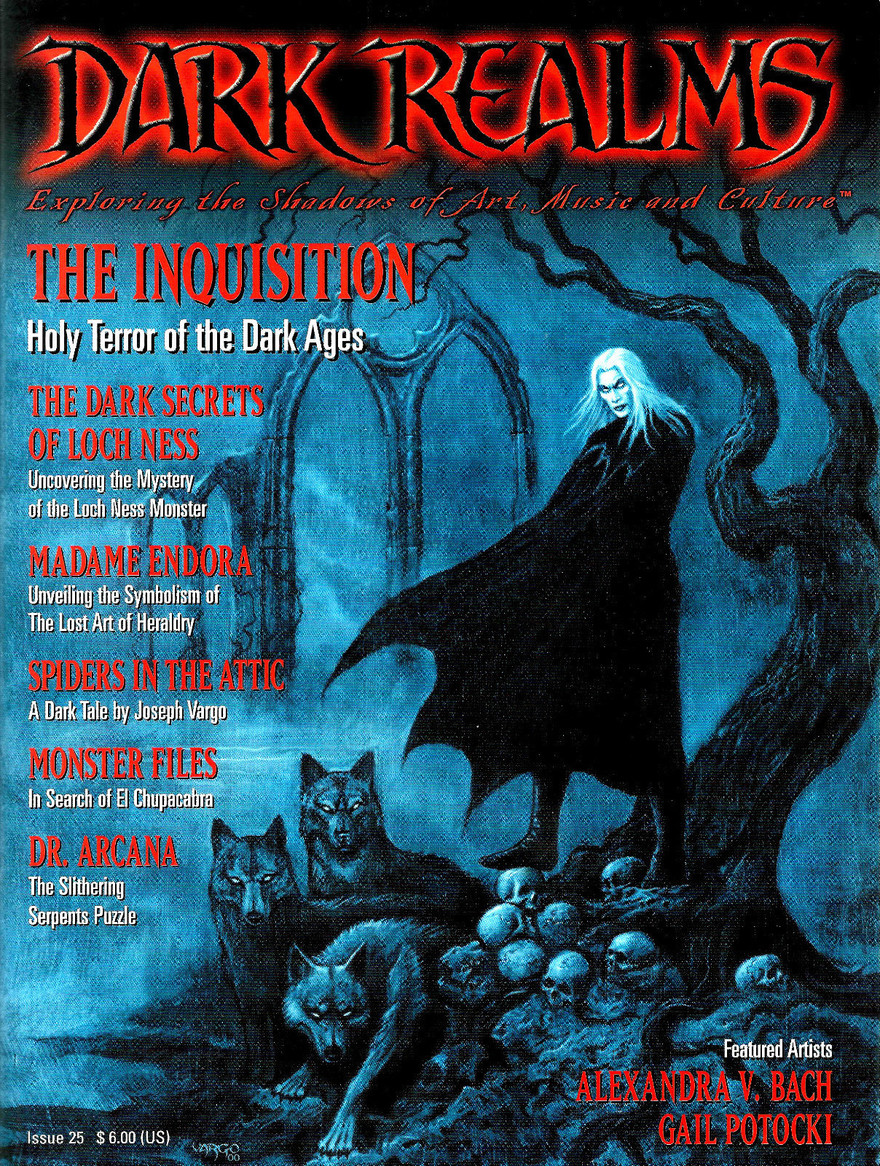
I bought my first issue of Dark Realms last week. A back issue, #25, cover dated Winter 2007. To be honest, I’m not sure what Dark Realms is all about, but it seems like my thing. The cover has a vampire dude, and promises to explore “The Inquisition” and the “The Dark Secrets of Loch Ness” inside. The subtitle reads “Exploring the Shadows of Art, Music, and Culture.” I’m up for that.

First thing I want to know, of course: is this thing still being published? Call it the ghoulish curiosity of a publisher with his own dead magazine. Sadly, I discovered I’m too late to actually support Dark Realms — the magazine give up the ghost five years ago, in 2008, after an impressive 32 issues.

From what I can tell after spending a few hours with it, Dark Realms is an odd mix of non-fiction, artwork, horror fiction, music reviews, and ads for goth necessities. However, while the magazine is visually very striking, it seems to rely heavily on a small number of contributors.

Issue #25 is a fine example. The moody and effective cover is by Joseph Vargo. On the inside front cover is a house ad for an art book and a tarot deck — both by Joseph Vargo. In the middle of the magazine is another ad, this one for Tales of the Dark Tower, a very professional-looking original anthology based upon characters created by Joseph Vargo. Turn the page and we come to the first fiction piece of the issue: “Spiders in the Attic,” written by… Joseph Vargo (with art by Joseph Vargo).

Read More Read More

New Treasures: Allegiance by Beth Bernobich

New Treasures: Allegiance by Beth Bernobich

Allegiance Beth Bernobich-smallYou can always tell the books that get a serious buzz here at Black Gate — because the review copies always vanish. I try to track them down and discover they’ve been passed from hand to hand until almost everyone on staff has read them. Except for me, of course. I can never find the damn things.

That’s what it’s been like with the novels of Beth Bernobich and her River of Souls trilogy. I still have no idea what happened to the first volume, Passion Play… I gave up looking for it after I learned my son Tim took it off to college. I’m trying to run a blog here, people. Work with me.

And so it is with the third volume, Allegiance. I have no idea where it is. I’m writing this based on the release notes. I think I just have to accept the inevitable: that I’ll have to draft New Treasures posts for Beth Bernobich’s novels without ever having the book in hand. I’m forced to rely on what I can glean from brief sightings during staff meetings and scattered Internet rumors. Enjoy.

King Leos of Károví, the tyrannical despot whose magic made him near immortal and who controlled a tattered empire for centuries through fear and intimidation, is finally dead. Ilse Zhalina watched as the magical jewels that gave him such power reunited into a single essence, a manifestly God-like creature who then disappeared into the cosmic void. Ilse is now free to fulfill her promise to Valara Baussay, the rogue Queen of Morennioù, who wants to return to her kingdom and claim her throne.

Ilse will do all in her power to help Valara if only as a means to get to her home. Home to her lover, Raul Kosenmark, who is gathering forces in their homeland of Veraene now that Leos is dead in order to save them from an ill-advised war. Pulled by duty and honor, Ilse makes this long journey back to where her story began, to complete the journey she attempted lives and centuries before and bring peace between the kingdoms. Along the way she learns some hard truths and finally comes to a crossroads of power and magic. She must decide if duty is stronger than a love that she has sought through countless lifetimes.

Will Ilse give up her heart’s desire so that her nation can finally know lasting peace?

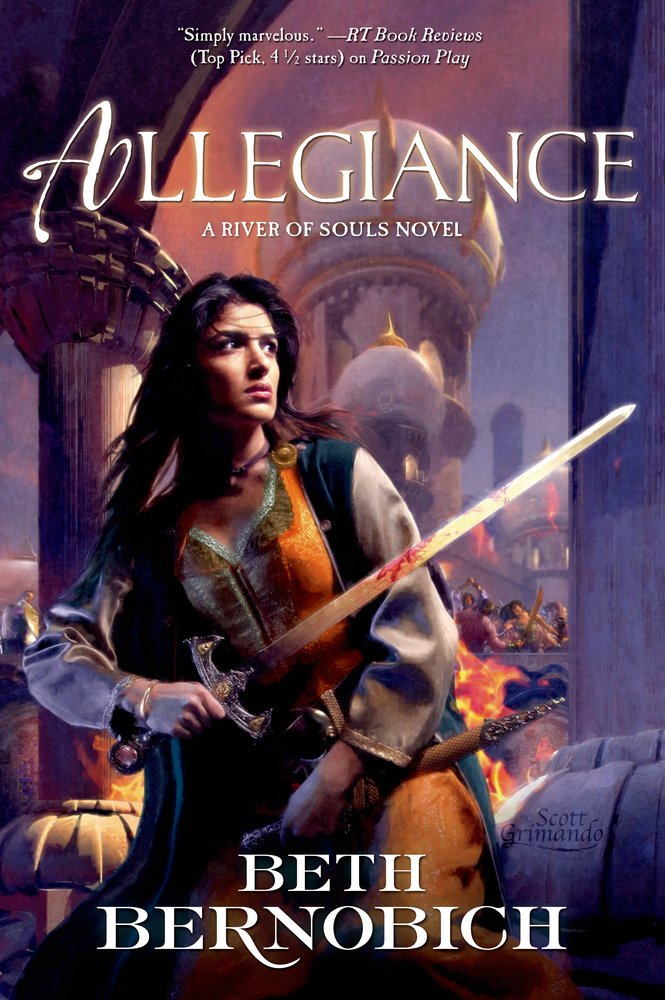
Allegiance was published by Tor Books on October 29. Best guess, it is 320 pages, priced at $25.99 in hardcover, and $12.99 for the digital edition. I dunno who painted the cover, but I like it.

A Fond Look Back at Bluejay Books

A Fond Look Back at Bluejay Books

Alien Cargo Theodore Sturgeon-smallThe most popular article on the Black Gate website in July was our report on the departure of James Frenkel from Tor Books.

News articles like that are usually good for some decent traffic. It seems everyone had something to say about Frenkel stepping down from his post at the most powerful genre publisher in America and all that attention generated a lot of clicks.

Most conversations, however, dwelled on the circumstances of his departure, and overlooked his many accomplishments. During his years at Tor, Frenkel sure was busy. He acquired and edited some of their most important books, including volumes from Frederik Pohl, Dan Simmons, Jack Williamson, Timothy Zahn, Greg Bear, Andre Norton, Vernor Vinge, and many others.

But even before he joined Tor, Frenkel made major contributions to American SF and fantasy, particularly as publisher at Bluejay Books in the mid-80s. It’s Bluejay, and the beautiful books they produced before going out of business, that I want to talk about today.

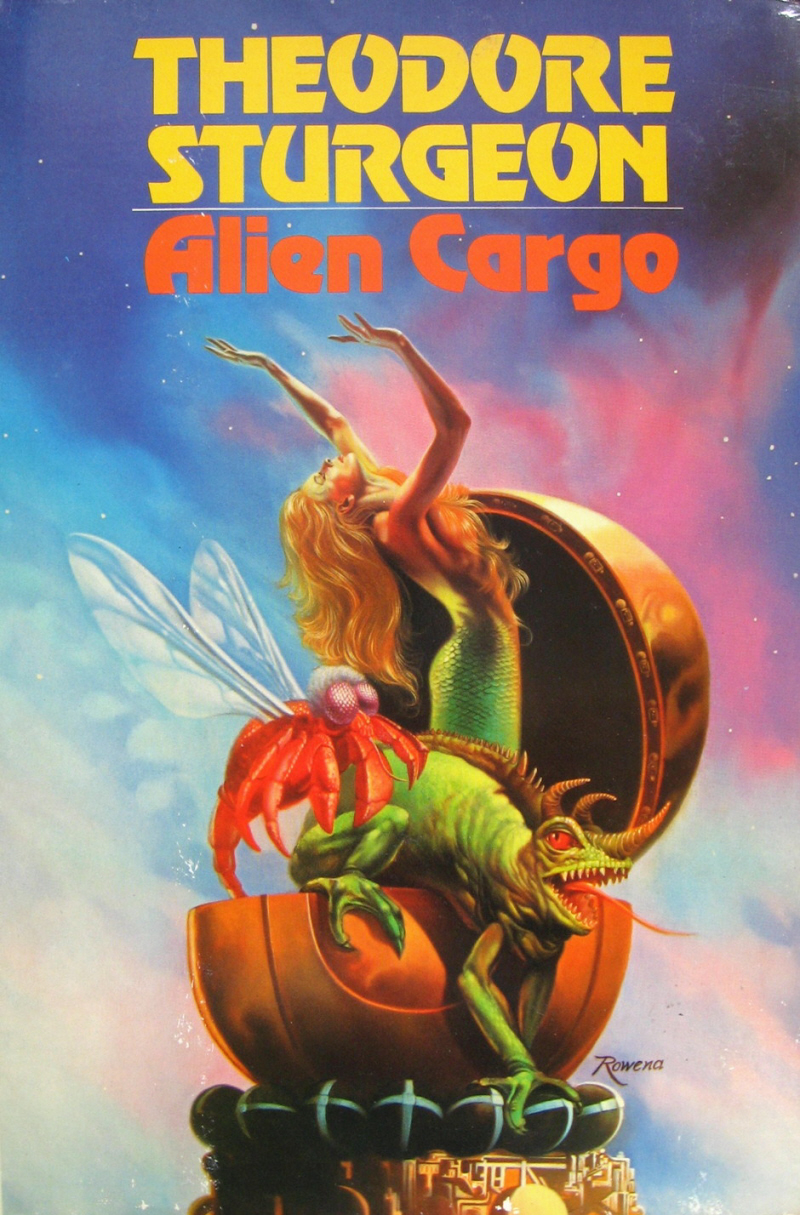
Bluejay was active just as I was really discovering American fantasy and SF in the early 80s, haunting bookshops in downtown Ottawa. They were pioneers in the trade paperback market, hired excellent cover artists — including Rowena Morrill, Tom Kidd, Barclay Shaw, John Pierard, Jill Bauman, and others — and published many of the top writers in the field, such as Theodore Sturgeon, Philip K. Dick, Harlan Ellison, Vernor Vinge, and many more.

That was a powerful combination, and it meant that Bluejay was an imprint with enormous prestige — at least in my mind. I kept an eye out for their books on the shelves and always gave them special attention.

That prestige extended to all their titles, not just the authors I recognized (part of the magic of having a strong and easily recognizable visual brand). It also extended to the new authors they discovered and championed.

Read More Read More

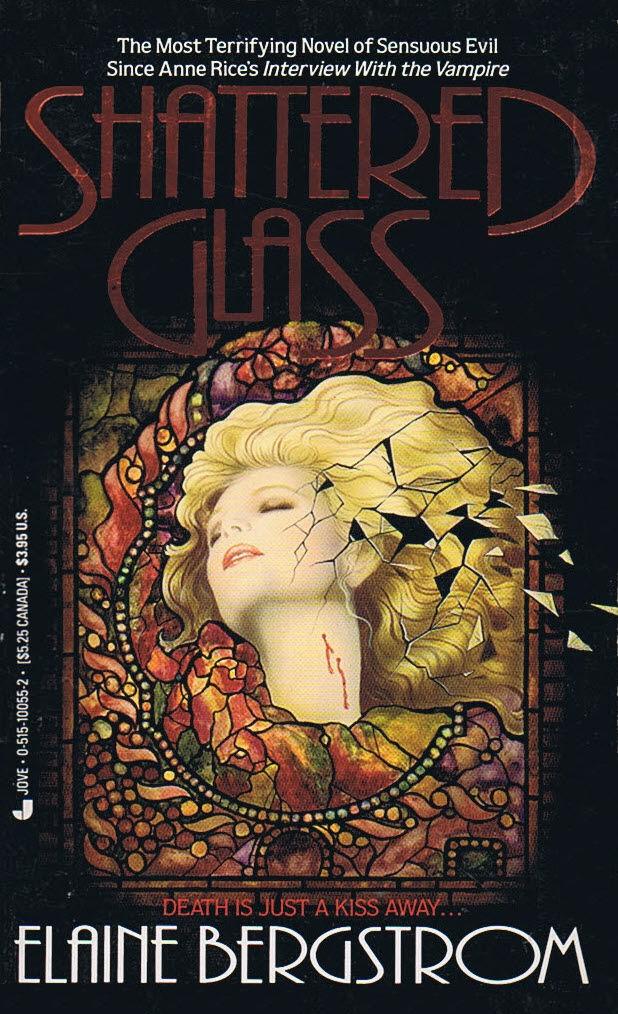
Vintage Treasures: Shattered Glass by Elaine Bergstrom

Vintage Treasures: Shattered Glass by Elaine Bergstrom

Shattered Glass Elaine Bergstrom-smallFor a long time, I credited the rise of the paranormal fantasy genre pretty much single-handedly to Buffy the Vampire Slayer. While I knew it was a little simplistic, it seemed obvious that the roots of the modern fascination with dating vampire, ghouls, werewolves, etc. arose from the long-running romance between the leads of Buffy and Angel, perhaps the two most successful horror TV shows of the our generation.

Of course, as I explore the modern history of dark fantasy, I find more and more evidence that paranormal romance was alive and well long before Joss Whedon penned his first screenplay. Chelsea Quinn Yarbro’s first vampire romance, Hôtel Transylvania, featuring Count Saint-Germain, was published in 1978, for example. (And the series is still going strong — with volume 26, Night Pilgrims, just released in August.)

Yarbro was hardly the only pioneer in the genre, however. Elaine Bergstrom was working as a copywriter when she wrote her widely acclaimed first novel, Shattered Glass (1989), one of the first vampire romances. It featured a family of vampiric immortals and received a Stoker nomination. She followed up with five additional novels of the Austra family: Blood Alone (1990), Blood Rites (1991), Daughter of the Night (1992), Nocturne (2003), and Beyond Sundown (2011). Here’s the back cover copy for the book that kicked it all off:

Modern technology has rendered the vampires’ night hunt obsolete. But some vampires continue to kill. By choice.

Stephen Austra is a prominent artist, renowned for his wondrous restorations of stained glass in cathedrals and churches. He is also a vampire. But he respects ordinary human lives, and would never hurt a soul. Or so his lover, Helen Wells, desperately wants to believe…

Chilling, erotic and provocative, this sensational new novel by Elaine Bergstrom will lure you into a world where immortal evil meets undying passion. And where a series of appalling murders leads a beautiful young woman into the depths of suspicion… and to new heights of terror.

Bergstrom has also written two Ravenloft novels: Tapestry of Dark Souls (1993) and Baroness of Blood (1995). Shattered Glass was published in July 1989 by Jove Books. It is 372 pages, originally priced at 3.95 in paperback. It is currently available in digital format for $3.99.