Browsed by
Author: Bob Byrne

The Public Life of Sherlock Holmes: The Key West Private Eye – Gideon Lowry
The Public Life of Sherlock Holmes: The Key West Private Eye – Gideon Lowry

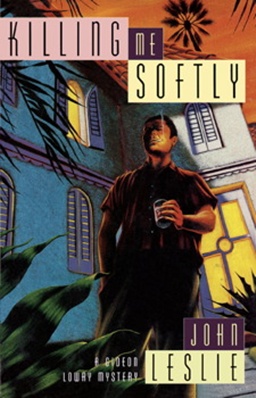
Leslie_SoftlyAs I’ve posted here at Black Gate, John D. MacDonald, author of the Travis McGee series (and much, much more) is my favorite writer. And I believe, one of the greatest American writers of the twentieth century, in any genre. His is the pre-eminent name in the subcategory of ‘Florida writers.’ Randy Wayne White’s Doc Ford, a marine biologist who lives in a stilt house, is McGee’s successor. I think White is a top-notch writer and I certainly recommend that series.

I’m not as up on this group as I used to be, but Carl Hiassen is probably the best-known Florida scribe these days. His biting satire and hilarious situations can be laugh-out-loud reading. In a similar vein to Hiassen are the works of Lawrence Shames. He also pokes fun at the absurdities of Florida life with a series of mostly unconnected books set in Key West. I recently read Virgin Heat and Mangrove Squeeze and got some chuckles, though his stuff is a bit raunchy for me.

There are others, of course, like Thomas McGuane (Jimmy Buffett’s brother in law), Geoffrey Norman, Lawrence Sanders, James W. Hall and John Lutz, to name a few; covering a wide range of styles. Today, I’m going to talk about John Leslie and his hard-boiled PI, Gideon Lowry.

There are only four books in the series, and it appears that no more will be forthcoming. This is a shame, because Lowry is an interesting character. Killing Me Softly was published in 1994 and Lowry is in his fifties. Except for a two-year vacation to Korea, paid by Uncle Sam, he has spent his entire life in Key West. He’s a true-blue Conch. And that matters, as the sense of tribe plays a big part of the series. Whether or not someone was one of “our people” was a major factor in how you responded to situations regarding them. But unlike his father, Lowry doesn’t simply identify with natives and locals.
…

Read More Read More

The Public Life of Sherlock Holmes: Austin’s Jack the Ripper

The Public Life of Sherlock Holmes: Austin’s Jack the Ripper

AustinKiller_XmasheadlineThis morning’s post would have been about Houdini and Doyle, the new TV series airing Monday nights on Fox. Except I missed the pilot: and contrary to much public opinion, I only write posts on subjects I know something about. Maybe not much, but… From what I can tell, it’s a buddy cop show in which the pair, one a believer in supernatural phenomena (Doyle), the other a skeptic (Houdini), investigates crimes. Brings to mind a poor man’s Mulder and Scully, but I’ll give it a chance.

And I’m about the last Black Gater you’re going to see a post from regarding the mess that is the Hugo Awards, so that’s not happening here. New fictional TV show aside, Sir Arthur Conan Doyle was quite interested, and occasionally involved with, real-life crimes.

I wrote about the George Edalji case here (and even put the world’s first private consulting detective into the crime in Volume III of The MX Book of New Sherlock Holmes Stories). I talked about his involvement with The Crimes Club in this post. And when time permits, I’m going to refresh my knowledge regarding the Oscar Slater case and write about that.

But my interest in Holmes and other Victorian mystery fiction, as well as hard-boiled mysteries, has resulted in reading about true crimes from those eras. Of course, there’s Jack the Ripper, various ‘trunks on trains’ murders, a plethora of poisonings (Florence Bravo is a particular interest area of mine) and more to delve into.

I lived in Austin, TX for a few years in the early 2000’s. While there, I read Steven Saylor’s A Twist at the End, and was fortunate enough to attend a lecture he gave on the killings. What killings, you say? Read on.

…

Read More Read More

The Public Life of Sherlock Holmes: Enter Jim Chee

The Public Life of Sherlock Holmes: Enter Jim Chee

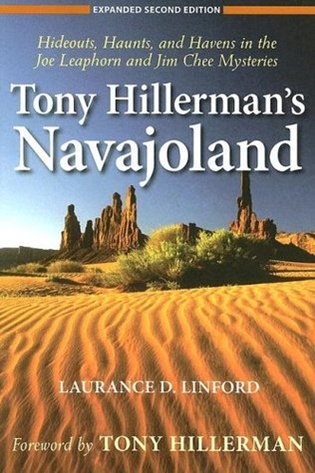
Chee_NavajolandSo, The Public Life of Sherlock Holmes has talked about Tony Hillerman here and Joe Leaphorn here. Leaphorn had featured in the first three novels: The Blessing Way, Dance Hall of the Dead and Listening Woman. This week, we turn our attention to Jim Chee

For his fourth Navajo Police novel, People of Darkness, Hillerman needed a less wise, less assimilated policeman. He actually considered flashing back to a younger Leaphorn but decided against that and instead created the younger, more naïve, Chee. He would hold for the next three books.

In addition to providing an alternative protagonist, Hillerman also changes the opening. In prior books, they begin outside, painting a picture of the reservation: Louis Horsman, on the run from the law, is setting traps to catch kangaroo rats (when he encounters a skinwalker – a witch). George Bowlegs is out running to practice for a Zuni religious ritual (and has a similarly unhappy encounter). And how about this descriptive passage to begin Listening Woman:

“The southwest wind picked up turbulence around the San Francisco Peaks, howled across the emptiness of the Moenkopi plateau, and made a thousand strange sounds in windows of the old Hopi villages at Shongopov and Second Mesa.”

But People of Darkness begins with somebody looking out her office window in a cancer clinic. Things certainly do get started with a bang!

Chee’s introduction is reminiscent of the opening scene of Raymond Chandler’s The Big Sleep. We have a “common” private investigator visiting a rich client of higher social standing. Rosemary Vines wants Chee to take some leave and find a box of keepsakes stolen from her husband. Her husband says it’s all a big mistake: no worry. Hillerman mixes in the Native American Church (the ones that caused the big legal furor over using peyote in their rituals).

Of all Hillerman’s books in the series, this one is most like a private eye novel and has a bit of a Ross MacDonald feel to it, as an event from long ago hangs over the current investigation.

…

Read More Read More

The Public Life of Sherlock Holmes: The Navajo Sherlock Holmes – Joe Leaphorn

The Public Life of Sherlock Holmes: The Navajo Sherlock Holmes – Joe Leaphorn

Leaphorn_StudiBeach
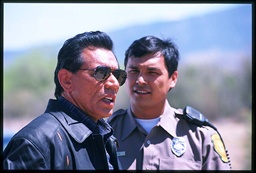
Wes Studi (Leaphorn) with Adam Beach (Chee)

Last week, we had something of an introduction to Tony Hillerman and his Navajo Tribal Police novels. A quick read before continuing on here might serve you well. Or, you can throw caution to the wind and keep going!

In July of 1945, Hillerman was was on a sixty day convalescent furlough from World War II, with a patch over a damaged eye and a cane to assist his gimpy leg. He had been wounded near the German village of Niefern. Carrying a stretcher under fire, he  had stepped on a mine. Now being carried himself on a stretcher, the man holding the front stepped on a mine and Hillerman was on the ground again. Someone picked him up in a fireman’s carry, dropped him in a creek, got him to a jeep and laid him across the hood. Hillerman made it out, alive (He would receive the Bronze Star, the Silver Star and the Purple Heart for his service).

Now temporarily back in the States, he had gotten a job driving pipe from Oklahoma City to an oil well drilling site on the Navajo checkerboard reservation. He stopped as a stick carrier’s camp crossed the road in front of him. They were making the ritual delivery of a scalp to the camp of a Navajo serviceman receiving an Enemy Way ceremonial. That’s a bit different than a deer crossing the road!

Hillerman’s first novel, some twenty years later, heavily involved an Enemy Way (that was his choice for the title. His publisher selected a completely unrelated ceremonial, The Blessing Way).

Tony Hillerman had been a reporter for many years and had also written nonfiction when he decided to write his first novel. As influences, he has cited Ross MacDonald, Raymond Chandler, George V. Higgins, Ernest Hemingway (“when he was still young enough to care about it”), Graham Greene and Eric Ambler (a master of suspense who has become unfairly forgotten over the years).

A less familiar name is that of Arthur Upfield, who wrote about the Australian Aborigine, Inspector Napoleon Bonaparte. Hillerman frequently cited Upfield’s ability to make the setting seem real. That same descriptive ability is at the core of the Leaphorn and Chee books.

And speaking of those books…

…

Read More Read More

Storming (Err…. Escaping) the Temple of Elemental Evil

Storming (Err…. Escaping) the Temple of Elemental Evil

Temple of Elemental Evil board game

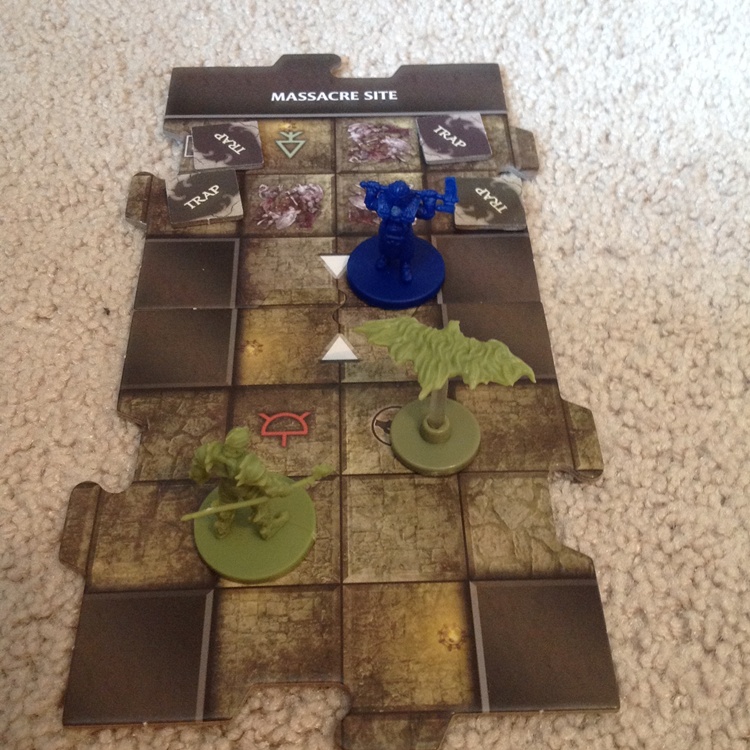
Toee_1
1st Turn

I’m sure you read my look at the Dungeons and Dragons Adventure Board Game series. I mean, who hasn’t? Anywhoo, I decided to try and solo the first adventure in The Temple of Elemental Evil (ToEE). I’ve not played Castle Ravenloft, but so far, I’ve found Legend of Drizzt to definitely be the easiest of the series, with Wrath of Ashardalon much tougher. After a few plays of Temple, I determined it to be even harder to win.

ESCAPE – That’s the name of the adventure. This one begins with the Massacre Site tile, rather than the Start Tile. Somewhere between the eighth and thirteenth tiles is the Guard Room tile. Once you find that, you lay the Start Tile next to it and if you can end your Hero Phase on the Start tile, you win.

Knowing how brutal this game is, I chose to play Barrowin, the female Gold Dwarf Cleric. Her healing power would most definitely be needed. Her stat line is 16 AC, 8 HP, 5 Speed. And when she uses a Daily or Utility power, one hero (which can be her) on her tile regains 1 HP.

I also House Rule that the monsters do not attack on the turn that they are placed. This is a big change, but I think that ToEE and Wrath are extremely difficult to win without that change.

You can click on the pictures to enlarge them and get a better look at what’s going on.

How did I do? Well, Barrowin made it to the 14th turn, which is at least a moral victory. See how it all turned out below.

…

Read More Read More

Here Come the Replicants! – Blade Runner 2 Moved Up

Here Come the Replicants! – Blade Runner 2 Moved Up

BladeRunnerThe long awaited sequel from Ridley Scott, starring Ryan Gosling, Harrison Ford, Robin Wright and Dave Bautista (yes, the former wrestler), was originally slated for January of 2018. That’s not exactly prime release time. Or a sign that the studio has confidence in the film. Instead, it’s been moved up to the weekend of October 6, 2017, which would put it in the Oscar discussion. If it is any good, of course.

Feelings about the sequel are certainly mixed. Though I think folks should remember that Blade Runner was not a hit upon release and had fared so poorly in test screenings that the film was recut before general distribution. However, it has grown to cult status. It’s one of my favorites and certainly a classic of scifi noir.

The script continues the story from the first film, which was an adaptation of Philip K. Dick’s Do Androids Dream of Electric Sheep. Which is well worth a read.

K.W. Jeter wrote two official sequel novels, which I’m happy to say, have nothing to do with the film. The first was readable: the second was terrible.

If you enjoyed Blade Runner, there’s a superb book on the making of the film, Future Noir: The Making of Blade Runner.

I remain hopeful about this film. And Vangelis is 73 years old. Will he be doing the soundtrack? It was a big part of the original.

…

Read More Read More

The Public Life of Sherlock Holmes: Meet Tony Hillerman

The Public Life of Sherlock Holmes: Meet Tony Hillerman

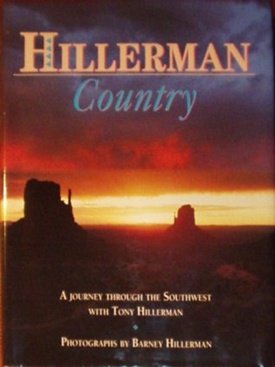
My all-time favorite coffee table book

Last week, I wrote about John Cleese’s Elementary, My Dear Watson. I’m struggling through my re-watch of his The Strange Case of The End of Civilization as We Know It (I thought it was bad on first viewing: nothing has changed my mind this time around), so that isn’t ready to go yet. So, here’s the first of several posts related to a Mystery Writers of America Grandmaster: the late Tony Hillerman.

“I was writing episodically because this short book stretched about three years from 1967 to 1970 from first paragraph to final revision – with progress frequently interrupted by periods of sanity – probably induced by fatigue and sleepiness. Most of my efforts at fiction were done after dinner when the kids were abed, papers were graded and the telephone wasn’t ringing.

Sometimes, in those dark hours, I would realize that the scene I finished was bad, the story wasn’t moving, the book would never be published, and I couldn’t afford wasting time I could be using to write nonfiction people would buy.

Then I would pull the paper from the typewriter (remember those?), put the manuscript back in the box, and the box on the shelf to sit for days, or some times a week, until job stress eased and the urge to tell the story returned.”

So did Tony Hillerman, decorated World War II combat veteran, former newspaper reporter and then-current university teacher, very slowly, write The Blessing Way. Hillerman is not a Navajo. He’s a Caucasian who grew up in a small Oklahoma village on land belonging to the Potawatomi tribe. He went to the local Indian school for first through eighth grade and from an early age had no prejudices against Indians. They were just kids, like him. It shaped the character that let him write about the Navajos in a realistic and sympathetic manner. They aren’t simply stereotypes in a mystery book.

…

Read More Read More

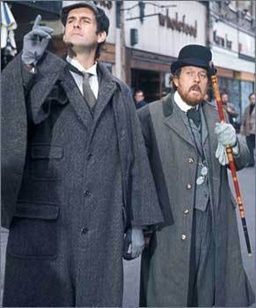
The Public Life of Sherlock Holmes: John Cleese as Holmes – Take One

The Public Life of Sherlock Holmes: John Cleese as Holmes – Take One

Cleese_ElementaryJohn Cleese is best known, of course, as the sardonic Q opposite Pierce Brosnan’s James Bond in Die Another Day. Though not as well remembered, he also played a key role in the British comedy troupe, Monty Python.

I’m kidding!

On January 18, 1973, the final episode of Python’s third season aired. It was Cleese’s last episode with the group, which would continue on for one more season. That very same same day, Cleese’s next project aired – Comedy Playhouse Presents: Elementary, My Dear Watson. It was produced by Barry Took, who had brought the Python members together.

I’m going to tackle the Achilles heel (really, it’s more like the entire torso) of this show, the plot: or rather, the lack of one. It’s barely a story. Try to stick with me, and no, I’m not leaving things out: it really goes like this…

The show opens in a room full of dead lawyers, slumped over their desks, each with a knife in the back.  Some would say that’s a pretty good start, but let’s stay focused. Thus the show’s subtitle, The Strange Case of the Dead Solicitors. A policeman and a secretary exchange what are intended to be witty comments, which immediately brings the lame laugh track to the viewer’s attention. This is not the most robust laugh track you’ll come across.

…

Read More Read More

The Public Life of Sherlock Holmes: Ronald Howard Dons the Deerstalker

The Public Life of Sherlock Holmes: Ronald Howard Dons the Deerstalker

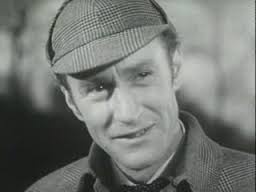
RonHoward2SmileArthur Wontner was the first great screen Holmes of the sound era, followed by Basil Rathbone. Wontner was 56 when he first donned the deerstalker and looked older. Rathbone was 54 for his last Holmes film, though he came across as younger.

I’ve already written a post here at Black Gate (Go ahead: read that before continuing on with this one. You know you want to…) on Ronald Howard’s under-appreciated performance as Holmes in Sheldon Reynolds’ television series, which was filmed in France. Howard, son of British actor Leslie Howard (familiar to Bogart fans), was 36 and portrayed a much younger Holmes than the previous standards. His Watson, H. Marion Crawford, was less of a doofus than we’d seen from Nigel Bruce (Rathbone) and Ian Fleming and Ian Hunter (Wontner).

It’s Elementary – Rathbone was not impressed with his successor: “All I can say is, I think he’s too young for the role. I never thought of Holmes being so young…”

While the scripts often left something to be desired, Howard and Crawford gave fresh performances in the 39 episodes they filmed. The first two, while self-supporting, actually formed a two-parter, by design.

The second episode, The Case of Lady Beryl, took place immediately after the conclusion of the first, The Case of the Cunningham Heritage. Reynolds was a savvy operator and he was hedging his bets. If the pilot episode failed to sell, he could splice the two together and sell it as a filler movie. However, the series was picked up and the two episodes aired in back-to-back weeks in October of 1954 on NBC stations in America. Today, we’re going to look at those two episodes.

…

Read More Read More

The Public Life of Sherlock Holmes: Elric & “The Jade Man’s Eyes”

The Public Life of Sherlock Holmes: Elric & “The Jade Man’s Eyes”

Jade_FlasingBeing an avid Black Gate reader, you know that we devoted a lot of attention to the various works of Conan’s creator last year with our ‘Discovering Robert E. Howard’ series. I was very much a latecomer to Conan, as well as Howard in general. I’ve made up a lot of ground on Solomon Kane, El Borak and others, but I’ve still got a slew of Tor paperbacks featuring the Cimmerian that I haven’t read yet, among other stuff.

However, one fantasy series that I delved far deeper into at a much younger age was Michael Moorcock’s saga of Elric and the Eternal Champion. To my middle school, Dungeons and Dragons-playing mind, that stuff, with those awesome DAW covers, was pure gold. In fact, White Wolf would have been FAR better served to use one of those instead of the craptacular cover they put on Elric: The Stealer of Souls in 1998. It is beyond awful and I’m not going to include it in this post. You can Google it if you doubt me, but I’d take my word for it.

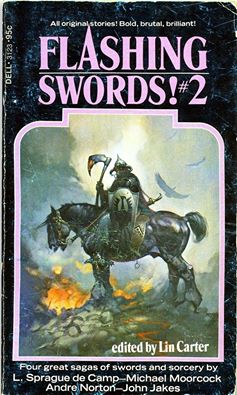
I was going through some boxes of books that aren’t on my shelves and I came across the Dell paperback of Lin Carter’s Flashing Swords #2. First published in hardback in 1974, it included a new story of the pale Melnibonian, “The Jade Man’s Eyes.” And with a Frank Frazetta cover, it’s miles ahead of the aforementioned White Wolf cover as well.

This collection has an interesting introduction that talks about Howard’s Conan as the birth of sword and sorcery (remember: forty-plus years ago and pre-internet, what we now regard as common knowledge and what’s popular and respected often wasn’t the case then).

Carter tells of the creation of The Swordsmen and Sorceror’s Guild of America, Ltd. (SAGA), including himself, L. Sprague de Camp and John Jakes. Fritz Lieber, Mike Moorcock and Jack Vance were added soon after, followed by Poul Anderson and Andre Norton. I imagine you’ll see a SAGA post here somewhere down the line.

…

Read More Read More