Of Swords & Scrolls: An Interview with Author David C. Smith
|
|
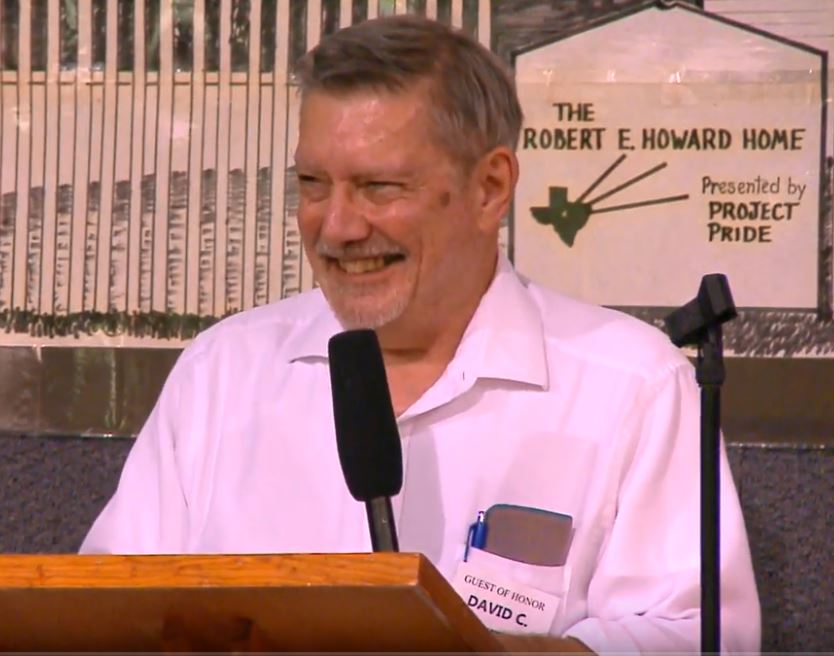
Joe Bonadonna introduces David C. Smith
In 1978, before emails and the Internet, I was working on a novella and reading Dave’s excellent first novel, Oron, when I came across a plot device/character trait in his novel that bore a striking similarity to something I had already incorporated into my story. Already a fan of Dave’s, and knowing he knew Charles Saunders, to whom I had sold several short stories for his and Charles de Lint’s excellent Dragonfields, I asked Saunders for Dave’s address; he was still living in his hometown of Youngstown, Ohio at the time. I wrote Dave a letter and he responded almost immediately. From 1978 until early 1996, when he and his wife Janine — who has a graphic design degree and is a very talented illustrator who did the maps for the brand-new, Wildside Press edition of Dave’s Fall of the First World trilogy — moved to Palatine, IL we kept up a steady correspondence that rivaled if not exceeded the lengthy correspondence between Robert E. Howard and H. P. Lovecraft. Their move occurred during a time when Dave and I had taken vacations from writing. But during the summer of 1996, I finally persuaded him to work with me on a zombie apocalypse screenplay called Twilight of the Dead (later retitled Children of the Grave), and then we collaborated on what we consider to be a solid screenplay called Magicians, which was based on his two David Trevisan novels: The Fair Rules of Evil and The Eyes of Night. That script did exceedingly well in screenplay competitions and we still have hope that one day it will be optioned by some wise, far-sighted and talented producer or director. (By the way, it was at the late and lamented Top Shelf Books in Palatine, at the monthly author’s live-reading night in 2010, where Dave and I met John O’Neill, the Great Eye of Black Gate.)
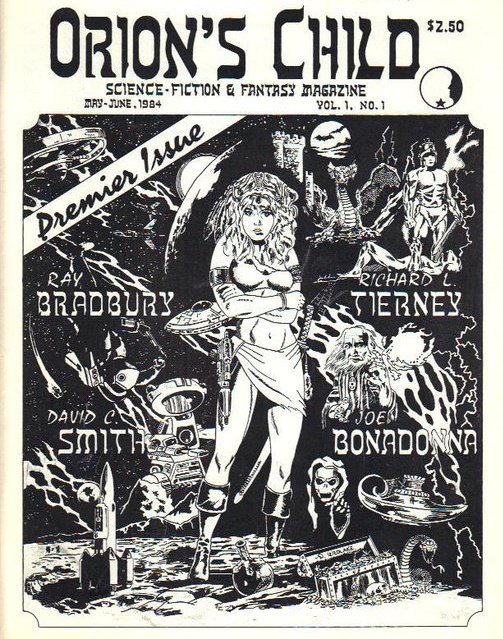
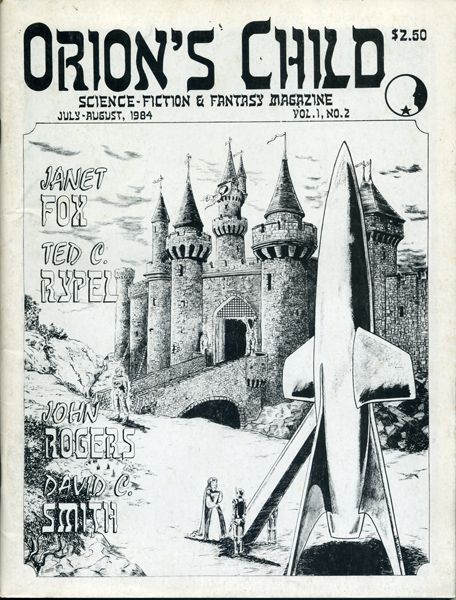
Over the years Dave and I had this weird symmetry or whatever going on: when he was writing, I wasn’t. When I was writing, he wasn’t. However, for many years now we have both been writing at the same time, and almost continuously. A few years ago we collaborated on a Sword-and-Sorcery pirate novel, Waters of Darkness, (which was reviewed for Black Gate by William Patrick Maynard, and an excerpt too), based on an idea of Dave’s, and heavily influenced by Howard and Lovecraft. We recently collaborated on a Sword-and-Planet short story for an upcoming anthology for Jason Waltz’s Rogue Blades label. It’s interesting that Dave and I have found publishers for each other over the years, too. First, we both appeared in the only two issues of a short-lived 1980s’ fanzine called Orion’s Child, even sharing the cover of the first issue with Ray Bradbury; Dave turned me onto the people behind that publication. Then he told me about iUniverse Publishers, I told him about Airship 27 and Damnation Books, and now he’s gotten me hooked up with Pulp Hero Press, for which I’ll forever be in his debt. So besides friendship, Dave and I have shared 5 publishers. (Incidentally, remember that story I was working on when I first read Oron? Well, in 2010 it became part of my Mad Shadows series — and Dave not only edited that story, but all the other stories in the first volume.) So it’s a pleasure and an honor to be both Dave’s friend and collaborator, and now interviewer.
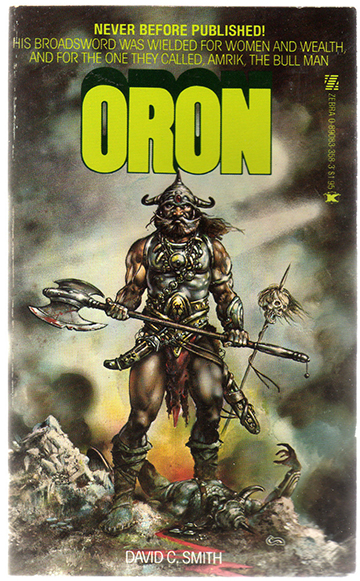
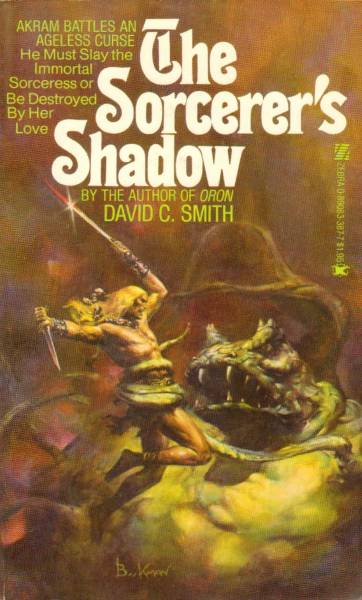
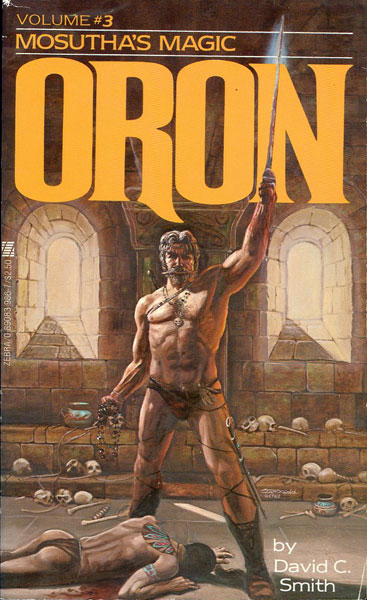
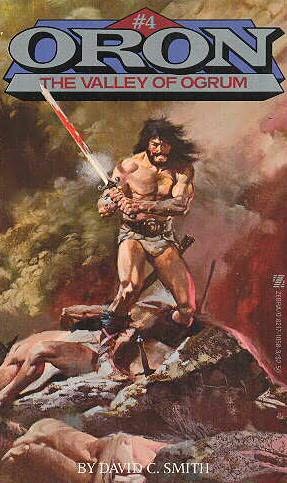
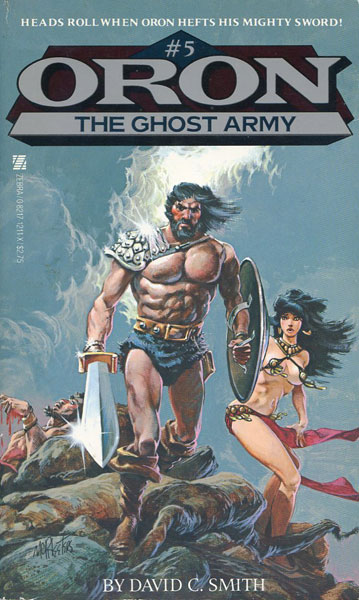
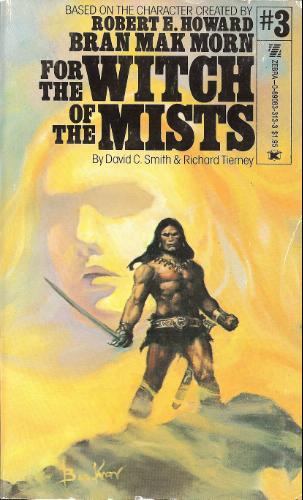
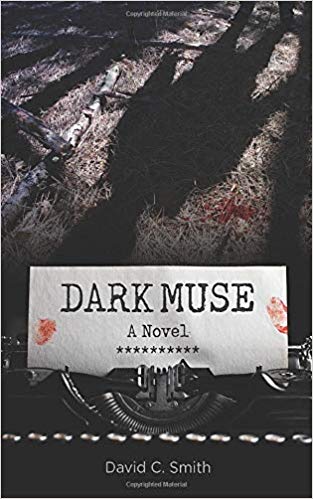
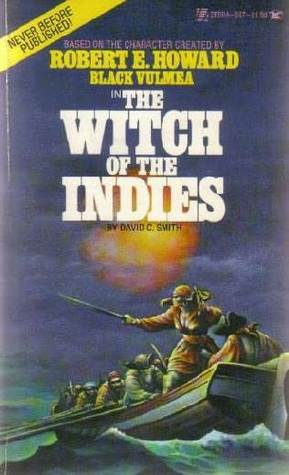
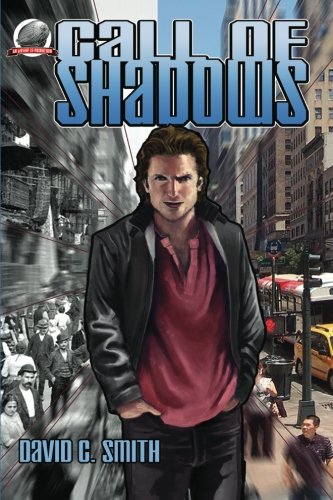
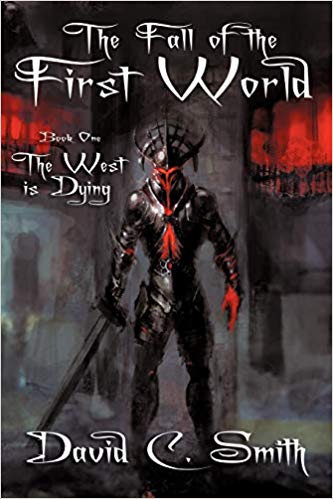
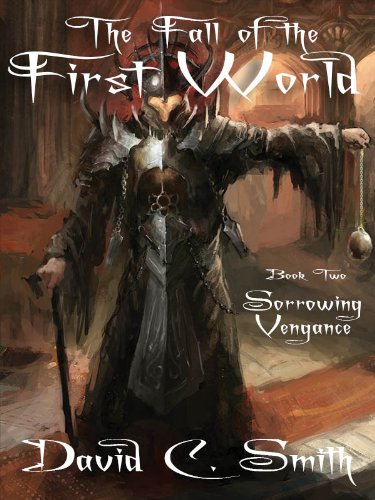
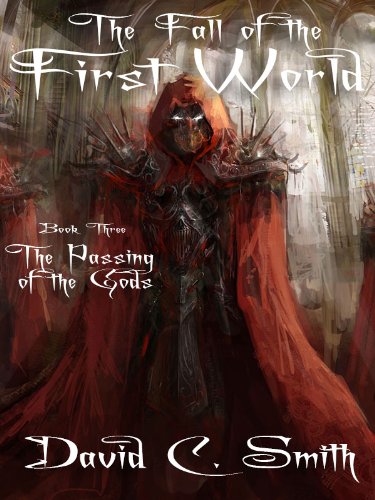
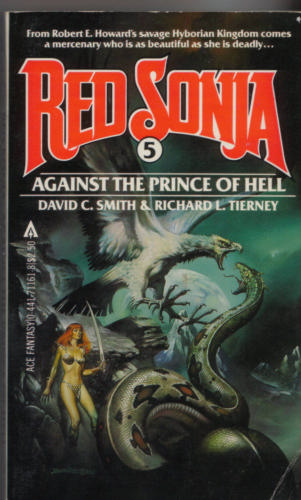
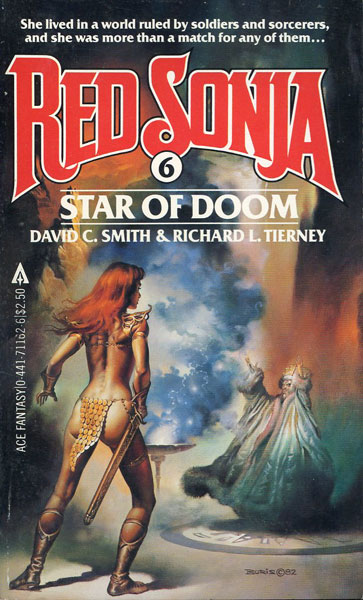
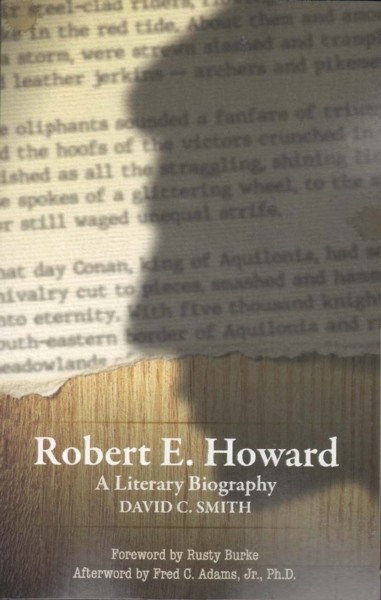
Dave has always been extremely prolific. Besides his aforementioned novels, he’s also written: Mosutha’s Magic, The Valley of Ogrum, and The Ghost Army, all featuring his Oron character; another Sword-and-Sorcery novel titled The Sorcerer’s Shadow; the epic heroic fantasy trilogy, The Fall of the First World; the rural thriller Seasons of the Moon; a creepy and even disturbing urban thriller called Dark Muse; and a modern-day tale of horror and sorcery, Call of Shadows. Early in his career, Dave became involved with Glenn Lord and the estate of Robert E. Howard, and in the 1980s he and Richard L. Tierney wrote six great Red Sonja novels and one really fine Bran Mak Morn novel, For the Witch of the Mists. Plus Dave wrote his own fantastic pirate adventure, The Witch of the Indies, featuring Howard’s character, Terence Black Vulmea. In addition to his many novels, Dave has also published eighteen short stories (one of which appeared in a volume of Andy Offutt’s famous Swords Against Darkness anthologies), and he’s authored numerous academic and literary essays and articles, as well. He wrote an insightful article for Black Gate on Robert E. Howard’s “The Pool of the Black One” called, which is part of Bob Byrne’s series, Hither Came Conan. Most recently Dave published a scholarly, in-depth look at Robert E. Howard’s life and body of work, Robert E. Howard: A Literary Biography, for which he deservedly won the 2018 Atlantean Award from the Robert E. Howard Foundation. Recently he was the Guest of Honor at Howard Days 2019!
I think I’ve covered it all. So now I’m going to sit back, give Dave the third degree and let him tell you more about his life and his body of work so far.
 |
 |
 |
 |
 |
First off, Dave, tell us how you came to be involved with Glenn Lord, Rusty Burke, and the Robert E. Howard Foundation. What were the circumstances that led you to write the Red Sonja, Bran Mak Morn, and Terence Vulmea novels? That surely was an honor and a thrill, as well as a great testament to your writing skills.
The Vulmea and Bran novels came first, and they were the result of my knowing Dick Tierney, whom I’d met — at first by mail — through Dirk Mosig, the Lovecraft scholar. We were both early members of the Esoteric Order of Dagon, the Lovecraft APA, and Dirk had kindly agreed to read and comment on the manuscript of Oron, which I’d completed in 1974. Sword-and-Sorcery fiction is not really something Dirk is interested in, or wasn’t at the time, but he liked Oron and mentioned it to Dick. By this time, I’d learned about Dick’s work, and he agreed to read Oron. I met Dick and Dirk and other good people in the fall of 1975, when I traveled with Roger Bryant, who was then the editor of the EOD, to St. Paul for Oktoberfest. When I met Dick, I handed him the manuscript of Oron, and he gave me an inscribed copy of The Winds of Zarr, which Harry Morris had published. I still have it.
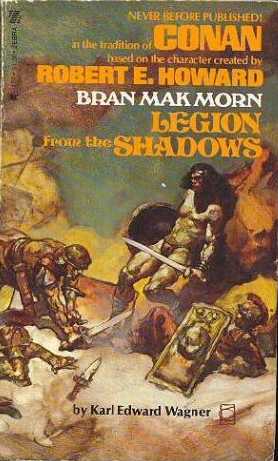
Once Dick read Oron, he asked if he could recommend it to his friend Kirby McCauley, who had just moved to Manhattan to start his career as a literary agent. Of course, I said yes; you couldn’t ask for a luckier break. Kirby had no luck initially in placing Oron, but he did convince Roberta Grossman at Zebra Books, which had the rights to some of the Howard characters other than Conan, to let me try my hand at a Bran Mak Morn novel. This was because they were uncertain whether Karl Wagner, whom Kirby also represented, would turn in his second Bran novel for Zebra, Queen of the Night. I submitted the first chapter and outline of For the Witch of the Mists —standard procedure — but when it looked as though Karl was going to turn in his Bran novel after all, Kirby asked me about writing a novel featuring Terence Vulmea. I’d always wanted to write a pirate novel and had an abandoned one in my files. Roberta accepted my initial chapter and outline, and I spent the winter of 1976-1977 in my little apartment in Erie, Pennsylvania, during one of the worst blizzards of the century, writing about pirates and witches in the Caribbean. It turned out that Karl never did turn in his Bran novel, so Kirby asked me to complete the one I’d outlined and to collaborate with Dick on it. He was representing us both, and I was more than happy to work with Dick. I finished the first draft according to the outline I’d done, and Dick then revised that draft. Good thing — he knows far more about the history of Rome and the Roman Empire than I do, so he was able to correct a number of details that I’d been sketchy about.
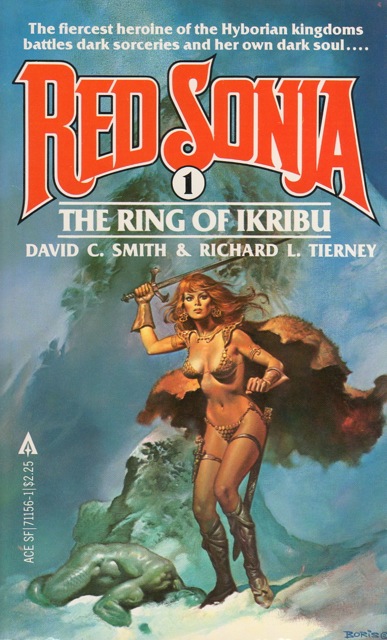
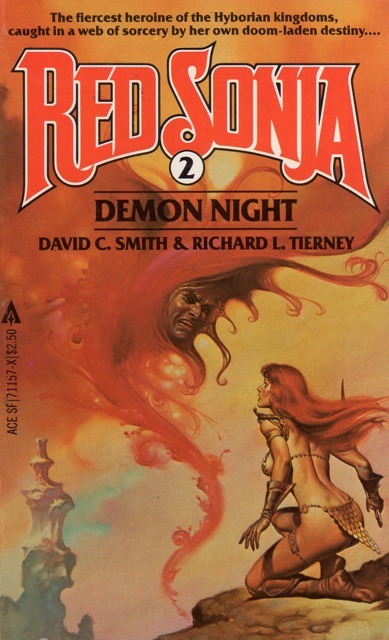
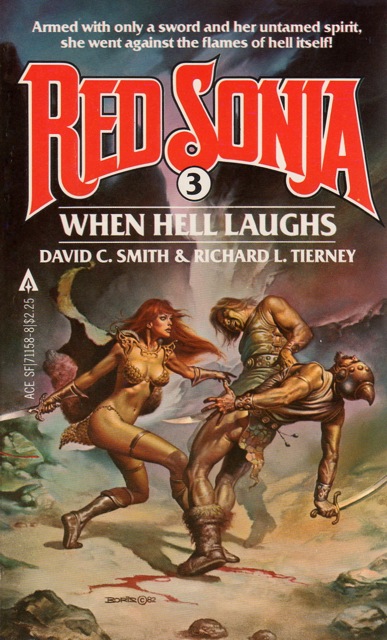
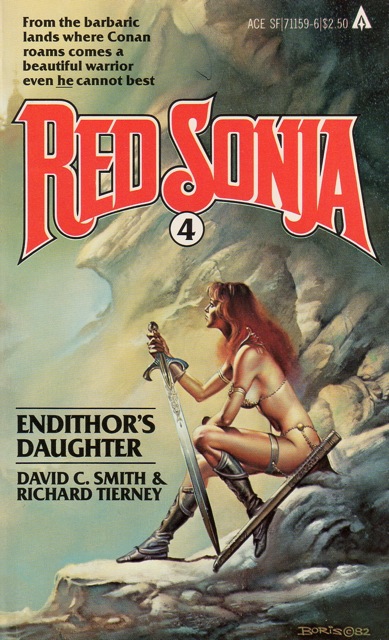
Our success in collaborating on the Bran novel led to our working together on the Sonjas. Kirby had negotiated a deal with Ace for four Red Sonja novels, based on the Marvel Comics character that Roy Thomas had essentially created. By the time we signed the contract, the number had been upped to six. We spent the next few years turning in those scripts, doing about two a year. By that time, Kirby had dropped me as a client; he’d signed Stephen King, so he had much bigger fish to fry. Horror was booming then and has never really let up, whereas Sword-and-Sorcery has always had a limited audience. In the mid-1980s, S&S was being replaced by Tolkienesque fantasies, which had a much wider reach in the popular media, and I had no interest in going in that direction. It’s not me. I considered working on some horror story ideas — I started out in the fanzines writing both horror stories and adventure-fantasies — but I was burned out after writing three Oron books and my fantasy trilogy simultaneously. I’d dropped my agent and was pretty depressed. So in 1984, I stopped writing. I felt that I’d had my moment.
 |
 |
Glenn was integral to the Vulmea, Bran, and Sonja books — he signed the royalty checks! I’d made his acquaintance briefly in the pages of the Robert E. Howard APA I’d joined in 1975 or thereabouts — The Hyborian League, I think, or maybe it was REHupa. I’d have to check. Within a few years, he was sending me royalty checks for the Howard pastiches I’d written, and this turned into a long correspondence with him. Anyone reading this who knew Glenn knows why I think the world of him. He was one the most generous men ever, and the man who truly started us all on the literary appreciation of Howard, no one else.
The Howard biography led to my interacting with the Robert E. Howard Foundation, which was founded in 2006. The idea for the biography began with Bob McLain at Pulp Hero Press. This was in the summer of 2017. We agreed on an approach, and I spent nearly every evening for nine, ten months working on it, going through the Ballantine editions of the approved texts of the stories and using every other Howard reference I have, going back to the early 1970s, plus lots of material I’ve downloaded over the years from the Web, pieces on literature and writers. It all came in handy. Once I started on it, I contacted Rusty, Mark Finn, Patrice Louinet, and Rob Roehm to ask if I could shoot questions past them, just to keep things squared with what they know about Howard and his work and life. They’re the experts; I was coming at it from the perspective of a sympathetic fellow writer who has also been through the grind. Rusty I knew from REHupa, which I had joined in the mid-1990s for a couple of years before moving to Chicago. I’d met him later at an event in Chicago. Patrice, of course, was working on his Ph.D. at the Sorbonne, so clearly he didn’t have any free time; still, I relied on the important essays he’d contributed to the Ballantine Conan volumes. Rusty, Mark, and Rob patiently answered my questions, and Rusty wrote the foreword and even heroically read through the whole Word doc and kept me honest on a few points where it was needed. Their assistance was invaluable. I asked Donald Sidney-Fryer and Charles Saunders for comments, too — Don for his insights into Howard’s poetry, which I wanted to devote a chapter to, and Charles for his generous insights into Howard’s racism and his views on race as reflected in his fictional universe.
Doing the biography let me formalize in one place the many ideas and intuitions I’d had about Howard’s work over the years. The dismissive attitude toward his work promoted by de Camp and Carter and other unsympathetic people — it’s time to put a stake through that and bury it. I don’t know how people who should know better look at the man’s work and miss what to me is obvious, that there are layers in that fiction that effectively place Howard’s best work on the top shelf. Clearly the poetry — poetry in all of its dimensions — and the care with the language and the vision and sheer invention in the man’s work eluded them. I think it’s a case of seeing what you expect to see: if all you want see is something one-dimensional and obvious, then that’s as far as you go with it. When I was in junior high school and first read Howard’s stories, that’s all I saw, too. But widen your experience, get an education, get some perspective, and read his work with informed awareness, not just casually, and the excellence becomes evident.
Other than Robert E. Howard, tell us about some of the other authors who influenced and inspired you and started you down the path of being an author yourself.
Jack London, certainly. I have a full shelf of his work in old used hardcovers I bought back in the days when we had honest-to-God used-book stores that were stacked to the ceiling with stuff going back a hundred years. And authors I read during study hall when I was in junior high school and high school, such as Leigh Brackett’s Eric John Stark novels. After that, I was also influenced a lot by drama, stage drama, believe it or not. I’d attended plays in college, and among those used books I’d bought were old editions of Ibsen and other playwrights. Plus I’d studied Shakespeare, of course, and other Elizabethan and Jacobean authors.
Aside from reading as widely as I could, though, I’ve been influenced a great deal by the movies. I started out with the intention of majoring in cinema, and I’ve been a movie nut for as far back as I can remember. I read tons of books on film history and technique in the late sixties and early seventies. The early seventies was a gold mine in the publication of histories and texts on the cinema. So I read Robert E. Howard and those paperback anthologies of horror stories that were everywhere in the early seventies while I was also reading books on film theory written by Pudovkin and Eisenstein and reading about other early filmmakers, especially of the silent era, when cinematic storytelling was developed — Griffith, particularly. I still think that if you read my books with the idea that each paragraph is a new shot and each section is a set-up, it works. The opening of The Shadow of Sorcery is one long tracking shot through Kabai, the city where the novel opens. The middle section of The Eyes of Night, with David Trevisan and the sorcerer’s daughter driving all the way across Ohio to evade the bad guy, is right out of Hitchcock.
What inspired you to start writing, and how long have you been writing?
I’ve always written. When I was ten or eleven, I made my own little booklets of a series of adventures about a cave boy and his pet dinosaur. I’m sure I was inspired by the Bomba the Jungle Boy books that a neighbor gave me, the “Roy Rockwood” series. Instead of turning in essays in the eighth grade the way we were supposed to, I wrote long science-fiction stories about explorers going to the center of the earth or being shrunk to insect size by radiation from a meteorite. My teacher wrote at the top of one of these, “I didn’t expect to read a chapter from your forthcoming novel.” Prescient of her!
In high school, when I was making 8mm movies with friends of mine, I wrote all sorts of scenarios for those. But the real impetus to write stories came after reading the Conan paperbacks Lancer brought out in the late sixties. I liked those Howard stories and they fit in with the adventure stories and movies I liked — Jack London, Edgar Rice Burroughs, and midcentury historical novels written by people such as Samuel Shellabarger. The first short story I wrote then was inspired by “Black Colossus.” When I took a fiction-writing course in my sophomore year with Steve Sniderman at Youngstown State, everything clicked. I was writing for the fanzines by then, particularly Space & Time, but I felt I wanted to add as much as I could to genre fiction, which I liked. So I tried to add as much heart and soul to the characters as I could even though they were in four-thousand-word, five-thousand-word short stories. I wanted to keep improving.
So, I’ve been writing seriously since the spring of 1971, when Mrs. Summerson at Ohio State called me into her office, told me that I wrote well, and asked if I’d considered majoring in English. That was the moment. I spent that summer writing all sorts of stuff — short things, ideas for comic book stories, plays, all sorts of stuff. Almost sold a comics script to Archie Goodwin, a Lovecraft-type story called “The Unnamable Horror.” Never quite got it to click. But I kept writing horror stories and then Sword-and-Sorcery stories for the fanzines.
 |
 |
What genres and/or literary style do enjoy writing in the most?
Adventure-fantasy, as I call it, first of all. It’s about elemental characters and desperate situations, and there must always be a Gothic element to it. As far as I’m concerned, if that existential darkness isn’t there, we’re missing something. It needn’t be overbearing; it can be subtle or in the subtext. But it needs to be there.
That probably carries over into my preference for suspense stories, too. Dark Muse is an example (excerpt on Black Gate). It’s in the David Trevisan novels, too, and in Call of Shadows. And all of those edge into horror at times. I’m now reworking “Coven House,” my short story that was in Weird Tales in 2012, into novel length. For me, this is horror. Sometime while I was taking my time out, horror became synonymous with gore-porn, which doesn’t work for me. It’s too obvious, and I don’t know how you build from that. I say this as someone who appreciates the Grand Guignol element as much as anyone. But gore for gore’s sake seems cheap me. Maybe I’m misreading this stuff, but I prefer to work on the reader’s mind and emotions during the build to the payoff. And the voice should be those of the characters and the situation, not the writer. The writer should be like the music in a movie — there, and contributing, but you’re aware of it only subconsciously.
Besides the obvious “entertainment factor,” what do you strive for in your writing?
Characterization, plain and simple. More and more, and especially since I’ve gotten back into writing seriously after the long dry spell, I want to write characters that an actor can look at and want to portray, characters where there’s something there. The other factor is what I think of as density or weight, so that there’s more to the story than there seems to be on the surface. If you think about the story after you’ve read it, it enlarges for you. There are layers that make it feel alive for you. You can reread it and still get something out of it.
Would you say your stories are more plot-driven or character-driven?
Character-driven. The plot comes from the characters and their actions and reactions to events. My early fiction was not this way, but this is how I write now. And I’m glad now that I had that long time out because it let me reconsider how I’d been doing things. There’s more thought now, less automatic reflex.
What can you tell us about your latest work(s) in progress? What’s on the horizon for you?
Right now, I’m finishing Sometime Lofty Towers, which I think of as “literary S&S” because I’m taking care with the characters and the writing. It’s interesting that I started it when I was still in that period where I was not writing much at all, but it was a reaction to my father’s death. He died in September 1997, and in October I found myself jotting down phrases and composing paragraphs that would fit into some kind of adventure-fantasy story. I was clearly working through my grief by turning to what I knew how to do, putting words on the page for that kind of story. I would up finishing about 16,000 words before letting it go. But I showed that beginning to friends, who liked it very much, so I’ve continued to work on it off and on over the years. Now it’s past 50,000 words, and I’m wrapping up the last ten or so, so it will be done soon.
After that, I’d like to finish Coven House.
And then, Bob McLain at Pulp Hero Press is going to reprint the entire Attluma or Oron series, those five books, in new editions — Oron and the rest of them — so I once I scan them in and clean them up, those will be coming out. We’re already discussing a cover for the new edition of Oron.
Bob will be bringing out Tales of Attluma very soon; those are the fantasy and adventure stories I wrote way back in the fanzine days, from 1971, 1972 on. I’ve touched them up and, in fact, have rewritten some of them, so now they’re in the shape they should have been all along if I’d had the experience back in the seventies that I have now.
And Bob is also bringing out Bright Star, a project dear to my heart and something very different for me. It’s about the mysterious disappearance of a beautiful, important movie star from the period when Chicago was basically Hollywood, with the studios and movie stars on the north side, back in the 1910s. Her great-great-nephew, now a script doctor in Hollywood, begins investigating the cause of her disappearance, and it leads him down many interesting paths. This was my labor of love, letting me vicariously relive the days when the movies were new and people made things up as they went along, inventing film storytelling the way we understand it now.
 |
 |
 |
In what direction do you think your work is now heading?
Toward improving my expression, writing clearly — I love the English language — and toward continuing to learn how to construct solid, tense stories with strong characters. Bright Star and Dark Muse and “Coven House” point in that direction. I’ll certainly continue to write adventure-fantasy stories — I feel about them the way Leigh Brackett felt about Sword-and-Planet.
In what genre of fiction have you not yet written but would like to in the future? Any plans to write more horror—or even a science fiction novel?
I’d like to write more horror and more suspense, such as “Coven House” and Dark Muse and Seasons of the Moon. I’d like to write more about the situations in Seasons of the Moon, go into the history of Weyburn and its matriarchal society and bring the town into the seventies and eighties. I could probably also expand on some of the ideas I had back in the seventies. I like the idea of ancient or remote things intruding on the present and mocking or undercutting our sense of complacency, that we’re secure and have everything figured out, that we’re in control. Scratch the surface, and nothing could be farther from the truth. I’m not sure I have the vision to write science fiction; I tend toward mythic and Gothic material. I do, though, have ideas for a kind of cosmic horror story. Maybe it would be called Lovecraftian to a degree, although it’s more like the Quatermass movies of the fifties and sixties. Those pictures are built perfectly. On the other hand, sometimes I think I’ve had my say and have done enough. I like aiming high, but I don’t think I’m right for the times. I’ve left a few good stories behind. That sounds pessimistic, I’m sure, so we’ll see.
 |
 |
 |
Name a few of your favorite literary characters and tell us why they are your favorites.
Aside from some of Howard’s heroes, Pierre Bezhukov in War and Peace. I really sympathize with him, and he was the inspiration for the character of Count Adred in The Fall of the First World. Achilles and Hector in the Iliad, of course — two sides of the same coin, being men, each representing a different aspect of manhood but still complete in themselves. Gatsby — because he’s doomed from the start, of course, but he’s so romantic in such an essentially American way. I’d have to include Arturo Bandini, the alter ego of John Fante, a great writer nobody seems to have heard about. I like Kull; maybe he’s not as fully developed as Conan or as reflexive and crafty as Conan, but he’s thoughtful and introspective, truly regal. I feel that way about Bran Mak Morn, too. And Charles Saunders’s Imaro, which is a wonderful creation, fully human; I’ve admired that character since I read my first story about him — in Space & Time, of course, back in the seventies. This is fun: I took one of these goofy online quizzes years ago to find out which great literary figure I most resemble; turns out it was Heathcliff from Wuthering Heights! Hope I don’t turn out as he did, though.
What are some of your all-time favorite films and TV shows?
The first TV shows that come to mind are Have Gun — Will Travel and Millennium. Paladin is a terrific character, all there, really well balanced. Millennium, of course, especially the first season, because of Lance Henriksen’s character struggling as well as he does with his dark gift. I’m surprised there was no theatrical movie made after it went off the air. And they’re both outsiders; for whatever reason, that aspect in characters speaks to me. Plus News Radio. I have the first three or four years on DVD. Great ensemble work, and it reminds us that comedy has drama and tension going on underneath it all the time. Many of the BBC productions — Reilly: Ace of Spies and I, Claudius, going back a ways. And any of the British mystery series. I could watch those back to back all day long.
As far as films go, there are many. Vertigo tops the list, along with Notorious for the Hitchcock pictures. Scorsese — Mean Streets and Goodfellas and Casino. Lots from the Golden Age — His Girl Friday, Sullivan’s Travels, Captain Blood, Casablanca, The Mummy, King Kong. There’s a William S. Hart picture I watch regularly called The Toll Gate; it’s as solid as Shane and The Searchers. Recent pictures I like are Hell or High Water and Finding Neverland, Genius and Trumbo. I very much like Night of the Demon; that had an influence on The Fair Rules of Evil, that movie and Sax Rohmer’s Brood of the Witch Queen. I watch Tombstone at least once a year. Kind of all over the place, I know. I like stories about creative people. The Whole Wide World, which I just recommended to a friend; she loved it, was riveted by the performances. And so many film noir movies, I can’t keep track of them, like Where the Sidewalk Ends — these great little desperate, dark pictures with people caught in traps of their own making. These postwar noir pictures are like the pre-Code movies in that way, although in the pre-Code movies, decent people are trying to do what they can to survive in a corrupt, rotten world; in the postwar pictures, everyone’s eyes are already open to the fact that everything is corrupt.
 |
 |
 |
 |
 |
 |
Tell us about your writing habits, such as: Do you outline extensively? Do you create your characters first, or your plot? Do you listen to music while writing, and if so, what kind?
When I first started out with novels, I outlined extensively. The short stories I’d just sit down and write, and if they worked out, fine; if not, I threw them away. But you just can’t do that with novels; at least, I can’t. Oron and Shadow I worked out as I wrote them with only some scenes and the endings in mind, but after that, I outlined everything — the Sonjas, the other Orons, all of them. The synopsis for The Fall of the First World was fifty pages long — single-spaced! The outline or synopsis for a third David Trevisan novel, a sequel to The Fair Rules of Evil and The Eyes of Night, was 17,000 words. Ace didn’t buy it, so I made copies of the synopsis myself, photocopied them and glued the pages together into a paperback-size book for friends to put on the shelf next to the first two books.
Since coming back to writing, though, I find that my habits have changed. I was worried when I wrote Seasons of the Moon — it had been so long since I’d attempted a novel, and I felt that I had actually killed the writer part of me, which was an awful feeling, as if I were missing part of myself. Very weird. I eventually got it back, but in the meantime, I wrote solid scenes, and those kind of told me what sort of story they would make. It’s been that way ever since. I don’t formally write down an outline the way I did for commercial publishers; I do it all in my mind and with little scribbled notes. No doubt it’s because the stories now come from the characters as they come to life and take charge.
In the seventies and early eighties, I always played background music when I wrote, and I even chose some compositions to go with a couple of my novels — Gliere’s Third Symphony, the Ilya Mourametz, for Oron, and Chausson’s Symphony in B-flat minor and Rachmaninoff’s Second Symphony for Shadow. I’ve loved classical music since I was a kid — go figure — so I’ve used it as a kind of soundtrack as I wrote. From the New World got played a lot, and The Isle of the Dead. Franck. Tchaikovsky. Borodin. Sibelius. The Romantic era, all of these strong, epic emotions.
What else can you tell us about your reading habits?
I do try to read as widely as possible, both fiction and nonfiction, and I seem to buy books like an addict. I read pulp, especially the books written by friends of mine. I appreciate pulp; the characters are large and the stories are large and elemental, stories down to their essence. I don’t care for much of the postmodern fiction, although I’m trying, but it seems too forced and self-aware to me, too much about the author performing, but that’s postmodernism for you. I guess I am conservative when it comes to structuring fiction, surely the only time you’ll hear the word conservative applied to me. But my approach is that the writer should be the person behind the screen. Modern writers such as Toni Morrison and Michael Chabon. And I like Chuck Palahniuk and Joe R. Lansdale, so I guess I’m all over the place. I like the early modern writers, the so-called classics we all had to read, because they seem to be more about seeing clearly and reporting. I’ve been going back to them, now that I’m retired — Sherwood Anderson, Faulkner, Thomas Wolfe, Flannery O’Connor’s short stories, Katherine Anne Porter. I haven’t read as many contemporary women writers or international writers as I should, but I should have the time, now.
In nonfiction, I read history and current events, both popular stuff and scholarly. Right now I’m finishing Savage Anxieties: The Invention of Western Civilization, by Robert A. Williams, Jr. The premise is that the West since the Greeks has defined its civilization in terms of superiority compared with barbarians, savages, people who are no better than animals — that’s where we’ve inherited our sense of superiority and entitlement. Fits right in with Sometime Lofty Towers, which is about an indigenous people’s holy lands being taken over by invaders — Picts versus Romans, or the Crusades, or the settling of the American West. These indigenous people have sorcery, though, and very much give as good as they get. The protagonist is a mercenary caught between both cultures since he married a kirange woman and has come to prefer their ways to those of civilization, echoing many such personal stories when cultures clash.
 |
 |
Tell us about your childhood and how that plays into your writing.
My childhood was wonderful up until adolescence. We were in Liberty Township in Trumbull County, Ohio, kind of semi-rural. I played in the sandbox in the side yard with plastic dinosaurs and army men and figurines from my Fort Apache set, making up stories about the men going back in time and being eaten by the dinosaurs before the volcano erupted. I was nearsighted and slightly built, so I was no good at basketball, but I enjoyed the baseball games and football games we played when I was a kid. Spent a lot of time reading comic books and paperbacks and drawing endlessly; I have a bit of talent and thought when I was older that I might become a comic artist. But in junior high school and senior high school, I was a nerd with bad skin and not particularly athletic, so I kept to myself. I did, however, in high school, start making 8mm movies with some friends, so that was great. Gave me some direction in visual storytelling and writing. I’m still in touch with friends I met in the first grade, so even though I was picked on by some jerks, in retrospect, things turned out okay. To this day, my friends still pull out those movies and watch them again. We made a version of The Mummy, and did a Western — that one turned out really well — and a psychological story about a young man who kills a bum, kind of like I Am a Fugitive from a Chain Gang. And a story set in the future after the nuclear apocalypse.
Besides Oron, your legacy character, your Tales of Attluma, your novels based on Howard’s Red Sonja, Bran Mak Morn (both co-authored by Richard L. Tierney), and your solo outing with Terence Vulmea, which of your characters do you find the most fascinating?
I like David Trevisan because he’s sort of my alter ego; I wish I’d been able to write more about him. Then again, nothing’s stopping me now, so I suppose I could get on with it. And Count Adred, of course, in The Fall, and particularly Thameron and Assia, these star-crossed lovers who are both innocents at heart but become so strange to themselves, Thameron, the priest who becomes the sorcerer and the focus of evil in that world, and Assia, driven into prostitution by her father who becomes the good, fearless person who frees Eromedeus from his undying curse. They’re all real for me. So is Catherine Farr, the actress in Bright Star. That may sound strange, coming from a guy who writes bloody stories, but I’d love to go back in time and meet her. Donald Sidney-Fryer has read the manuscript; he said he fell in love with her. So have I.
Can you tell us some things about David C. Smith that your fans and readers may not know?
Well, I’m 2.3% Neanderthal! Maybe that has more influence on my taste in fiction writing than I am aware of! And my family feels I am too addicted to snacking on bags of chips, which is true.
Thank you very much for taking time out to do this interview, Dave. It’s been fun and insightful. This has been a truly great interview, and I learned so many things I never knew! All the best to you, and long may you write!
Joe, the pleasure’s been all mine. Thank you for your patience. I’ve gone on for way too long about myself! Too much information!
To all our Black Gate readers and fans, Dave and I thank you, Joe Bonadonna
Learn more about David C. Smith from his Amazon Page, Author Blog, and Wikipedia Page.
Joe Bonadonna is the author of the heroic fantasies Mad Shadows: The Weird Tales of Dorgo the Dowser (winner of the 2017 Golden Book Readers’ Choice Award for Fantasy); Mad Shadows II: Dorgo the Dowser and the Order of the Serpent; the space opera Three Against The Stars; the Sword-and-Planet space adventure, The MechMen of Canis-9; and the Sword & Sorcery adventure, Waters of Darkness, in collaboration with David C. Smith. With co-writer Erika M Szabo, he wrote Three Ghosts in a Black Pumpkin (winner of the 2017 Golden Books Judge’s Choice Award for Children’s Fantasy), and The Power of the Sapphire Wand. He also has stories appearing in: Azieran—Artifacts and Relics, GRIOTS 2: Sisters of the Spear, Heroika: Dragon Eaters, Poets in Hell, Doctors in Hell, Pirates in Hell, Lovers in Hell, and the upcoming Mystics in Hell; Sinbad: The New Voyages, Volume 4; and most recently, in collaboration with author Shebat Legion, he wrote Samuel Meant Well and the Little Black Cloud of the Apocalypse. In addition to his fiction, he has written a number of articles and book reviews for Black Gate online magazine.
Visit his Amazon Author or his Facebook Author’s page: Bonadonna’s Bookshelf
Joe Bonadonna has been a contributor to Black Gate since 2011, most recently posting his view on The Walking Dead:
9 Seasons of Hell on Earth: Some Thoughts About The Walking Dead, Part One, Thursday, September 26th, 2019
9 Seasons of Hell on Earth: Some Thoughts About The Walking Dead, Part Two, Saturday, September 28th, 2019
Wow! Seth Lindberg, you did a bang-up job with this presentation! Thank you very much!
John O’Neil, once again . . . thank you!
Thx John. Of course, Joe did all the heavy lifting interrogting his colleague David! It’s fun to work up such rich content for the web. Lot’s to work with. Joe and David are a fun pair. I am wondering if the introspective shadow on the REH Literary Biography is David C Smith’s… or REH’s.
Dave did all the heavy lifting. I just handed him a bunch of questions! I think the silhouette on the REH biography is indeed REH, but it could be Dave’s. I keep forgetting to ask him.
Gentlemen, thanks to all of you. Seth, your layout is fantastic on this. I sure appreciate it. The shadow on the cover of the REH biography is that of Howard. The typescript sheet behind him is torn in half to reflect the fact Howard’s life, too, was shortened by half. Thanks again.
Learning the history of the collaborations and publications is fascinating. Thanks for sharing so candidly.
Great interview. Always glad to see another MILLINIUM fan!
Awesome read, thanks Team Black Gate and David for a terrific interview and presentation.