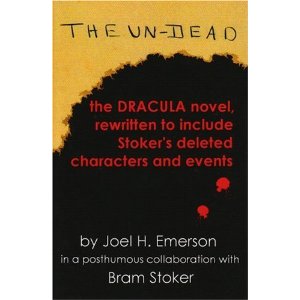
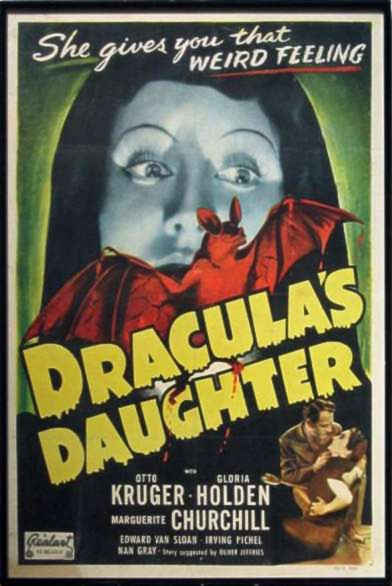
Peter Tremayne’s Dracula Lives Trilogy Revisited
NOTE: The following article was first published on February 14, 2010. Thank you to John O’Neill for agreeing to reprint these early articles, so they are archived at Black Gate which has been my home for over 5 years and 250 articles now. Thank you to Deuce Richardson without whom I never would have found my way. Minor editorial changes have been made in some cases to the original text.
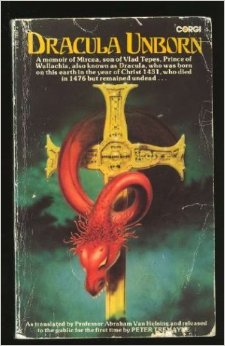
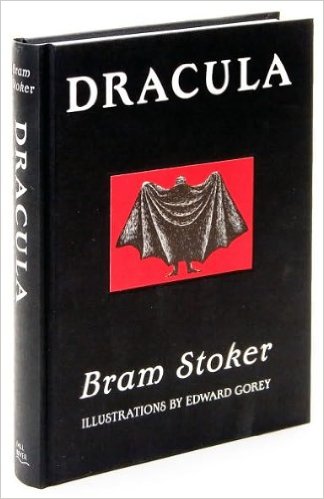
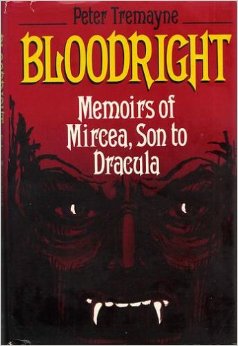 It has long been my contention that pulp fiction not discovered by age thirteen was beyond my ability to appreciate later in life. A certain amount of nostalgia seemed essential to enjoying such escapism once age and responsibility have got the better of you. There are, of course, exceptions to this rule in the rare instances where genuine literary talent is in evidence as is the case with the Holy Trinity of hardboiled detective fiction: Dashiell Hammett, Raymond Chandler, and Ross Macdonald. Given that I recently covered Bram Stoker’s Dracula, I decided to revisit Peter Tremayne’s three Dracula novels and one short story that I enjoyed so much as a teenager to see how they held up three decades on.
Peter Tremayne is best known today for his long-running Sister Fidelma mysteries. His medieval detective series is sort of a lightweight version of an Umberto Eco doorstop. Although Tremayne’s real world credentials are quite impressive as both an academic and scholar, his fiction is strictly populist in its appeal. Turn back the clock 40 years and one would find Peter Tremayne as a dedicated pulp pastiche writer trying his hand at extending the lifespan of H. Rider Haggard’s She, deliriously combining Shelley’s Frankenstein with Conan Doyle’s Hound of the Baskervilles, and delving deep into Stoker’s Dracula for a trilogy of loosely connected titles published by Bailey Brothers in the UK.
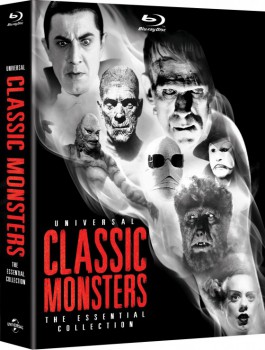 This year, the home video divisions of all the major distributors banded together and plotted a full-scale assault on the wallets and bank accounts of Blu-ray owners during September and October. Only the wealthiest could possibly survive an attack that began with the first Hi-Def release of the Indiana Jones films. But the supreme weapon, the ultimate October Surprise, is Universal’s huge ebony slab of fear, nostalgia, and latex make-up: Universal Classic Monsters: The Essential Collection. Spanning twenty-three years and nine films (advertised as eight, sorry Spanish Dracula), the long-anticipated set brings the Masters of Halloween into glorious 1080p for the first time, and in perfect seasonal position to drain your money before you waste it on a Jack Sparrow costume that forty other people are also going to wear to that same party.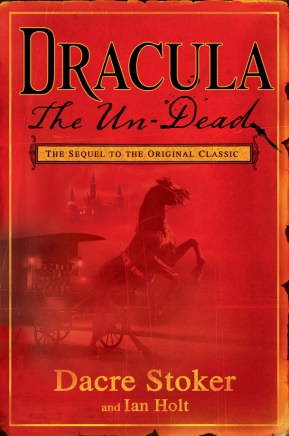
 October films come in two flavors for me: Universal and Hammer. I have affection for almost any Gothic horror films these studios produced during their Golden Ages (1930s and ‘40s for Universal, 1950s and ‘60s for Hammer), even the lesser entries. The studios have such opposite visual approaches to similar material — the black-and-white shadows of Universal, the rococo lurid colors of Hammer — that they create a perfect Yin and Yang for Halloween, a Ghastly Story for Whatever Suits Your October Mood.