A Tale of Two Covers: The Last Page by Anthony Huso
 |
 |
I bought the hardcover edition of Anthony Huso’s debut novel The Last Page after reading Matthew David Surridge’s review in Black Gate 12.
The Last Page is a high fantasy steampunk novel, and a love story. We follow the sexually charged relationship between the improbably named Caliph Howl, heir to the throne of the northern country of Stonehold, and a witch named Sena. The two of them meet at university, go their own ways, and then come together again after Caliph has become king and Sena has acquired a vastly powerful magical tome… what really makes the first book work is its language. The prose is strong, quick and dense in the best ways. The diction, the word choice, is inventive; the imagery is both original and concise. At its best, Huso’s language recalls Wolfe or Vance…
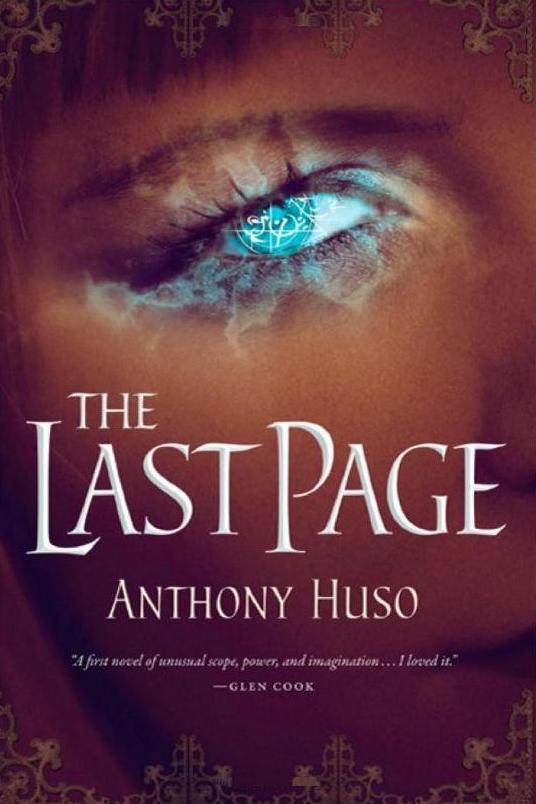
The last time I was in a bookstore I did a double take when I saw the trade paperback edition, which has been given a dramatically different cover. The hardcover edition (above left) was packaged as an urban fantasy, with a beautiful woman with glowing eyes on the cover. The paperback (at right) has been completely redesigned as a fantasy adventure novel, showing a huge fleet of airships massing over a sprawling fantasy landscape. If you’re not paying attention, it’d be pretty easy to mistake it for a completely different book.


 According to at least one source, Granada’s Alhambra Palace is the most visited tourist attraction in Spain. I’m sure the people in Barcelona would argue that their Sagrada Familia actually holds that honour, but the fact is that people have been going to visit the Alhambra since it became a Moorish royal palace in 1333. Or at least since Washington Irving wrote his Tales of the Alhambra in 1840.