Hercules Coming Back to the Big Screen to Kill Lots of Stuff
 I shall be briefer today than usual, since I plan to put up another post on Black Gate this coming Friday: a review of the film John Carter [of Mars]. If I’m doing an overview of all of Edgar Rice Burroughs’s Martian novels to coincide with the release of this movie over a hundred years in the making (and in development hell since the mid-1930s, I jest not) then I certainly owe my readers a review of the movie delivered on the day of its release. I’ve already scored my ticket for the Friday morning IMAX screening at the Howard Hughes Center, a genuine six-story screen, not one of those false ones that have popped up around the country that are only squarer and a bit taller than a regular screen.
For today I planned to write a review of one of the old Italian Hercules movies as a long-delayed follow-up to the most popular post I’ve ever done at Black Gate, a joking review of the 1983 Hercules starring Lou Ferrigno. But right as I was planning to explore Hercules in the Haunted World, a piece of important movie news broke, and so I’ll delay my old Herc review to talk about this mythological tidbit from Tinseltown:
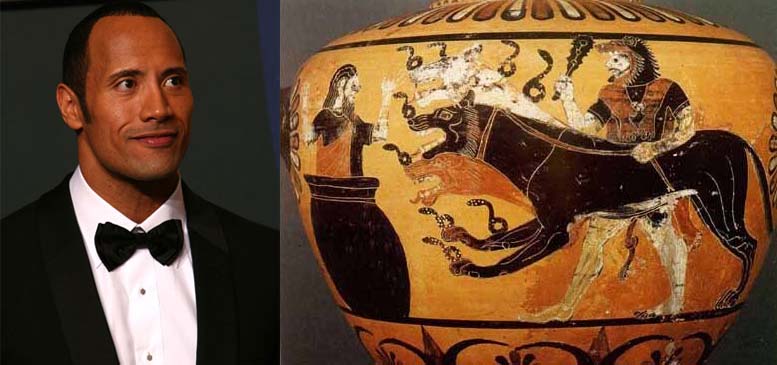
According to Variety, MGM is lining up a new live-action Heracles film. Ah, I mean Hercules film.
Are you excited? Allow me to temper your enthusiasm with this statement: Brett Ratner is attached to direct, and Dwayne “The Rock” Johnson to star as the demigod.
Yes, I’m dismayed as well . . . but only because of half of that statement. The first part, containing the name “Brett Ratner.” I don’t mind the idea of Dwayne Johnson playing Hercules one bit. I genuinely like the guy as an action movie star. He’s got charm and humor, and farnbetter acting chops than most guys who are cast strictly based on brawn. Johnson has gotten mired in too many bland kiddie-oriented flicks (Tooth Fairy, last month’s Journey 2: Mysterious Island), so getting him to take on a mythological heavy-weight like Hercules and beat the Hades out of creatures like the Nemean Lion, the Hydra, and three-headed Cerebus sounds like a good turn for his career.
 We still get e-mail about “
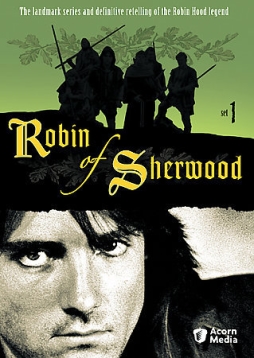 I read some bad news earlier this week: Richard Carpenter died. Carpenter, 78 at the time of his death on February 26, was an actor and television writer. He created several shows; he’s probably best known for his children’s series Catweazle, the animated Dr. Snuggles, and the show that I want to talk about here, the ITV-broadcast series Robin of Sherwood. It’s easily my favourite interpretation of the Robin Hood story, and perhaps my favourite filmed piece of sword-and-sorcery.
 Journal of a UFO Investigator