Teaching and Fantasy Literature: Do as I Say, Not as I Do (Until I Do because of You)
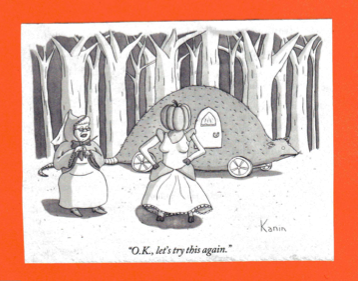 I commanded my first students to revise, as I had been commanded by my own mentors. Had I ever revised–not just proofread and fiddled, but actually revised–anything in my life before I started teaching? No. When I was a student, my first drafts were clean enough and clever enough, I could get away with handing them in for all my classes. Some of my teachers called me on it, but nobody insisted I do anything differently. When I took the helm of a writing class for the first time, at the absurd age of 24, I could tell my students all the steps of a beginner’s revision process. I knew the platitudes, and for me, that’s all they were. I could not have followed those steps to save my life. My first drafts, while in progress, were plenty messy, but once I finished them, the prose style was smooth as glass. I feared what might happen if I broke it.
To my astonishment, my first crop of freshman composition students followed my directions. Why on earth did they do that? I had no idea what I was doing at the helm of that classroom in 1994. I’ll be grateful to them always, because they did one thing none of my teachers had theretofore accomplished: they made revision look desirable, enviable, even occasionally joyful. They didn’t just shame me into learning how to revise, though I will say that my horror at my hypocrisy was one force that drove me to change my ways. My students were, at semester’s end, happy with freshman composition papers, of all things, because they had accomplished major transformations on their projects. Yes, their sentences got smoother, but more to the point, their ideas grew.




 So it ends here, not with a climatic epic, but with a bit of house cleaning almost fifteen years after the author’s death. The final book in Edgar Rice Burroughs’s career-spanning Barsoom saga is a slender volume containing two unrelated novellas.
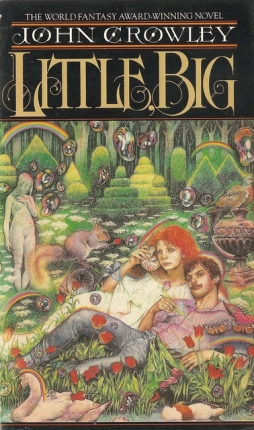 I’ve been thinking a fair bit lately about how I read what I read, and how I enjoy it. Or, what’s in it that I enjoy. It seems to me that much of the pleasure in my reading comes about from bad habits. Which is to say, habits that I can’t help but think ought to be bad, but which nevertheless feel central to the act of reading. Maybe that feeling’s an illusion; maybe it’s the secret why bad habits become habits. At any rate, I thought I’d be self-indulgent this week and throw out what I’ve come up with, as I’d love to hear if any of it resonates with anyone else’s experience of reading.

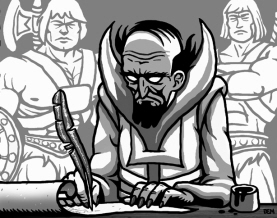 We’re slowly capturing all the online fiction we’ve published here over the past 12 years as part of our Black Gate Online Fiction series. This week we present the complete text of Alex Kreis’s “The Renunciation of the Crimes of Gharad the Undying,” one of the shortest tales to ever appear in Black Gate.