Browsed by
Category: Series Fantasy

Comedy in Fantasy: The Ebenezum Trilogy by Craig Shaw Gardner

Comedy in Fantasy: The Ebenezum Trilogy by Craig Shaw Gardner

A Malady of Magicks-smallThe late Terry Pratchett left a large gap in the Comedic Fantasy genre which, for many, may never be filled. Love him or hate him (I have found myself doing both over the years), he pretty much defined the field.

I first came across Craig Shaw Gardner not long after I read The Colour of Magic. Giving away my age here, but when I read The Colour of Magic I think only the third Discworld book, Equal Rights, has just been published. Needless to say, like anything new, different and — more precisely — successful, there was demand for more of the same. Enter Craig Shaw Gardner. While I doubt they were consciously trying to emulate Pratchett, it is possible that Gardner’s publisher may have drawn a parallel of sorts, and decided to try and brand his novels in a similar way.

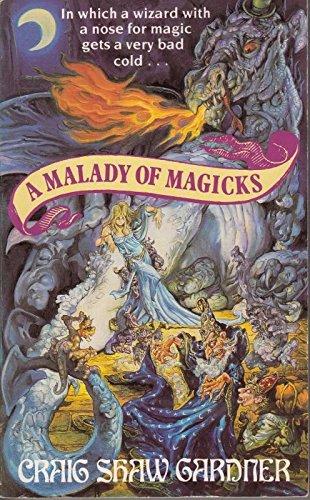
Thus it was that I encountered A Malady of Magicks, which immediately caught my eye with its familiar cover style. The cover blurb:

In which a wizard with a nose for magic gets a very bad cold…

was intriguing. Add to that a Josh Kirby cover and one can start to see the parallels, intended or not. I didn’t buy the book, but made a mental note of it, and saw that in due course books two and three appeared: A Multitude of Monsters and A Night in the Netherhells respectively. Others followed.

I was of course looking at the British versions, published by Headline in 1988 and 1989 and as mentioned, all with Josh Kirby covers. The series was originally published in the US by Ace in 1986 and 1987, with the first book, A Malady of Magicks, reprinted three times in 1986.

Read More Read More

Vintage Treasures: Pamela Sargent’s Women of Wonder

Vintage Treasures: Pamela Sargent’s Women of Wonder

Women of Wonder The Classic Years-small Women of Wonder The Contemporary Years-small

In 1973, author Pamela Sargent began to assemble stories for a groundbreaking anthology: Women of Wonder, collecting science fiction stories by women, about woman. It was the first anthology of its kind, and as you can probably imagine, Sergeant ran into some obstacles when she tried to sell it. Here’s Ms. Sargent:

For over two years, I tried to find a publisher for Women of Wonder, and the reactions of editors were instructive. A few editors thought the idea was wonderful but decided not to do the book anyway. Some editors found the book absurd, a couple doubted whether I could find enough good stories to fill the book, and one editor didn’t think there was a large enough audience for such an anthology.

But the audience was there, and so were the authors.

That’s taken from the introduction to the fourth volume in the series, Women of Wonder: The Classic Years, published by Harcourt Brace in 1995.

Read More Read More

New Treasures: Pathfinder Tales: Beyond the Pool of Stars by Howard Andrew Jones

New Treasures: Pathfinder Tales: Beyond the Pool of Stars by Howard Andrew Jones

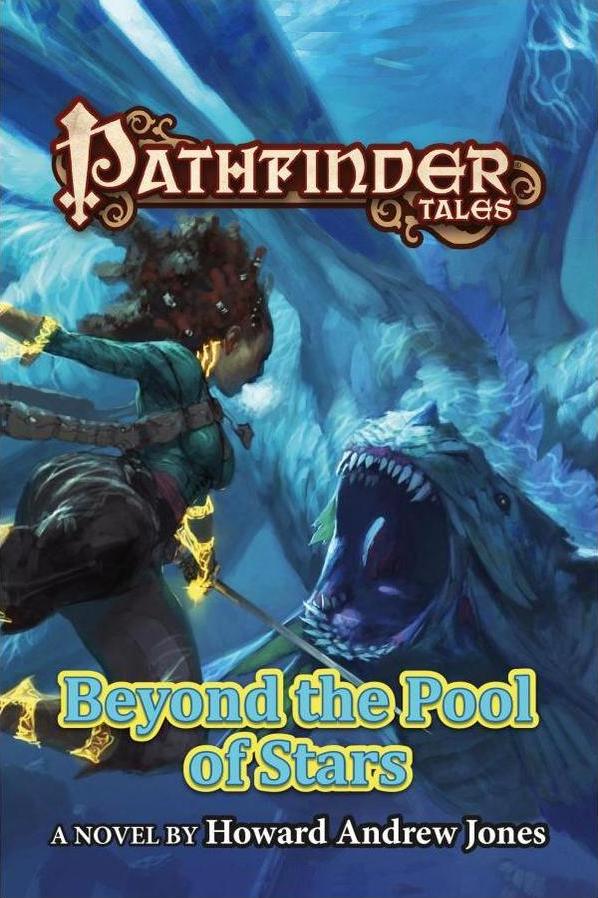
Beyond the Pool of Stars-smallHere at the Chicago rooftop headquarters of Black Gate, one of the most anticipated books of the fall is Howard Andrew Jones’ third Pathfinder Tales novel, Beyond the Pool of Stars. It was finally released this week.

Beyond the Pool of Stars is a fantastical adventure of deep-water danger and unlikely alliances set in the award-winning world of the Pathfinder Roleplaying Game. It follows Plague of Shadows and Stalking the Beast, but is a completely standalone adventure.

Mirian Raas comes from a long line of salvagers, adventurers who use magic to dive for sunken ships off the coast of tropical Sargava. When her father dies, Mirian has to take over his last job: a dangerous expedition into deep jungle pools, helping a tribe of lizardfolk reclaim the lost treasures of their people. Yet this isn’t any ordinary job, as the same colonial government that looks down on Mirian for her half-native heritage has an interest in the treasure, and the survival of the entire nation may depend on the outcome…

It also contains a free 12-page excerpt from Pathfinder Tales: Bloodhound by F. Wesley Schneider, on sale in December.

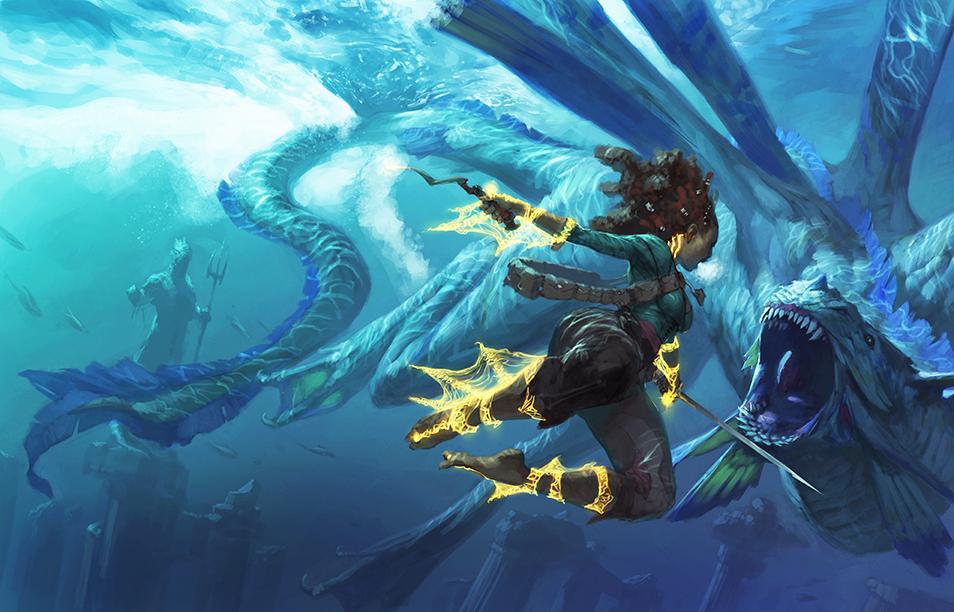
Pathfinder Tales: Beyond the Pool of Stars was published by Tor Books on October 6, 2015. It is 347 pages, priced at $14.99 in trade paperback and $9.99 for the digital edition. The cover is by Tyler Jacobson (see the complete wraparound art here). Read more at Howard’s website.

Future Treasures: King of Shards by Matthew Kressel

Future Treasures: King of Shards by Matthew Kressel

King of Shards-small

Matthew Kressel has had an impressive career over the past decade. He started publishing fiction in his own magazine, Sybil’s Garage, and quickly branched out to Electric Velocipede, Interzone, Lightspeed, Clarkesworld, and Beneath Ceaseless Skies. He received his first Nebula Nomination for “The Sounds of Old Earth” in 2013, and his second for “The Meeker and the All-Seeing Eye” earlier this year. He has also been nominated for the World Fantasy Award, for editing Sybil’s Garage.

King of Shards is his debut novel. It will be published by Arche Press, a quality small press who this year have also produced Marguerite Reed’s Archangel, and The End of the End of Everything by Dale Bailey. It is the first novel in The Worldmender Trilogy, and N.K. Jemisin called it “A surreal and exotic adventure in a unique mythological setting. Scary, exhilarating fun!” It follows Daniel Fisher, abducted on his wedding day by the demon king, Ashmedai, who been supplanted by the demon Mashit. Daniel and Ashmedai must work together to stop Mashit, before she destroys all of existence.

King of Shards will be published by Arche Press on October 13, 2015. It is 320 pages, priced at $17 in trade paperback. The striking cover is by Leon Tukker (click the image above for a bigger version). Read more at Matthew’s website.

The Search for Perry Rhodan 50

The Search for Perry Rhodan 50

Perry Rhodan 50-smallBack when I was a teenager in the 1970’s, I was a big fan of the Perry Rhodan series.

The English edition was published by Ace Books, and edited by Forry Ackerman. Forry offered subscriptions to the series, and I started subscribing as soon as I found out about the series.

The primary cover artist for the first 100+ issues was Gray Morrow. Morrow’s cover for #50, “Attack From the Unseen,” showed Perry posing heroically.

In 1976, Ace ran a survey in the back of issue #s 86-91, offering a free poster of the cover for #50 if you cut out the survey and returned it to Ace. I filled out my survey the day I got #86 in the mail, and sent it back immediately.

And then I waited. And waited. And waited. And no poster ever showed up. I’ve never seen one of these posters, have never heard of anyone who actually got one, and don’t think they were ever printed. My disappointment with Ace over this was deep.

Fast forward 28 years to the 62nd Worldcon, Noreascon 4, held in Boston. Prior to the convention, Deb and I visited our friend, Jerry Weist, and his wife Dana, who lived in the area. While going through stacks of art in Jerry’s flat files, I was astounded to find the original Gray Morrow painting for Perry Rhodan 50!

Read More Read More

Future Treasures: Gold Throne in Shadow by M.C. Planck

Future Treasures: Gold Throne in Shadow by M.C. Planck

Gold Throne in Shadow-smallIn her review of the first book in M.C. Planck’s new series, Sarah Avery said “Sword of the Bright Lady deals in surprising juxtapositions of familiar tropes… This is a fun book.” She also said it “ends just a breath beyond a cliff-hanger… I want to see Crazy Pater Christopher get even crazier. I want to gawk like a peasant at what he comes up with next.”

Now she’ll finally get the chance, as the second volume, Gold Throne in Shadow, will be released in trade paperback by Pry Books next week.

Christopher Sinclair was a mechanical engineer — until he stepped into a world where magic works and no one has heard of a pistol. Now he’s a priest of war, raised from the dead and promoted to take command of the army regiment he trained and equipped. Sent south to an allegedly easy posting, he finds himself in the way of several thousand rabid dog-men. Guns and fortifications turn back the horde, but Christopher’s troubles are only beginning.

Lalania is a bard with a connection to a mysterious group of scholars Christopher hopes can help him find his way back to his wife and home. But the journey to the scholars is long, and Lalania’s motivations are too murky for him to truly trust her.

Christopher has problems that connot be solved with mere firepower: a wicked assassin, hostile clergymen, dubious allies, and worst of all his own impolite tongue. But all of these pale to mere distractions once he discovers that the true enemy is hidden and is playing the kingdom like a puppet master’s stage. Lalania claims she can help — but will it be enough? And will it get him any closer to returning to our world?

Gold Throne in Shadow will be published by Pyr Books on October 13, 2015. It is 315 pages, priced at $17 in trade paperback and $11.99 for the digital version. The cover is by Gene Mollica.

Future Treasures: My Loaded Gun, My Lonely Heart by Martin Rose

Future Treasures: My Loaded Gun, My Lonely Heart by Martin Rose

Bring Me Flesh I'll Bring Hell-small My Loaded Gun My Lonely Heart-small

I missed the first novel in Martin Rose’s new undead private investigator series, Bring Me Flesh, I’ll Bring Hell (Talos, October 2014), and that’s beginning to look like a mistake. An intriguing mix of Raymond Chandler and George Romero, the first novel introduced us to “pre-deceased private investigator” Vitus Adamson, kept ambulatory only by hourly administrations of a powerful drug, who finds himself hot on the trail of a missing boy… one who bears a more-than-uncanny resemblance to his own long-dead son. Scott Kenemore called the novel “The shot in the arm that the zombie genre needs… Vitus Adamson shambles on the scene as an undead Sam Spade of the very best sort.”

As the second novel opens, Adamson is still picking up the pieces from the events of the first — not least of which is an unexpected return to the land of the living.

Read More Read More

Vintage Treasures: The Cú Chulainn Novels of Gregory Frost

Vintage Treasures: The Cú Chulainn Novels of Gregory Frost

Tain Gregory Frost-small Remscela Gregory Frost-small

Celtic fantasy has always been a popular sub-genre, but it really exploded in the 80s, in the capable hands of writers such as Charles de Lint, Emma Bull, C.J. Cherryh, Katharine Kerr, and R.A. MacAvoy, and with bestsellers like Marion Zimmer Bradley’s Mists of Avalon.

In 1986 new writer Gregory Frost — whose debut novel Lyrec had been published by Ace two years earlier, and been well received — retold the great Irish epic Tain Bo Cuailnge (“Cattle Raid of Cooley”), the tale of the hero of Ulster, Cú Chulainn, Ireland’s greatest champion, who at the age of 17 single-handedly defended his people against the invading army of the sorceress queen Maeve. This began a two-book cycle retelling many of the tales of Cú Chulainn: Tain, published in 1986, and its sequel Remscela, which appeared in 1988.

Read More Read More

New Treasures: The Incorruptibles and Foreign Devils by John Hornor Jacobs

New Treasures: The Incorruptibles and Foreign Devils by John Hornor Jacobs

The Incorruptibles-small Foreign Devils John Hornor Jacobs-small

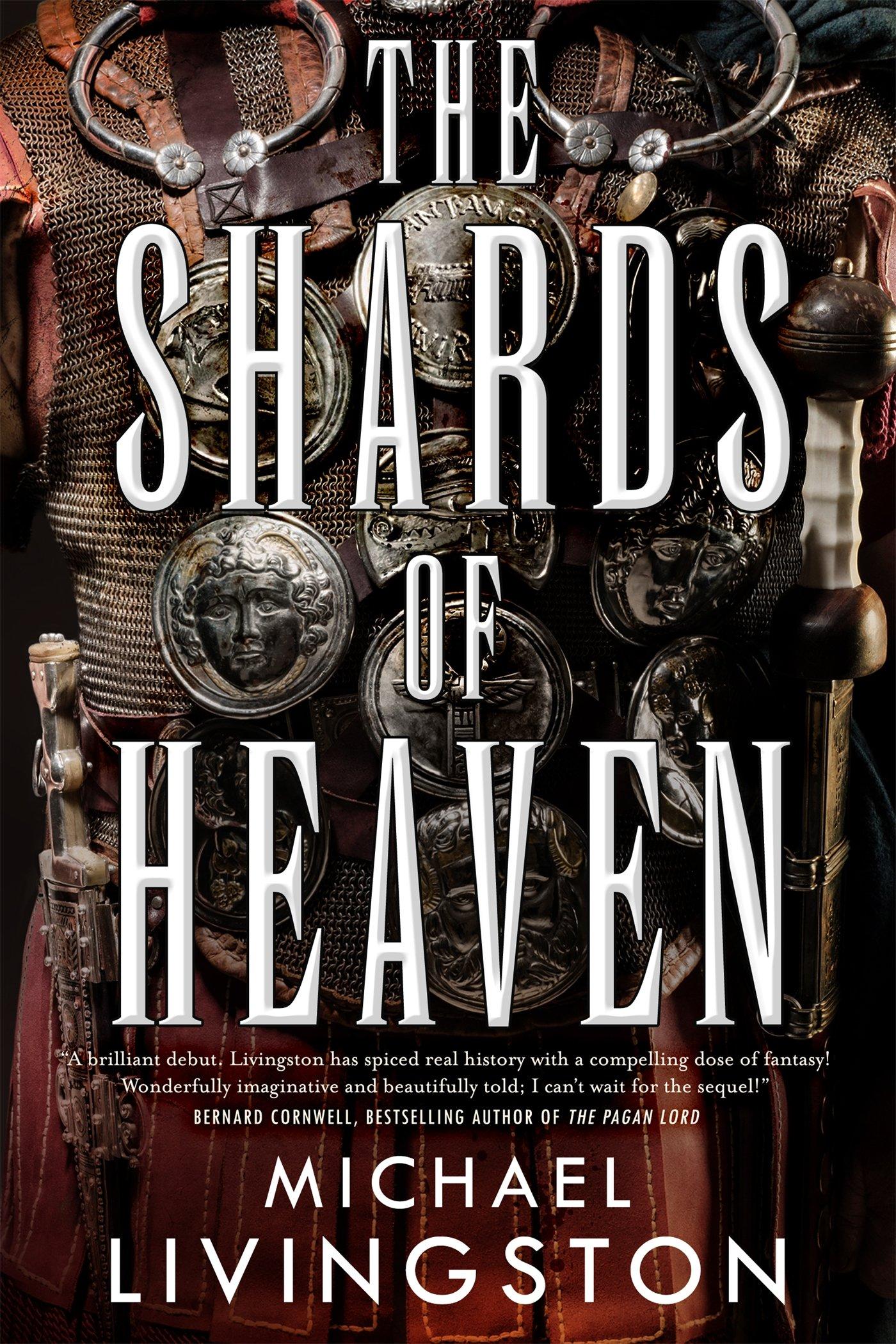
John Hornor Jacobs’ first novel was Southern Gods (2011), which was shortlisted for the Bram Stoker Award. His new fantasy series began with The Incorruptibles (2014), and the second volume, Foreign Devils, was just published by Gollancz in the UK. Both novels feature the mercenaries Fisk and Shoe, in a fantasy western setting that mixes ancient Rome, savage elves, the wild west, daemons, and the Autumn Lords’ Empire, which hides a terrible truth at its heart.

Here’s Black Gate author Myke Cole on the first volume:

The Incorruptibles gives us the very thing we read fantasy for: something new. The Incorruptibles joins Red Country in what I hope will become a new sub-genre, the fantasy western. Westerns are American stories, and Jacobs’ Arkansas roots show in his gritty, hard-bitten tone. The Incorruptibles shakes like a rattlesnake, sings like a bullet, whispers like a tumbleweed dancing over hardscrabble.

And Pat Rothfuss on the same volume:

One part ancient Rome, two parts wild west, one part Faust. A pinch of Tolkien, of Lovecraft, of Dante. This is strange alchemy, a recipe I’ve never seen before. I wish more books were as fresh and brave as this.

Read More Read More

It Is A Busy Omniverse: The Sword of Shadows: The Voidal Vol. 3 by Adrian Cole

It Is A Busy Omniverse: The Sword of Shadows: The Voidal Vol. 3 by Adrian Cole

oie_28424579gNJmMwZ

Tyrandire, the Palace of Pain, moves secretly and silently through unseen tunnels between the many dimensions of the omniverse, traversing any of them that its grim master wishes to visit. A minute moon, perfectly circular, colder than terror, Tyrandire speeds on its way like light, sometimes lingering like a biting frost. The energy that charges this oval missile is greater than that of any sun, indeed greater than the energy contained within an entire universe, for it is the will of the outlaw god, Ubeggi the Deceitful. Where Ubeggi seeks to go, his Palace of Pain takes him. He has many missions, all of them selfish, all of them corrupt, for the Weaver of Wars exists solely for his own amusement and he delights in knotting together the workings of more thoughful gods or undoing their orderly tapestries of fate. All the gods know of Ubeggi, and when his Palace of Pain nears their own haunts in the omniverse, they curse him, knowing that his mischief will be upon them.

                                                                                                                from Part One: The Weaver of Wars

And so, with The Sword of Shadows, we come to the end of the Voidal’s saga. For a series I have already called favorably “a study in sensory overload,” and “excessive, over the top, and incredibly phatasmagorical,” author Adrian Cole ends things as madly and wildly as a reader could hope.

Three of its eight chapters, were published previously as short stories: “The Weaver of Wars,” “At the Council of Gossipers,” and “Dark Destroyer.” Unlike the two previous books, this one reads more like a coherent novel than as a fix-up.

Read More Read More