Browsed by
Category: Rich Horton

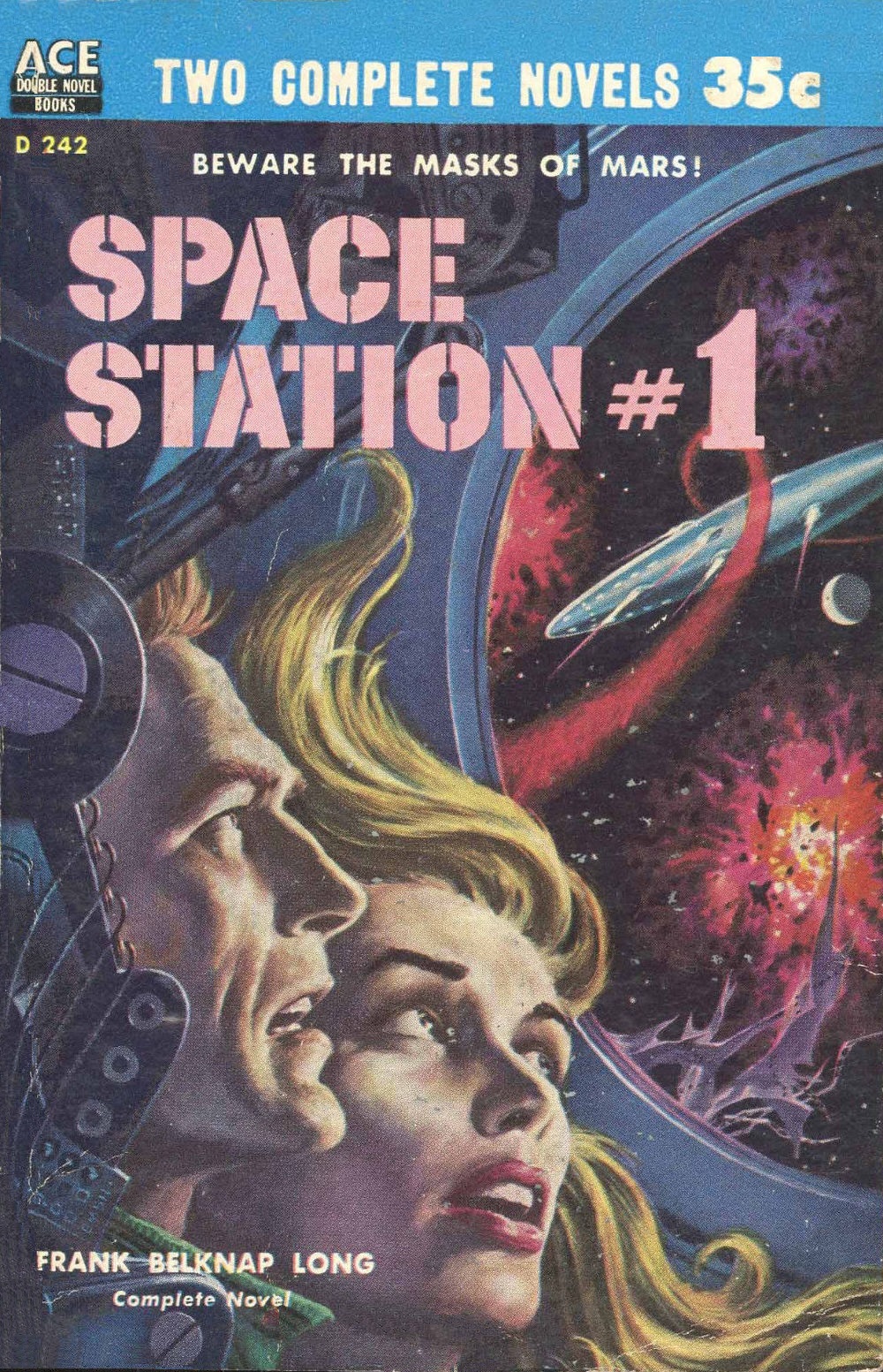
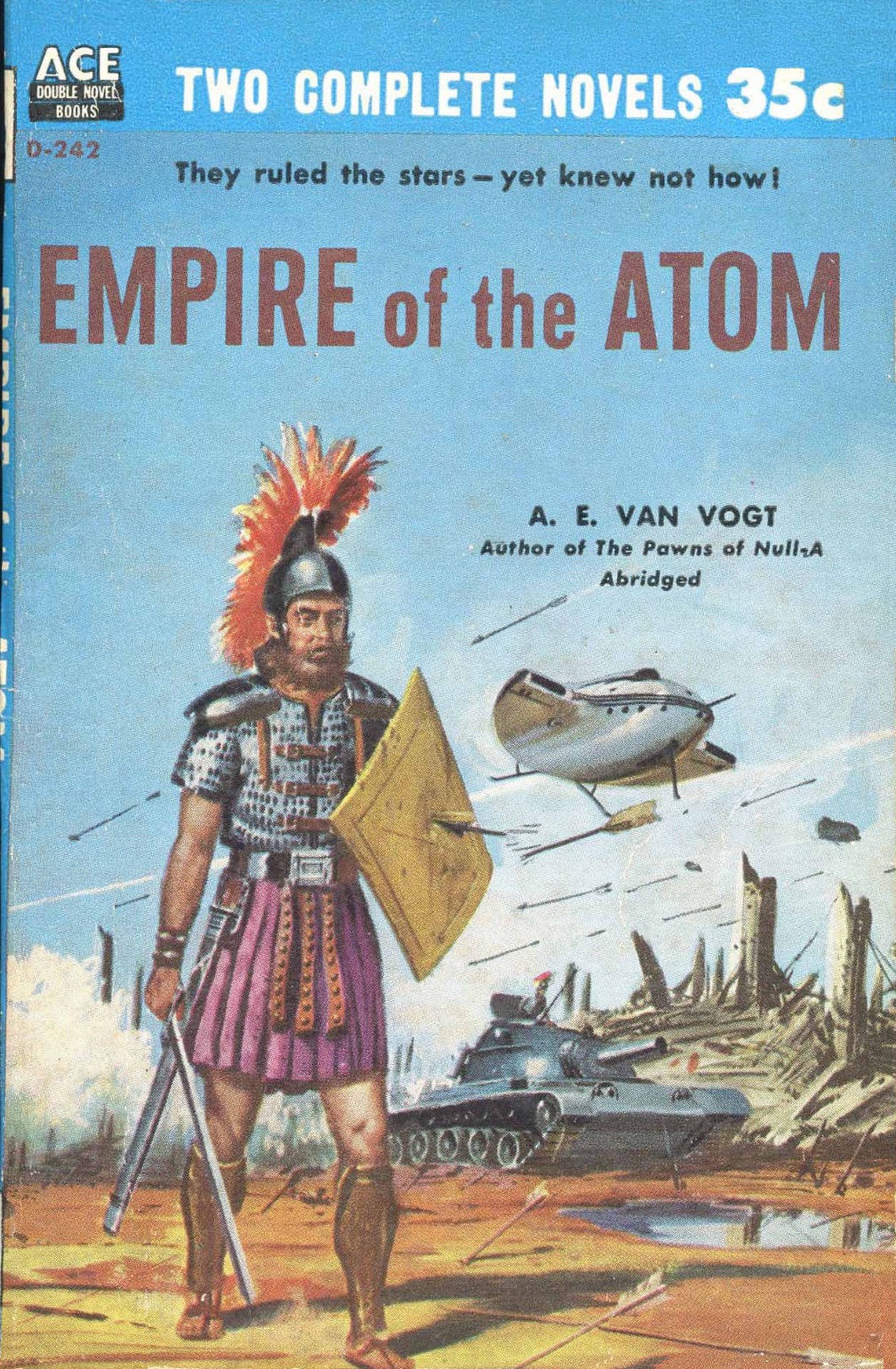
Space Barbarians and Uranium Mining on Mars: Rich Horton on Empire of the Atom by A. E. Van Vogt and Space Station #1 by Frank Belknap Long
Space Barbarians and Uranium Mining on Mars: Rich Horton on Empire of the Atom by A. E. Van Vogt and Space Station #1 by Frank Belknap Long

empire-of-the-atom-small space-station-1-small

It’s been a month or two since I’ve been able to make time for some classic pulp SF. But over at his website Strange at Ecbatan, Rich Horton has piqued my interest in a 1957 Ace Double, pairing A.E. van Vogt’s Empire of the Atom and Space Station #1 by Frank Belknap Long. Here’s Rich:

I approached Empire of the Atom with some caution. It is another “fix-up”, though a fairly coherent one, comprising five novelettes first published in Astounding in 1946 and 1947. It was published in hardcover by Shasta in 1957, followed the same year by this abridged Ace Double edition…. I have to say I was pleasantly surprised…

It is set some 10,000 years in the future, after humans have colonized the planets of the Solar System, and then been reduced to barbarism on each of these worlds. A city-state, Linn, arose, and in the recent past it conquered the world and began to try to annex the barbarians on Venus, Mars, and even outer satellites such as Europa. The ruler, or Lord Leader, is a vigorous man but getting older. A new child is born to his scheming second wife, Lydia. (These are, of course, analogues to Augustus and Livia.) The new baby, named Clane, turns out to be a mutant — Lydia was accidentally exposed to radiation — this society uses radioactive metals (and worships the “Atom Gods”) but has no idea how they work. As a mutant Clane should be killed. However, a leading Temple Scientist wants to raise him and show that mutants, if treated properly, have the same potential as anyone. So Clane is raised, somewhat isolated, and becomes an unusual but very intelligent young man… There is a sequel, The Wizard of Linn, serialized in Astounding in 1950.

Empire of the Atom was one of Van Vogt’s most popular novels, with over a dozen editions from multiple publishers over the next four decades.
Read More Read More

Amazing, May 1963: A Retro-Review

Amazing, May 1963: A Retro-Review

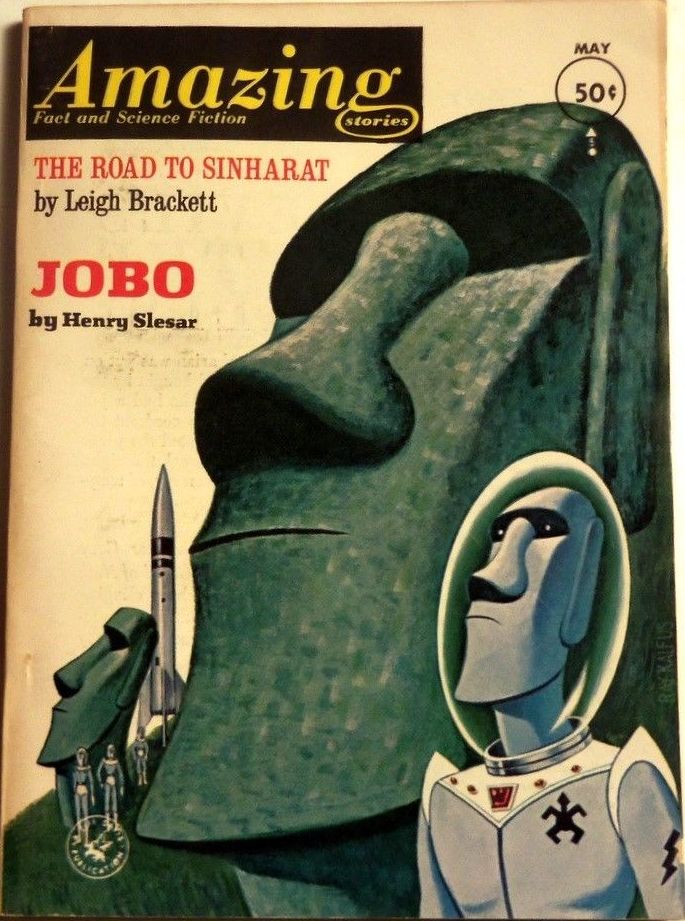
amazing-science-fiction-may-1963-smallThis is one of the best issues of Cele Goldsmith’s Amazing I’ve encountered. Only four stories, but all decent, one really good.

The cover is by Ray Kalfus, illustrating Henry Slesar’s “Jobo” in a fashion that gives away one of the story’s secrets (not that it’s that big of a secret). Interiors are by Leo Summers, George Schelling, and Virgil Finlay.

Norman Lobsenz’ Editorial opens thusly:

The New Yorker magazine, which normally does not care to admit of the existence of such a literary form as science fiction (probably because sf stories have plots with beginnings, middles, and ends, which the New Yorker fiction editors abhor)…

Plus ça change! The occasion is an approving New Yorker review of Arthur C. Clarke’s Tales of Ten Worlds, and in particular their praise for the story “Before Eden,” which was first published in Amazing in 1961.

“… Or So You Say”, the letter column, is mostly occupied with complaints about a letter in the January issue from Lorne Yacuk, which apparently complained about the “new” type of stories published in those days, particularly that they featured dull “common men” instead of “supermen.” The writers are James C. Pierce, W. D. Shephard, and Gil Lamont. In addition, Paul Gilster (from St. Louis!) praises Albert Teichner’s “Cerebrum” (mentioned in these reviews some time ago).

The Spectroscope, S. E. Cotts’ book review column, covers The Space Child’s Mother Goose, by Frederick Winsor; Moon Missing, by Edward Gorey; They Walked Like Men, by Clifford Simak; and Anything You Can Do…, by Darrel T. Langart (Randall Garrett). The only one he really approves of is the Simak.

There are two “fact” articles. One is called “A Soviet View of American SF,” by Alexander Kazantsev. It’s a reprint (translated by John Isaac) of the introduction to an anthology of American SF published in the Soviet Union. The author (Kazantsev) is said to be famous for suggesting that the Tunguska event was caused by the explosion of a Martian spaceship. His views of the stories mentioned are politically tinged to the point of parody. The other article is by Ben Bova, “Where is Everybody?”, and it’s a look at the Fermi Paradox.

Read More Read More

Gamma 3, 1964: A Retro-Review

Gamma 3, 1964: A Retro-Review

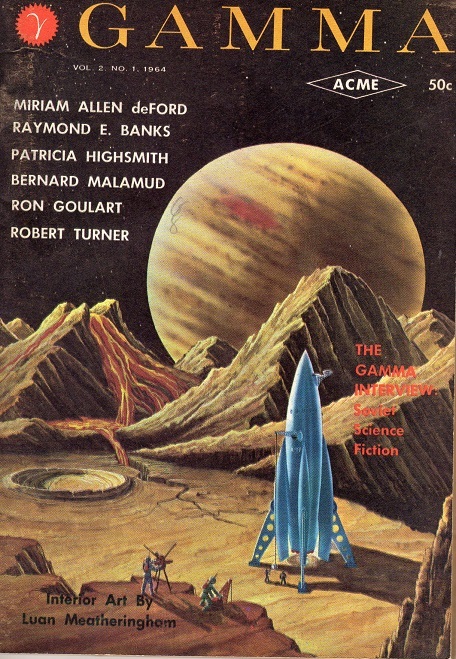
Gamma 3-smallHere’s a bit of a curiosity — a magazine I had not heard of until quite recently.

Gamma was a short lived digest magazine published out of North Hollywood, CA, between 1963 and 1965. Five issues total were published, the first three edited by William Nolan (best known, probably, for writing Logan’s Run with the recently late George Clayton Johnson, but an active writer since 1956 and still publishing new stuff now, age 88). Because of its location*, perhaps, they attracted some writers associated with the movie business, and in general published a mix of SF and Fantasy, and of writers both from within and without the genre, that reminded me of F&SF, especially in its first few years.

*(Indeed, of the 9 writers in this issue, 7 (as far as I can tell) were based in California, and those who weren’t (Malamud and Highsmith) are the most prominent and the only “non-genre” writers.) The interior art is by Luan Meatheringham, an LA artist active in the ad industry and as a freelancer, who seems to have disappeared from notice.

The cover is called “Expedition to Jupiter,” by Morris Scott Dollens, and it depicts a spaceship and a couple of astronauts on what I take to be Ganymede or Callisto, with Jupiter in the sky.

There is one feature, an interview with the editor (using a false name) of a Soviet publishing house, discussing the state of Soviet SF. (By coincidence, I just read a similar piece in Amazing.)

Read More Read More

Fantastic, August and September 1964: A Retro-Review

Fantastic, August and September 1964: A Retro-Review

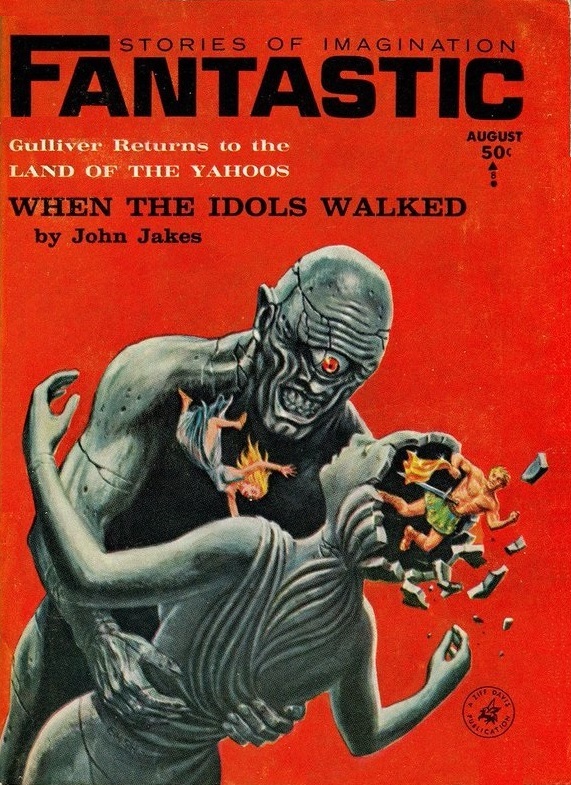
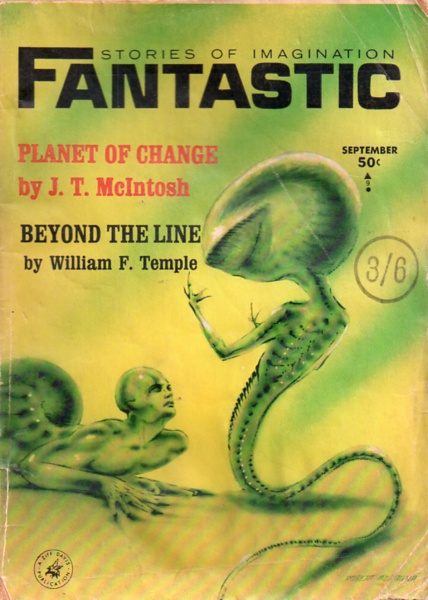
Fantastic Stories of Imagination August 1964-small Fantastic Stories of Imagination September 1964-small

My most recent forays into Cele Goldsmith Lalli’s editing career have concentrated on Amazing, so here’s a look at a couple of issues of Fantastic. These two issues include a complete John Jakes serial, so I’ll consider them together.

During this period Fantastic was subtitled “Stories of Imagination,” and though it concentrated on fantasy it also published some SF. (The letter column, when one existed, occasionally included complaints about this, to which the response was “sometimes there just isn’t enough good fantasy.”) Fantastic was also thin on features, usually the only one being an editorial from Norman Lobsenz and a brief Coming Next Month blurb. The August editorial is about psychic research, particularly that of the Greek scientist Angelos Tanagras. I thought Lobsenz was a bit too credulous. The September issue’s editorial complains about the quality of SF on TV: instead of adaptations of Isaac Asimov’s robot stories we got Living Doll, and instead of The Martian Chronicles we got My Favorite Martian.

August’s cover is by Ed Emshwiller, with interiors by Emsh, Virgil Finlay, and George Schelling. Robert Adragna does the September cover, and the interiors are by Adragna, Finlay, Emsh, and Schelling.

The stories, then.

Read More Read More

The 2016 Hugos: Short Fiction Ballot Thoughts

The 2016 Hugos: Short Fiction Ballot Thoughts

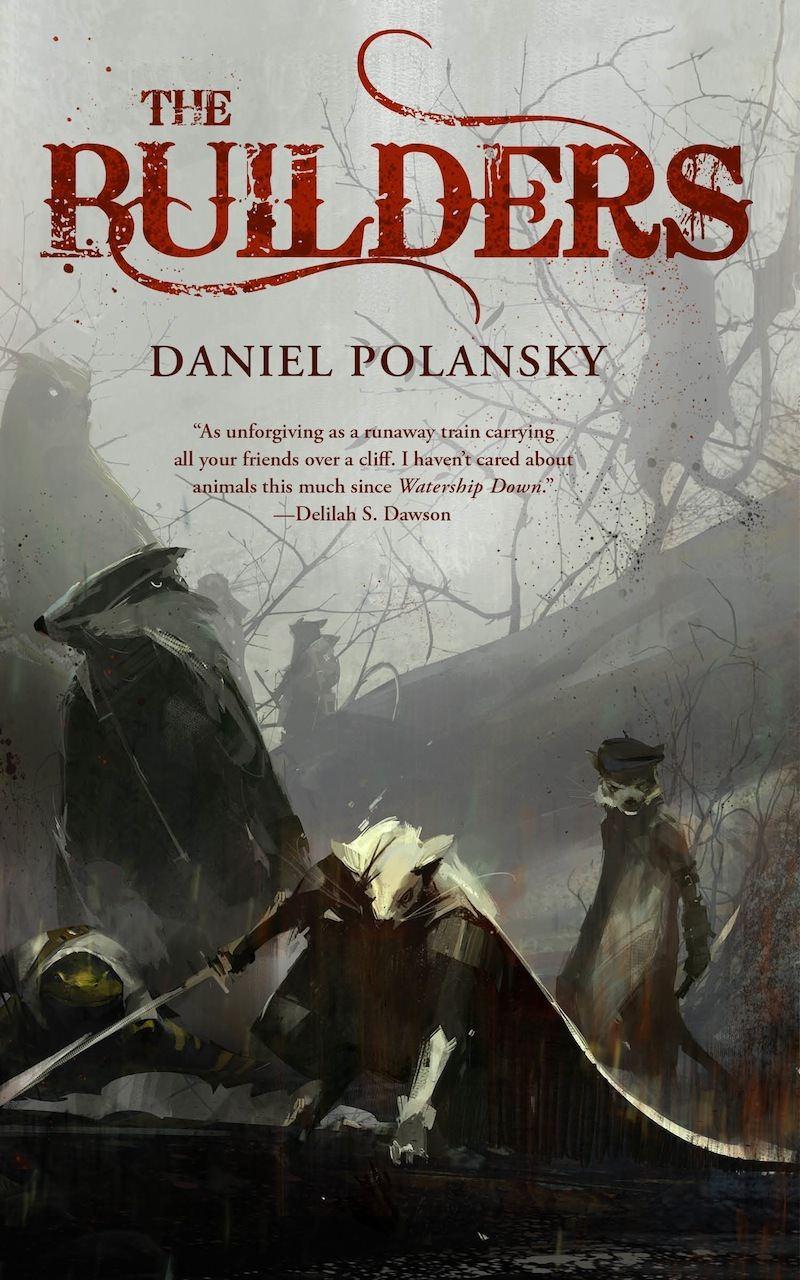
The Builders Daniel Polansky-smallHere are my compiled thoughts (as promised) on the stories nominated in the short fiction categories for the 2016 Hugo.

(Versions of these posts appeared earlier on my blog, Strange at Ecbatan.)

A quick word on my voting philosophy: I am not planning to reflexively rank Rabid Puppy entries below No Award. I am of course disgusted by the Rabid Puppy antics, and I feel that many more worthy stories were kept off the ballot by the Rabid choices. And if a story is bad enough, it will certainly be off my ballot, with No Award the last choice. (That’s always been my approach.)

But, this year in particular, many of the nominees supported by the Rabid Puppies were either unaware of that, or aware and quite clearly not happy with that. Also, I don’t want to reduce the meaningfulness of the win for those worthy winners – if they finish first and No Award is second, to my mind it to some extent delegitimizes their wins, through no fault of their own. Better to have been chosen the best with everyone voting on merit than voted best simply because all the other choices were automatically rejected regardless of quality.

I’m going to comment only on the short fiction. In the other categories, I mostly don’t know enough about the nominees. All the novels look worth reading, but I doubt I’ll finish them all by the deadline.

I have seen four of the movies, and two of them I think are excellent, in very different ways. These are The Martian and Mad Max: Fury Road. I still need to see Ex Machina. I thought The Force Awakens and Age of Ultron were both OK, but not much better than that.

Read More Read More

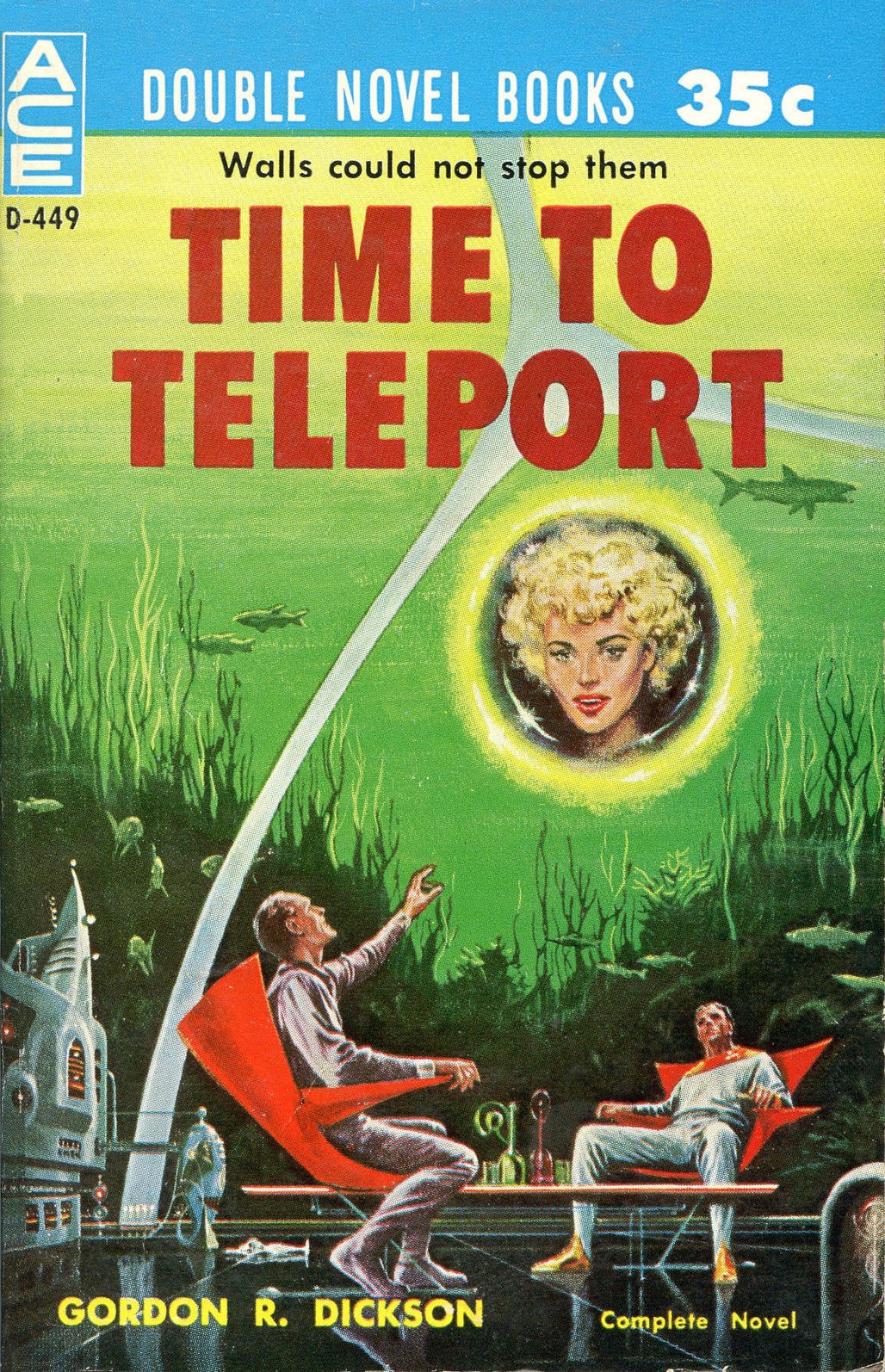
Dorsai and Secret Psi Powers: Rich Horton on The Genetic General/Time to Teleport by Gordon R. Dickson

Dorsai and Secret Psi Powers: Rich Horton on The Genetic General/Time to Teleport by Gordon R. Dickson

The Genetic General-small Time to Teleport-small

Over at Strange at Ecbatan, Rich Horton turns his attention to an author who’s rapidly being forgotten in the 21st Century: Gordon R. Dickson.

So this time an Ace Double featuring a pretty significant novel in SF history, by a pretty significant writer. The Genetic General is much better known as Dorsai!, the title under which it was serialized in Astounding in 1959… Dorsai! was the first major story in Dickson’s central series, called The Childe Cycle… The Genetic General is about a young man of the Dorsai people, from the planet called Dorsai, orbiting Fomalhaut. The Dorsai are mercenaries, and Donal Graeme, as the book opens, is a very young man just ready to go out into the wider human civilization and take on his first assignment. Immediately he encounters a beautiful but scared woman, Anea, the Select of Kultis, one of the Exotic worlds. She has taken a contract to be an escort for the powerful merchant William of Ceta, and wants Donal to get rid of it. He of course realizes that would be a crime and a mistake, and so refuses, but he is set on a collision course with William…

It’s early Dickson, not as well done as some of his later work. But it is quite exciting, and Donal’s military feats make good stories. And Dickson’s ambition is quite apparent — he is interested in deeper themes than just good adventure. I quite enjoyed the book.

Dorsai! was a major installment in a highly popular multi-novel sequence from Dickson, and it remained in print for decades. As Rich noted, it originally appeared in Astounding, serialized across three issues (May, June, and July) in 1959.

Read More Read More

Thrilling Wonder Stories, April 1951: A Retro-Review

Thrilling Wonder Stories, April 1951: A Retro-Review

Thrilling Wonder Stories April 1951-smallI felt like looking at a classic pulp from the great late stages of the true SF pulps.

A moment of definition is in order here: I consider a true pulp magazine to have been printed on pulp paper, in approximately the traditional pulp size (7″ by 10″), during the heyday of the SF pulps (say, 1926-1955). This is meant to exclude digests (like Astounding after about 1943; and most SF magazines after 1955), and of course slicks. The great pulps (in my opinion) of the early 1950s were the Standard Magazines companion pair, Thrilling Wonder Stories and Startling Stories, and Planet Stories (published by Love Romances).

So this is Thrilling Wonder Stories for April of 1951. Thrilling began publication in 1936, though it was essentially a direct descendant of Wonder Stories, which was founded by Hugo Gernsback after he lost control of Amazing, first as two magazines, Air Wonder Stories and Science Wonder Stories, that soon merged into one. The editor is uncredited but at this time was surely Sam Merwin, Jr., who took over the magazine in 1945, and who left at the end of 1951, Sam Mines taking over. Sam Merwin, little enough celebrated at the time, was actually a quite effective editor, raising the quality of Thrilling Wonder Stories and Startling Stories to at least shooting distance of Astounding – perhaps the quality at the top wasn’t as good, but the vibe was a bit more entertaining, less didactic.

Indeed, I discussed this premise – that Thrilling Wonder and Startling were nearly the equal of Astounding – with a few other folks who know the magazines of that time as well or better than I do, and we came to the conclusion (some holding this view more strongly than others) that in about 1948-1950 that was a very defensible statement, but that by 1951 they were falling behind. And the reason seemed obvious once suggested: the appearance in late 1950 of Galaxy (not to mention the appearance slightly earlier of F&SF) provided a new market that quickly attracted most of the best stories that Campbell didn’t or couldn’t buy.

Read More Read More

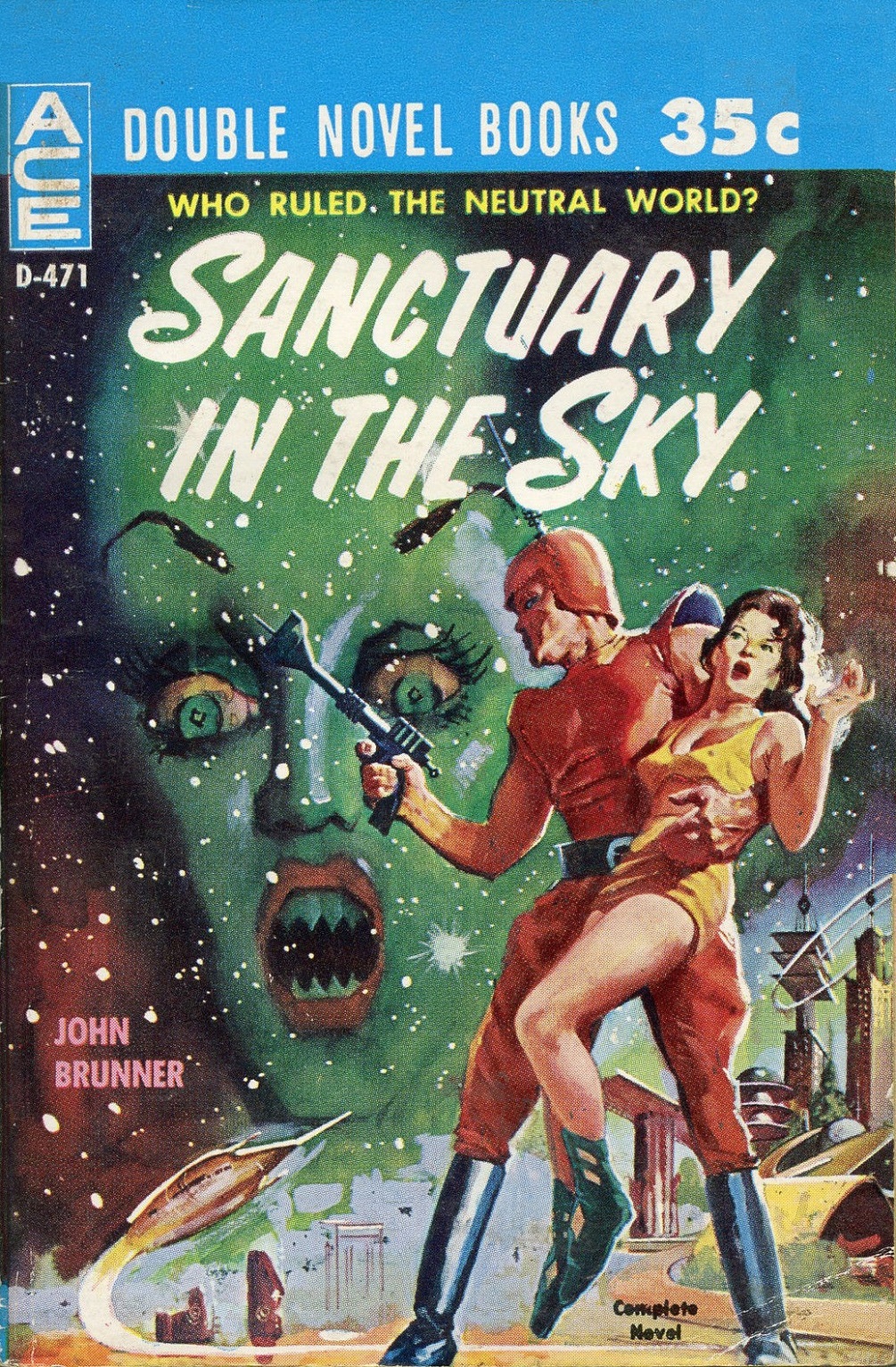
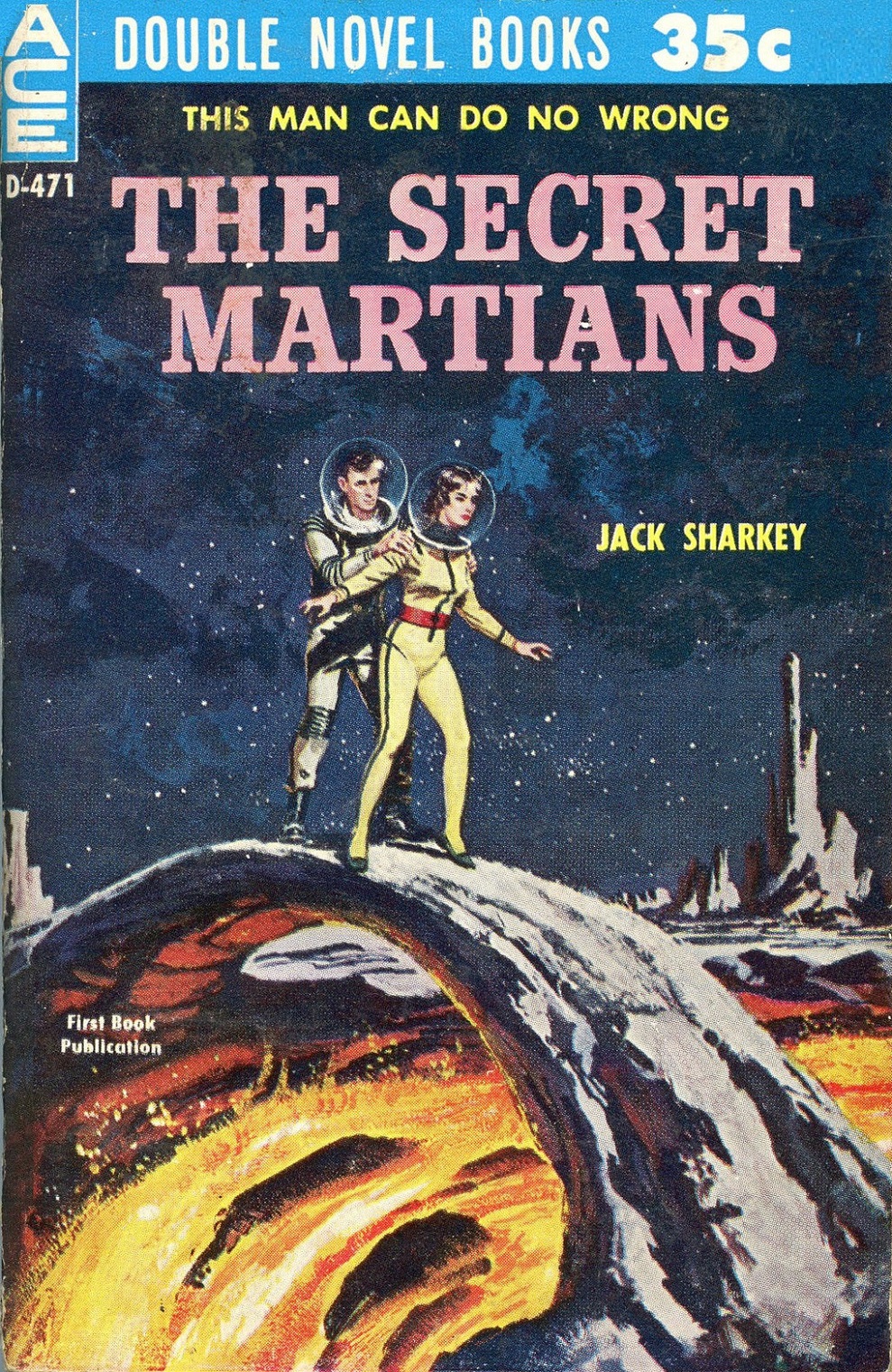
Space Stations With Secret Passages, and Snow White in Space: Rich Horton on Sanctuary in the Sky by John Brunner/The Secret Martians by John Sharkey

Space Stations With Secret Passages, and Snow White in Space: Rich Horton on Sanctuary in the Sky by John Brunner/The Secret Martians by John Sharkey

Sanctuary in the Sky John Brunner-small The Secret Martians Jack Sharkey-small

After a series of duds, our intrepid retro-reviewer Rich Horton turns to the always-reliable John Brunner.

I’ve read some weak Ace Doubles lately, so I tried to improve my fortunes by picking one with a John Brunner half. I can almost always count on Brunner for entertainment with a thoughtful edge. Brunner (1934-1995) of course was one of the field’s greats, a Hugo winner for Stand on Zanzibar (1968). He had a bifurcated career a bit like Robert Silverberg’s: beginning around the same time as Silverberg he was extremely prolific early in his career, publishing a lot of quickly executed and competent work; and then sometime in the early to mid ’60s seems to have consciously raised his level of ambition, beginning with novels like The Whole Man and The Squares of the City, and continuing to his famous quartet of long novels, beginning with Stand on Zanzibar, then The Jagged Orbit, The Sheep Look Up, and The Shockwave Rider.

The book under consideration this time is the 1960 Ace Double Sanctuary in the Sky by John Brunner, paired with The Secret Martians by the far less well known John Sharkey.

Read More Read More

Amazing Stories, October 1962: A Retro-Review

Amazing Stories, October 1962: A Retro-Review

Amazing Stories October 1963-small Amazing Stories October 1963-back-small

Back to Cele Goldsmith’s Amazing. This is a minor issue in context.

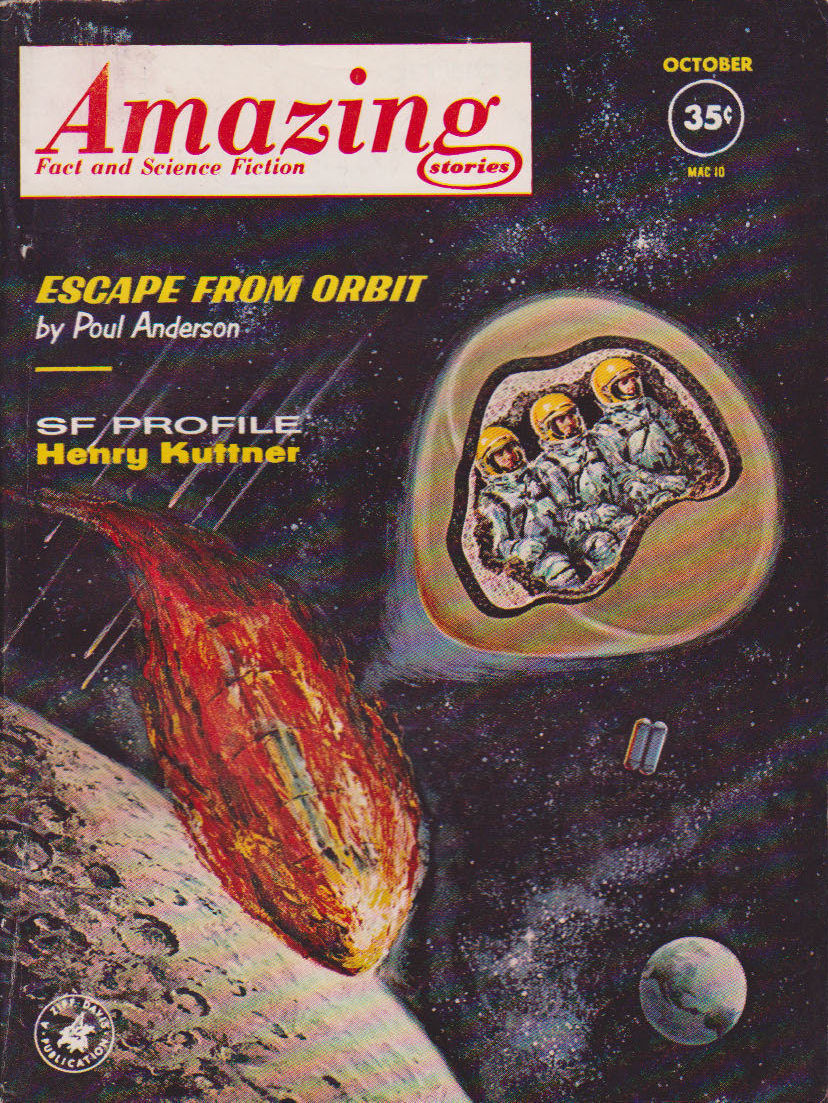
The cover is by an artist I’m not familiar with, Bill Conlon. The interiors are by Virgil Finlay, Austin Briggs, George Schelling, Lloyd Birmingham, and Dan Adkins. Norman Lobsenz’ editorial is about science vs. the humanities. The science fact article is called “The Nuclear Putt-Putt,” by Frank Tinsley, and it’s about Project Orion (the notion of propelling a spacecraft by nuclear bombs). Sam Moskowitz contributes a profile of the late Henry Kuttner, reflecting the view that much of what he wrote under his own name was garbage, so no one could believe he was behind the Lewis Padgett stories.

S. E. Cotts’ book review column covers Great Science Fiction by Scientists, edited by Groff Conklin; The Long Tomorrow, by Leigh Brackett; Return to Otherness, by Henry Kuttner; Telepath, by Arthur Sellings; and The Super Barbarians, by John Brunner. He praises the Conklin anthology for its off-center focus — the fiction of actual working scientists — less than for the quality of the actual stories. The review of The Long Tomorrow is an out and out rave (with an apology for having taken so long to get around to it).

Read More Read More

Future Treasures: The Year’s Best Science Fiction & Fantasy 2016, edited by Rich Horton

Future Treasures: The Year’s Best Science Fiction & Fantasy 2016, edited by Rich Horton

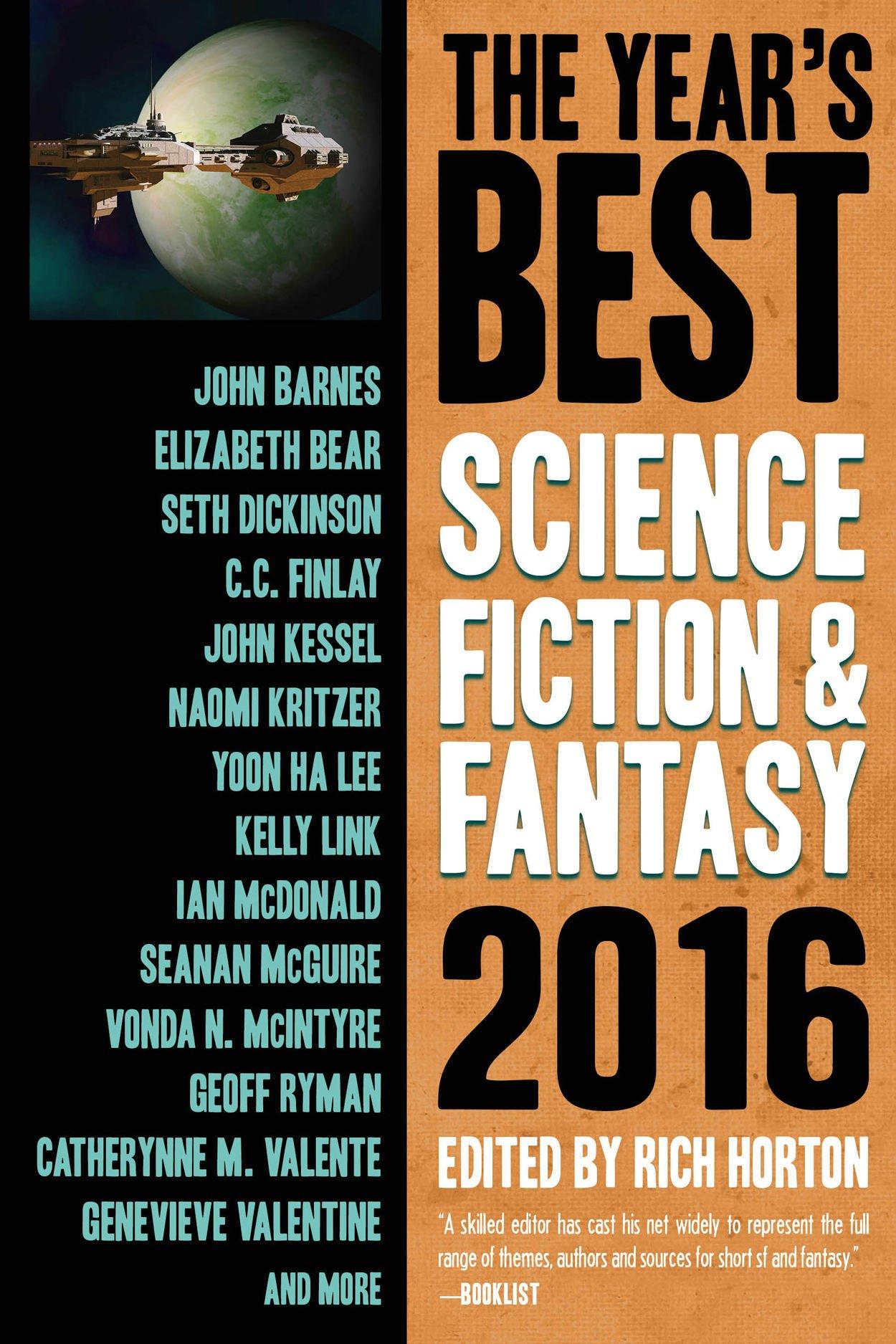
The Year's Best Science Fiction & Fantasy 2016-smallWe are well and truly into the Year’s Best season now, that delightful part of the year when the annual best-of-the-year anthologies start flying thick and fast. This year this season kicked off with Jonathan Strahan’s Best Science Fiction and Fantasy of the Year: Volume Ten, and next week Neil Clarke’s The Best Science Fiction of the Year, Volume 1 follows close on its heels. And that’s just the beginning — over the next two months we’ll see Year’s Best books from Gardner Dozois, Paula Guran (two!), Ellen Datlow, Karen Joy Fowler and John Joseph Adams, and many others. If you’re a short story lover like me, it’s a veritable embarrassment of riches.

If you can only afford to buy one, for my money Rich Horton’s The Year’s Best Science Fiction & Fantasy 2016 is the one to get. Rich’s taste is exemplary, and he ranges far and wide to hunt down the very best short fiction of the year. The eighth volume goes on sale next week, and includes C. S. E. Cooney’s novella The Two Paupers and Naomi Kritzer’s Hugo and Nebula nominee “Cat Pictures, Please,” plus several other Nebula nominees — including Tamsyn Muir’s novelette “The Deepwater Bride,” Brooke Bolander’s “And You Shall Know Her by the Trail of Dead,” and “Today I Am Paul” by Martin L. Shoemaker — and 25 more stories.

I do find that, year after year, Rich’s taste tends to align best with mine. But with several newcomers on the scene, I’m curious to see if Rich remains at the top of the heap. Giving him particular competition last year were the Strahan and Paula Guran volumes, especially The Year’s Best Science Fiction & Fantasy Novellas (and this year’s looks especially good).

Rich Horton’s The Year’s Best Science Fiction & Fantasy 2016 will be published by Prime Books on June 7, 2016. It is 576 pages, priced at $19.95 in trade paperback and $6.99 for the digital edition. See the complete table of contents here.

Read More Read More