Who Gods There?: “The Elder Gods” by Don A. Stuart
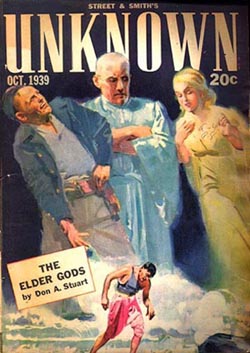 I’m guest-blogging this week at Babel Clash, along with fellow Pyr author Matt Sturges, and for the past couple days we’ve been kicking around the topic of our influences and anti-influences. It’s not always the biggest books or the best that are influences, though. For instance…
Don A. Stuart‘s “The Elder Gods” is a fantasy novella from the late 1930s that reads a lot like the science fiction being written around the same time. That’s no accident: the author behind the pseudonym is John W. Campbell, once a leading light in the “super science” stories of the 1930s, later a pioneer of a more sophisticated form of speculative fiction, and (by the time the work under review appeared) he was well into his third and longest career as the influential editor of Astounding Science Fiction–and the new fantasy magazine Unknown, in which “The Elder Gods” first appeared. (I reread it in a rather battered copy of the 1970s Ace reprint of The Moon is Hell; but there’s a NESFA edition of Campbell’s Stuart stories, including “The Elder Gods”. That’s what I’d recommend seeking out, if you’re interested, as there are some typographical glitches in the Ace edition; plus, it may be harder to find; plus, I’ve always thought “The Moon Is Hell” was a stupid title.)
In Unknown, Campbell didn’t want to create yet another knockoff of Weird Tales; the tagline for the paper-covered anthology From Unknown Worlds was “Fantasy Stories for Grown Ups”–by which he seems to have meant the serious grownups who were reading Astounding. Lots of his Astounding writers crossed over to write for Unknown, and “The Elder Gods” was apparently his how-to-do-it example, applying the Astounding method of speculative fiction to fantasy.
[ Spectacular Stories of Scientific Theology beyond the jump.]
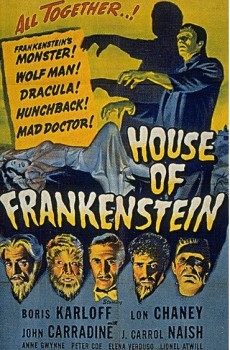 House of Frankenstein (1944)
 Fans of Tom Waits are often divided into two camps: those who favor the early boozy Kerouac, be-bop inspired crooner of life’s derelicts and losers up until he transmogrified beginning with the “Heartattack and Vine” album and “crossed over” into Kurt Weill cacaphonous orator of the absurd; fans of the later period sometimes disdain the earlier, and vice versa, despite the obvious connections. Me, I’m in the third camp as a huge admirer of both milieus. (I suppose there’s a further quarter of people who can’t stand Waits at all, but, much like the folks who still tiresomely maintain Dylan hasn’t done anything since his protest days, aren’t worth serious attention.)
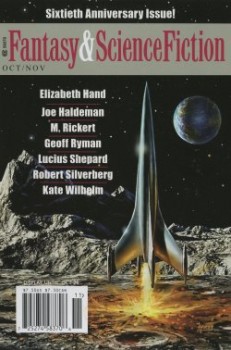
 I’m a sucker for retrospective anthologies. And F&SF is one of my favorite magazines — and has been since I first discovered tattered copies in the tiny library of Rockcliffe Air Force base in Ottawa, Canada, in the late 70s. Editor Gordon van Gelder has assembled an imposing, 470-page collection spanning more than five decades, starting with Alfred Bester’s “Of Time and Third Avenue” (1951) and ending with Ted Chiang’s “The Merchant and the Alchemist’s Gate” (2007).
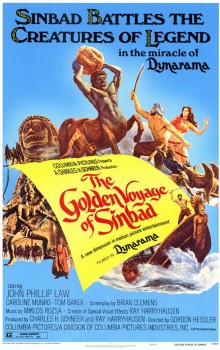 The Golden Voyage of Sinbad (1974)
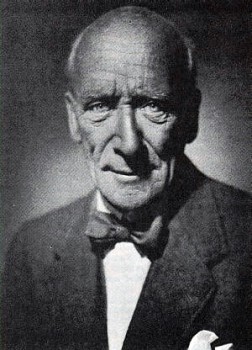 Incredible Adventures
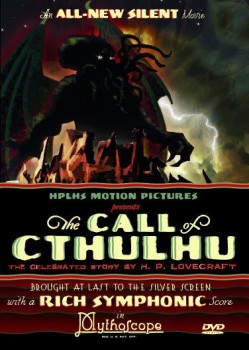 Directed by Andrew Leman; starring Matt Foyer, Chad Fifer, Noah Wagner, Ramon Allen Jr., and Ralph Lucas.
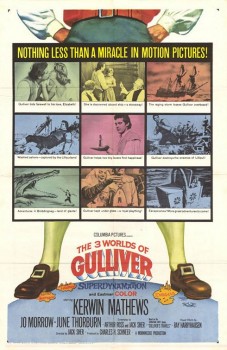 The 3 Worlds of Gulliver (1960)
 When other genre-lovers find out I’m a fan of Robert E. Howard, they often ask me what my favorite of his stories is. They probably expect I’ll name one of the Conan yarns, or perhaps a Solomon Kane or Kull story. (Kull is, indeed, my favorite Howard character.) If they already know something of my background in history, they may think I’ll name one of the Crusader stories that appeared in Magic Carpet Magazine.
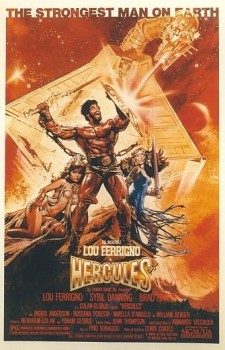 Hercules (1983)