Browsed by
Category: Pulp

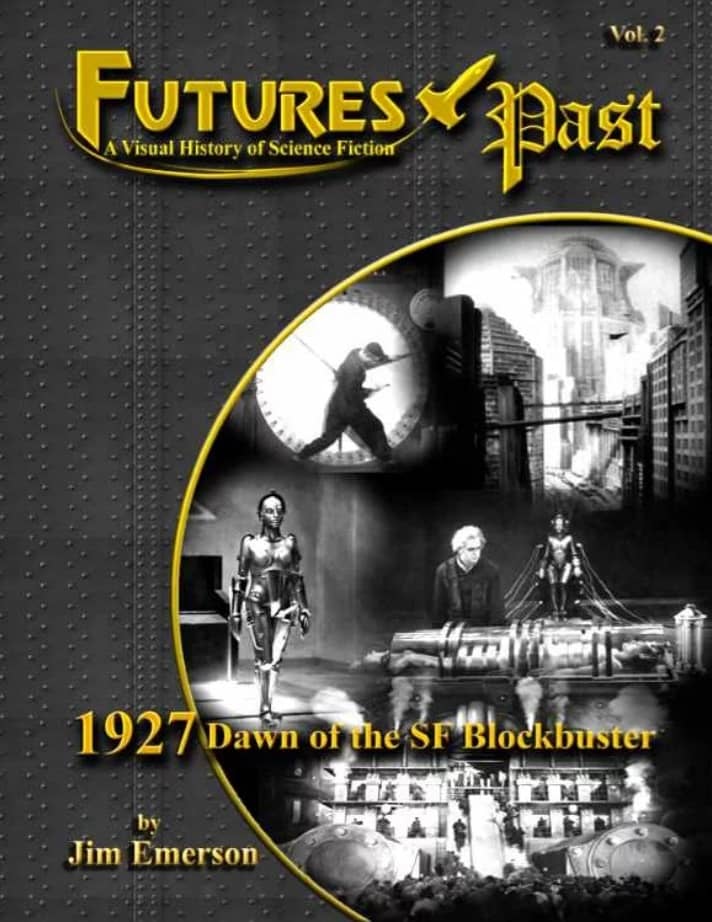
A Lush Visual History of Science Fiction: Futures Past by Jim Emerson

A Lush Visual History of Science Fiction: Futures Past by Jim Emerson


The first two issues of Futures Past, a Visual History of Science Fiction, edited and published by Jim Emerson

Way back in the 90s, before most of you young whippersnappers were born, Jim Emerson had a very fine fanzine called Futures Past, covering the birth of modern science fiction. He published four issues, each covering one year of SF history, from 1926-29.

In 2014 Jim resurrected his fondly-remembered zine as a 64-page digital magazine, with gorgeous full-color pages. The first issue covered 1926, the year Hugo Gernsback founded Amazing Stories. Futures Past Vol. 1 illuminated the Birth of Modern Science Fiction, covering all the highlights of science fiction publishing in magazines and books.

A Kickstarter intended to fund full-color print versions of the new version in 2014 wasn’t successful. Undaunted, Jim funded the project himself, and earlier this year I was surprised and very pleased to receive a print copy of Futures Past, Volume 2 in the mail. Covering the year 1927 and the Dawn of the SF Blockbuster, this 144-page publication is a love letter to a forgotten era, when a brand new literary genre was being born in the pages of pulp magazines, books, and on the silver screen.
Read More Read More

Vintage Treasures: Planets Three by Frederik Pohl

Vintage Treasures: Planets Three by Frederik Pohl


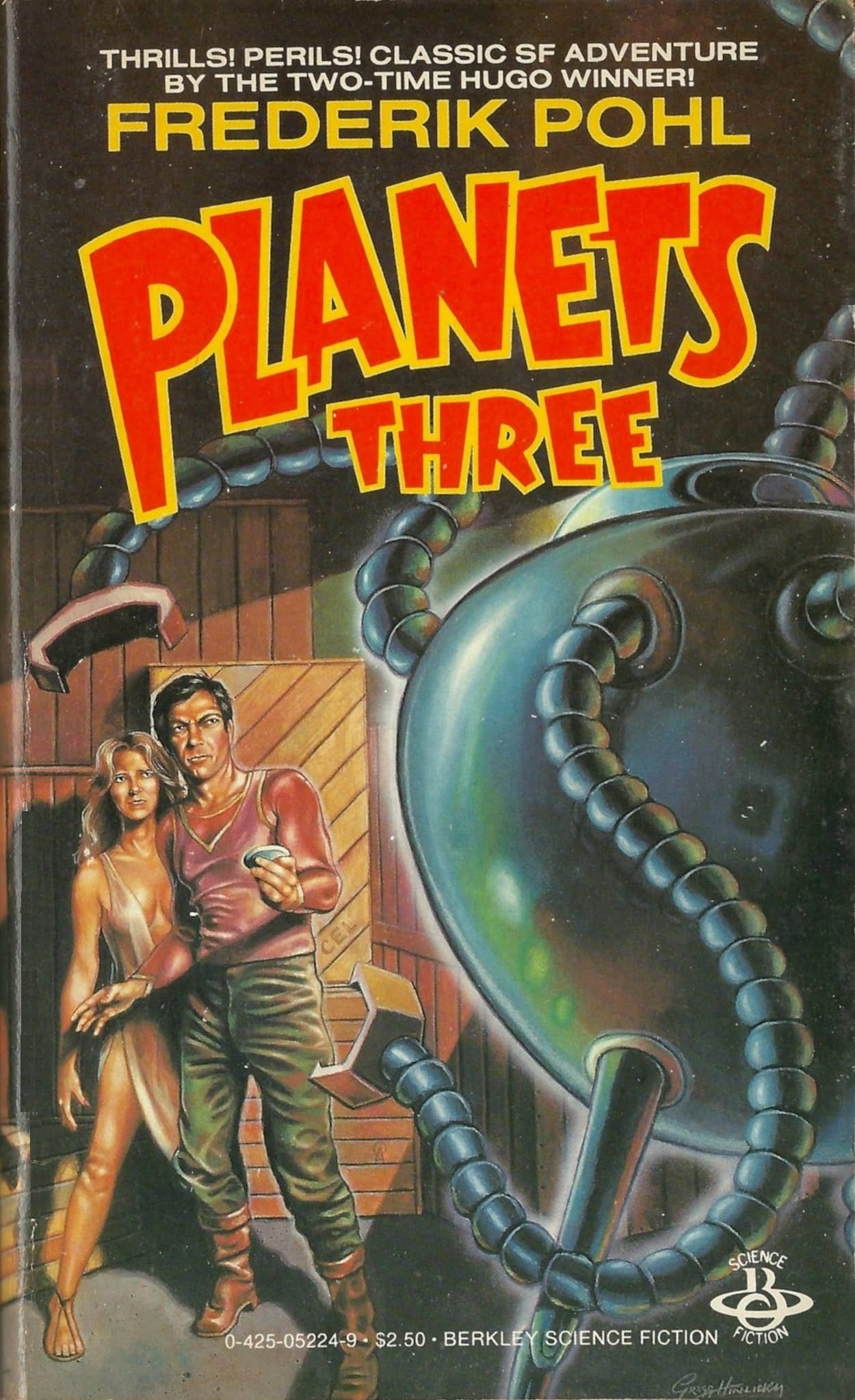
Planets Three by Frederik Pohl (Berkley Books, 1982). Cover by Gregg Hinlicky

I admire Frederik Pohl. He had a nearly 75-year career in science fiction, from the early stories he published as a young teen in the 1930s all the way to the Hugo Award he won in 2010 for his superb early blog, The Way the Future Blogs, at the age of 90. He was an astute and prolific fan writer, an agent, and a legendary editor, winning three successive Hugos for Best Editor for his work at IF magazine in the 60s.

His first love was writing, of course, and it’s not hard to sense some frustration at his mid-career lack of success, especially as he watched his fellow Futurians and friends enjoy stellar careers, including Isaac Asimov, Donald Wollheim, Damon Knight, Cyril Kornbluth, and many others. Asimov, whom Pohl had known since they were both teenage fans in Brooklyn, had such name-brand recognition that virtually everything he’d written was still in print in the 70s and 80s — certainly not the case for Pohl, whose early output languished in obscurity in moldering pulp magazines.

Then came Gateway.

Read More Read More

Vintage Treasures: The Gods of Bal-Sagoth by Robert E. Howard

Vintage Treasures: The Gods of Bal-Sagoth by Robert E. Howard


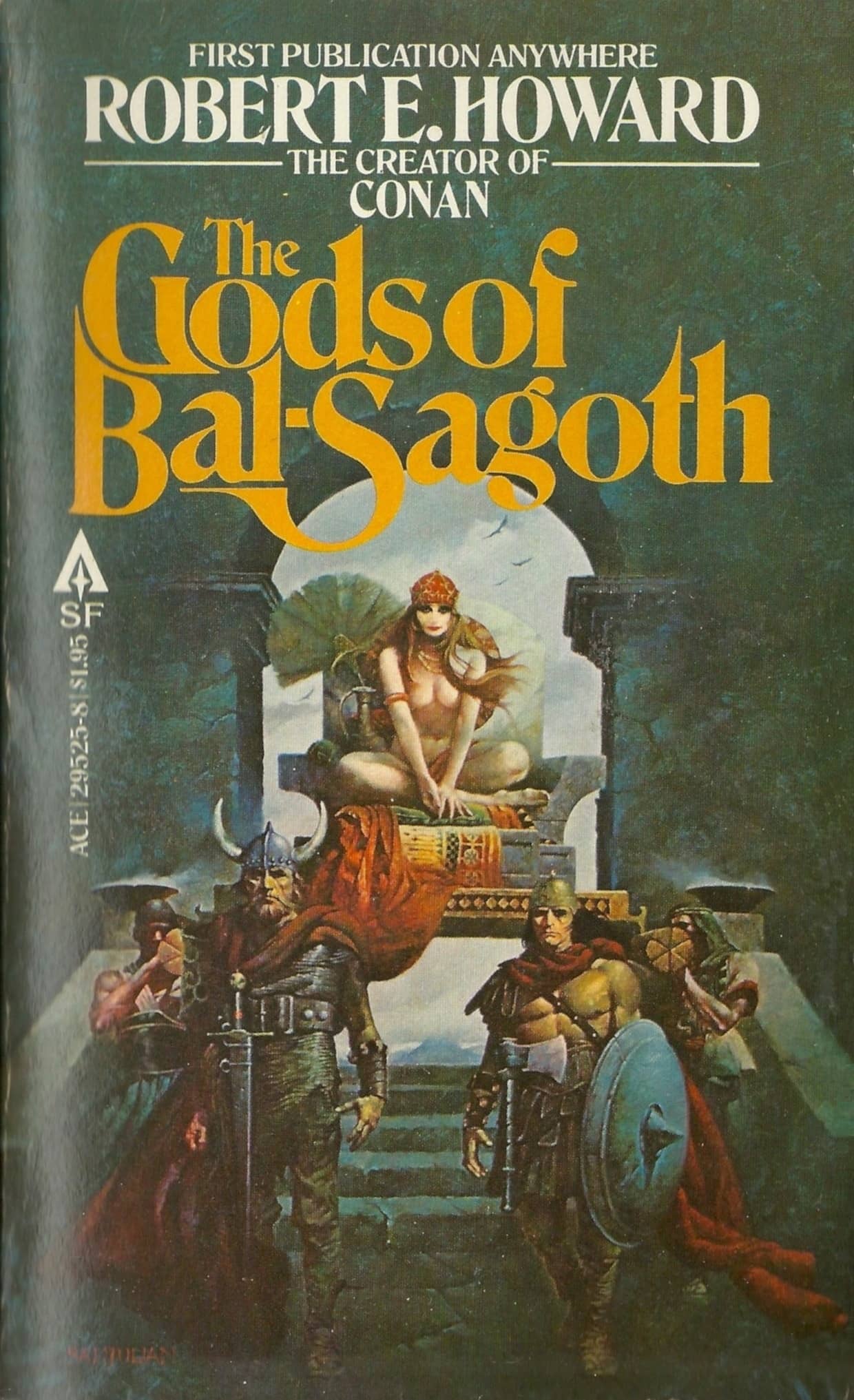
The Gods of Bal-Sagoth (Ace, 1979). Cover by Sanjulian

I didn’t discover Robert E. Howard through Conan. In fact, it was decades after I started reading fantasy before I read my first Conan story (“The Tower of the Elephant,” for the record.)

No, it was Howard’s rich fiction collections from Ace Books in the late 70s and early 80s that really introduced me to the master of 20th Century sword & sorcery. They were filled with enthralling tales of blood-stained history, dark adventure, and unexpected horror, like “Worms of the Earth,” “Pigeons From Hell,” and “The Gods of Bal-Sagoth.”

And those gorgeous Sanjulian covers!

Read More Read More

B is for Bradbury

B is for Bradbury


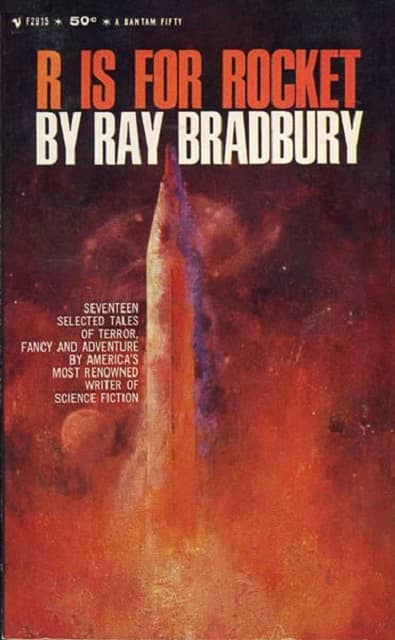
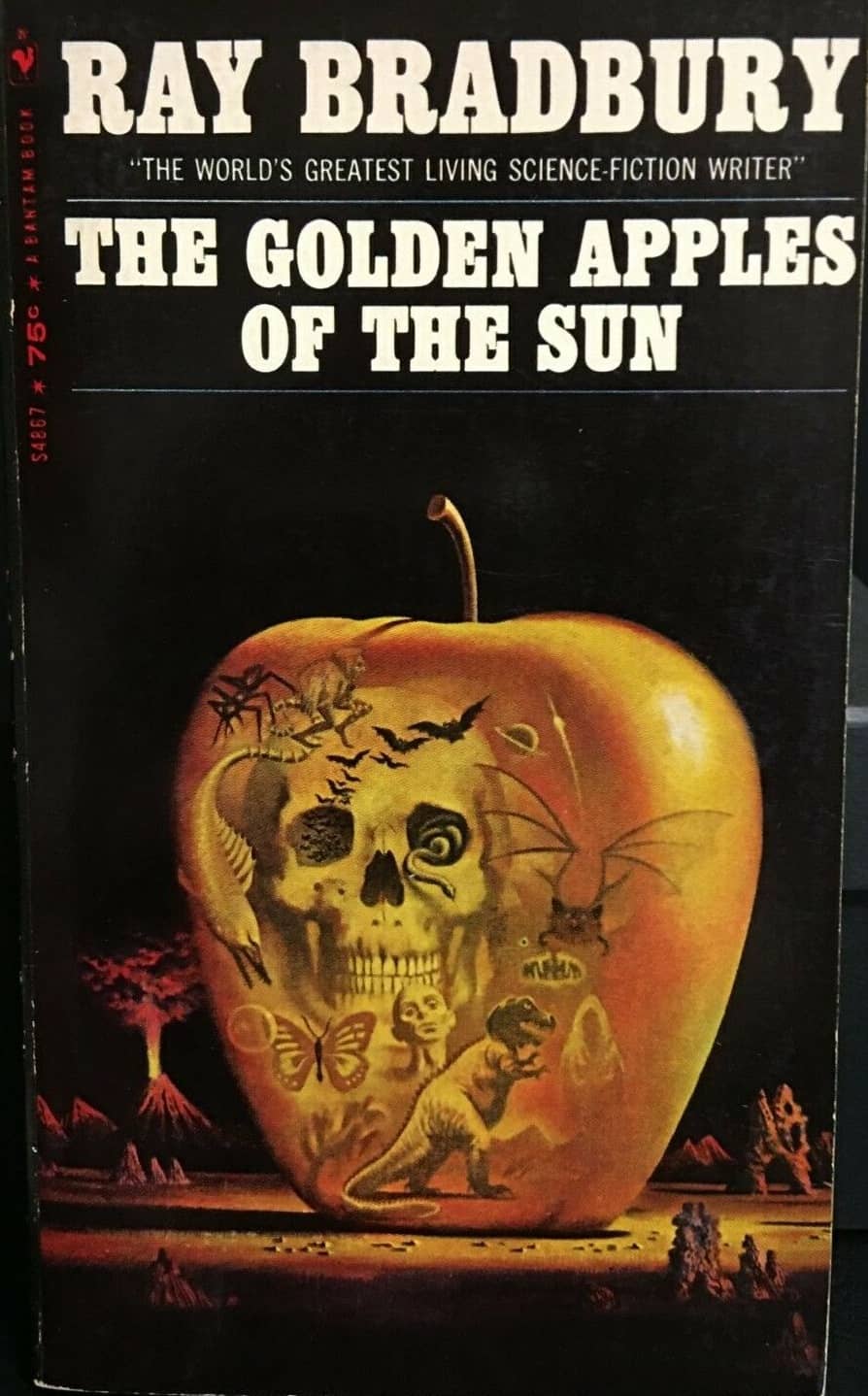
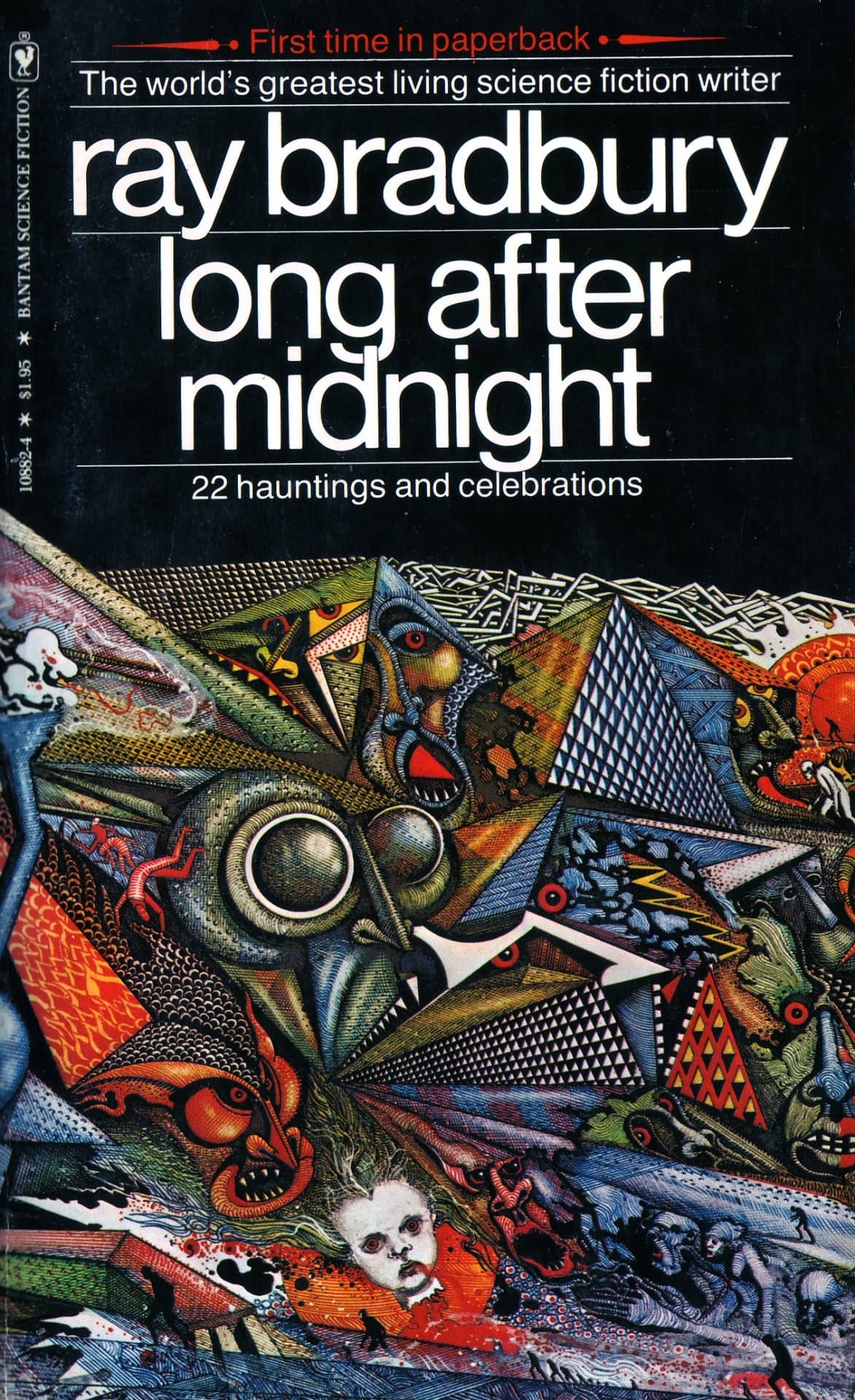
R is for Rocket (Bantam, 1965, cover by Paul Lehr), The Golden Apples of the Sun
(Bantam, 1970, cover by Dean Ellis), Long After Midnight (Bantam, 1978, cover by Ian Miller)

June 5, 2022 marks the 10th anniversary of the death of Ray Bradbury, one of the greatest speculative fiction writers of all time. It’s fair to say that no author has positively affected my path into reading, and subsequently writing, to the extent that he did. Through this four-part series, I hope to convey some of the joy and wonder that Bradbury instilled in me and so many others, by revisiting a selection of his short stories that have continued to resonate with me throughout the years. Disclaimer: I don’t profess that my selection are his greatest tales, no matter what your definition of the term, but they hold a special place in my pantheon of stories, and I hope they will be worthy of your time.

Read More Read More

Take Me Home! A Princess of Mars by Edgar Rice Burroughs

Take Me Home! A Princess of Mars by Edgar Rice Burroughs

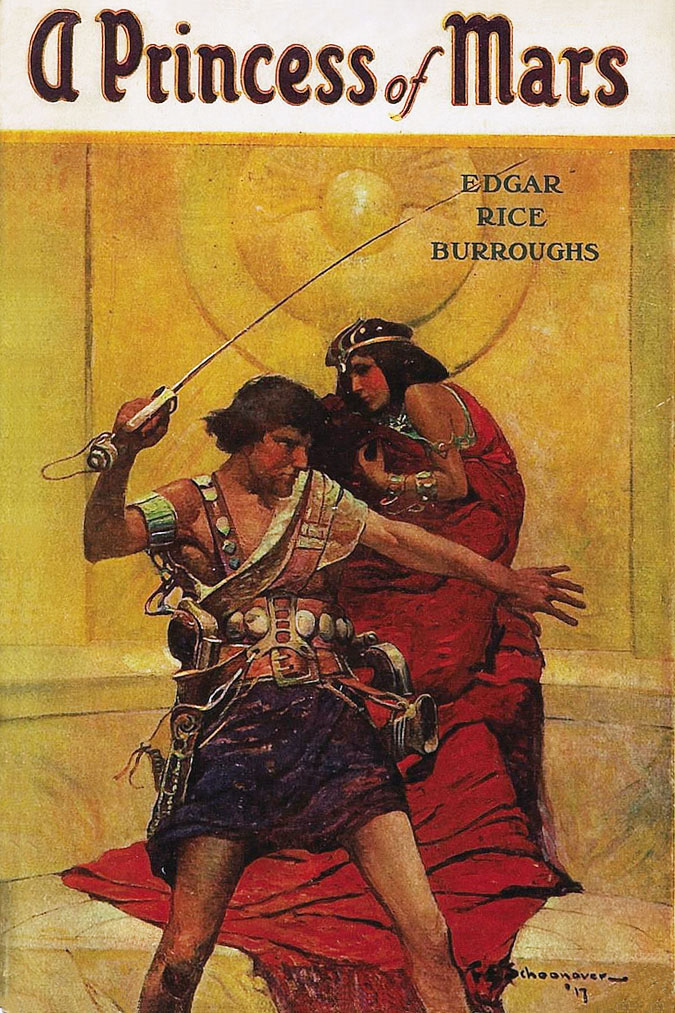
I opened my eyes upon a strange and weird landscape. I knew that I was on Mars; not once did I question either my sanity or my wakefulness. I was not asleep, no need for pinching here; my inner consciousness told me as plainly that I was upon Mars as your conscious mind tells you that you are upon Earth. You do not question the fact; neither did I.

So reacts John Carter, ex-cavalryman of the Army of Northern Virginia, when he transmigrates to the red planet in A Princess of Mars (1917). Chased by torture-minded Apaches, Carter secrets himself in a cave. By unknown means, he finds his spirit severed from his body and transported to Mars.

On Mars, a dying, barren world littered with the ruins of millennia-gone civilizations, he finds his great love and becomes the greatest hero that Barsoom, as its inhabitants call Mars, has ever known. Along that path to glory, thousands of miles are traveled and thousands of foes slain. A Princess of Mars is pure escapist fantasy, where the protagonist, standing in for the increasingly civilized American man Burroughs was writing for, fights and defeats all foes, outwits every enemy, and wins the hand of the most beautiful woman in the world. To some, that might sound juvenile, but they are wrong. A Princess of Mars is absolutely deserving of the mind-blowingly pulpy cover illustrations of Frank Frazetta.

Read More Read More

Random Reviews: “Blue Haze on Pluto” by Raymond Z. Gallun

Random Reviews: “Blue Haze on Pluto” by Raymond Z. Gallun

On February 18, 1930, Clyde W. Tombaugh, a 24-year old astronomer, noticed a miniscule dot that flickered when he ran two astronomical slides through a device known as a blink comparator.  Tombaugh had been working at the Lowell Observatory in Flagstaff, Arizona since April of the preceding year trying to find an hypothetical ninth planet that Percival Lowell had predicted would exist.  Tombaugh realized he had made the discovery and reported the news to his superiors. The news of the discovery was announced on March 13 and the new planet would be named Pluto, at the suggestion of an eleven year old girl, Venetia Burney, whose great uncle, Henry Madan, had suggested the names Phobos and Deimos for the two moons of Mars 52 years earlier.

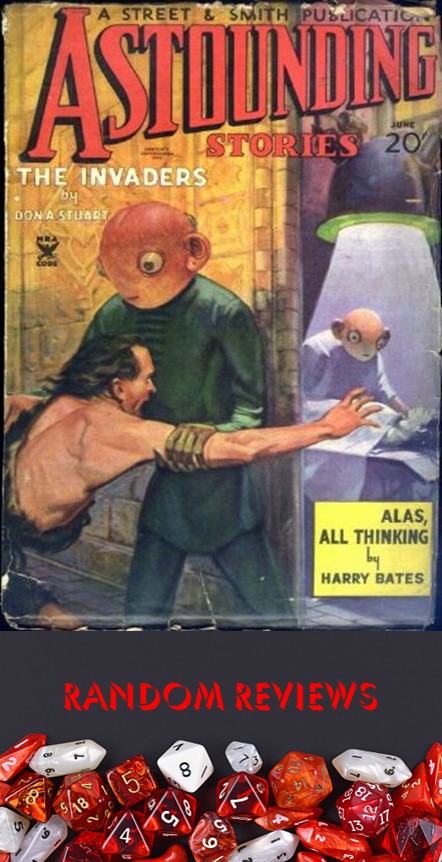
The first science fiction story to be published that mentioned Pluto appeared in Fall of 1930 when John W. Campbell, Jr. published the story “The Black Star Passes” in Amazing Stories Quarterly.  Other stories followed suit and in the June 1935 issue of Astounding Raymond Z. Gallun published the story “The Blue Haze on Pluto.”

Gallun’s story opens with the aftermath of the crash of a transportation craft on Pluto’s surface. His protagonist, Terry Sommers, is injured and willing to wait for rescue until he remembers that the person in the seat in front of him, Dr. Cairns, had commented that he was transporting a serum to cure Sylfane plague that had struck the city of Pindar. Upon discovering that Cairns, along with most of the other passengers, had been killed in the wreck, Sommers decided it was his duty to try to make it to Pindar with the serum, despite a broken arm.

Read More Read More

Beautiful Plagues: An Interview with John C. Hocking

Beautiful Plagues: An Interview with John C. Hocking

To help reveal the muses that inspire weird fiction and horror writers, this interview series engages contemporary authors on the theme of “Art & Beauty in Weird/Fantasy Fiction.” Recent guests on Black Gate broaching this topic have included Darrell SchweitzerSebastian JonesCharles GramlichAnna Smith Spark, & Carol Berg, Stephen Leigh, Jason Ray Carney. See the full list of interviews at the end of this post.

Today we corner John C. Hocking whose Conan pastiche we reviewed a few months ago.

John C. Hocking is an American fantasy writer who is the author of two well-acclaimed Conan novels and has also won the 2009 Harper’s Pen Award for Sword and Sorcery fiction for his story, “The Face In The Sea”. He lives in Michigan with his wife, son, and an alarming quantity of books. He is a nigh-obsessed reader and writer of lurid pulp fiction, the author of Conan and the Emerald Lotus, the “Black Starlight” Conan serial, and their time-lost companion, Conan and the Living Plague, and an obedient thrall of Tales From the Magician’s Skull.

For clarity, we’ll actually corner him twice. Firstly, here on Black Gate, we’ll cover his weird, pulpy muses & Conan pastiche; secondly, in a companion interview, we’ll cover his King’s Blade and Archivist series on the Tale from the Magician’s Skull Blog.

Read More Read More

Random Reviews: “Minister Without Portfolio” by Mildred Clingerman

Random Reviews: “Minister Without Portfolio” by Mildred Clingerman

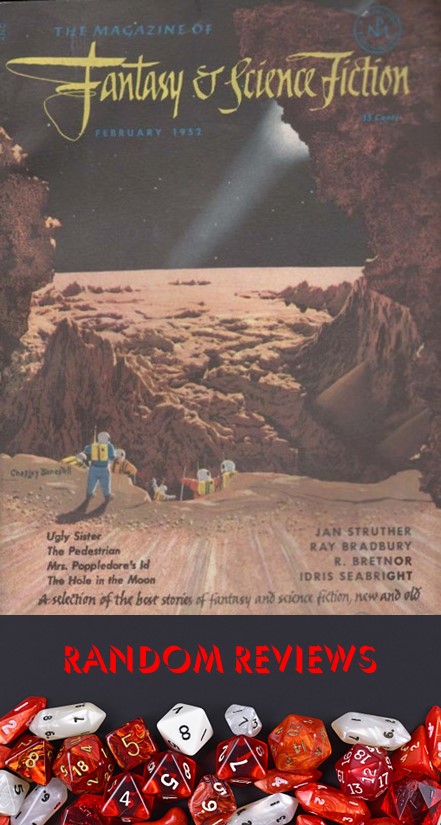
F&SF, 2/52, Cover by Chesley Bonestell

Throughout 2022, I’ll be reviewing short stories. Some of these may be classics, others forgotten. The two things that all will have in common is that they are part of my personal collection and they will be selected through a randomization process.  What works and authors I look at will be entirely selected by a roll of the dice.

“Minister Without Portfolio” was Mildred Clingerman’s debut short story and first appeared in the February 1952 issue of The Magazine of Fantasy and Science Fiction. It is the sort of short story which occasionally appears, but not often, but perfectly captures the time in which it was written.

Mrs. Ida Chriswell is a widow living with her son and daughter-in-law, and, in fact, living in some fear of her daughter-in-law.  Not particularly worldly, she has few hobbies aside from crocheting, apparently has few friends, and little interest in the world around her.  As the story opens, she is going out to try her hand at bird watching at her daughter-in-law’s insistence, although Ida points out that her inability to see color, reflective, perhaps, of the drab existence she has, will limit her enjoyment of the pastime, which she isn’t actually interested in. Her daughter-in-law’s insistence and her own desire not to rock the boat, results in Ida heading out to an empty field to watch birds, or at least pretend to watch birds while she sits by a tree and crochets.

Read More Read More

Random Reviews: “The Yeast Men” by David H. Keller

Random Reviews: “The Yeast Men” by David H. Keller

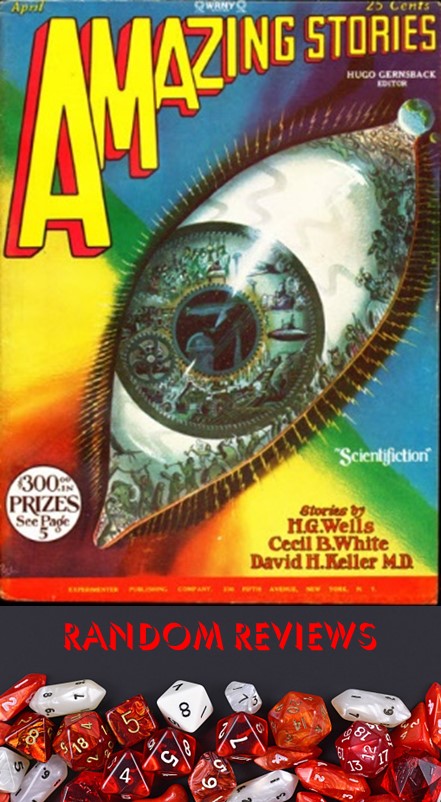
Amazing Stories, April 1928
Amazing Stories, April 1928, cover by Frank R. Paul

Throughout 2022, I’ll be reviewing short stories. Some of these may be classics, others forgotten. The two things that all will have in common is that they are part of my personal collection and they will be selected through a randomization process.  What works and authors I look at will be entirely selected by a roll of the dice.

The Yeast Men,” which originally appeared in the April 1928 issue of Amazing Stories, was the second science fiction story published by David H. Keller, M.D., as his byline often read. He had actually been publishing as early as 1895, with the story “Aunt Martha” in Bath Weekly, under one of many pseudonyms that he used. He is believed to have been the first psychiatrist to write science fiction.

When Hugo Gernsback launched Science Wonder Stories in 1929, he listed Keller as the magazine’s Associate Science Editor. Keller also served as the editor of Gernsback’s Sexology magazine from 1934 to 1938.  Keller lived from 1880 to 1966. He served in the US Medical Corps during World War II. A fan of H.P. Lovecraft, Keller was able to provide August Derleth with a sizable loan to keep Arkham House from going bankrupt during a period when there were cashflow issues.

“The Yeast Men” is set in 1930 in the fictitious European countries of Eupenia and Moronia. Premier Plautz of Eupenia is planning ahead for the next war with Moronia with the plan of utterly destroying the neighboring country, much as Cato the Elder ended every speech by calling for the destruction of Carthage, Plautz ends each speech calling for the destruction of Moronia.

Read More Read More

Cleve Cartmill, The Devil’s in the Details

Cleve Cartmill, The Devil’s in the Details


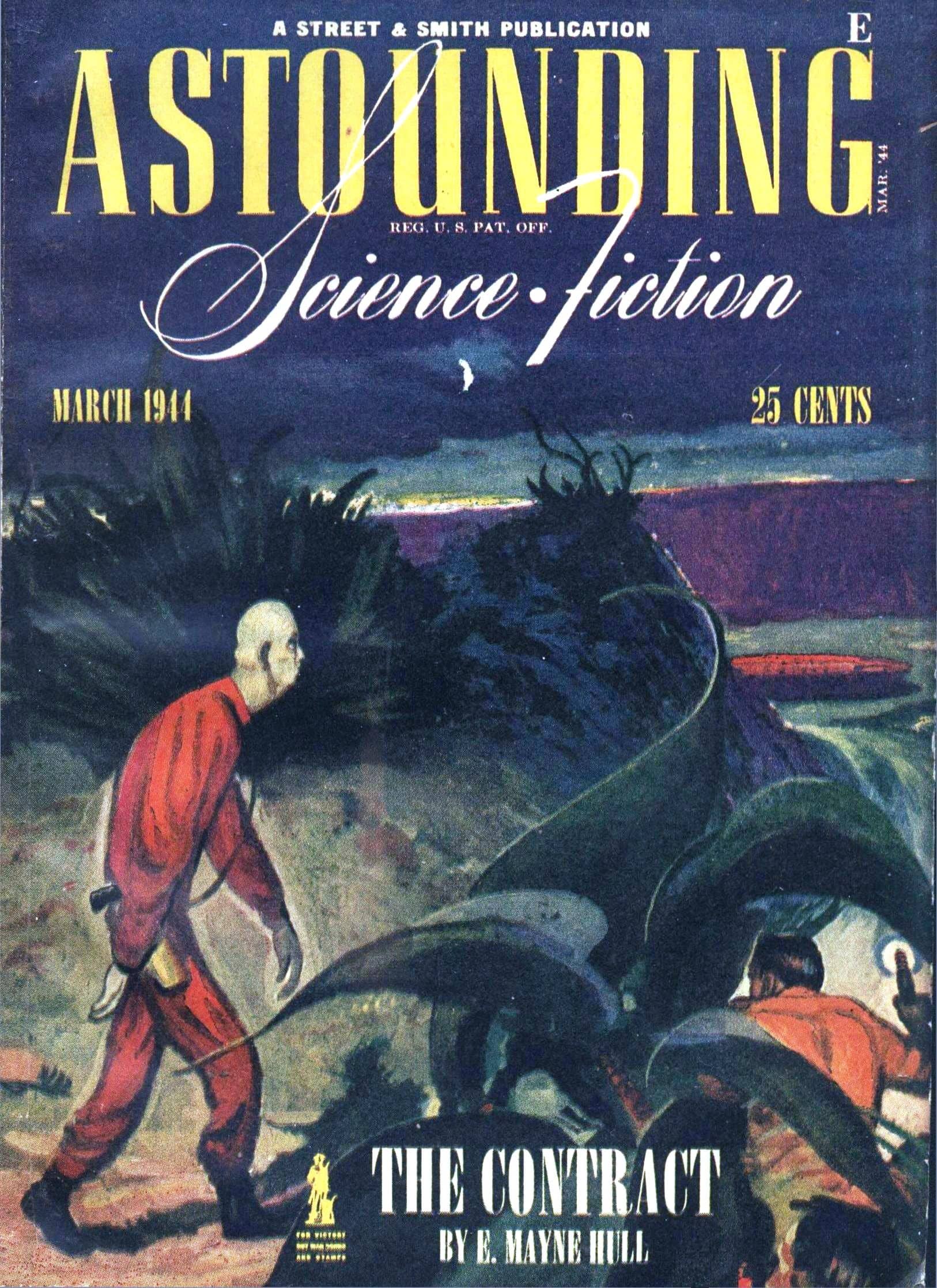
Astounding Science Fiction, March 1944, containing “Deadline” by Cleve Cartmill. Cover by William Timmins

Pulp writer Cleve Cartmill (1908 – 1964) is probably best known for writing the story that prompted an FBI visit to John W. Campbell’s office at Astounding. The story in question, “Deadline” (March, 1944), featured a bomb eerily similar to the one being developed by the Manhattan Project at the time. As an educated science fiction audience, Black Gate readers probably do not need that old story re-hashed. Instead, I’ll tell you about three of Cartmill’s fantasy stories published in Unknown, all of which are interesting and worth reading.

Historically, Cartmill is considered a competent but undistinguished pulp writer. In A Requiem for Astounding, Alva Rogers writes — “Cartmill wrote with an easy and colloquial fluidity that made his stories eminently readable.” I agree. But I also think there’s more to him than that. In the three pulp fantasy stories I’ll be reviewing here — “Bit of Tapestry” (1941), “Wheesht!” (1943), and “Hell Hath Fury” (1943) — Cartmill examines some deeper themes including free will and what makes us human. Although he doesn’t always follow through on these ideas, you are asked to think about them.

As a heads up, there will be heavy spoilers in this article.

Read More Read More