Browsed by
Category: Essays

Romanticism and Fantasy: The Emergence of the Romantic
Romanticism and Fantasy: The Emergence of the Romantic

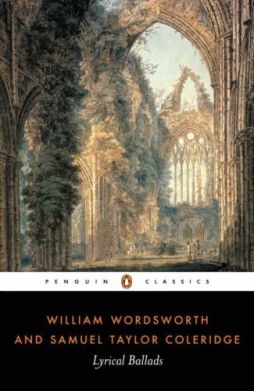
Lyrical BalladsLast week, I described the neo-classical attitudes of the Age of Reason, which dominated English literature through most of the 18th century. This week I want to take a look at how and when things changed.

In 1798 William Wordsworth and Samuel Taylor Coleridge published the first edition of Lyrical Ballads, a collection of poetry that some critics have pointed to as the start of Romanticism in English literature. In fact, you can fairly easily find precursors to one aspect or another of the phenomenon called Romanticism; Blake, for example, was publishing his illuminated prophecies in 1789. But there were a number of works preceding him, as well, and I’m going to look here at some of those texts that seem to pave the way for Romanticism, particularly in the thirty years from 1760 to 1790.

Since I’m interested in Romanticism as a form of fantasy, the texts I’ll look at have to do broadly with the impulse toward fantasy and away from realism. I think the fantastic is a key characteristic of the romantic, while the classical or neo-classical emphasis of the earlier eighteenth century effectively went hand-in-hand with realism. It has to be said that there are other ways to look at Romanticism; it’s certainly true that Wordsworth in particular emphasised the importance of doing away with Enlightenment conventions, and with an outdated poetic diction, in order to focus on life as it was really lived across all social classes. Romanticism is an amorphous term. Writers of the era did not call themselves Romantic, and did not group themselves together the way we group them now. As a result, strict definitions are useless. If you look too long at the vast territory often ascribed to ‘romanticism,’ sooner or later you find significant overlap with ‘the enlightenment.’
Read More Read More

The Nightmare Men: “The Ghost-Seer”

The Nightmare Men: “The Ghost-Seer”

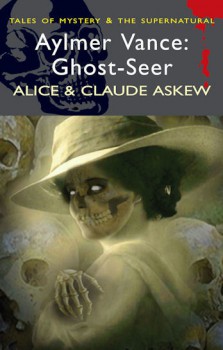
9781840225396Aylmer Vance, agent of the enigmatic Ghost Circle, made his first appearance on the nightmare stage in 1914. The creation of husband-and-wife writing team Alice and Claude Askew, Vance appeared in eight consecutive issues of The Weekly Tale-Teller between July and August. The stories-“The Invader”, “The Stranger”, “Lady Green-Sleeves”, “The Fire Unquenchable”, “The Vampire”, “The Boy of Blackstock”, “The Indissoluble Bond” and “The Fear”-ranged from grotesque to gentle, and are, by and large, of a slower pace than those featuring Vance’s contemporaries, such as Carnacki. Only one of the stories has been regularly anthologized (“The Vampire”), with the rest languishing in obscurity until the release of recent collections by Ash-Tree Press and Wordsworth Editions respectively.
Like John Silence, Vance inhabits an England of soft spiritual influence, where elementals, ancient memories and ghostly manifestations cling to the unseen corners and visit just long enough to inject the mundane with a booster shot of the strange. Unlike Carnacki’s Outer Monstrosities and Malign Visitors, the apparitions that Vance faces are utterly human in their aspect, if not their motivation. Death is no barrier to the desires of the flesh or the dreams of the determined, and it is when these elements intrude on the hard-won peace of the Edwardian mind that the Ghost-Seer must intervene.

Read More Read More

Is The Lord of the Rings Literature?

Is The Lord of the Rings Literature?

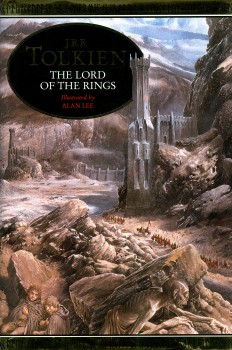
alan_lee_the20lord20of20the20rings_coverPart 2 of a 2-part series

Part 1 of this article set the stage for the question, Is The Lord of the Rings literature? Part II examines six criteria commonly used to define works of high literary quality and applies them to The Lord of the Rings.

1. Popular appeal

The argument against: The Lord of the Rings might be popular, but that doesn’t make it literature.

The counterargument: There’s popular, and then there’s an omnipresent, mammoth, overshadowing level of popularity.

How popular is The Lord of the Rings? At last count, it has been translated into 57 languages and is the second best-selling novel ever written, with over 150 million copies sold. Its also a repeat winner of multiple international contests for favorite novel (note the broad term novel, not just fantasy novel). For example:

  • In 1997 it topped a Waterstone’s poll for Top 100 Books of the Century.
  • In 2003 a survey (The Big Read) was conducted in the United Kingdom to determine the nation’s best-loved novel of all time. More than three quarters of a million votes were received, and the winner was The Lord of the Rings.
  • A 1999 Amazon poll administered to its customers yielded the same result.

In short, readers of all stripes, from all around the world, adore this book more than just about any other.

All that said, I will fully admit that this is the least convincing argument, because mass appeal is not necessarily a good indicator of quality. See Justin Bieber. So let’s look at some other criteria.

Read More Read More

Romanticism and Fantasy: The Neoclassical Background

Romanticism and Fantasy: The Neoclassical Background

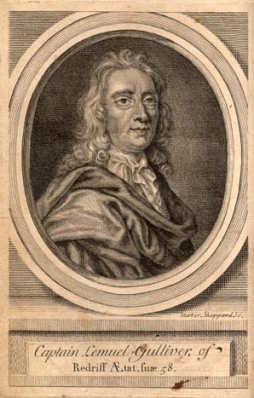
Lemuel GulliverBy way of beginning a discussion about Romanticism and fantasy, I’d like to take a quick look at where the Romantics came from. If Romanticism was a revolt against Reason, what was Reason understood to be? If Romanticism, as I feel, is essentially fantastic, is Reason opposed to fantasy? To know Romanticism is to know the Enlightenment which it was reacting against, so in this post I’ll try to describe some characteristics of the 18th-century Enlightenment in England that seem relevant to the development of fantasy. I’ll go up to about 1760, and then in my next post point out some of the counter-currents and proto-Romantic elements that were developing at the time and after.
A few broad statements to start with: The Enlightenment, or the Age of Reason, started in the mid-seventeenth century, viewed by thinkers at the time as a reaction against the wars of religion that had rocked Europe up through the Thirty Years’ War (which ended in 1648). Reason was considered the fundamental human faculty, and human beings were thought to be fundamentally rational actors. Deism, particuarly prominent in England, was a religious philosophy which suggested that God had created the world and left it to develop according to its own laws, without the intervention of miracle and revelation. Free speech, freedom of thought, and humanism were natural, because rational: in a free market of ideas, reason would naturally turn to the true and shun the false. Human rights as we understand them today derive from Enlightenment virtues.

This wasn’t simply a philosophical movement. This was a change in habits of thought across Europe. The scientific method became broadly diffused and rational thinking became an ideal. Isaac Newton developed new theories of physics and optics; he and Gottfried Liebnitz simultaneously developed calculus. The Royal Society was born in the late seventeenth century, helping to systematically spur the development of science. Europeans discovered the secret of making porcelain; clockwork reached new levels of sophistication; mercury thermometers were introduced.

Read More Read More

You Can’t Read the Same Comic Twice: Justice League of America 183-185

You Can’t Read the Same Comic Twice: Justice League of America 183-185

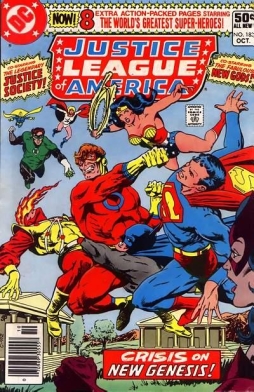
Justice League of America 183I was planning to start the series of posts on Romanticism and fantasy this week, but something came up in the last few days that I’d like to write about; particularly since it seems to resonate with a recent experience of John O’Neill’s. Earlier this week, my friend Claude Lalumiére sold off much of his library of sf, fantasy, and comics in preparation for an upcoming move. I’ve known Claude for a long while, and esteem his tastes highly. It’s not surprising I came away from his sale with a huge amount of material. What was surprising, to me at least, was that of all the many things I picked up — fiction by Zelazny, Lafferty, Delaney, Tanith Lee; comics by Alan Moore, Grant Morrison, Jack Kirby — the first items I chose to read were three Justice League comics from over thirty years ago.
There’s nothing particularly exceptional about the books. They do feature the last issue drawn by former JLA mainstay artist Dick Dillin before his death, and the first two issues drawn by George Pérez, as well as dynamic covers by Jim Starlin. But that’s not why I was drawn to them. They’re a three-issue story, telling a tale of one of the JLA’s annual meetings with the parallel-earth Justice Society of America; that’s not why either. It’s a storyline that uses Kirby’s Fourth World characters and concepts; but that also isn’t it.

It’s simply that I remember reading those comics when they first came out, and I remember loving them. The books are cover-dated October, November, and December, 1980, meaning they’d have come out in the summer of that year. I was six. Like John’s experience with Little Lulu, when I found new copies, the draw of my childhood was overpowering. But Little Lulu’s frequently held to be some of the greatest kids’ comics ever done. These are just a few random issues of a mid-tier superhero book. Well-drawn, yes, but not spectacular. Still, I found that in part because the work is decent without being great, I could re-read them with a double vision, remembering how they seemed to me at six as much as I reacted to them in the present moment.

Read More Read More

Is The Lord of the Rings Literature?

Is The Lord of the Rings Literature?

lotr-50th-anniversary1Part 1 of a 2-part series

And whether or not Tolkien’s works will stand the test of time is not within our lot to know, so that the Tolkien enthusiast’s need to defend Tolkien’s title of “author of the century,” as a result of the recent Waterstone’s poll of 25,000 readers in Great Britain in 1997, may be unnecessary and even gratuitous. A work like The Hobbit that has already been translated into thirty languages or one like The Lord of the Rings, into more than twenty, has already demonstrated the virtues of both accessibility and elasticity, if not endurance. An author who has sold fifty million copies of his works requires no justification of literary merit.

Jane Chance, Tolkien’s Art: A Mythology for England

Is The Lord of the Rings literature? The answer depends on who you ask. As I see it, four camps exist, each with a different take on the question.

Camp 1, Devoted Tolkien fans. Ask one of these folks and you’re likely to hear, “A Elbereth Gilthoniel! Of course. Need this question even be asked?” For members of Camp 1 the evidence is plain, the case long made for Tolkien’s literary greatness—even if they don’t always offer clear and/or compelling supporting evidence.

Camp 2, Ardent Tolkien haters. An answer by a member of Camp 2 is typically something along the lines of [Sarcasm mode on] “Tolkien’s books had literary merit?” [/Sarcasm mode off] No awful children’s story about Elves and Hobbits and Dark Lords could possibly qualify as literature. At least The Sword of Shannara wasn’t boring.

Read More Read More

Q.D. Leavis, Edgar Rice Burroughs, and Fiction and the Reading Public

Q.D. Leavis, Edgar Rice Burroughs, and Fiction and the Reading Public

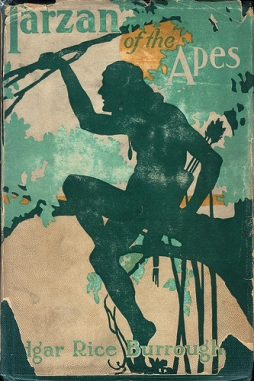
Tarzan of the ApesBefore continuing the series of posts on Romanticism that I talked about last week, I’d like to write about a couple of subjects I’ve had on my mind for a while. First up is Q.D. Leavis, and her book Fiction and the Reading Public.

In or slightly before 1932, Edgar Rice Burroughs wrote a letter to literary ciritc Queenie Dorothy Leavis. Leavis was preparing her PhD thesis, a book that would be an overview of the development of the bestseller and the publishing industry; as part of her preparation, she sent a questionnaire to sixty writers of various kinds, asking them about various aspects of fiction and publishing. Burroughs returned his questionnaire with a letter, which Leavis reproduced at one point in her book:

In submitting to you, in accordance with your courteous letter, my answers to your questionnaire, I wish you to know that I am fully aware of the attitude of many scholars and self-imagined literati toward that particular brand of deathless literature of which I am guilty.

From past experience it is only natural that I should assume that you may, in some degree at least, share their views. It would seem rather remarkable to me if you did not.

Read More Read More

The Nightmare Men: “The Ghost-Finder”

The Nightmare Men: “The Ghost-Finder”

Carnacki!William Hope Hodgson’s Carnacki outlived his creator with a tenacity that Hodgson, a bantam rooster of a man, would have appreciated. Thomas Carnacki, resident of 472 Cheyne Walk, London, first appeared in a series of five stories (“Gateway of the Monster”, “The House Among the Laurels”, “The Whistling Room”, “The Horse of the Invisible”, and “The Searcher of the End House”) in The Idler Magazine in the January through April, as well as June, issues of 1910. But despite Hodgson’s death in World War I, Carnacki carried on in a further four stories (“The Thing Invisible”, “The Hog”, “The Haunted Jarvee” and “The Find”) retrieved from Hodgson’s papers by his wife. All nine stories are available in a variety of printed, electronic and audio forms.
But that wasn’t the end. Carnacki’s career was further chronicled by other writers, including A. F. Kidd, Andrew Cartmel, Barbara Hambly, Alberto Lopez Aroca, Kim Newman, Willie Meikle and Alan Moore. He battled evil alongside the Second Doctor and Sherlock Holmes, as well as Mina Murray’s League. He appeared on television, played ably by Donald Pleasance. He’s even inspired a concept album! But in each of his incarnations, Carnacki combined ancient sorceries and Edwardian science to face the squealing, swine-faced threats of the Outer Void.

Read More Read More

Romanticism and Fantasy: A Prelude

Romanticism and Fantasy: A Prelude

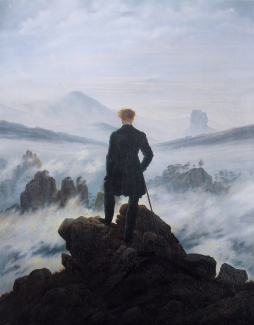
Caspar Friedrich: Wanderer Above the Sea of FogI’ve been thinking over the past few days about last week’s post on William Blake and fantasy. I’ve come to realise that post is actually just the start of a much larger project.
I mentioned last week that I agreed with John Clute’s argument that the mid-eighteenth century was the era when fantastika — sf, fantasy, and horror — came into being. I’ll go further. I think the era that followed, the Romantic era of English literature, represented the dawn of fantasy as we know it; and that the major writers of that time pioneered approaches to fantasy, and elements of fantasy fiction, that are still in use today. I’ve realised now that I want to write about this general subject: Romanticism as the start of modern fantasy. But the more I thought about it, the more different connections I found between fantasy and Romanticism. So many, in fact, that I’ve also realised that there’s no way I can cover them all in one post.

I therefore intend to explore those connections in a series of upcoming essays. It’ll be an irregular series, I expect, interspersed with posts about more contemporary elements of fantasy as well. I anticipate it being wide-ranging. There are a lot of different aspects to Romanticism, and it’s a topic and a time that’s endlessly fascinating to me.

Read More Read More

William Blake and the Nature of Fantasy

William Blake and the Nature of Fantasy

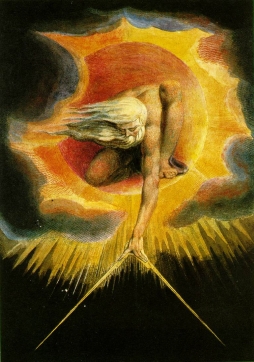
The Ancient of DaysPerhaps my favourite fantasy writing is arguably not fantasy at all. The epics and prophecies of William Blake certainly read like fantasy to many people, I think, albeit fantasy in a distinctive, unfamiliar form. But is the word appropriate? Blake himself was a visionary — he literally saw visions — and may well have believed that some at least of his writing was literally true. Does the definition of fantasy reside in the writer, or the reader? And how would Blake himself want his writing to be viewed?

Farah Mendlesohn, in her book Rhetorics of Fantasy, argued that the term ‘fantasy’ did not necessarily apply to the works of Latin American magic realist writers. As I understand her, she argues that the cultures of these writers are distinct from the culture that produced ‘fantasy fiction,’ and that the writers therefore stand in a different relationship of belief to the fiction. Magic realist texts “are not meant to act as genre text. Instead, the world from which the text was written is the primary world. It only becomes fantastical because we Anglo-American readers are outsiders. … Magic realism … is written with the sense of fading belief. If we are looking for some form of it, we need the literature of a similar culture, one in which the presence of other powers is a real and vibrant thing, even if it must exist alongside scientific rationalism.”

I don’t know whether what Mendlesohn describes is necessarily a cultural outlook, or whether it can be a personal one. She acknowledges it can apply to writing from the American South. But take John Crowley’s novel quartet The Solitudes, which seems like a North American piece of magic realism and which very carefully builds in explanations for its metaphysical elements — Crowley suggests that the world remakes itself on occasion, with different rules and a rewritten history each time; magic might have worked once, the books say, but when the world last changed, not only did magic stop working, but history itself was changed so that in fact magic now never has worked. Does one need to concern oneself with Crowley’s own philosophical positions before determining whether his writing is fantasy? (In fact, it’s a more complicated question than that; briefly, the characters are half-aware that they’re characters in a story, and the text itself unfolds aware of its nature as a text. Whether this makes it more fantastic or less is an interesting point, but not what I want to talk about here.)

Read More Read More