Browsed by
Category: Books

Vintage Treasures: The Worlds of A.E. Van Vogt

Vintage Treasures: The Worlds of A.E. Van Vogt

The Worlds of A.E. Van Vogt-smallWe haven’t discussed A.E. Van van Vogt at Black Gate very much, and that’s probably a significant oversight.

True, he’s primarily thought of as a science fiction writer (when he’s thought of at all these days.) But however you categorize him, van Vogt was one of the most important writers of the pulp era. I looked at one of his most famous novels, a fix-up of his early pulp stories from Astounding Science Fiction, The Voyage of the Space Beagle, back in September, but that’s really the first time we discussed van Vogt at any length.

Well, that leaves us a lot of ground to cover, so we better get started.

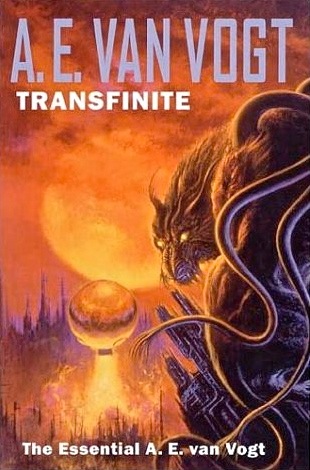
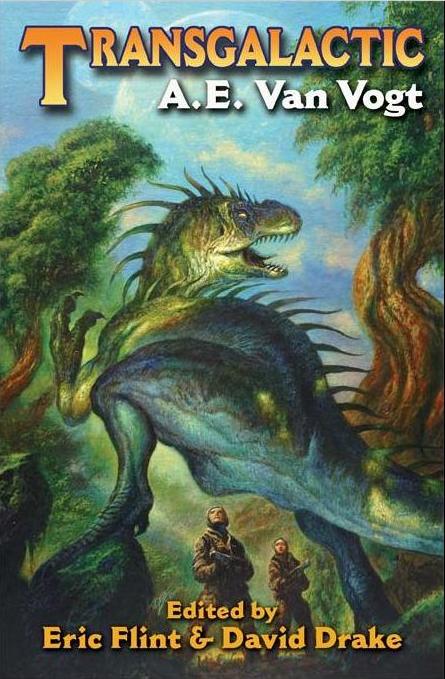
Van Vogt’s longer works include some of the most famous early novels in the SF canon, including Slan (1946), The World of Null-A (1948), and The Weapon Shops of Isher (1951). If you’re interested in sampling his shorter work, there are a lot of collections to choose from — including Transfinite: The Essential A. E. Van Vogt (2003), the deluxe, 576-page hardcover collection of his best work from NESFA Press (still in print, you lucky dog.) If you’re looking for something a little more economical, I highly recommend Transgalactic (2006), a handsome trade collection containing eleven short stories and a short novel, The Wizard of Linn, still in print from Baen.

Of course, you know how I feel. If you want to experience Van Vogt in the pure state, the way his original fans did, you should collect pulps, like any decent person. Failing that, I recommend tracking down a few of his most important paperbacks. Besides, that’s the truly economical approach.

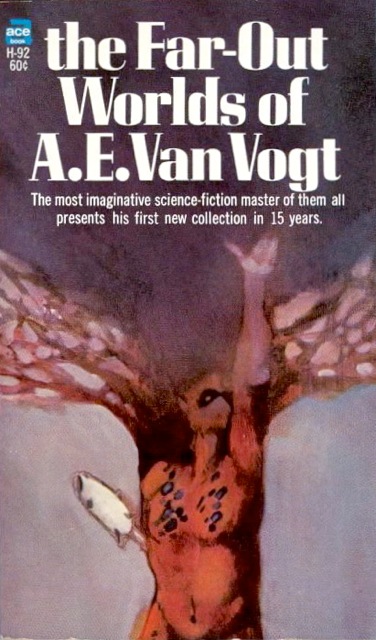
I suggest starting with The Worlds of A.E. Van Vogt, a generous sampling of his short fiction spanning 1941 – 1971. It was originally published in 1974 and is still easy to find and very inexpensive. Twelve of the stories within (plus Forrest J. Ackerman’s one-page introduction) appeared in a smaller paperback, The Far-Out Worlds of A. E. van Vogt, in 1968; but this edition includes all of those stories plus three long novelettes, adding over 100 pages. It’s the one you want.
Read More Read More

New Treasures: Burnt Black Suns by Simon Strantzas

New Treasures: Burnt Black Suns by Simon Strantzas

Burnt Black Suns-smallAnother interesting thing about exploring the Dealer’s Room at the World Fantasy Convention was meeting all these marvelous small press publishers, and discovering just how many delightful books they’ve produced. Hippocampus Press, whom I’m not really familiar with, had a table packed high with books by H.P. Lovecraft, Clark Ashton Smith, S. T. Joshi, Wade German, Algernon Blackwood, William F. Nolan, Donald Wandrei, and Thomas Ligotti, as well as several copies of their journals, Dead Reckonings, Spectral Realms, and The Lovecraft Annual.

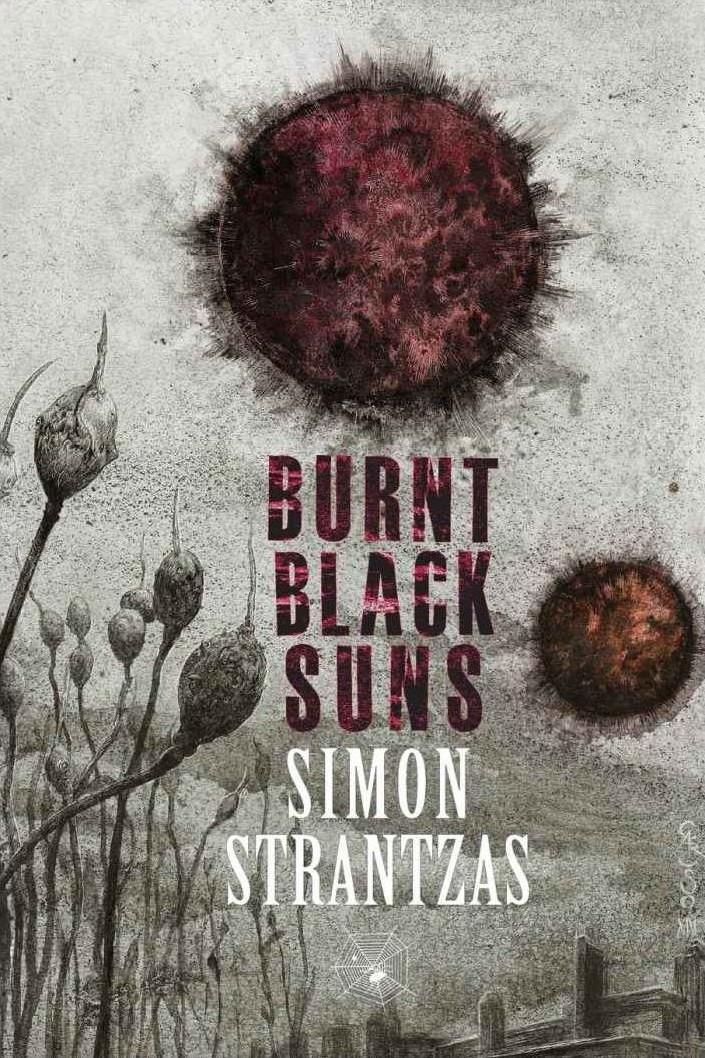
I had to try at least one. I was sorely tempted by John Langan’s collection The Wide, Carnivorous Sky and Other Monstrous Geographies and Clint Smith’s Ghouljaw and Other Stories. But the one I eventually settled on was Simon Strantzas’s most recent collection, Burnt Black Suns, mostly because I was drawn to the cover and the story descriptions on the back. Adam Nevill’s quote on the back cover (“In Burnt Black Suns Strantzas casts far into time and space to find the alien, and what comes back wriggling inside his net is ghastly”) didn’t hurt, either. The first story, “On Ice,” described as “a grim novella of arctic horror,” will be the story I read this weekend.

In this fourth collection of stories, Simon Strantzas establishes himself as one of the most dynamic figures in contemporary weird fiction. The nine stories in this volume exhibit Strantzas’s wide range in theme and subject matter, from the Lovecraftian “Thistle’s Find” to the Robert W. Chambers homage “Beyond the Banks of the River Seine.” But Strantzas’s imagination, while drawing upon the best weird fiction of the past, ventures into new territory in such works as “On Ice,” a grim novella of arctic horror; “One Last Bloom,” a grisly account of a scientific experiment gone hideously awry; and the title story, an emotionally wrenching account of terror and loss in the baked Mexican desert. With this volume, Strantzas lays claim to be discussed in the company of Caitlín R. Kiernan and Laird Barron as one of the premier weird fictionists of our time.

Burnt Black Suns was published by Hippocampus Press on May 1, 2014. It is 310 pages, priced at $20 in trade paperback and $6 for the digital edition. The Foreword is by Laird Barron. The cover art is by Santiago Caruso. Burnt Black Suns is available for half price on the Hippocampus Press website this month — check out their November specials here.

Monsters, Lobster Women, and Creepy Cats: Explore the Dark Side of the Circus in Nightmare Carnival

Monsters, Lobster Women, and Creepy Cats: Explore the Dark Side of the Circus in Nightmare Carnival

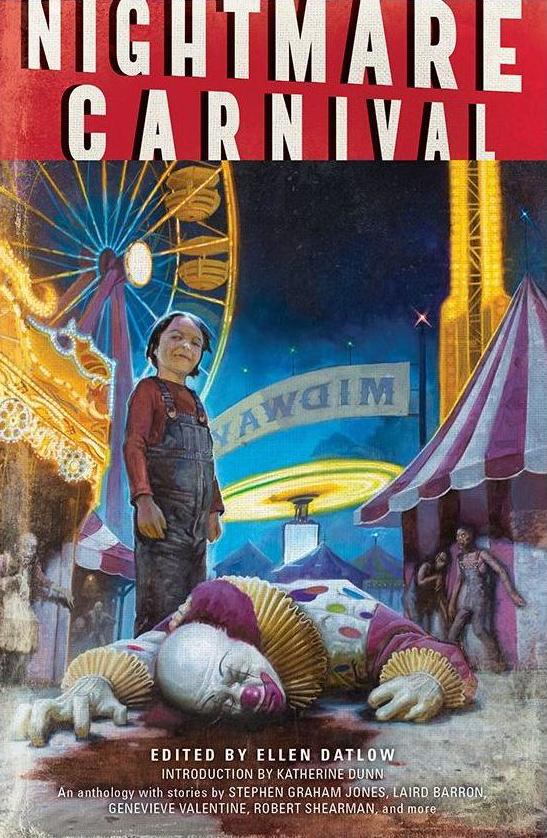
Nightmare Carnival-smallDepending on your perspective, a carnival or a circus can generate a host of pleasant or not-so-pleasant associations. You may have been thrilled by lions and elephants performing tricks, riding the Ferris wheel and Tilt-A-Whirl, or even eating popcorn and hotdogs.  Or perhaps you mainly associate carnivals and circuses with less pleasant things… like creepy clowns, freak shows, spooky fortune-tellers, and carnies. (No offense to the people that make carnivals possible!)

A newly released anthology, Nightmare Carnival, tends to present carnivals and circuses from this darker end of the scale. This new collection of dark fantasy and horror is edited by the inestimable Ellen Datlow, editor of scores of genre anthologies and the winner of many, many awards, including the Hugo, the Bram Stoker, the Shirley Jackson, and most recently the World Fantasy Award for Life Achievement. Datlow continues to show her impeccable ability for spotting good and chilling stories with Nightmare Carnival.

I’m a huge fan of Datlow’s horror anthologies. I raved about her latest Year’s Best Horror volume just a few months ago at Black Gate. Some of her efforts are better than others, and Nightmare Carnival is definitely one of Datlow’s better anthologies. As usual, she has corralled an impressive list of authors, as well as a few lesser known (at least to me). I’ll discuss a few of the best stories here.

I’m not familiar with N. Lee Wood, but her story “Scapegoats,” the leadoff story, was excellent. It is mainly told from the perspective of Mae, “The Amazing Lobster Woman,” part of the World Famous Bishop Brothers Traveling Carnival. Through Mae, we become acquainted with the various characters of this train-traveling carnival/circus, particularly a gentle elephant named Madelaine. The story focuses upon the carnival’s arrival in a small town, where an unjust incident involving Madelaine ends with a local man’s death, and the unfair consequences for the carnival. I won’t spoil the ending, but the title should give you some idea. And let me say that the ‘scapegoat’ scene is fairly traumatic. However, the ending offers something of a just desert, at least by some moral compasses.

Read More Read More

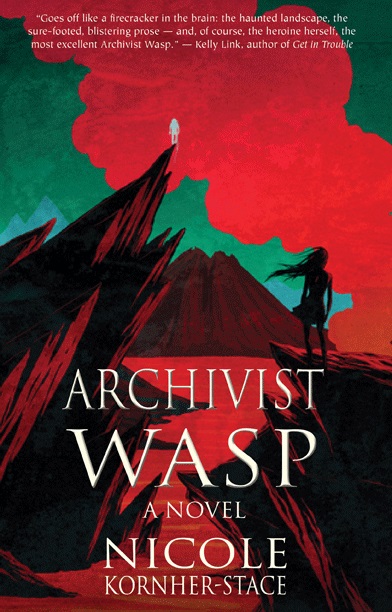
Future Treasures: Archivist Wasp by Nicole Kornher-Stace

Future Treasures: Archivist Wasp by Nicole Kornher-Stace

Archivist Wasp-smallOne of the great things about the World Fantasy Convention — or any decent convention, really — is the opportunity to attend readings. Just think about that for a second. You get to sit back in a comfortable chair in an intimate setting, while some of the finest fantasy writers in the field personally read their stories to you. Why would you waste your time doing anything else? (Except trolling the Dealer’s Room, of course.)

This year was especially rewarding, as I got to attend readings by Frederic S. Durbin, the delightful Liz Argall, Helen Marshall, Nathan Ballingrud, Christopher Barzak, Peter V. Brett, Guy Gavriel Kay, Tiffany Trent, Sharon Shinn, Bradley Beaulieu, Jeffrey Ford, Mike Allen, Elwin Cotman, Kathryn Sullivan, Andy Duncan, Kelly Link, and many others. But the reading that surprised and delighted me the most was by a new writer named Nicole Kornher-Stace, who read from her upcoming novel to be published by Small Beer this spring. A fast-paced and beautifully written story of ghosts, a mysterious post-apocalyptic world, and a young woman of extraordinary bravery, I predict Archivist Wasp will make a major splash when it arrives next May.

Wasp’s job is simple. Hunt ghosts. And every year she has to fight to remain Archivist. Desperate and alone, she strikes a bargain with the ghost of a supersoldier. She will go with him on his underworld hunt for the long-lost ghost of his partner and in exchange she will find out more about his pre-apocalyptic world than any Archivist before her. And there is much to know. After all, Archivists are marked from birth to do the holy work of a goddess. They’re chosen. They’re special. Or so they’ve been told for four hundred years.

Archivist Wasp fears she is not the chosen one, that she won’t survive the trip to the underworld, that the brutal life she has escaped might be better than where she is going. There is only one way to find out.

Archivist Wasp will be published by Small Beer Press on May 12, 2015. It is 256 pages, priced at $14 in trade paperback and $9.95 for the digital edition.

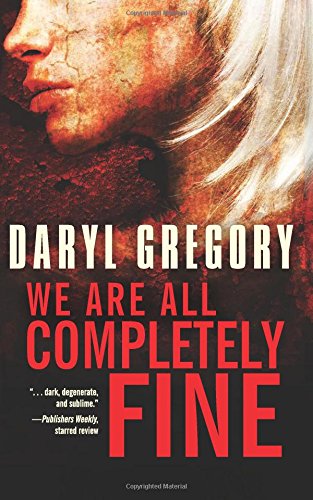
New Treasures: We Are All Completely Fine by Daryl Gregory

New Treasures: We Are All Completely Fine by Daryl Gregory

We Are All Completely Fine-smallWell, I’m back from the 2014 World Fantasy Convention and I had a terrific time. Matthew Wuertz did a fine job with his daily convention reports… just don’t ask me where he found the time to write them. It certainly looks like he had fun, anyway, what with all the sight-seeing, panels, autograph sessions, readings, and whatnot. Me, I headed right for the Dealer’s Room, where I spent four days ogling books.

And what marvelous books! You’d think that running a website like Black Gate, I’d be more or less on top of major genre releases, right? Not so, apparently. While wandering the floor, I came across dozens (and dozens) of marvelous new titles from such splendid publishers as Prime, American Fantasy Press, Small Beer Press, Hippocampus, ChiZine, Midnight Books, Tachyon, Fairwood Press, Borderlands Press, and many others. I’ll be reporting on the most intriguing books right here over the next few weeks — starting with Daryl Gregory’s We Are All Completely Fine, the tale of a support group for people who have survived horror-movie traumas. It’s a book that’s received a great deal of attention over the past two months, and it went right to the top of my reading pile.

Harrison was the Monster Detective, a storybook hero. Now he’s in his mid-thirties and spends most of his time popping pills and not sleeping. Stan became a minor celebrity after being partially eaten by cannibals. Barbara is haunted by unreadable messages carved upon her bones. Greta may or may not be a mass-murdering arsonist. Martin never takes off his sunglasses. Never.

No one believes the extent of their horrific tales, not until they are sought out by psychotherapist Dr. Jan Sayer. What happens when these seemingly-insane outcasts form a support group? Together they must discover which monsters they face are within — and which are lurking in plain sight.

Daryl Gregory is also the author of Pandemonium, Afterparty, and The Devil’s Alphabet. We Are All Completely Fine was published by Tachyon Publications on August 12, 2014. It is 192 pages, priced at $14.95 in trade paperback and $9.99 fo the digital edition.

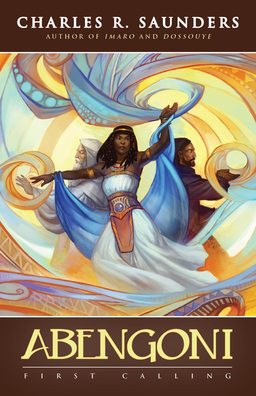
Epic Fantasy from the Father of Sword & Soul: Abengoni: First Calling by Charles R. Saunders

Epic Fantasy from the Father of Sword & Soul: Abengoni: First Calling by Charles R. Saunders

oie_105284GMwxHNOHAfter DAW killed the fourth Imaro novel, for nearly twenty years Charles R. Saunders’s published swords & sorcery output was limited to only a few short stories. Since 2006, starting with the reprinting of Imaro, new books from him have been appearing at a furious rate. In addition to new novels starring his established S&S characters, Imaro and Dossouye, he introduced a new pulp hero, Damballa.

Abengoni: First Calling (A:FC) is the first book in Charles R. Saunders’s foray into epic fantasy. From one of the masters of the 1970s golden age of swords & sorcery comes a project in the works for the past decade. And thanks to Milton Davis’s MVmedia, it’s seeing the light of day.

Full disclosure here: Milton Davis asked me to preview this book earlier this year and give him a blurb if I felt like it. Well, I jumped at the chance to read a new Charles Saunders book. That’s like asking if I want to hear some unreleased Led Zeppelin tracks before they hit the general public. There was no way I was going to say no. And before I go any further, I love the book and gave Milton this blurb I totally stand by:

“In Abengoni: First Calling, Charles Saunders writes the sort of epic fantasy I want to read. He tells the tale, with its large cast of sharply drawn characters and complex history, in a wonderfully spare and fast-paced style that doesn’t waste time getting to where it’s going. I can’t wait for the next book.”

When Saunders first created Imaro, his literary inspiration was Robert E. Howard. In this book, the influence of J.R.R. Tolkien is at work. He has specifically cited the two authors as his main influences. But in both cases, what he wrote was inspired by larger issues as well.

Read More Read More

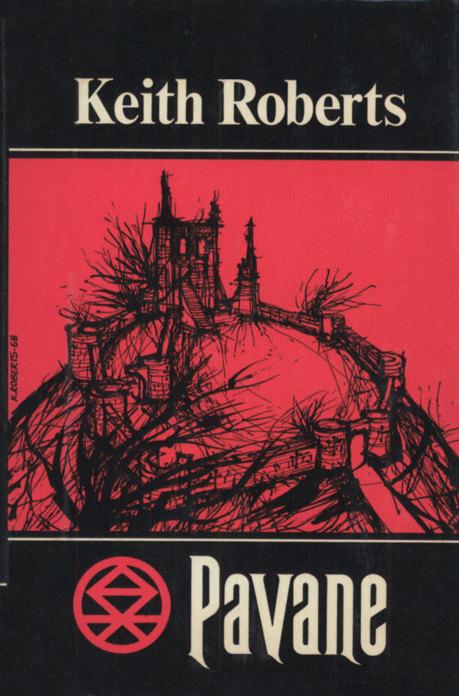
In Praise Of Pavane

In Praise Of Pavane

Pavane hardcover-smallThe power of place. Where we’ve been, what we see, the lighting and the weather. These things hold us, sink roots into our nervous system; they unfurl massive Yggdrasils that coil within, then twist into memory.

So it must have been for author Keith Roberts, and his encounters with Corfe Castle, in southwest England. He built his story cycle Pavane around Corfe, almost as an homage.

I understand, I do, for I first saw Corfe – indeed, the only time I have ever seen Corfe – in 1976, in the rain, with my family. I was nine, but I have never forgotten that tusk of a castle, the last spike of it spearing skyward from a sharp, steep hill, the flanks yellow-green with shaggy, unkempt grass. A chain-link fence enclosed the base of the hill, and we could not get in.

My father was furious. Rain and all, he’d had plans to hike us up that hill, to see the ruin for ourselves, up close and appropriately personal. Instead, we never got out of our rented car – it really was the soggiest of days, British to the core — but I see that spike of mortared stone to this day, standing proudly in the storm and refusing, absolutely refusing to come down.

So it is for Keith Roberts, as his stories swirl around and finally come to roost at Corfe, a rebuilt Corfe, a Corfe in an alternate history where the keep’s motte and donjon have stood the test of time, and war now, against mighty odds, with Holy Rome.

Read More Read More

Self-Published Book Review: Spirit of a Kyrie by T. L. Rese

Self-Published Book Review: Spirit of a Kyrie by T. L. Rese

If you have a book you’d like me to review, please see the submission guidelines here. I’ve run short on books that I’ve received in the past year, so anything new has a good chance of being reviewed.

Spirit of a Kyrie

I’ve been at World Fantasy this weekend, and I fell a bit behind in writing this review, so it’s a little later than usual. World Fantasy was great fun, where I had the opportunity to spend some time with some of the esteemed luminaries of Black Gate, including Mike Allen and John O’Neill himself. Nonetheless I apologize for the delay.

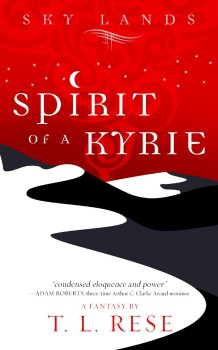
This month’s book is Spirit of a Kyrie by T. L. Rese. Kityrah is a young girl with ambitions curtailed by her environment. Growing up poor in the Sallarah Desert during a famine, she and her brothers beg and steal to help their family survive on more than their meagre wolly herd. Her older sister arranges for her to be promised to the son of a wealthy family on the Shores, but Kit is unsatisfied with that life, and instead steals away to seek a new one. Through a combination of ambition and boldness, she manages to join the knights. The story is focused on her rise as a Hopeful for each of the various levels of knighthood, starting with Ash, then Furian, and finally Kyrion. For each level, she must pass a difficult and deadly test, one which most of the Hopefuls fail, many dying in the process.

T. L. Rese’s world is rich and detailed and very different from our own. A lot of the difference is in the little things: Coals that you can carry in your hand or your pocket, but that burst into flame on command. The shape-changing weapons carried by the knights, each class of knight bearing a distinct and lethal set of weapons. The wollies who seem to be dog-and-sheep hybrids, and the fire-breathing eira birds. With so much of the world different, it’s not always clear what you should expect. This is especially true when the descriptions are too spare, and the reader is left puzzling over why things work the way they do, expecting the rules to be the same as those in our world when they are not. In a few places, it sounded like the things Kit was doing were physically impossible, and I couldn’t be sure whether it was just that the world was different.

Read More Read More

Future Treasures: The Very Best of Kate Elliott

Future Treasures: The Very Best of Kate Elliott

The Very Best of Kate Elliott-smallKate Elliott is the bestselling fantasy author of Crown of Stars and Crossraods series, the Spiritwalker trilogy, and many other popular novels. Her first short fiction collection has been long awaited.

The Very Best of Kate Elliott showcases two decades of her best work, including many short stories that are long out of print, four essays appearing for the first time, and a brand new Crossroads story.

Strong heroines and riveting storytelling are the hallmark of groundbreaking fantasy author Kate Elliott (Crown of Stars, Crossroads). Elliott is a highly-compelling voice in genre fiction, an innovative author of historically-based narratives set in imaginary worlds. This first, retrospective collection of her short fiction is the essential guide to Elliott’s shorter works. Here her bold adventuresses, complex quests, noble sacrifices, and hard-won victories shine in classic, compact legends.

In “The Memory of Peace,” a girl’s powerful emotions rouse the magic of a city devastated by war. Meeting in “The Queen’s Garden,” two princesses unite to protect their kingdom from the blind ambition of their corrupted father. While “Riding the Shore of the River of Death” a chieftain’s daughter finds an unlikely ally on her path to self-determination.

Elliott’s many readers, as well as fantasy fans in search of powerful stories featuring well-drawn female characters, will revel in this unique gathering of truly memorable tales.

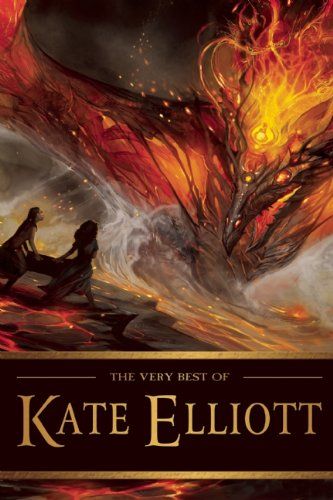
The Very Best of Kate Elliott will be published by Tachyon Publications on February 10, 2015. It is 501 pages, priced at $15.95 in trade paperback and $9.99 for the digital edition. The cover art is by Julie Dillon.

2014 World Fantasy Convention: Sunday — World Fantasy Award Winners Announced

2014 World Fantasy Convention: Sunday — World Fantasy Award Winners Announced

World Fantasy Award Lovecraft-smallI was able to attend the World Fantasy Convention this year, for the first time since 2011, and I really had a terrific time. It was fabulous to attend all the panels, readings, parties, and events — and especially to re-connect with so many old friends, and make so many new ones. Years ago, Mark Kelly at Locus Online called World Fantasy “a reunion,” and I think that’s really the best description.

The highlight of the convention is the Sunday banquet, where the World Fantasy Awards were presented. The toastmaster for the event was the delightful Mary Robinette Kowal, who gave a highly entertaining speech about rejection, and the awards themselves were presented by Gordon van Gelder and David Hartwell. I sat at Table 25 with my new friends Amanda C. Davis and Matt O’Dowd, where we had a great view of the proceedings.

The World Fantasy Award itself is a cartoonish bust of H.P. Lovecraft sculpted by the brilliant Gahan Wilson (seen at left). It’s an extremely distinct award that honors the contributions of perhaps the finest American horror writer of the 20th Century. But using Lovecraft as the poster child for the awards has also caused some recent controversy (that surfaced twice during the proceedings.) I’ll get to that in a minute.

But first, the Awards themselves. This year’s winners of the World Fantasy Awards are:

Novel:

  • A Stranger in Olondria, Sofia Samatar (Small Beer)

Read More Read More