Browsed by
Category: Books

Book Review: The Mark of the Shadow Grove by Ross Smeltzer

Book Review: The Mark of the Shadow Grove by Ross Smeltzer

If you have a book you’d like me to review, please see this post for instructions to submit. I am officially out of stories, since I haven’t received any recently and I’m reluctant to go back to submissions from more than a year ago.
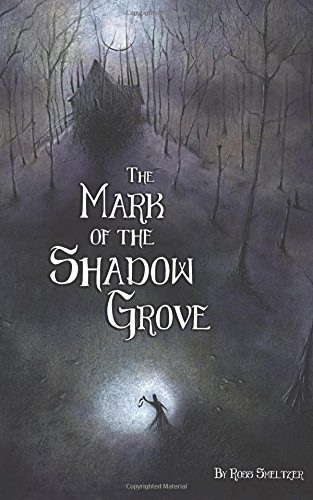
Shadow Grove CoverWhile I usually limit myself to self-published books in my reviews here, I’ll occasionally review small press publications if I’m asked. This month’s review is of one such book, Ross Smeltzer’s The Mark of the Shadow Grove.

The Mark of the Shadow Grove is somewhere between a novel and a story collection. It contains three novellas, “The Witch of Kinderhook,” “Lord of All High and Hidden Places”, and “The Rule of Old Blood.” These three stories are all first person, but each one has a different narrator from a different time period: a necromancer’s apprentice in the 1820s, a young coed in the 1880s, and a journalist in the 1920s. But though the stories are from different perspectives and different times, they are ultimately connected, telling the story of two intertwined families, and the dark secrets that bind them. It is Lovecraftian in its horror, with gods beyond human ken who cause madness in those who encounter them, but it has eschewed any of Lovecraft’s deities for more familiar ones.

“The Witch of Kinderhook” tells its story both through the recollections of Tom, the aforementioned apprentice, and the journal of his missing master, Carver. Carver is not much of a necromancer. In reality he is a medical examiner with a history of fraud, an unhealthy obsession with old books of supposed occult lore, and an ill-founded belief in his ability to apply science to the ancient search for reviving the dead. He has come to Kinderhook to find the witch who dwells there, sure that she knows the secrets he seeks. Carver is disappointed with what he finds, and holds the witch’s attempts to teach him in contempt. Tom, meanwhile, is drawn to the beautiful witch Katrina.
Read More Read More

The Books of David G. Hartwell: Visions of Wonder and The Science Fiction Century

The Books of David G. Hartwell: Visions of Wonder and The Science Fiction Century

Visions of Wonder-small The Science Fiction Century-small

We lost David Hartwell on January 20th. This is our sixth article in a series that looks back at one of the most gifted editors in our industry.

With the publication of The Dark Descent and The Ascent of Wonder, David quickly established himself as the go-to guy for big genre survey volumes, and he produced many of them. These massive books were popular with libraries and book clubs, and many stayed in print for years. David had found a fine niche for himself that showed off his considerable talents for genre scholarship (not to mention his excellent taste), and he continued to compile these giant books for the rest of his life.

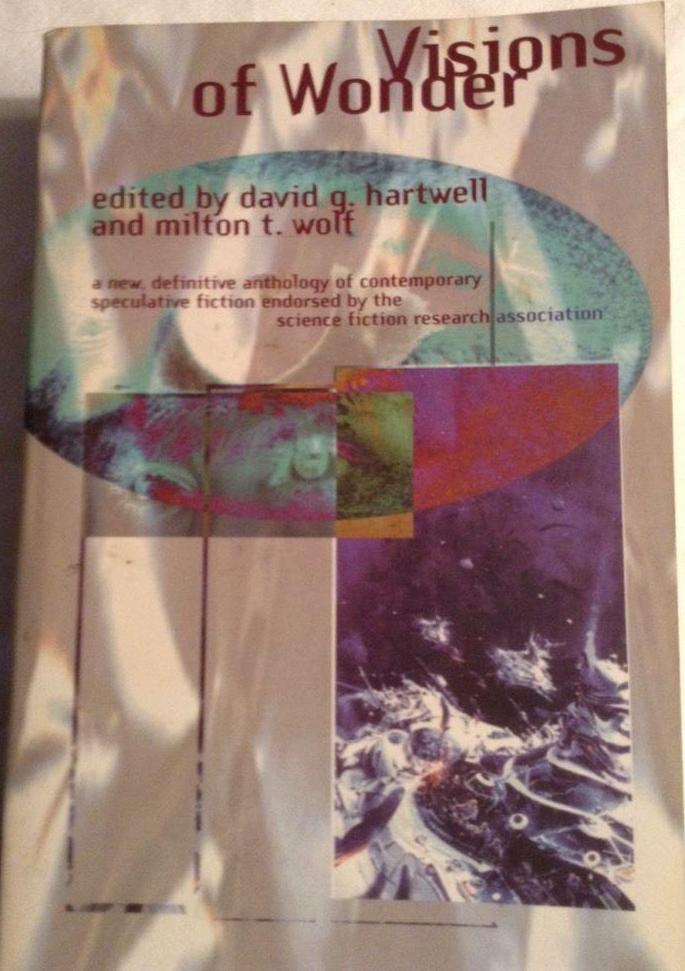
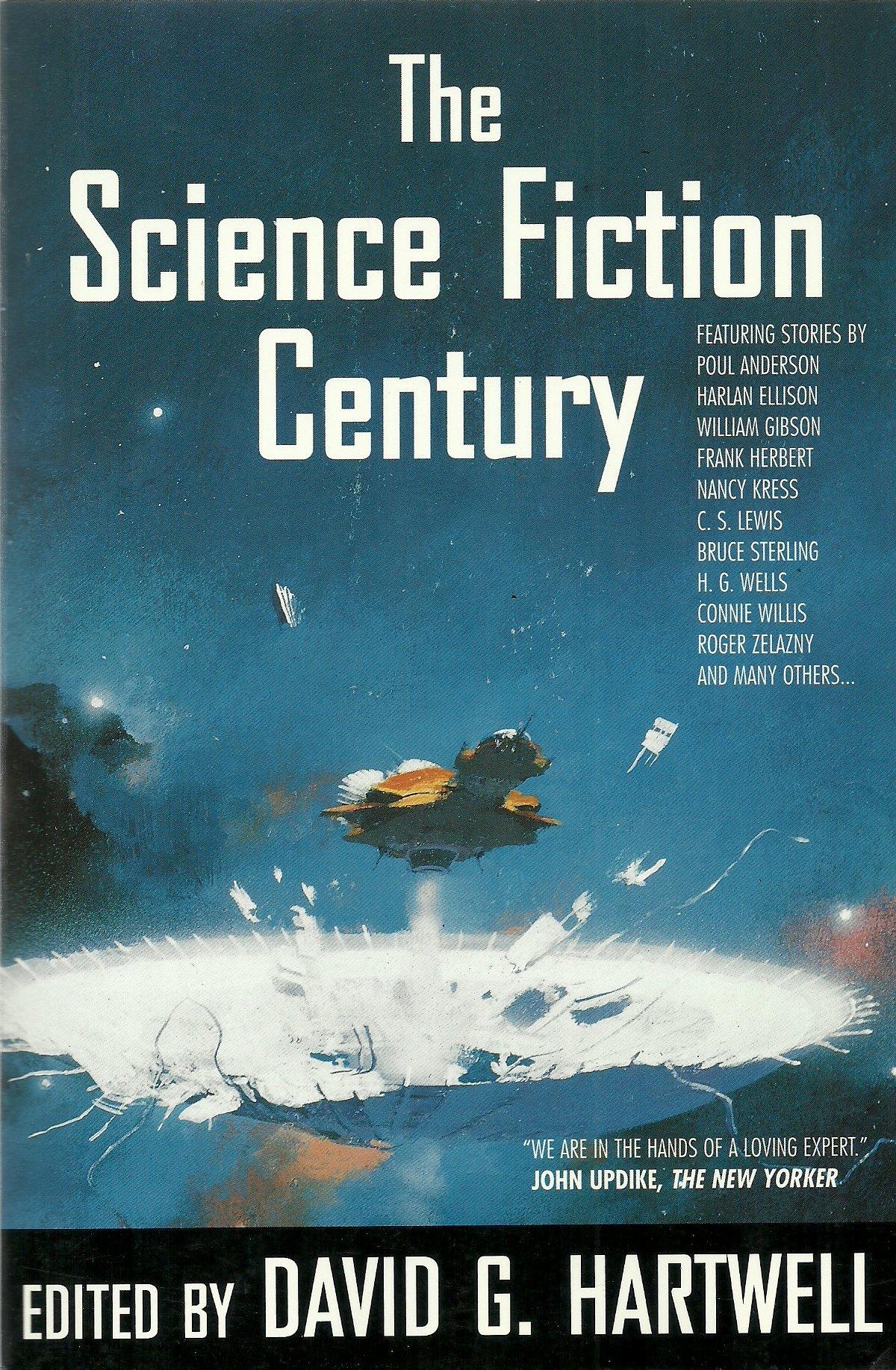
His next two major anthologies were huge science fiction retrospectives. The first, Visions of Wonder (1996), weighing in at a mere 798 pages, was co-edited with Milton T. Wolf, Vice President of the Science Fiction Research Association, and was a fine attempt to create an up-to-date SF textbook, mixing in critical essays by Damon Knight, John W. Campbell, Jr., Judith Merril, Samuel R. Delany, and others — plus a comprehensive guide to modern SF scholarship compiled by Gary K. Wolfe — with a generous sample of top-notch fiction. The 1005-page The Science Fiction Century (1997) was nothing less than a comprehensive survey of a hundred years of science fiction, containing works by H. G. Wells, C. S. Lewis, E. M. Forster, Rudyard Kipling, Jack London, A. E. van Vogt, Jack Vance, Robert Silverberg, Poul Anderson, Roger Zelazny, James Tiptree, Jr., Bruce Sterling, Nancy Kress, William Gibson, and dozens of others.

Read More Read More

Future Treasures: Stories of the Strange and Sinister by Frank Baker

Future Treasures: Stories of the Strange and Sinister by Frank Baker

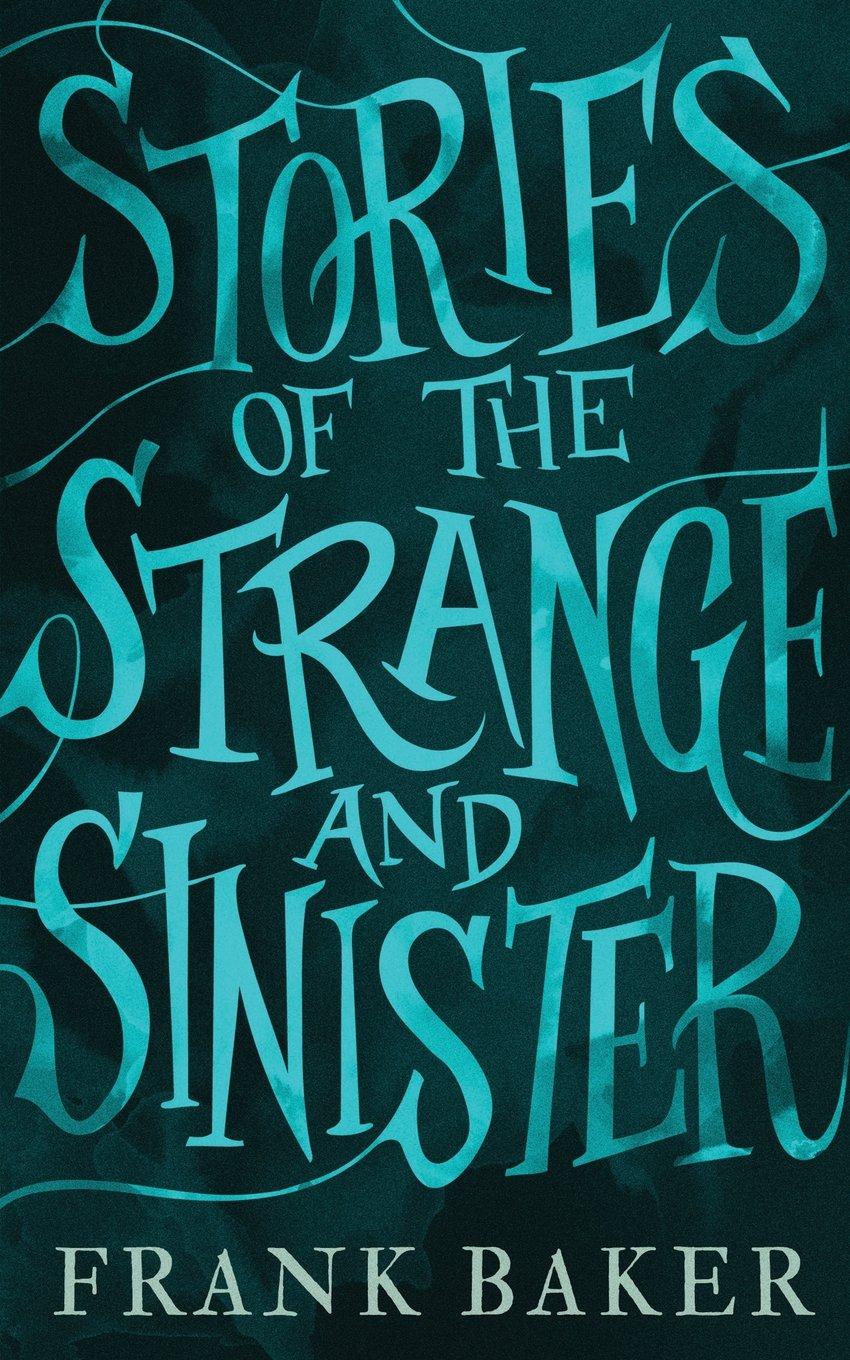
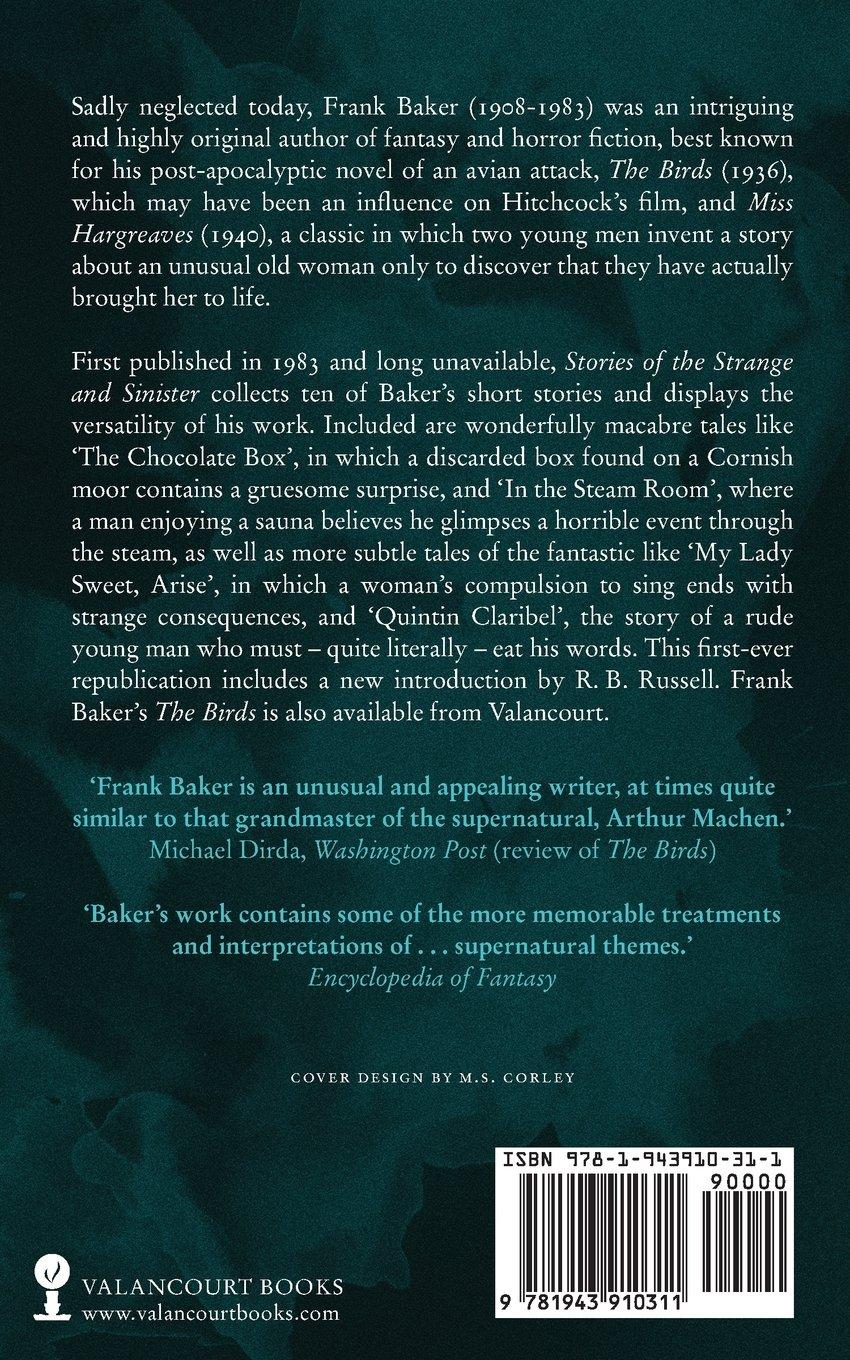
Stories of the Strange and Sinister-small Stories of the Strange and Sinister-back-small

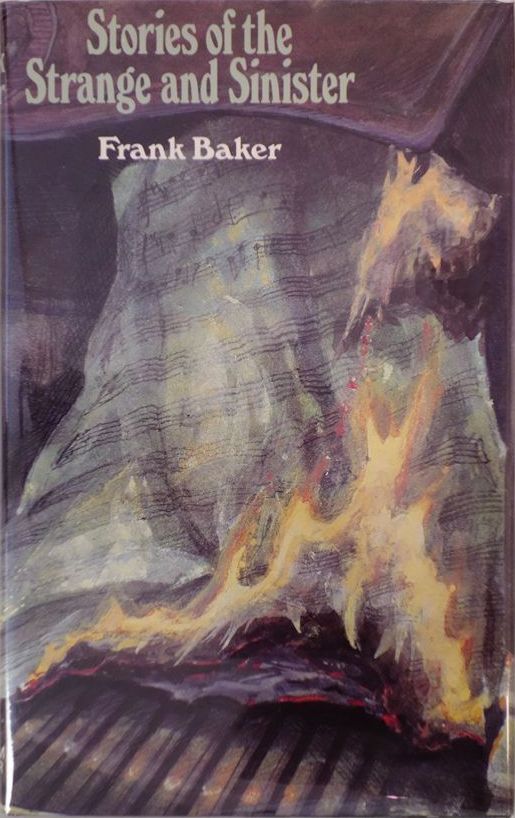
Stories of the Strange and Sinister first-smallI first discovered Valancourt’s marvelous 20th Century Classics line when I stumbled on their booth at the 2014 World Fantasy convention in Washington D.C.. I was so impressed, in fact, that I wrote up a lengthy survey of their back catalog as soon as I got home.

Valancourt has been bringing neglected horror and thriller classics back into print in handsome new editions for years now. Their latest subject is Frank Baker, whose first novel, The Twisted Tree, was published in 1935. He published an odd little book titled The Birds in 1936… it sold only about 300 copies, and Baker labeled it “a failure.” It likely would be utterly forgotten today, if Alfred Hitchcock had not turned it into a hit with his 1963 horror film of the same name.

Perhaps Baker’s most successful work was Miss Hargreaves (1940), a comic fantasy in which two young people invent a story about an elderly woman, only to find that their imagination has brought her to life. He published more than a dozen others, including Mr. Allenby Loses the Way (1945), Embers (1947), My Friend the Enemy (1948) and Talk of the Devil (1956), before his death in 1983.

Stories of the Strange and Sinister is his only collection. It was first published in 1983 (see cover at right), and has long been out of print.

The new edition will be published by Valancourt on March 15, 2016. It is 184 pages, priced at $16.99 in trade paperback and $7.99 for the digital version. See more details at the Valancourt website.

See all of our coverage of the best in upcoming fantasy here.

The Goblin King, New York Sorcery, and Demon Pirates: The New and Upcoming Fantasies of Tor.com

The Goblin King, New York Sorcery, and Demon Pirates: The New and Upcoming Fantasies of Tor.com

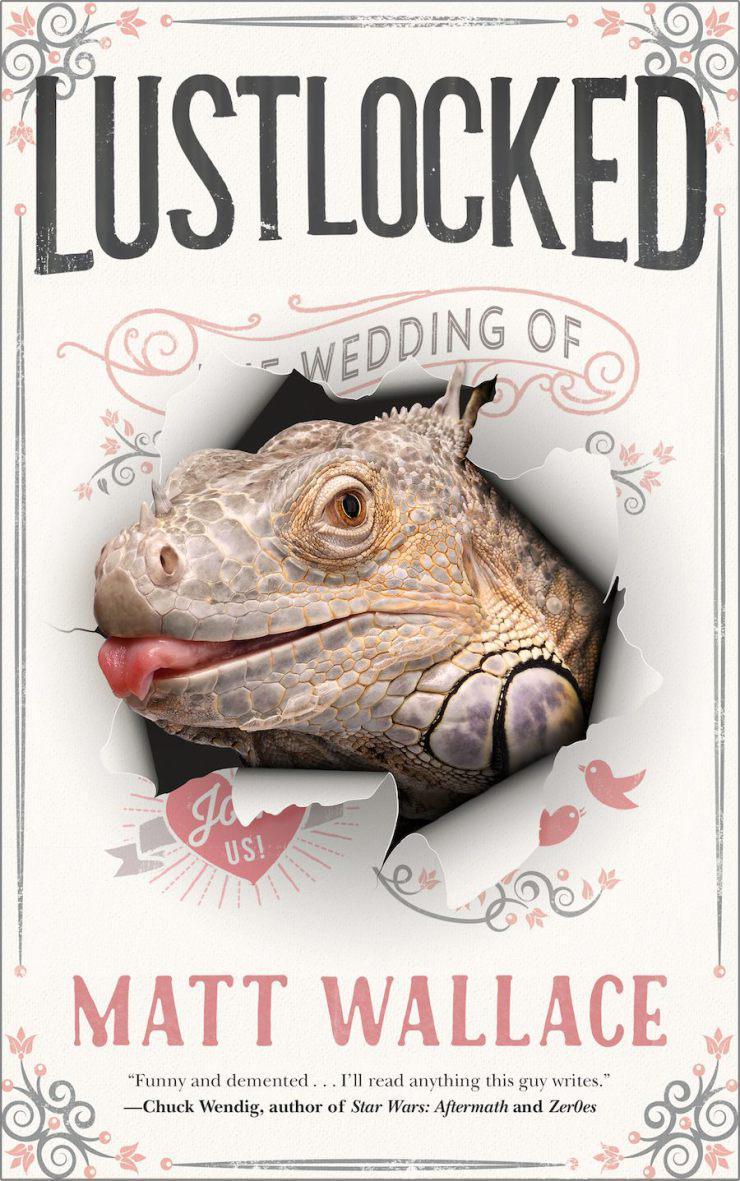
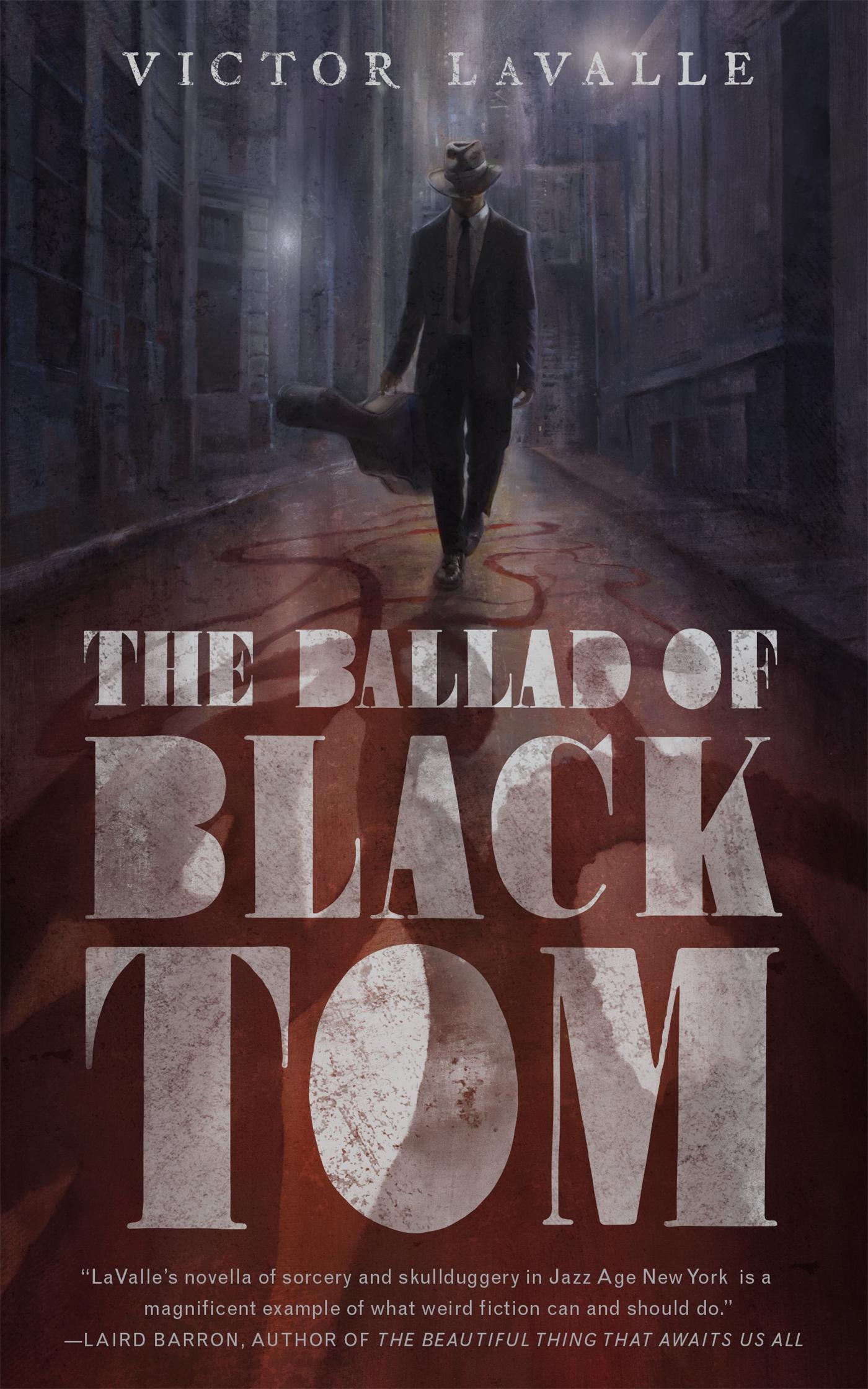
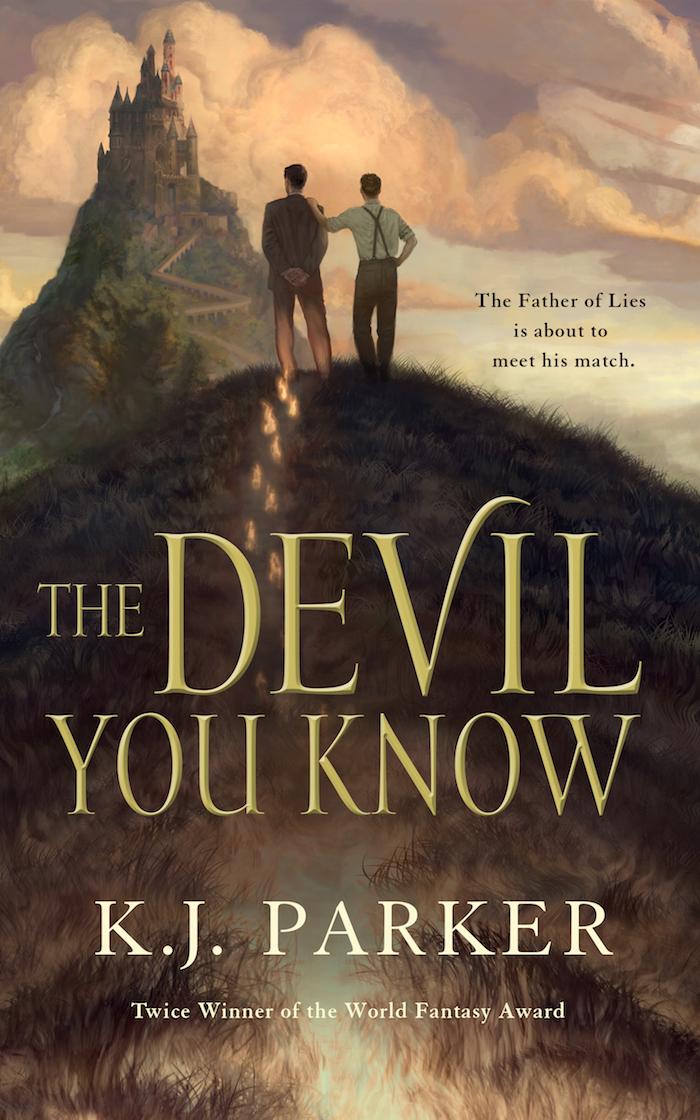
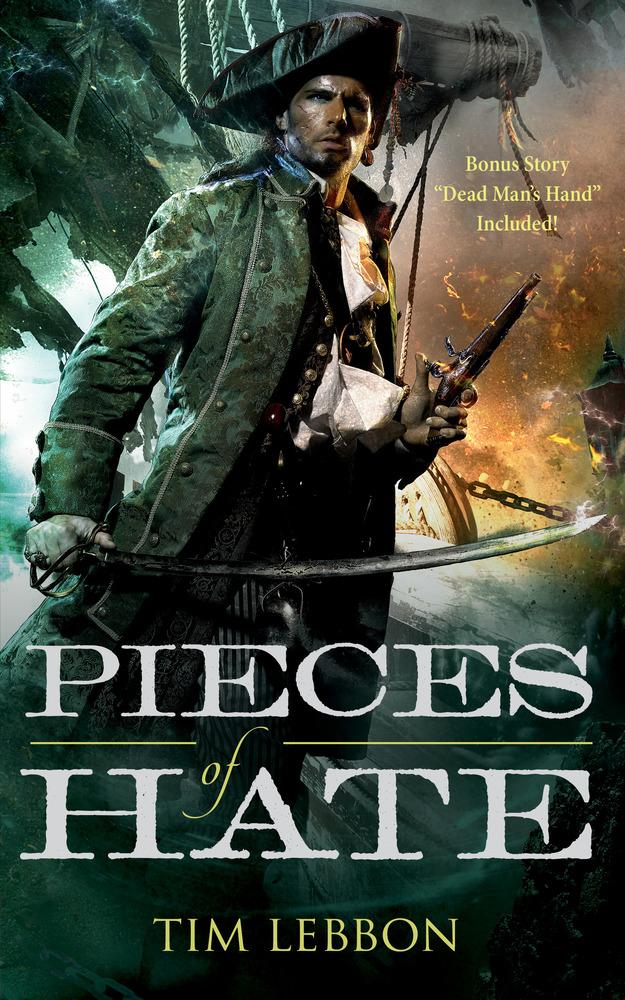
Lustlocked-small The Ballad of Black Tom-small The Devil You Know-small Pieces of Hate-small

I’ve been very much enjoying Tor.com‘s new line of novellas, which has produced a number of clear winners already. We’ve covered the first dozen or so, but they haven’t been resting in the past few weeks and months — far from it. When I checked this morning, I discovered more than a dozen new titles scheduled for the rest of this year, from authors such as Mary Robinette Kowal, Andy Remic, Tim Lebbon, Seanan McGuire, Michael R. Underwood, Matt Wallace, K. J. Parker, and many others.

It’s time to play catch-up. So here’s a detailed look at the next eight volumes on their schedule, including covers and (where available) links to cover reveals, sample chapters, and audio excerpts. It’s a smorgasbord of future fantasy from one of the best publishers in the business. Check it out.

Read More Read More

New Treasures: Clarkesworld: Year Eight, edited by Neil Clarke and Sean Wallace

New Treasures: Clarkesworld: Year Eight, edited by Neil Clarke and Sean Wallace

Clarkesworld Year Eight-small Clarkesworld Year Eight back-small

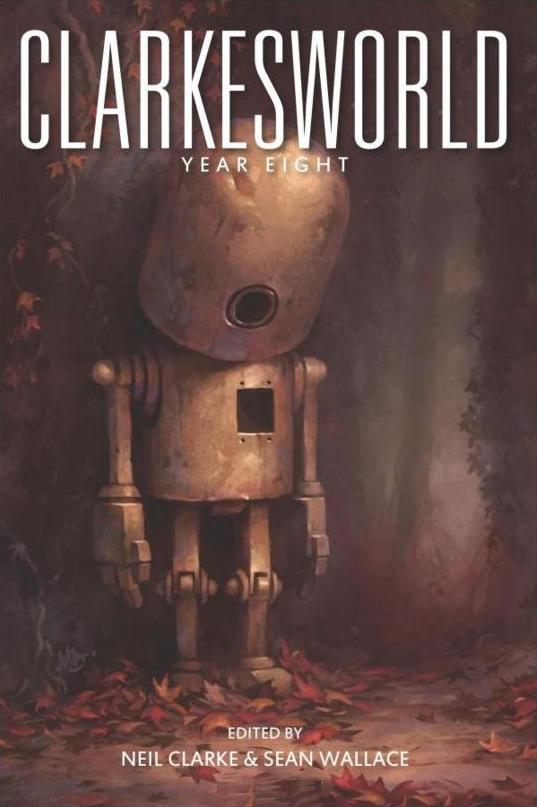
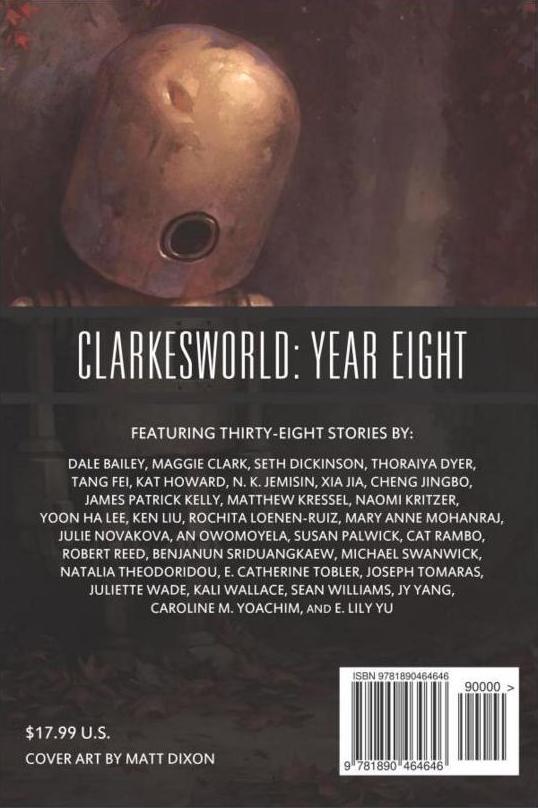
If you’re like me, you don’t have time to read every issue of Clarkesworld — even though you probably should. It is a three-time winner of the Hugo Award for Best Semiprozine, and in 2013 it received more Hugo nominations for short fiction than all the leading print magazines combined. Wouldn’t it be great if every year editors Neil Clarke and Sean Wallace gathered all the fiction in Clarkesworld into one big volume, so you could catch up on everything you missed at the end of the year?

Well, actually, they do. Every year Neil and Sean assemble every story from the previous year into a single generous volume, and this year is the biggest yet: 448 pages, collecting all 38 stories published in 2015, from authors like Michael Swanwick, Robert Reed, Sean Williams, N. K. Jemisin, James Patrick Kelly, Dale Bailey, Naomi Kritzer, Maggie Clark, E. Catherine Tobler, Ken Liu, Matthew Kressel and many others. The book also serves as a fund-raiser for the magazine (which is available free), and every purchase helps support the magazine.

It’s a marvelous bargain, and it helps support one of the finest publications in the industry. What more could you ask for?

Read More Read More

Vintage Treasures: Worlds Imagined: 14 Short Science Fiction Novels, Compiled by Robert Silverberg and Martin H. Greenberg

Vintage Treasures: Worlds Imagined: 14 Short Science Fiction Novels, Compiled by Robert Silverberg and Martin H. Greenberg

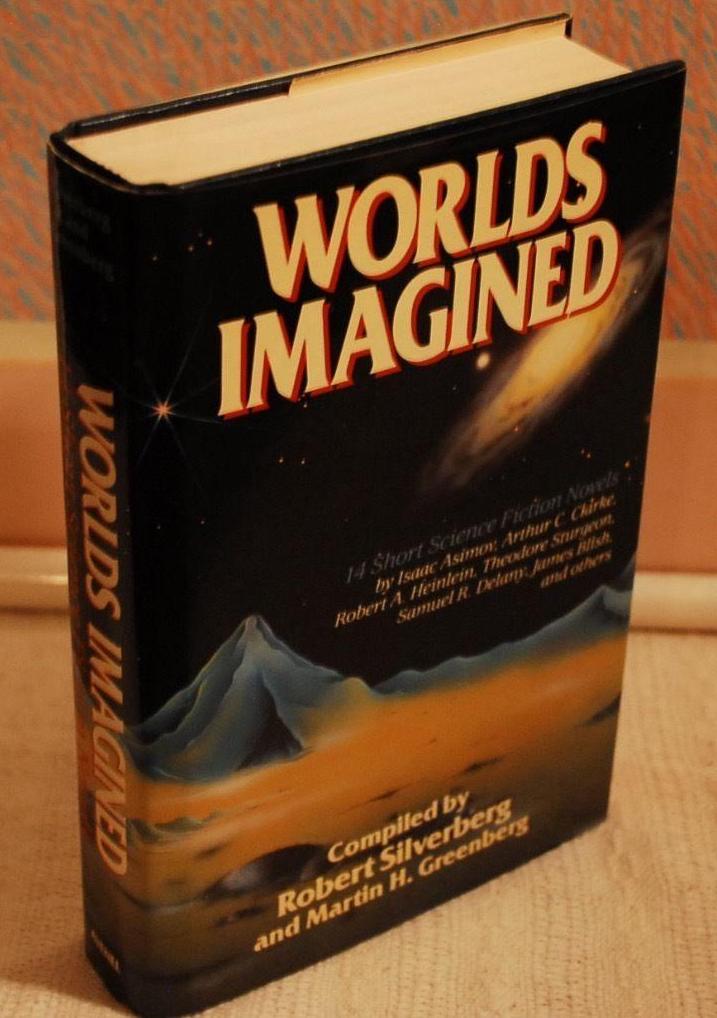
Worlds Imagined Robert Silverberg-smallI bought a fine anthology of science fiction novellas on eBay last week for 5 cents. With $3.99 shipping, that brought the whole thing to $4.04 — about 28 cents per novella. Pretty sweet deal.

The anthology is Worlds Imagined, published by Avenel in April 1989, and edited by Robert Silverberg and Martin H. Greenberg. Excuse me, ‘Compiled by,” not edited by. I guess Silverberg and Greenberg didn’t feel comfortable with the title of editors, for merely selecting the fiction. That’s editorial integrity for you.

One of the things I love about this book is the editors’ (erm, compilers’) impassioned defense of the novella in their intro. I read it years ago, and much of it stayed with me. Here it is, in part.

The short novel — or “novella,” as some prefer to call it — is one of the richest and most rewarding of literary forms. Spanning twenty to thirty thousand words, usually, it allows for more extended development of theme and character than does the short story, without making the elaborate structural demands of the full-length book… Some of the greatest works in modern literature fall into the class of novellas. Consider Mann’s “Death in Venice,” Joyce’s “The Dead,” Melville’s “Billy Budd,” and Conrad’s “Heart of Darkness” — or Faulkner’s “The Bear,” Tolstoi’s “The Death of Ivan Ilych,” Carson McCuller’s “Ballad of the Sad Cafe”…

Since a prime task of the science fiction writer is to create carefully detailed worlds of the imagination, room for invention is a necessity. The short story can give only a single vivid glimpse of the invented world; the full-length novel frequently becomes so enmeshed in the obligations of plot and counterplot that the background recedes to a secondary position. But the short novel, leisurely without being discursive, is ideal for the sort of world-creation that is science fiction’s specialty. and since the days of H.G. Wells and his classic novella “The Time Machine” it has exerted a powerful attraction for science fiction writers.

Preach, brothers!

Read More Read More

Future Treasures: An Unattractive Vampire by Jim McDoniel

Future Treasures: An Unattractive Vampire by Jim McDoniel

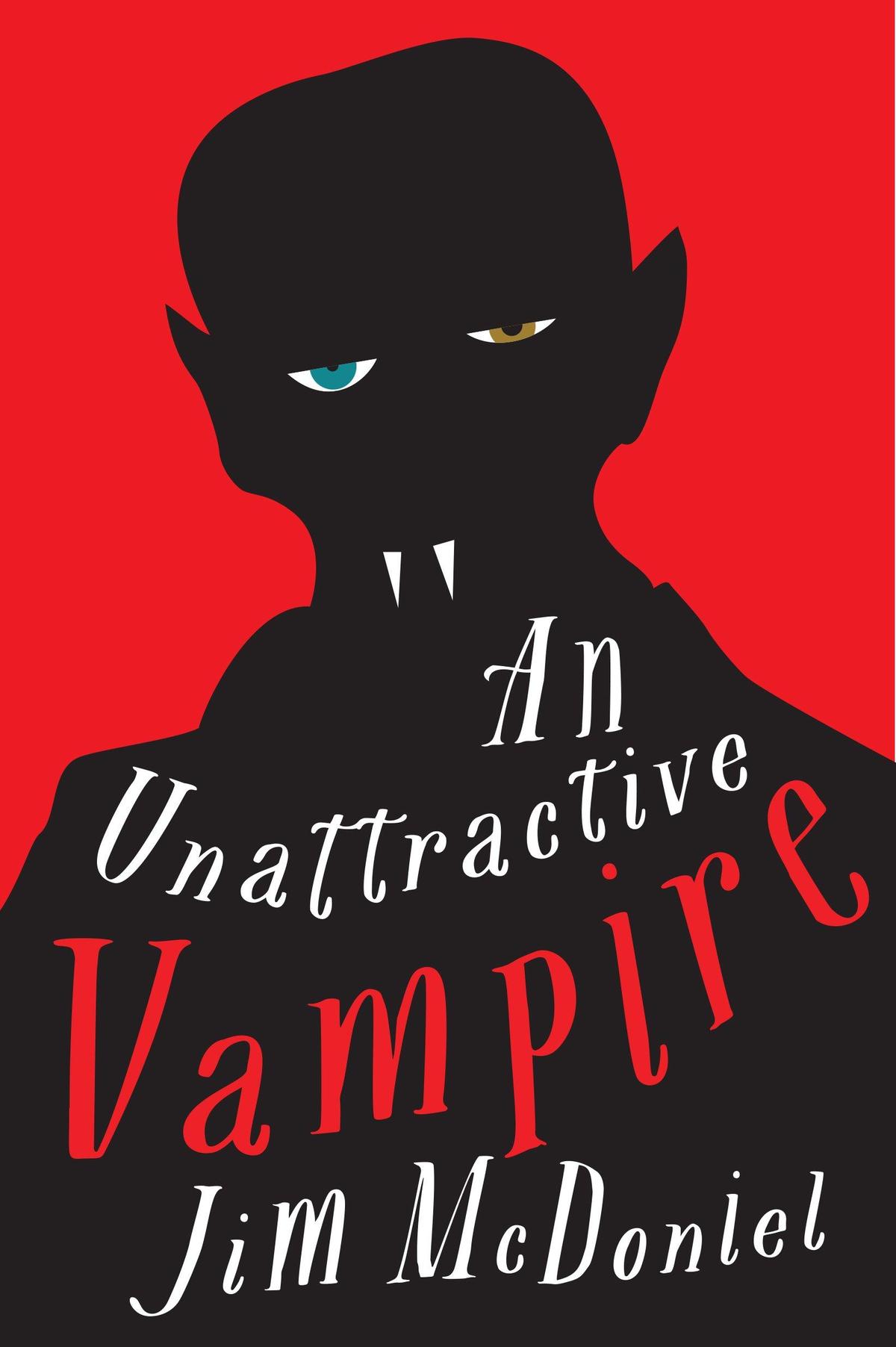
An Unattractive Vampire-smallAre you a reader who yearns for a return to the days where vampires were monsters, instead of hunky leading men? Then have I got a book for you.

Jim McDoniel’s debut novel An Unattractive Vampire, a darkly comic urban fantasy of ancient horrors in suburban cities, is tailor-made for those sick of vampires that sparkle. It’s one of the first releases from new publishing house Sword & Laser, and will be available later this month.

After three centuries trapped underground, thousand-year-old Yulric Bile ― also known as the Curséd One, the Devil’s Apprentice, He Who Worships the Slumbering Horrors ― awakens only to find that no one believes he is a vampire. Apparently he’s just too ugly ― modern vampires, he soon discovers, are pretty, weak, and, most disturbing of all, good. Determined to reestablish his bloodstained reign, Yulric sets out to correct this disgusting turn of events or, at the very least, murder the person responsible.

With the help of pert vampire-wannabe Amanda; Simon, the eight-year-old reincarnation of his greatest foe; and a cadre of ancient and ugly horrors, Yulric prepares to battle the glamorous undead. But who will win the right to determine, once and for all, what it truly means to be a vampire?

An Unattractive Vampire will be published by Sword & Laser on March 15, 2016. It is 307 pages, priced at $13.99 in trade paperback and $8.99 for the digital version. The cover is designed by David Drummond.

See all of our coverage of the best in upcoming fantasy here.

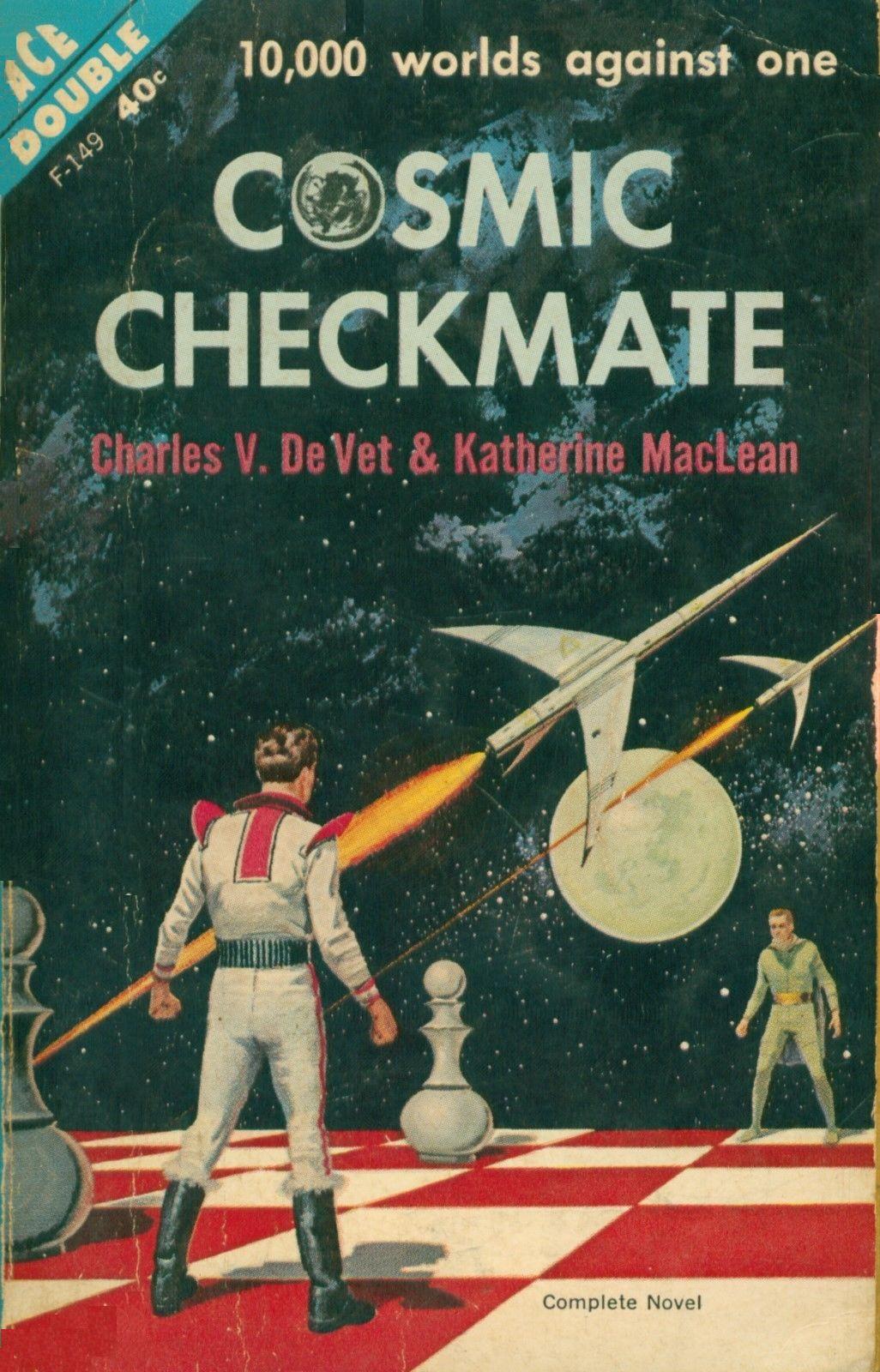
Telepathy Machines and Strange Alien Games: Rich Horton on King of the Fourth Planet/Cosmic Checkmate

Telepathy Machines and Strange Alien Games: Rich Horton on King of the Fourth Planet/Cosmic Checkmate

King of the Fourth Planet-small Cosmic Checkmate-small

Last June, in the comments section of an article on a 1959 Ace Double by Andre Norton and Jerry Sohl, Joe H, asked:

I think this is the only “classic” Ace Double I own… King of the Fourth Planet/Cosmic Checkmate by Robert Moore Williams/Charles V. De Vet & Katherine MacLean. Any chance it might make your list someday?

It sometimes takes us a while, but we always do right by our readers!

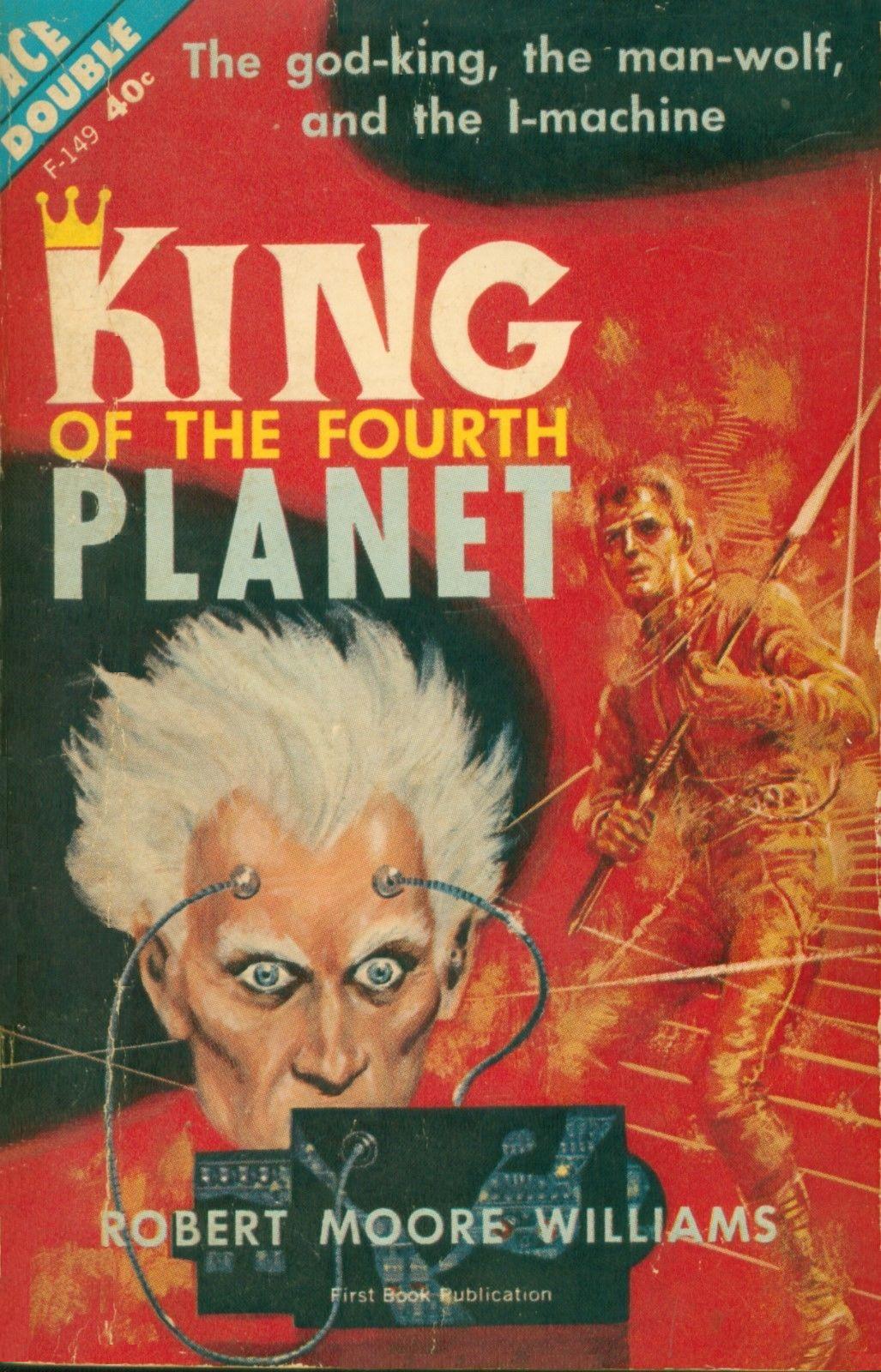
I’ve never read this one. But Rich Horton has, of course, and he reviewed it around a decade ago. King of the Fourth Planet, a tale of Martians and telepathy machines, didn’t appeal to him, but he found Cosmic Checkmate (later expanded and republished under the title Second Game), a tale of space exploration and alien games, much more intriguing. Here’s his review.

Read More Read More

New Treasures: The ‘Mancer Series by Ferrett Steinmetz

New Treasures: The ‘Mancer Series by Ferrett Steinmetz

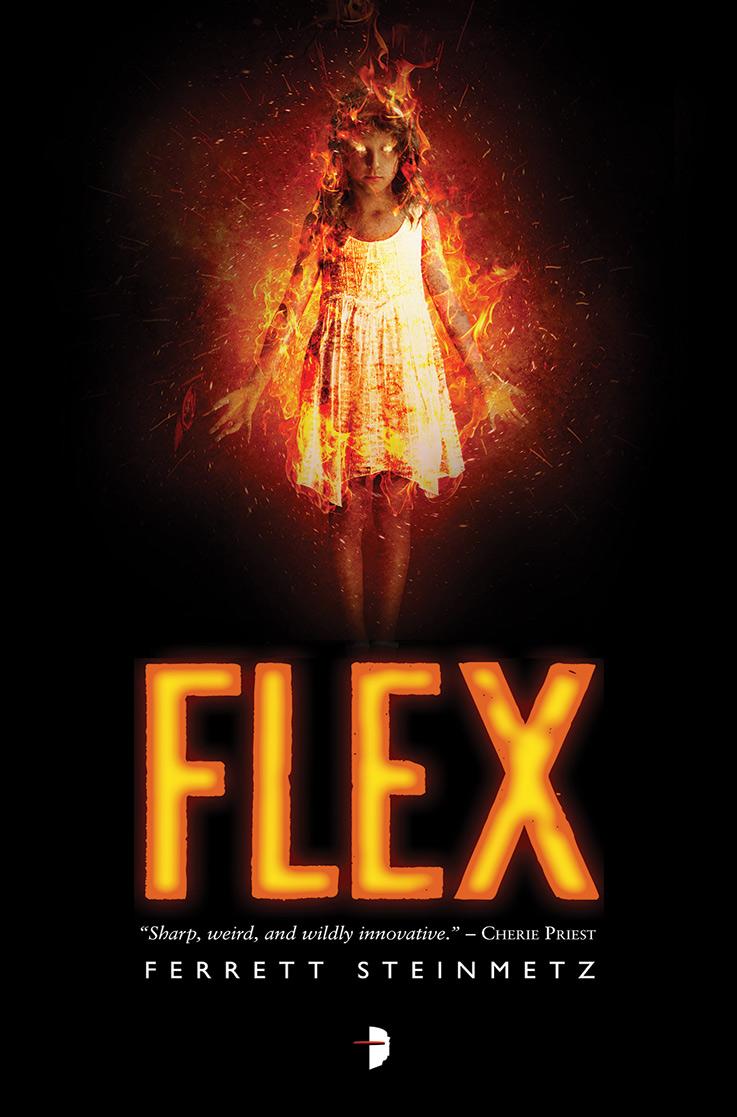
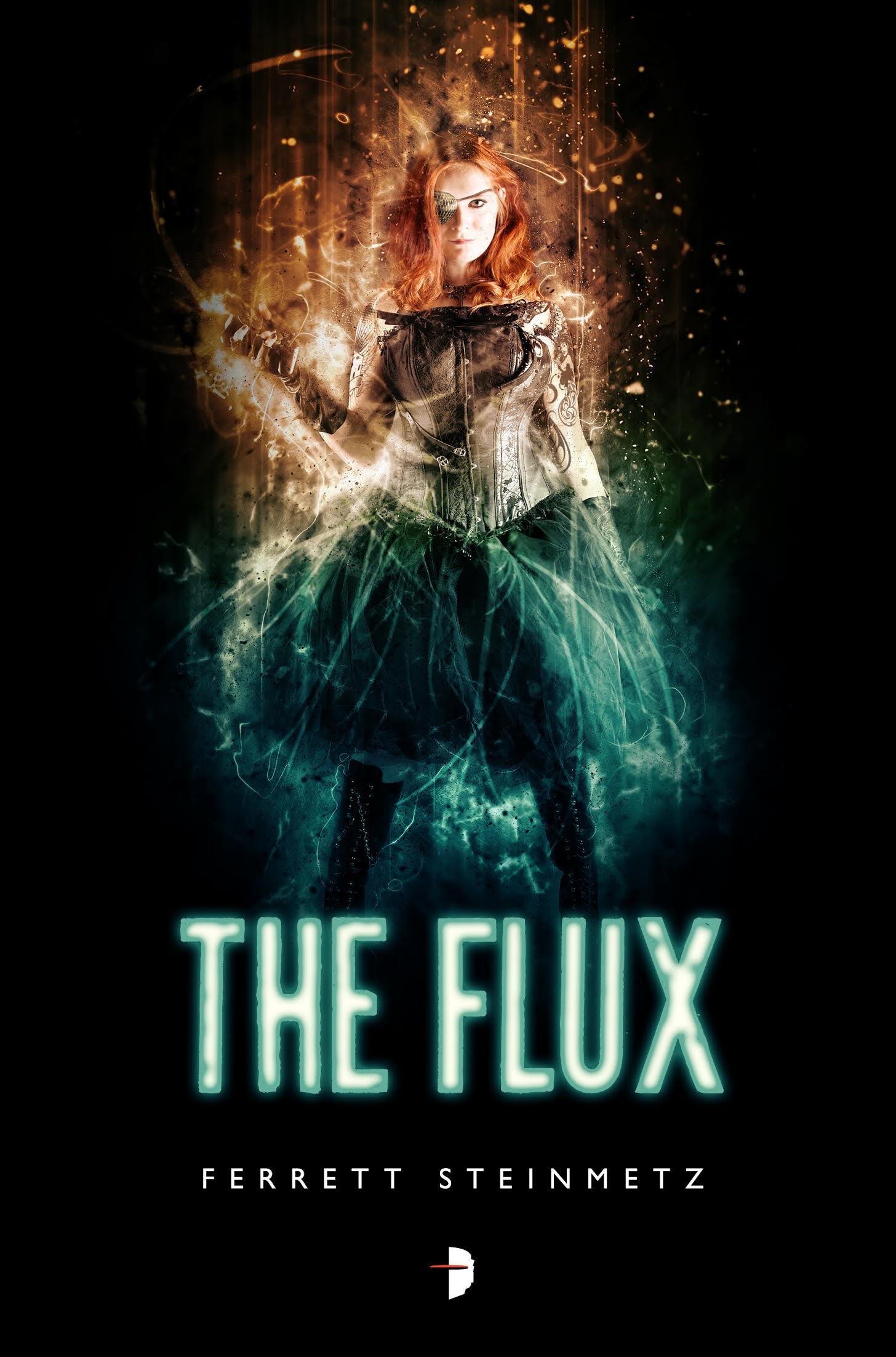
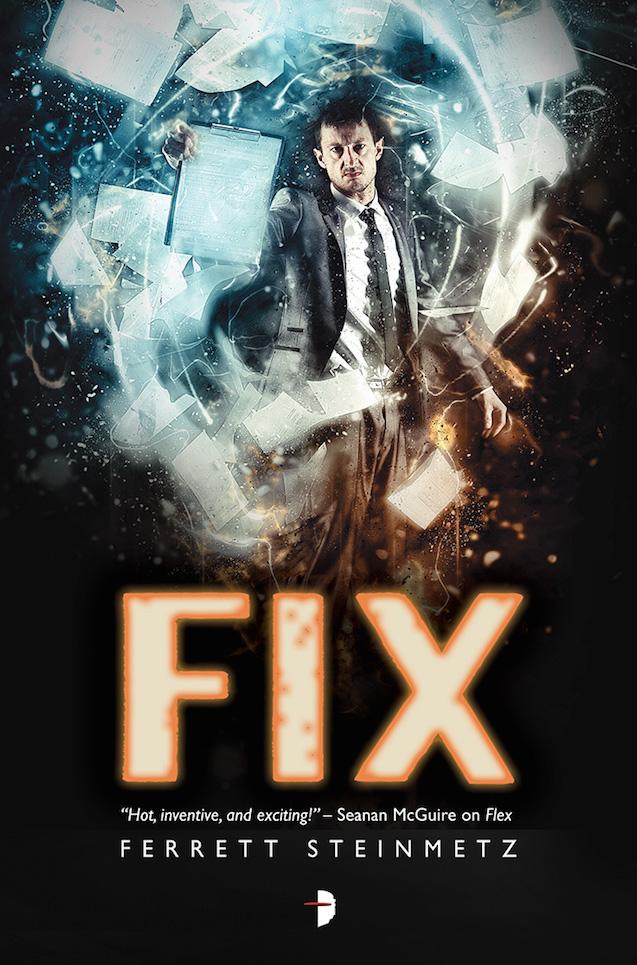
Flex Ferrett Steinmetz-small The Flux Ferrett Steinmetz-small Fix Ferrett Steinmetz-small

I bought Ferrett Steinmetz’s The Flux during my last trip to Barnes & Noble, partly because it’s an Angry Robot novel, and Angry Robot is doing great stuff. But also because of its intriguing premise: a world where if you love something enough, your obsession will punch a hole in reality, creating unique magics and potentially giving you powerful abilities.

Turns out The Flux is the second novel in a loose trilogy which has been getting a lot of attention. The first one, Flex, was published last year, and the third, Fix, arrives this September. Joel Cunningham at Barnes & Noble.com has praise for the entire series.

We’d probably love Ferrett Steinmetz’ Flex trilogy for the premise alone — it’s a gritty, hilarious contemporary fantasy series about magic users in a world where your obsessions can can bore a hole through the fabric of spacetime and give you the ability to manipulate reality at will. But it’s all the extra bits (characters you will ache for, twisty plots, the baddest baddies, killer action sequences) that put it over the top, and onto our list of 2015’s best reads.

I suppose I should be annoyed that now I have to track down a copy of Flex, and wait for Fix to complete the story. But when a series sounds this promising, I’m more than happy to gobble up additional volumes.

Read More Read More

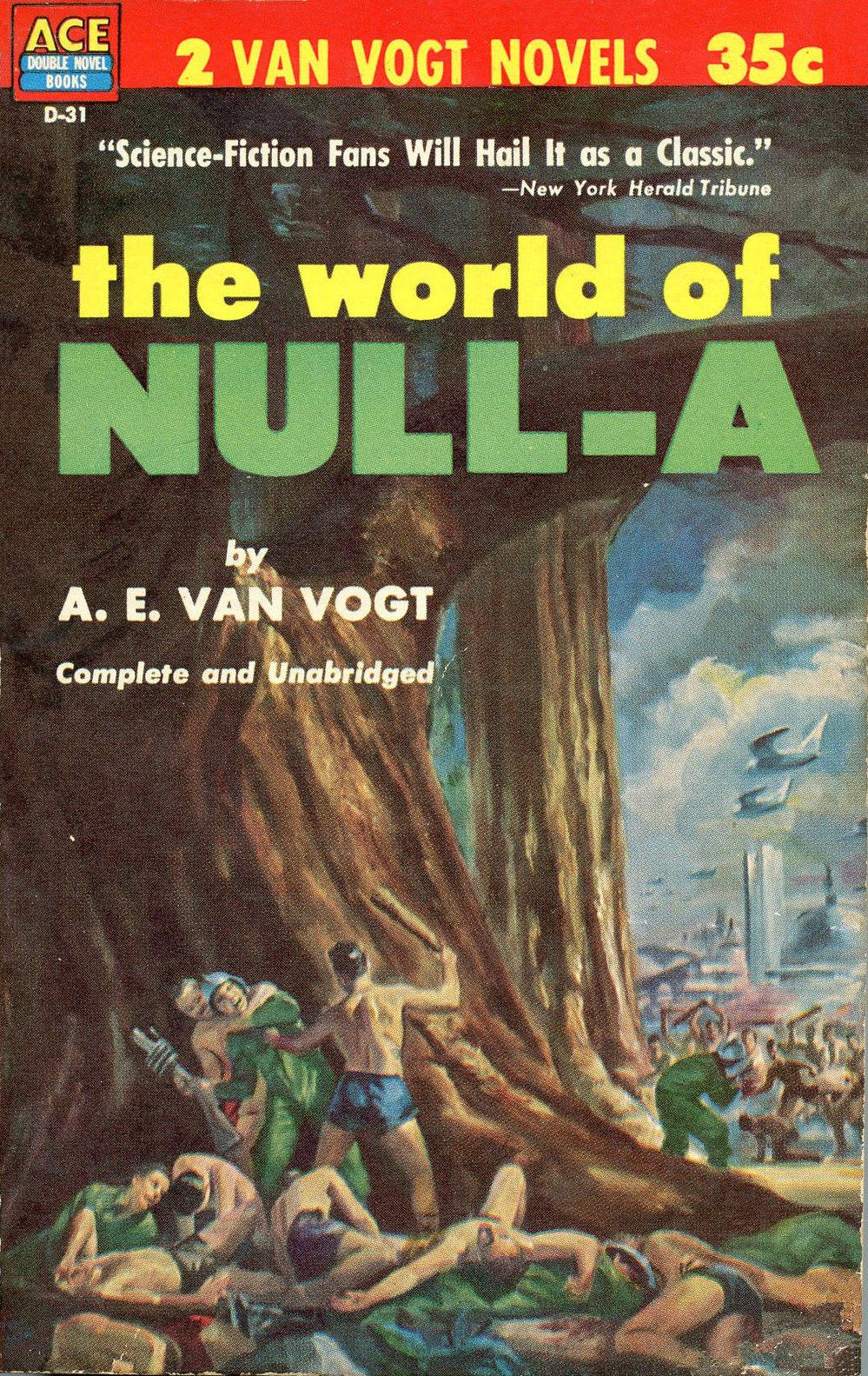
Classically Awful or Awfully Classic: A.E. Van Vogt’s The World of Null-A

Classically Awful or Awfully Classic: A.E. Van Vogt’s The World of Null-A

The World of Null-A-smallAlfred Elton van Vogt (1912-2000) is one of the great names of 20th century science fiction, and not just because the moniker sounds so odd, like it belongs to a mad scientist in a lurid Gernsbackian tale, the kind where “cosmic rays” are used to mutate the sleepy denizens of the city zoo into panicky prehistoric behemoths, which then rampage through the streets, spreading riot and chaos, thus allowing a cabal of sinister foreigners to hijack the metropolis’s secret supply of plutonium in order to build a colossal… sorry. Got a bit carried away there; once you’re in full Pulp Mode it’s hard to disengage. Back to A.E. van Vogt.

Van Vogt was a giant of the golden age of the 40’s, first appearing in John Campbell’s Astounding Science Fiction with the short story “Black Destroyer” in 1939. In the years that followed, he dominated the pages of the magazine with countless short stories and novels that even today are regarded as classics, among which the best known are Slan, The Empire of the Atom, The Voyage of the Space Beagle, The War Against the Rull, The Book of Ptath, and The Weapon Shops of Isher. (He frequently incorporated his short stories into his full length books; van Vogt was a pioneer of the “fix-up” — a term he coined — in which a novel is cobbled together from earlier, shorter pieces.)

In an era in which many of the SF writers of the 40’s and 50’s (some of major importance) have vanished from the shelves, most of the van Vogt books I’ve mentioned are still in print, and he remains influential — and controversial. (He did a short stint as a cheerleader for L. Ron Hubbard’s dianetics, for instance.) His writing seems to be equal parts sublime and appalling, and any discussion of van Vogt must sooner or later get around to addressing one simple question: can a “classic” be a godawful, incoherent mess?

Read More Read More