New Treasures: They Don’t Come Home Anymore by T.E. Grau
 |
 |
T.E. Grau’s short horror fiction has appeared in The Children of Old Leech, The Dark Rites of Cthulhu, Dark Fusions – Where Monsters Lurk!, World War Cthulhu, and other fine anthologies and magazines. His other books include Triptych: Three Cosmic Tales, The Lost Aklo Stories, and The Nameless Dark, which was nominated for a 2015 Shirley Jackson Award for Single-Author Collection. His novella I Am The River will be published later this year by Lethe Press.
I’ve been wanting to sample his fiction for a while, and his brand new novella They Don’t Come Home Anymore seems like the way to do it. On his blog, Grau describes it this way.
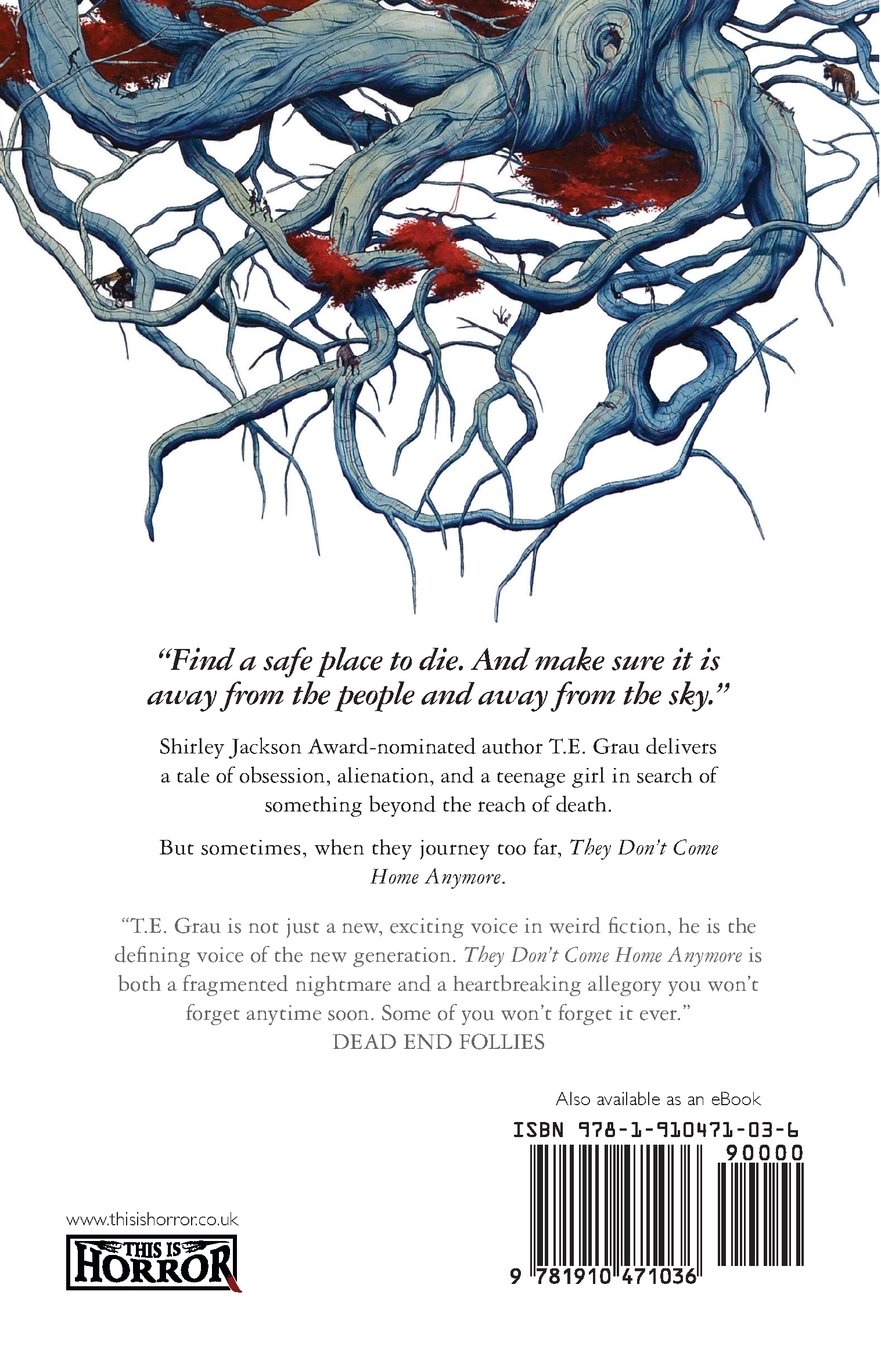
They Don’t Come Home Anymore [is] a story that might, at first blush, seem like a slight departure from my previous work, as it centers on a teenage girl, and is very much a tale of obsession, loneliness, and a search for meaning, acceptance, and love in a world (and sub world) that waits, cruel and threatening, just behind the facade. It’s also about vampires, but not the garden variety sort you’d expect in a mass market/network television teenage vamp story, but something that cleaves closer to the natural world, and how our planet once was, and might still be in certain darkened corners. I can’t really say more, other than to invite you to pick up the book when it’s available, and tell me what you think it’s about, underneath, beyond that first impression.
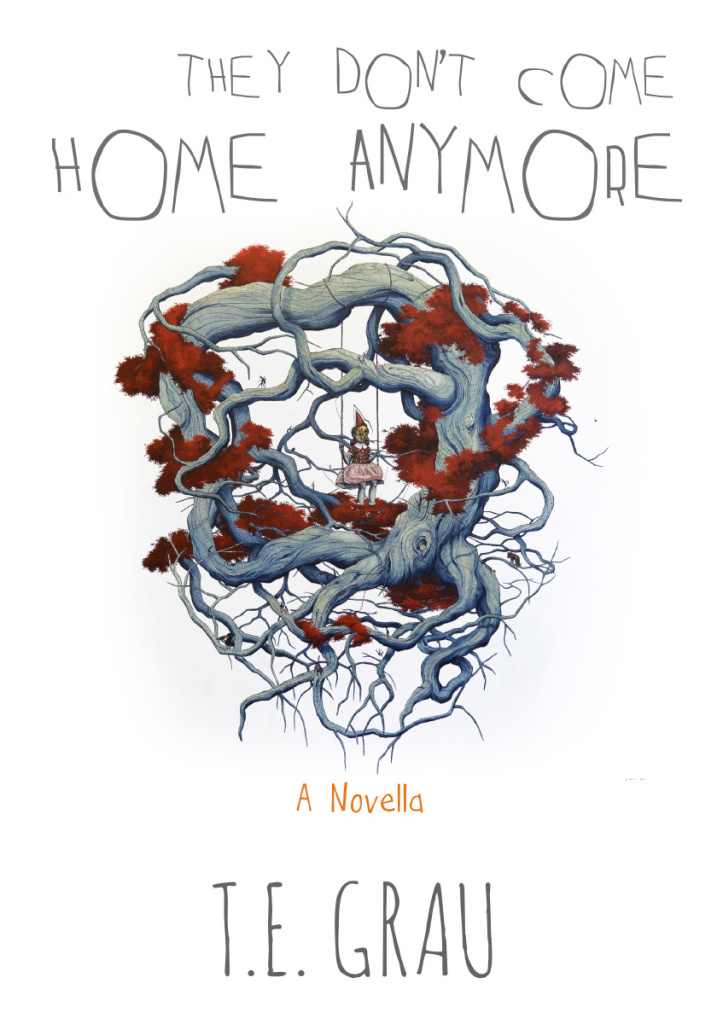
They Don’t Come Home Anymore was published by This Is Horror on November 28, 2016. It is 104 pages, priced at $10.99 in paperback and $6.99 for the digital edition. The cover is by Candice Tripp.

 People can have all kinds of reasons to use another name, or to change their names permanently, for that matter. There are personal or family reasons, like marriage or adoption. There are political or social reasons, like marking a religious conversion, or immigration – though that last’s not as common now as it was in the early to mid-20th century. My own father, for example, changed his name to Malan because British authorities – to whom he had to report regularly as a displaced person after WWII – suggested that he try to sound less Polish since he was planning to stay in England. He chose a name much in the news at that time, and that’s why my brother and I are often asked if we’re South African.