Browsed by
Category: Books

Vintage Treasures: Annals of Klepsis by R.A. Lafferty

Vintage Treasures: Annals of Klepsis by R.A. Lafferty

Annals of Klepsis-small Annals of Klepsis-back-small

I haven’t used Goodreads much, but I’m beginning to see that’s a mistake. It truly is a marvelous resource for those looking for a wide range of opinions about books — especially those that have been out of print for decades. For example, here’s a small sample of reviews for R. A. Lafferty’s gonzo space-pirate novel Annals of Klepsis, published as an Ace paperback original in 1983. First up is Andrew:

A surrealistic apocalypse from a master of surreal apocalyptic fantasy. Lafferty’s novels function with the logic of a Bugs Bunny cartoon written by Kafka.

Astonishing how on-point that is a 2-sentence review. Here’s a snippet from a much more in-depth review by Printable Tire.

The book’s setting is sort of a blend of science fiction, in that it takes place on another planet, with “zap guns” (not called that) and everything, and fantasy, in the way Alice in Wonderland is fantasy. The very loose sprawling story takes place on Klepsis, a pirate planet, who for the last 200 hundred years has been in a state of pre-history, a state of legend. One of the thousands of things Lafferty postulates is that all pre-history and pre-legend does not take place in linear time, but because it is pre-history it all takes place at the same time; thus Hercules was a contemporary of Achilles, and thus the proportion of ghosts in this book.

And finally, here’s a sample from my favorite Goodreads review, from Raymond St.

Read More Read More

Birthday Reviews: Paul Levinson’s “The Protected”

Birthday Reviews: Paul Levinson’s “The Protected”

Cover by Billy Tackett

Paul Levinson was born on March 25, 1947.

Levinson served as President of SFWA from 1998 to 2001, originally serving as Vice President, but succeeding to the Presidency when Robert J. Sawyer resigned. He has published a series starring detective Phil D’Amato beginning with The Silk Code as well as several short stories. His other series, starting with The Plot to Kill Socrates, concerns time travel. In addition to his fiction, Levinson has published several non-fiction books.

Levinson’s novel The Silk Code won the Locus Poll for Best First Novel in 2000. His story “The Chronology Protection Case” was nominated for the Theodore Sturgeon Memorial Award, the Nebula Award, and won the HOMer Award. He received a second Nebula nomination for “The Copyright Notice Case,” and his third Nebula nominee, “Loose Ends,” was also nominated for the Sturgeon and the Hugo Award. His third Sturgeon nomination was for “Advantage, Bellarmine.” In 2004, Levinson’s novel The Pixel Eye was nominated for the Prometheus Award.

“The Protected” may have been published originally in Paul Levinson’s collection Bestseller: Wired, Analog, and Digital Writings in 1999. Two years later, it was definitely included in Martin H. Greenberg and Larry Segriff’s Silicon Dreams.

Levinson tackles the rights of androids in “The Protected,” a topic which has a long history in science fiction as evidenced by many of Isaac Asimov’s Three Laws stories. “The Protected” is less about the rules that govern androids, but rather the struggle between those who support androids’ rights against a group of Human firsters known as the Blood Party.

As an android who has a robotic brain inside a flesh body, Shara’s protector/lover is responsible for her security. When her creator Mark Wolfson agrees that she should be allowed to attend a conference which puts her in danger, her protector argues against it, but in the end he is forced to watch as she puts herself in danger.

Read More Read More

Ghosts, Pirates, and Sea-Faring Werewolves: Strange Island Stories, edited by Jonathan E. Lewis

Ghosts, Pirates, and Sea-Faring Werewolves: Strange Island Stories, edited by Jonathan E. Lewis

Strange Island Stories-small Strange Island Stories-back-small

I really enjoyed Jonathan E. Lewis’ previous Star House Supernatural Classics anthology, Ancient Egyptian Supernatural Tales, which I talked about here. Lewis is a true connoisseur of early spooky fiction, and he’s doing the kind of work that virtually no one else is right now — compiling classic pulp (and pre-pulp) adventure and horror tales into handsome packages for a modern audience.

So I was surprised and pleased to open my mail recently and find a review copy of a brand new Lewis anthology, Strange Island Stories. (And I was just as pleased to find this quote on an inside page devoted to Ancient Egyptian Supernatural Tales: “Lewis has done a fine job assembling a stellar line-up of dark fantasy and horror stories featuring mummies, curses, ancient Egyptian vampires, and lots more.” — Black Gate.) In his introduction to his latest volume Jonathan explains how he’s divided the contents.

I have chosen to divide Strange Island Stories into four distinct sections. The first, GHOSTS AND SHAPE SHIFTERS, includes classic ghost stories, tales of lycanthropy and werewolves, and supernatural tales set on islands… The second section, BIZARRE CREATURES AND FANTASTIC REALMS, includes short stories in which bizarre animal and plant life play an important role… The third section, HUMAN HORRORS, as its title indicates, includes works that are not necessarily “weird” but are nonetheless horrific and deeply strange. Readers might find these stories, all of which evoke a sense of foreboding dread, to be deeply chilling. Among the stories included in this section is George G. Toudouze’s lighthouse story “Three Skeleton Key,” a story that was adapted three times into a chillingly effective radio show. The fourth and final section of Strange Island Stories includes an original work of short fiction I have written entitled “An Adriatic Awakening.”

The anthology includes stories by M.P. Shiel, John Buchan, George MacDonald, Algernon Blackwood, Arthur Conan Doyle, Francis Stevens, Robert Louis Stevenson, H. P. Lovecraft, Henry S. Whitehead, Jack London and nine others.

Read More Read More

Birthday Reviews: Edward Page Mitchell’s “The Clock That Went Backwards”

Birthday Reviews: Edward Page Mitchell’s “The Clock That Went Backwards”

dd
Cover by Will Staehle

Edward Page Mitchell was born on March 24, 1852 and died on January 22, 1927. Mitchell wrote early science fiction stories for the New York Sun in the 1880s, including stories of invisibility, time travel, computers, and teleportation, predating the works of H.G. Wells. From 1897 to 1926 he served as editor for the Sun. While he was the Sun’s editor in 1897, the newspaper published Francis Pharcellus Church’s famous essay “Yes Virginia.”

“The Clock that Went Backward” first appeared anonymously in the Sun on September 18, 1881. Because it didn’t include Mitchell’s byline, for many years the story was ignored and not reprinted until Sam Moskowitz included it in The Crystal Man: Stories by Edward Page Mitchell, a collection of Mitchell’s science fiction published in 1973.

Isaac Asimov, Martin H. Greenberg, and Charles G. Waugh included it in Isaac Asimov Presents the Best Science Fictio of the 19th Century and it also appeared in Edel Brosnan’s The SF Collection and Peter Haining’s Timescapes: Stories of Time Travel. More recent reprints include in Chad Arment’s About Time, The Tachypomp and Other Stories, a collection of Mitchell’s science fiction, The Wordsworth Collection of Science Fiction, the audio anthology Short Science Fiction Collection 50, and Swords and Steam Short Stories, edited by Laura Bulbeck.

It is also available on Project Gutenberg. Ann and Jeff VanderMeer included the story in The Time Traveler’s Almanac, noting that it may be the first published time travel story, predating both “The Chronic Argonauts” and The Time Machine by H.G. Wells. The story has also been translated into Romanian.

Harry and the narrator are cousins who have spent considerable time with their Aunt, Gertrude. The most notable thing about Gertrude, beside her antiquity, is a stopped clock that she owns, which was made in 1572 in the city of Leyden in the Netherlands, where the family came from before immigrating to the United States. Following Gertrude’s death, when she willed the clock to Harry, the two travel to Leyden, with the clock, to attend university.

Naturally enough, with the guidance of one of their professors who could have been a distant ancestor, they use the clock to travel back to 1574 and the Siege of Leyden, where Harry rescues the daughter of Mayor Pieter Adriaanszoon Van der Werf and Professor van Stopp takes a key role in lifting the siege. The narrator returns to his native time, alone, and possibly the descendent of his cousin Harry.

Read More Read More

In 500 Words or Less: Robots vs Fairies, edited by Dominik Parisien and Navah Wolfe

In 500 Words or Less: Robots vs Fairies, edited by Dominik Parisien and Navah Wolfe

Robots vs Fairies
Edited by Dominik Parisien and Navah Wolfe
Saga Press (384 pages, $16.99 paperback, $7.99 eBook, January 2018)

When I asked Dominik Parisien and Navah Wolfe, the editors of Robots vs Fairies, on Twitter if I absolutely had to decide between Team Fairy and Team Robot, I was hoping they’d let me off the hook. Here’s what Dominik told me instead:


Dominik tweet


Apparently, I have no choice. It doesn’t help that Team Fairy and Team Robot both offer up truly remarkable stories. I mean, take one look at the table of contents and you’ll see that this is a stacked deck of established legends and talented up-and-comers. That said, I have heeded the instructions of my overlords and picked a side.

Read More Read More

New Treasures: Beasts Made of Night by Tochi Onyebuchi

New Treasures: Beasts Made of Night by Tochi Onyebuchi

Beasts Made of NIght-smallTochi Onyebuchi lives in Connecticut. His first short story was published in 2011; since then he’s appeared in Asimov’s SF, Ideomancer, and a number of small press anthologies.

Beasts Made of Night is his debut novel, and I’ve heard a lot about it over the last few months. VOYA called it “Unforgettable,” and Caitlyn Paxson at NPR says it’s “The beginning of a great saga… Tochi Onyebuchi conjures up a busy market city inspired by his Nigerian heritage and populates it with a group of outcast kids who shoulder the sins of the rich and powerful.” And Buzzfeed called it a “compelling Nigerian-influenced fantasy has a wonderfully unique premise and lush, brilliant worldbuilding.” Here’s the description.

Black Panther meets Nnedi Okorafor’s Akata Witch in Beasts Made of Night, the first book in an epic fantasy duology.

In the walled city of Kos, corrupt mages can magically call forth sin from a sinner in the form of sin-beasts — lethal creatures spawned from feelings of guilt. Taj is the most talented of the aki, young sin-eaters indentured by the mages to slay the sin-beasts. But Taj’s livelihood comes at a terrible cost. When he kills a sin-beast, a tattoo of the beast appears on his skin while the guilt of committing the sin appears on his mind. Most aki are driven mad by the process, but Taj is cocky and desperate to provide for his family.

When Taj is called to eat a sin of a member of the royal family, he’s suddenly thrust into the center of a dark conspiracy to destroy Kos. Now Taj must fight to save the princess that he loves — and his own life.

Debut author Tochi Onyebuchi delivers an unforgettable series opener that powerfully explores the true meaning of justice and guilt. Packed with dark magic and thrilling action, Beasts Made of Night is a gritty Nigerian-influenced fantasy perfect for fans of Paolo Bacigalupi and Nnedi Okorafor.

Beasts Made of Night was published by Razorbill on October 31, 2017. It is 304 pages, priced at $17.99 in trade paperback and $10.99 for the digital edition. Read a lengthy excerpt at NPR.

Birthday Reviews: Kim Stanley Robinson’s “The Part of Us That Loves”

Birthday Reviews: Kim Stanley Robinson’s “The Part of Us That Loves”

Cover by Peter Stallard

Kim Stanley Robinson was born on March 23, 1952.

Robinson won the Hugo Award for his novels Green Mars and Blue Mars. He won the Nebula for Red Mars, the first novel in the series, as well as for 2312 and for his novella “The Blind Geometer.” Red Mars also won a British SF Association Award, the Ignotus Award, and the Seiun Award. Green Mars won the Ignotus Award, the Italia Award while Blue Mars won the Prix Ozone. He won a World Fantasy Award for the novella “Black Air” and his novel Pacific Edge received the John W. Campbell Memorial Award.

“The Part of Us That Loves” was originally published in Full Spectrum 2, edited by Lous Aronica, Shawna McCarthy, Amy Stout, and Pat LoBrutto in 1989. Robinson included the story in his 1991 collection Remaking History and that same year it was translated into French.

The city of Zion, Illinois was founded in 1901 as a religious community. Although it has become a more traditional community over the years, Robinson uses its religious background as an effective setting for “The Part of Us That Loves.” The tale feels like two completely separate stories, though the first half provides the means of understanding the second.

The first half focuses on Naomi and Tom, two teenagers in the community band preparing for a concert in honor of two residents who are both celebrating their one hundredth birthday. The two are interested in each other, although they aren’t sure how to pursue that interest.

Read More Read More

Future Treasures: The Best Science Fiction of the Year, Volume Three edited by Neil Clarke

Future Treasures: The Best Science Fiction of the Year, Volume Three edited by Neil Clarke

The Best Science Fiction of the Year 3 Neil Clarke-smallNeil Clarke has only had produced two volumes of his Best Science Fiction of the Year, but it’s already become one of my favorite Year’s Best anthologies — and considering the competition (Dozois, Strahan, Horton, Guran, Kelly, Adams, and Afsharirad, among others), that’s really saying something.

For 2018, in addition to being one of the best, he’s also the first. His Year’s Best anthology will be the first to go on sale, in just two weeks. Here’s the description. (And yes, they’re talking about Rich Horton in that first line. Isn’t it obvious?)

To keep up-to-date with the most buzzworthy and cutting-edge science fiction requires sifting through countless magazines, e-zines, websites, blogs, original anthologies, single-author collections, and more ― a task accomplishable by only the most determined and voracious readers. For everyone else, Night Shade Books is proud to introduce the latest volume of The Best Science Fiction of the Year, a new yearly anthology compiled by Hugo and World Fantasy award–winning editor Neil Clarke, collecting the finest that the genre has to offer, from the biggest names in the field to the most exciting new writers.

The best science fiction scrutinizes our culture and politics, examines the limits of the human condition, and zooms across galaxies at faster-than-light speeds, moving from the very near future to the far-flung worlds of tomorrow in the space of a single sentence. Clarke, publisher and editor in chief of the acclaimed and award-winning magazine Clarkesworld, has selected the short science fiction (and only science fiction) best representing the previous year’s writing, showcasing the talent, variety, and awesome “sensawunda” that the genre has to offer.

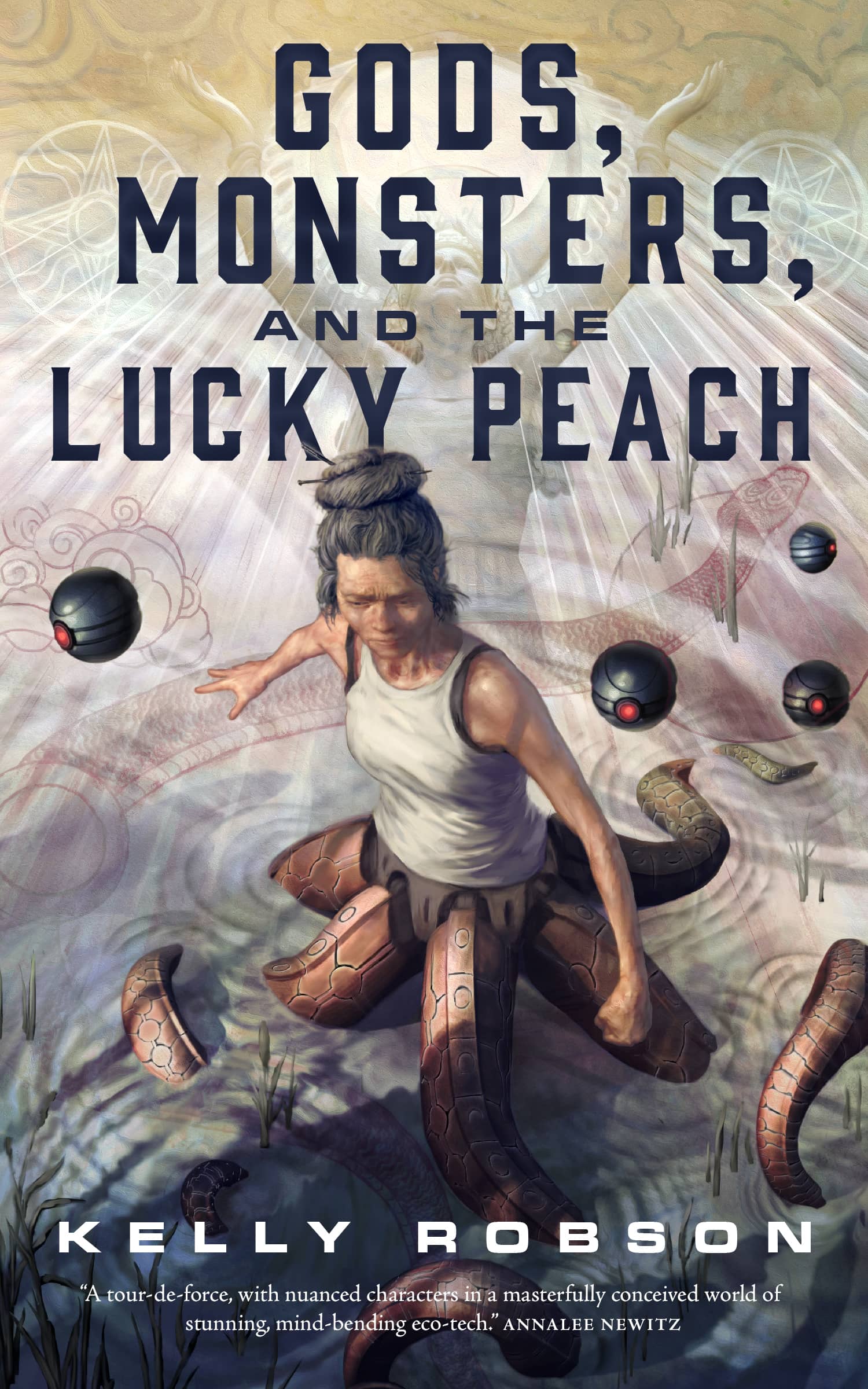
Neil’s volume includes stories by Alastair Reynolds, Nancy Kress, Sarah Pinsker, Linda Nagata, Greg Egan, Kelly Robson, Kathleen Ann Goonan, Yoon Ha Lee, Aliette de Bodard, Robert Reed, Rich Larson, Peter Watts, Suzanne Palmer, and many others.

Here’s the complete table of contents.

Read More Read More

Birthday Reviews: Terry Dowling’s “The Last Elephant”

Birthday Reviews: Terry Dowling’s “The Last Elephant”

Cover by Nick Stathopoulos

Terry Dowling was born on March 21, 1947. Most of Dowlings fictional output is at short story length, although the stories about Tom Rynosseros are connected and have been collected in four volumes. Dowling has also published the novel Clowns at Midnight. He edited the anthology Mortal Fire: Best Australian SF with Van Ikin and worked with Richard Delap and Gil Lamont to edit The Essential Ellison.

Dowling has received four Aurealis Awards and twelve Ditmar Awards. In 1988, he won the Ditmar for Best Long Fiction for his story “For as Long as You Burn” and the Ditmar for Best Short Fiction for “The Last Elephant.” His collection Basic Black: Tales of Appropriate Fear won an International Horror Guild Award and the collection Wormwood received a Readercon Award. Basic Black was also nominated for the Bram Stoker Award, and Dowling has three World Fantasy Award nominations.

“The Last Elephant” first appeared in Australian Short Stories issue #20, published in 1987 and edited by Bruce Pascoe. In 1994, Paul Collins included it in his Metaworlds: Best Australian Science Fiction and Dowling has reprinted the story in three collections, An Intimate Knowledge of the Night, Antique Futures: The Best of Terry Dowling, and Make Believe: A Terry Dowling Reader.

Dowling tackles endangered species in “The Last Elephant,” describing the festivities and hoopla around Terrence Harm, whose job it is to inspect Caza, believed to be the last living elephant. While Harm cares about the creature and understands the importance of preserving it for as long as possible, he also understands the quality of life issues that come into play and realizes that the more humane course of action may be to announce that Caza is ready to die.

However, when Harm finally visits the last elephant, it is not quite the situation Dowling has prepared the reader for. The questions of ecology Dowling appeared to be setting up are not the issues that Harm actually faces, and Caza is important to the culture in a very different way. Dowling’s story shows that while preservation is important, it can be achieved in different ways, and although they may not be entirely satisfying, they carry their own significance.

Read More Read More

Nazis and Superheroes Warring in the Shadows: An Interview with Kay Kenyon

Nazis and Superheroes Warring in the Shadows: An Interview with Kay Kenyon

At the Table of Wolves Kay Kenyon-small Serpent in the Heather-small

The Dark Talents novels by Kay Kenyon

I was lucky enough to hear Kay Kenyon read from her novel At the Table of Wolves in 2016, and I was immediately captivated. Her tale of a young English woman with superhuman abilities in the late 1930s who is drawn into the world of intelligence services warring in the shadows — and who stumbles on a chilling Nazi plan to invade England, utilizing their own superhuman agents — was one of my favorite novels last year. I jumped at the chance to interview Kay for Black Gate last week; the transcript of our conversation is below.

The next book in the series, Serpent in the Heather, arrives in hardcover on April 10th, and Saga Press is offering a Goodreads Giveaway which runs until March 27. Check it out here!

Kay, thanks so much for joining us! I first became acquainted with your work through your marvelous standalone SF novels from Bantam Spectra beginning in the late 90s, like The Seeds of Time, Rift, and Maximum Ice, which was nominated for the Philip K. Dick Award. More recently you’ve embraced series fiction, starting with The Entire and The Rose from Pyr, and now the Dark Talents books from Saga. Why the switch?

Do you want the deep artistic reason or the crass marketing one? I mean, I’m tempted to go all artistic on you with the vision thing and growth as a writer, but I know you too well to lie that brazenly.

Read More Read More