Browsed by
Category: Blog Entry

The Golden Age of Science Fiction: Janice Bogstad and Jeanne Gomoll

The Golden Age of Science Fiction: Janice Bogstad and Jeanne Gomoll

Janice Bogstad
Janice Bogstad

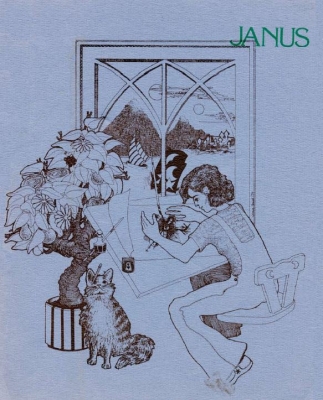
Janus 15, Cover by Jeanne Gomoll

Jeanne Gomoll
Jeanne Gomoll

The Fan Activity Achievement Award (FAAN) were presented from 1976 through 1980 to recognize achievement by those who write, edit, and illustrate fanzines. The awards were revived in 1994 and have presented every years since, with the exception of 1996. The Best Fan Editor Award was only presented during the initial run of the award from 1977 to 1980. It was won in each of the first two years by Rob Johnson. Janice Bogstad and Jeanne Gomoll won the FAAN Award for Best Editor in both 1979 and 1980 for their editorial work on the fanzine Janus. They were also nominated in both those years (as well as 1978) for the Hugo Award.

Janice Bogstad began editing the fanzine Janus in 1975. She was joined in editorial duties by Jeanne Gomoll with issue 2 and the two co-edited the zine from 1975 through 1980, producing a total of 18 issues of the fanzine. The zine was nominated for the Best Fanzine Hugo three times, in 1978, 1979, and 1980. When Bogstad and Gomoll decided to stop editing the zine, the editorial duties to Diane Martin, who continued publishing another 8 issues between 1981 and 1990 under the auspices of SF3, although name of the fanzine was changed to Aurora. Following the publication of Janus, Bogstad began publishing the zine New Moon in 1981.
Read More Read More

July 20, 2019 – As Seen from 1986

July 20, 2019 – As Seen from 1986

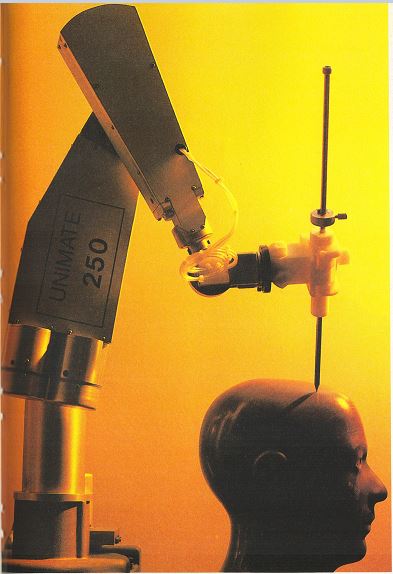
Arthur C. Clarke, July 20, 2019 robotic surgical arm

In the 1980s, science fiction, the red-headed stepchild of literature, the field that had been declared dead in 1960, the genre that Kurt Vonnegut decried because serious critics kept mistaking it for a urinal, became the hot new thing.

As we now know, a rising tide may lift all boats, but the few superyachts get raised to previously unimaginable heights. The corporate buyout of old-line publishing houses created the blockbuster mentality, wherein the few Big Names could be paid supermoney in the assurance that their being proclaimed bestsellers made them so and therefore return huger profits. Robert A. Heinlein got paid $500,000 for The Number of the Beast. Isaac Asimov made a million for his new Foundation books. And Arthur C. Clarke needed all his formidable scuba skills to avoid being drowned under the tsunami of money that arrived just by allowing others to borrow the magic of his name.

Read More Read More

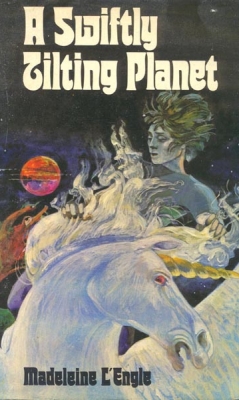
The Golden Age of Science Fiction: A Swiftly Tilting Planet by Madeleine L’Engle

The Golden Age of Science Fiction: A Swiftly Tilting Planet by Madeleine L’Engle

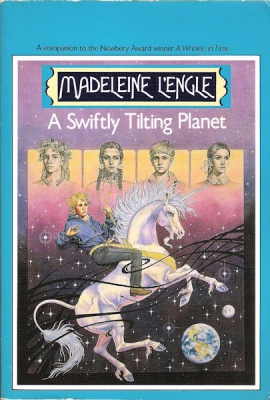
Cover by Carolyn Beresford

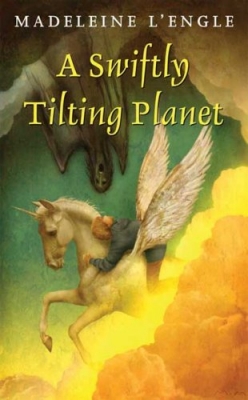
Cover by Jody A. Lee

Cover by Matt Mahurin

The National Book Awards were established in 1936 by the American Booksellers Association. Although the Awards were not given out between 1942 and 1949 because of World War II and its aftermath, the awards were reestablished in 1950 and given out annually since then. Since 1950, only US authors are eligible for the award, which is designed to celebrate the best of American literature, expand its audience, and enhance the value of good writing in America. From 1980 through 1983, the American Book Awards were announced as a variation of the National Book Awards, run by the Academy of the American Book Awards.

The first Children’s Book award was presented to Meinhardt DeJong for Journey from Peppermint Street. In 1980, the award rebranded as the American Book Awards (TABA) and increased the number of awards given, including creating both a hardcover and paperback award for Children’s Books. The winner of the first Paperback Children’s Book Award was Madeleine L’Engle’s A Swiftly Tilting Planet.

A Swiftly Tilting Planet was the third book published in Madeleine L’Engle’s Time Quintet (although it is the fourth volume viewed by internal chronology). It follows the established character of Charles Wallace Murry who must save the world from an impending nuclear disaster. Charles Wallace has demonstrated the ability to read other people’s minds and thought and connect to his older sister, Meg, through a process called kything.

Read More Read More

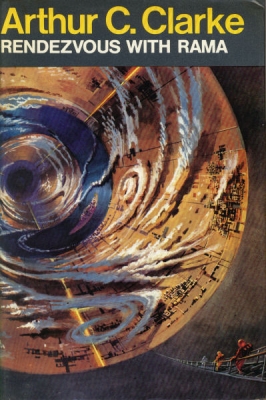
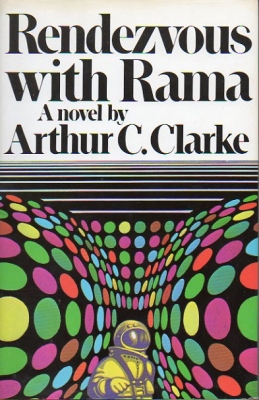
The Golden Age of Science Fiction: Rendezvous with Rama by Arthur C. Clarke

The Golden Age of Science Fiction: Rendezvous with Rama by Arthur C. Clarke

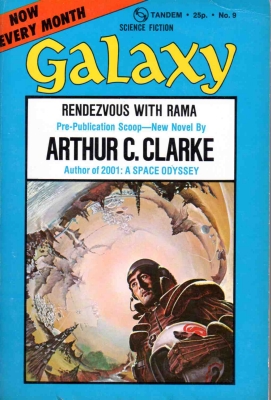
Cover by Brian Boyle

Cover by Bruce Pennington

Cover by Hal Siegel
Cover by Hal Siegel

The Seiun Awards are often described as the “Japanese Hugo Awards” since they are voted on by the membership of annual Japanese Science Fiction Convention. This description almost invariably is followed up by pointing out that Seiun is Japanese for Nebula. A Seiun Award for Best Foreign Novel and Best Foreign Short Fiction has been presented since 1970, although in 1980, the year being explored in this series, no Short Fiction Seiun was awarded. The first Seiun Award for Best Novel was presented to J.G. Ballard’s The Crystal World (originally published in 1966) and the first award for Short Fiction was presented to Thomas M. Disch for “The Squirrel Cage,” published in the same year. Because the awards are presented for works in translation, there is generally a lag of a few years from first publication. For many years, the Seiun Award foreign categories were presented at Worldcon as part of the Hugo Award ceremony.

Arthur C. Clarke’s Rendezvous with Rama was first published in 1973 and by the time it was translated into Japanese, it had won the Nebula Award, the Hugo Award, the Locus Award, and the BSFA Award. In a Locus Poll in 1975, it was ranked the 20th best novel in science fiction history.

Read More Read More

The Golden Age of Science Fiction: Robert A. Heinlein

The Golden Age of Science Fiction: Robert A. Heinlein

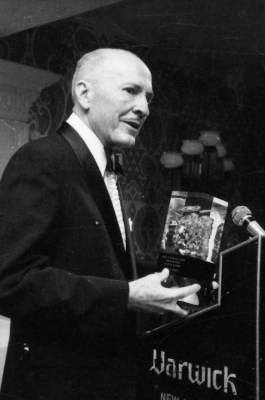
Heinlein accepting the Nebula

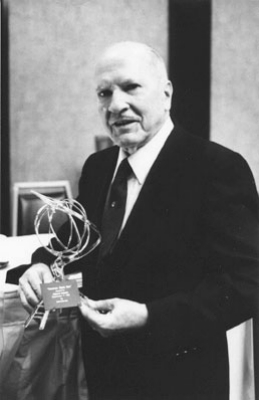
Robert A. Heinlein
Robert A. Heinlein

The Forry Award has been presented annually by LASFS (the Los Angeles Science Fantasy Society) since 1966 and is named for Forrest J Ackerman.  The award celebrates lifetime achievement in science fiction and the recipients are selected by a vote among LASFS members. The first award was presented in 1966 to Ray Bradbury and has generally been presented to science fiction professionals, although an occasional fan has received the award as well.  Ackerman didn’t receive the award until 2002. Robert A. Heinlein received the award in 1980. The award was presented at Loscon 7, the weekend of November 28-30 at the Anaheim Sheraton.

Books have and will continued to be written about Robert A. Heinlein, some recent examples being William H. Patterson’s two volume Heinlein biography and Farah Mendlesohn’s The Pleasant Profession of Robert A. Heinlein. From 1979, there was H. Bruce Franklin’s Robert A. Heinlein: America as Science Fiction, which I discussed on May 6. Of course, Heinlein also has his staunch devotees and partisans as well as his detractors.

Read More Read More

The Many Lives of Otto Mattix

The Many Lives of Otto Mattix

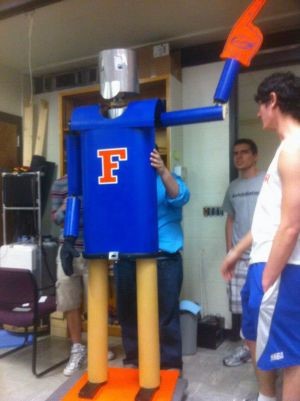
Otto 2013

Don Wiggins was one of the charmed young men who became college legends back in the days when just being a college student came with a halo of prestige. A native of nearby Jacksonville, he entered the University of Florida in the late 1940s and in 1951 was named to UF’s Hall of Fame. He graduated in 1952 with an Electrical Engineering degree and was immediately hired as an Assistant in Research before rapidly rising to the professorial ranks. His nerdiness was not in question, but he probably never got teased by the jocks at the football-crazed school. At least not twice. He was also faculty instructor to the Judo Club.

All of that paled to his true claim to fame. He was “father” to Otto Mattix, the school’s robot mascot, here with minor personages like the college’s dean and president.

Read More Read More

On Writing Advice

On Writing Advice

Black Gate clouds-small

This isn’t my view, but it’s pretty darn close

Good afternoon, Readers!

It’s a beautiful summer’s day here in Ottawa, Canada as of the writing of this. A lovely cool breeze is coming in the window, mitigating the heat of the sun, while cotton-puff clouds float through an impossibly blue sky.

I’m sitting by the window while my dad cooks a spectacular fry- up brunch, letting my thoughts drift with the clouds. I have nothing with me but his old iPad and a cup of delicious locally roasted coffee from my friends at JenEric Coffee.

This is all a poetic way of saying that I’ve been thinking a lot about writing advice of late, and I figured I would share my thoughts with you.

(You want clumsy segues? I’m your gal!)

Read More Read More

The Golden Age of Science Fiction: Alien

The Golden Age of Science Fiction: Alien

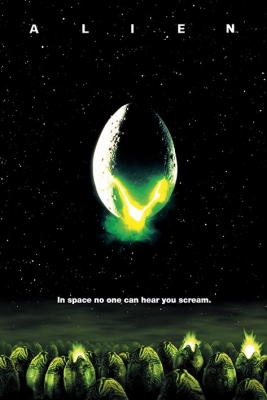
Alien poster
Alien poster

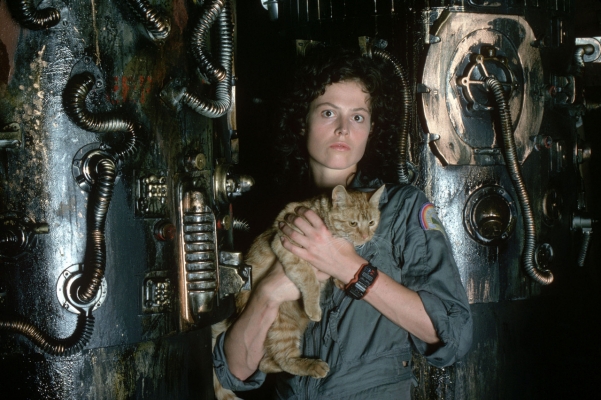
Ripley (Sigourney Weaver) and Jones

The Best Dramatic Presentation category was not one of the original Hugo categories in 1953, but was introduced in 1958, when it was won by The Incredible Shrinking Man. No Award won in 1959 followed by three years of The Twilight Zone and another No Award. The Award, called variously Best Dramatic Presentation and Best SF or Fantasy Movie, was given out annually from 1958 through 2002 when it was split into two categories, one for Short Form and one for Long Form. In 1980, the Hugo Award was presented at Noreascon Two in Boston, Massachusetts on August 31.

In 1972, the British Fantasy Society began giving out the August Derleth Fantasy Awards for best novel as voted on by their members. In 1976 the name was changed to the British Fantasy Award, although the August Derleth name was still the name for the Best Novel Award. A category for Best Film was created in 1973 and ran years until 1990 and has not been replaced. In 1980, the awards were presented at Fantasycon VI in Birmingham.

Stanley Kubrick’s 2001: A Space Odyssey was released in 1968.  Eleven years later, Ridley Scott released Alien. Although one is generally thought of as a spiritual science fiction film and the other is a science fiction horror film, there are similarities between the two.

Read More Read More

A Whole World of Metal Men?

A Whole World of Metal Men?

1937-10-17 San Francisco Examiner [American Weekly 3] A Whole World of Metal Men, The Last Robot

“Creaking painfully, its joints rusty, the last robot to survive the civilization which man is making to replace the dwindling crop of babies, would crawl along to a heap of scrap-iron, the cemetery for defunct robots.

“Rain, ceaseless torrents of rain, would bring the germs of the only disease which could possibly affect a mechanical man: Rust.”

Read More Read More

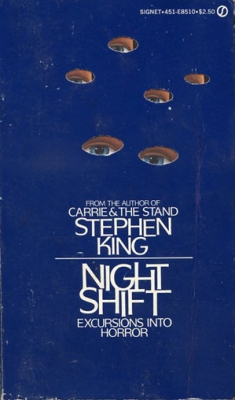
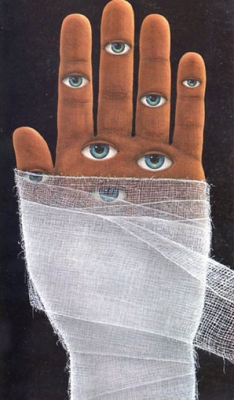
The Golden Age of Science Fiction: Night Shift, by Stephen King

The Golden Age of Science Fiction: Night Shift, by Stephen King

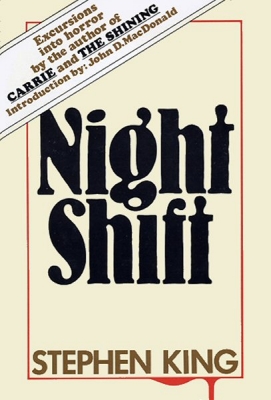
Cover by Fred Marcellino

Outer cover by Don Brautigam

Inner cover by Don Brautigam

The Balrog Award, often referred to as the coveted Balrog Award, was created by Jonathan Bacon and first conceived in issue 10/11 of his Fantasy Crossroads fanzine in 1977 and actually announced in the final issue, where he also proposed the Smitty Awards for fantasy poetry. The awards were presented for the first time at Fool-Con II at the Johnson County Community College in Overland Park, Kansas on April 1, 1979. The awards were never taken particularly seriously, even by those who won the award. The final awards were presented in 1985. The Balrog Award for Collection/Anthology was presented each year that the awards were active.

The stories in Night Shift cover a period from the late 1960s through 1976, a time when King was maturing as an author and finding his own voice as well as becoming a best selling author. Many of the stones in Night Shift would form the basis of novels and films, notably “Jerusalem’s Lot,” “Lawnmower Man,” “children of the corn,” and “Graveyard Shift.”

King opens The collection with “Jerusalem’s Lot,” which was a previously unpublished version of his novel Salem’s Lot. Although King comments that the story has a basis in Bram Stoker’s Dracula, it’s even more obvious antecedents are the works of H. P. Lovecraft. Even as King tries to emulate Lovecraft’s style, he never quite captures it, making the story of The Boone family in  Maine feel overwritten rather than chilling. By the time King gets to “The Man Who Loves Flowers,” he has discovered that a more naturalistic world provides the opportunity for much more chilling horror. The fantastic creatures of “Jerusalem’s Lot” could only happen in fiction or dreams, but the sociopathic horror of kings’ protagonist in he later story could be anyone the reader meets on the street.

Read More Read More