Robots Have Tales: Henry Kuttner’s Gallagher Stories
 Apologies for my radio silence last week. Candidly, I was at a loss for a subject, until Fate and Amazon put the perfect book into my hands (which I’ll talk about below), which wasn’t until sometime late in the week.
And, with further apologies, here’s a self-pimping update: there’s still time to participate in the discussion of Blood of Ambrose at Stargate producer Joe Mallozzi’s blog.
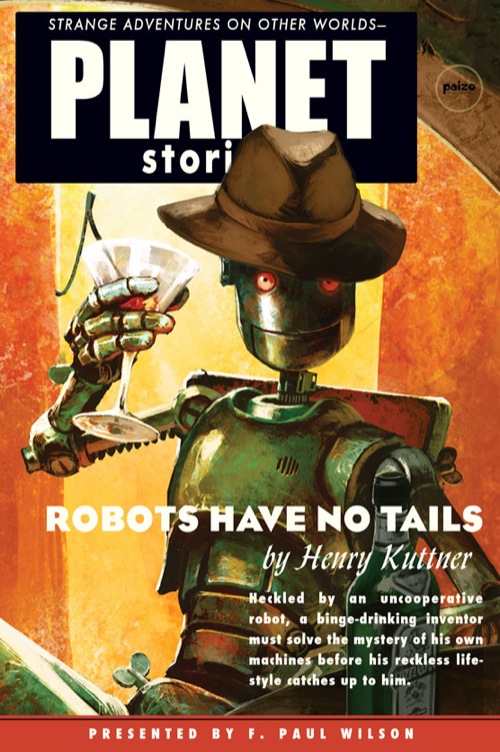
As to the “perfect book”–the new issue from Paizo Press’ Planet Stories line, Henry Kuttner’s Robots Have No Tails, may not be perfect in some absolute sense (although it comes pretty close) but it’s certainly one that I and others have been looking forward to for years. And it’s only the latest (hopefully not the last) in a series of Kuttner reprints from Planet that now includes Elak of Atlantis, his pioneering sword-and-sorcery stories, and The Dark World, probably the best of his swashbuckling adventure tales. (I say “probably” only because I can’t claim to have read all of Kuttner–maybe no one has, although Planet publisher Erik Mona has certainly come closer than most.)
[Sagrazi the unvastenable beyond the jump.]
 Last month I read a psychology book exploring the implications of the digital information age. In