Goth Chick News: Graveyard Humor
 There’s nothing like being faced with your own weirdness.
Last week a home improvement project forced me to pack up my beloved library for the weekend, including that creepy little statue from Raiders of the Lost Ark. Every last book had to be removed, and since I didn’t trust anyone else, I did it myself.
The eye-level shelves contained nostalgic memory joggers such as the complete set of A Series of Unfortunate Events, which represented the first review I ever did for Black Gate, and the hard cover copies of every book Anne Rice ever wrote, each personally signed to me (remember all the lousy weather you stood outside in to get those autographs?).
These two items may seem a bit strange to you, but that’s par for the course around my abode. And when I come across something odd, even for me, that’s saying something.
As I got toward the bottom shelves in the corner near the love seat, just left of the secret door leading down to the dungeon (kidding), I found I had collected a whole shelf of unusual books on the topic of death. And for those of you thinking “That sounds normal for her,” it really isn’t.
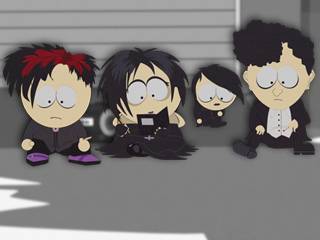
Unlike the “Goth Kids” on South Park, I am not, nor have I ever been, death obsessed. One summer working as an orderly at the local hospital cured me of that, believe me. Wheeling several of the real thing down to the morgue while the warmth was still dissipating was enough to put me off.
 Most pulp writers of the 1930s were itching to break into the hardcover book market. Since reprints of pulp stories in book form were rare at the time, these writers did not expect that their work for the newsstands would survive past an issue’s sell-date. They felt comfortable re-working and expanding on them to create novels. Raymond Chandler famously called his process of novelizing his already published work as “cannibalizing.” He welded together different short stories, often keeping large sections of text intact with only slight alterations. Other authors took ideas that they liked, or else felt they could do more justice to in the novel format, and enlarged them into books without text carry-over. Robert E. Howard used “The Scarlet Citadel” as a guide for The Hour of the Dragon. And Cornell Woolrich turned many of his short stories into novels. “Face Work” became The Black Angel. “Call Me Patrice” became I Married a Dead Man. “The Street of Jungle Death” became Black Alibi. And “Speak to Me of Death” became Woolrich’s most depressing novel (which is really saying something), Night Has a Thousand Eyes.
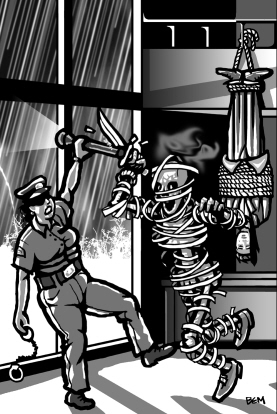 The sarcophagus was empty, the mummy was on the loose, and Corporate expected her to deal with it. Seemed like a lot to ask, especially for minimum wage.
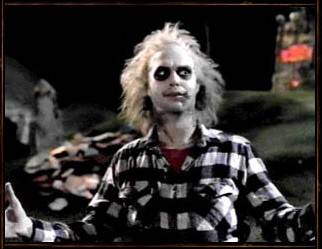 I freely cop to having the sort of geeky sense of humor that is immediately triggered by someone coming up with the perfect movie quote for any given situation. For that matter, the level of hilarity is proportionately magnified by the obscurity of the quote, how quickly I was able to identify it, and any subtle, “insider” references the quote might invoke.
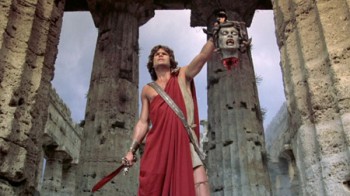 On April 2nd, “Titans Will Clash!” Which is perhaps the worst tag-line I’ve seen since “The Story That Won’t Go Away” for JFK. I wonder why the tag-line on director Louis Lettier’s previous film wasn’t “This Summer, The Hulk Is Incredible!”
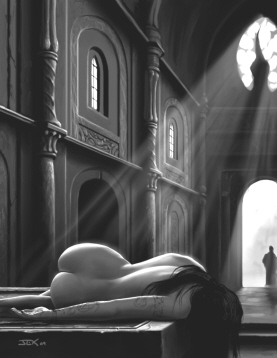 It was Lena’s fifth suicide. Such was the way of the Killaster Witches. But as ambitious as she was, Lena’s schemes for revenge might not be quite treacherous enough…