An Experiment in Gor: What Are John Norman’s Books About, Really? The Hidden Secret of the Counter-Earth Saga is an Over-Abundance of…
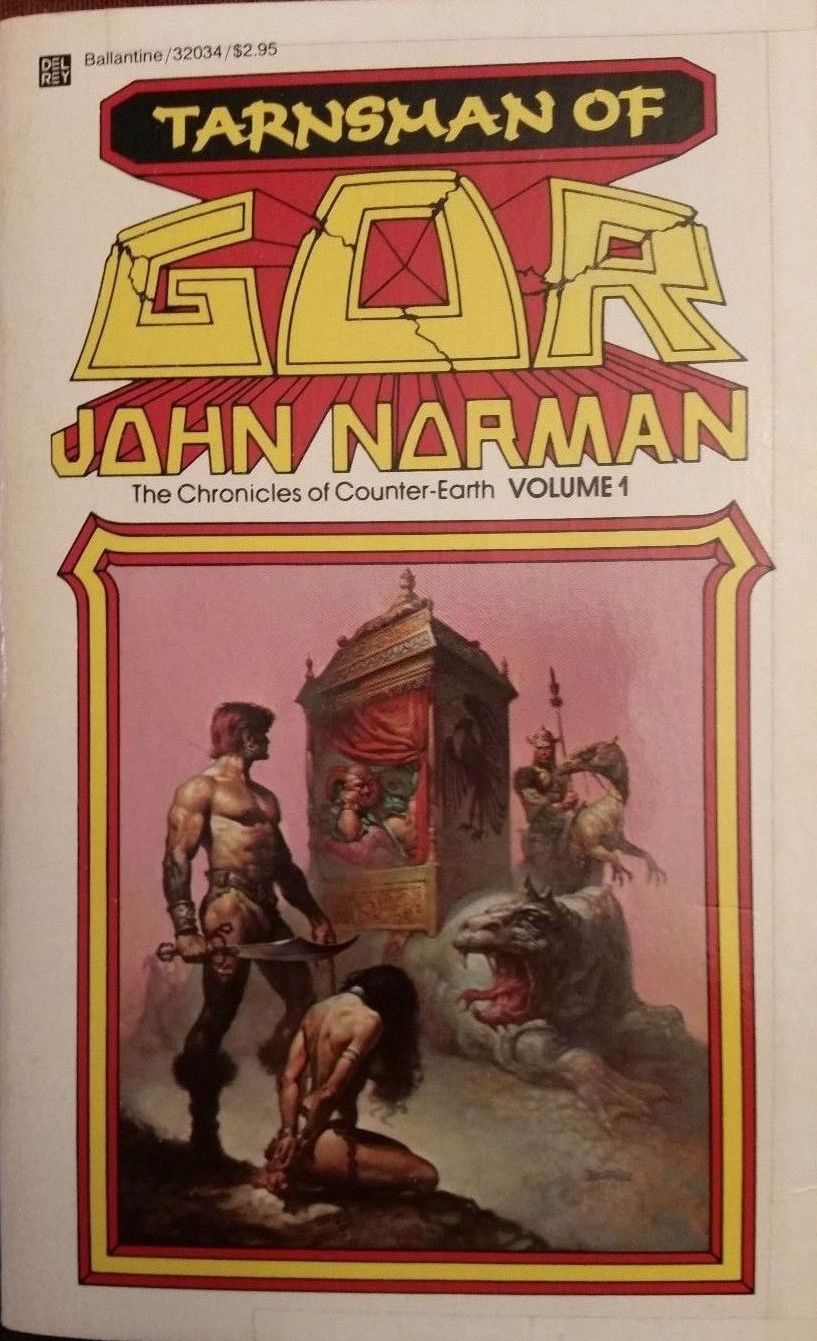 I’m positive that I read the first book in the [Counter-Earth Saga/Tarl Cabot Saga/Chronicles of Counter-Earth/Gorean Cycle/Gorean Saga/take your pick], sometime back in junior high. That would be Tarnsman of Gor, first published in 1966 by Ballantine, which recounts how Earth professor Tarl Cabot is mysteriously transported to our solar system’s hidden tenth planet orbiting the sun in a position exactly counter to Earth’s. There he encounters a Barsoomian-inspired sword-and-planet environment. He quickly adapts, becoming a Gorean swordsman and assimilating into the culture of his adopted planet.
If I read any of the sequels, I can’t recall — although I remember enjoying the first book, at least the first part of it recounting Talbot’s strange experiences (involving a mysterious package, I believe) and subsequent relocation to another world. As The Encyclopedia of Fantasy (1997), a huge tome sitting here on my bookshelf, notes, the first Gor books were passable Edgar Rice Burroughs pastiches, and that’s the impression I came away with too. As a boy, I was a huge fan of ERB’s John Carter of Mars stories and was looking for something else along those lines.
The Encyclopedia goes on to condemn later volumes in the series (which now total 34), noting that they “degenerate into extremely sexist, sadomasochistic pornography involving the ritual humiliation of women, and as a result have caused widespread offence.” DAW, which published the series from volumes 7 through 25, apparently dropped Norman for this reason (Naughty Norman!), and the subsequent 9 volumes are only available in e-book editions.
As a collector and purveyor of vintage sci-fi and fantasy paperbacks, I happen to have several Gor books sitting in a pile here beside my office desk. I will be posting them to eBay soon. I have, on occasion, picked one up and opened it at random to read a paragraph or two.
 “It’s an accepted fact that all writers are crazy; even the normal ones are weird.” Wm. Goldman
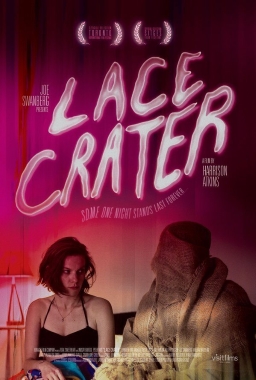 At 7:30 PM on Thursday, July 28, I was in a seat in the De Sève Theatre waiting to see a screening of an American independent horror-comedy called Lace Crater, about a woman who catches a venereal disease from a ghost. After that I’d cross the street to the Hall theatre for a showing of the Iranian horror movie Under the Shadow. I wasn’t entirely sure what to expect from either film, which from experience I knew was often the best way to come to a screening at Fantasia. I was pondering this when the lights went down and Adam Kritzer, producer of Lace Crater, was introduced to the crowd. He thanked us for coming, and urged all of us in the audience to turn to our neighbours, whether we knew them or not, and say whether we believed in ghosts. There was an aisle to my left. I glanced to my right. The man beside me shrugged. “Not particularly,” he said in French. “Same here,” I replied.