The Man Behind The Princess Bride
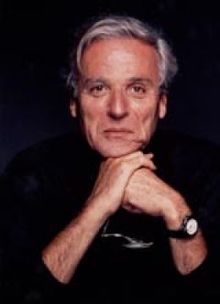 “It’s an accepted fact that all writers are crazy; even the normal ones are weird.” Wm. Goldman
Anyone who has been reading my posts over the last few years already knows that The Princess Bride (TPB) is one of my favourite – if not my favourite – movies. Family and friends quote from it all the time. “Morons!” we’ll exclaim when faced with any, or, “Murdered by pirates is good,” we mutter as we walk away from someone who should be.
And I know there will be some who disagree with me, but I think TPB is one of the few examples where the movie is actually better than the book. And why not? They were both written by the same person, one who understands clearly what he’s doing:
Here is one of the main rules of adaptation: you cannot be literally faithful to the source material.
Here’s another that critics never get: you should not be literally faithful to the source material. It is in a different form, a form that does not have the camera.
Here is the most important rule of adaptation: you must be totally faithful to the intention of the source material.
— from Which Lie Did I Tell?
Which, by the way, is the perfect answer to people who complain when movies turn out to be different from books. It’s only when screenwriters fail in that last rule that they’ve done a bad job.
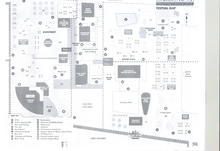 In September, Word on the Street takes place in major cities all over Canada, though not necessarily on the same day. In fact, if you live in Ontario, as I do, you could conceivably participate in both Ottawa’s and Toronto’s events.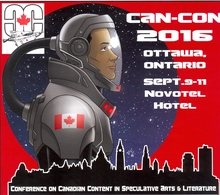
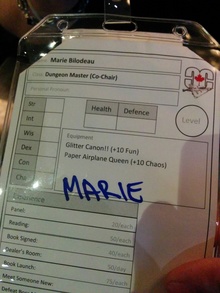 Last weekend I attended Can-Con as a Special Guest. The Guests of Honour were Eric Choi (Science), Tanya Huff (Author), Sam Morgan (Agent, JABberwocky Literary Agency), and Sheila Williams (Editor, Asimov’s Science Fiction Magazine).
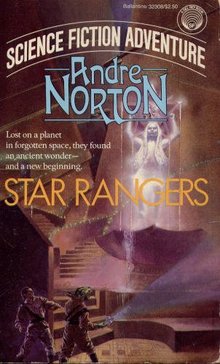 It’s been my experience that Andre Norton is extremely popular among women of my generation, those who grew up reading SF when there were few women writing, and even fewer female protagonists. When I was looking at Norton’s Witch World
 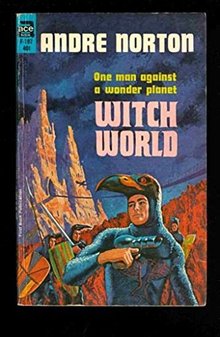 I don’t think there is any one today who doesn’t know that Andre Norton was really Alice Mary Norton, which makes her portrayal of female characters more interesting than it would be otherwise. Much of her fiction was written prior to the politicization of the feminist movement (or at least widespread public awareness of it) so it isn’t surprising that in many respects her characters reflect the traditional, male-centric, social attitudes that we would expect from that time period.
 Last time I was talking about the idea of there being a time to railroad. In other words, that there’s a time when the supporting technology, or maybe just the zeitgeist, allows for a concept or invention to finally flourish. The railroad itself is the ultimate example of this idea technologically, and you can look at
  I don’t think there’s anyone in the Fantasy and SF community that isn’t familiar with this concept (I first came across it in a Heinlein novel) but just in case: There’s a point at which all the necessary components to allow for an invention to flourish are in existence, and at that point – and not before – the invention takes off.
 I’m a long-time fan of Spider Robinson’s work, and I’ve written about his Callahan’s Bar Stories and novels
  I haven’t heard much about George C. Chesbro lately, and I don’t think it’s entirely because he died in 2008. Chesbro was one of those writers who are somehow just a little bit too extreme – in one way or another – to become widely popular. The people who like Chesbro’s stuff really like it, and the ones who don’t, are often left a little perplexed.
 Lately I’ve been looking at SF-like inventions or discoveries that turn up in crime/mystery novels, first with