Miscellaneous Musings
Reading The New York Times on-line (something I used to read about people doing in science fiction novels; I still prefer the actual paper version, though my resistance to eventually getting an e-book reader of some kind is slowly crumbling), I came across these two divergent items of interest to those who ponder the stability of our immediate universe:
 Astronomer James Elliot gets a featured obit because he discovered the rings of Uranus (okay, wipe that smirk off your face). What’s also noteworthy is that he apparently did so in a kind of jury-rigged fashion. According to the Times obituary:
In 1977, using a telescope in an airplane, Dr. Elliot led a team of Cornell University scientists to observe the planet Uranus when it passed between Earth and a star. Flying at night over a patch of the Indian Ocean where Uranus’s shadow was to be cast, he had the foresight to turn on his equipment more than a half-hour early. This allowed him to record a series of slight dimmings that provided the first evidence of Uranus’s rings…“In the current culture of giant spacecraft missions and multibillion-dollar experiments,” Dr. [Michael] Person said, “he showed that someone dedicated to science with relatively small resources could still make very exciting discoveries.”
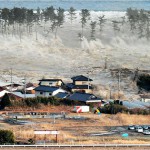 Also in the news is the tsunami and the largest earthquake in a century or more that hit Japan. Whatever our global technological progress (even while world politics continues to destabilize), we tend to forget just how fragile we are as a species even without our efforts to do ourselves in. During the Cold War, the end of the world was nuclear. Then it was terrorism and religious fanatacism. But, maybe it will end up just being good old Mother Nature. Time to go reread J.G. Ballard.
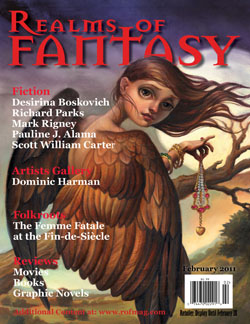 The first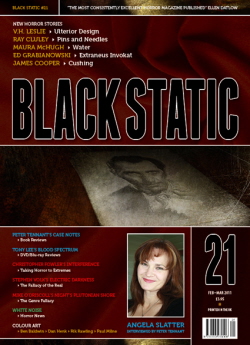

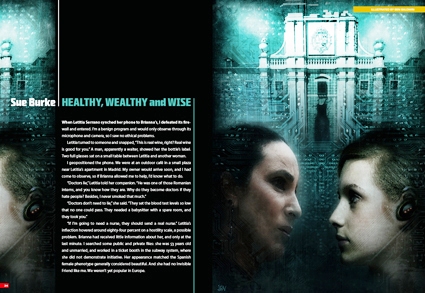
 Dhaka, the capital of Gano Projatontri Bangladesh. With a population of thirteen million the city was a madhouse. Buses and plastic Tata Kei Cars spewed thick smoke from their struggling two cylinder aluminum engines. The heat and pollution were stifling and the cacphony of car horns relentless. This place was more than enough to drive you mad. It was dirty. It was overcrowded. It was dangerous.
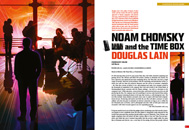 “Noam Chomsky and the Time Box,” Douglas Lain’s lead story in the January-February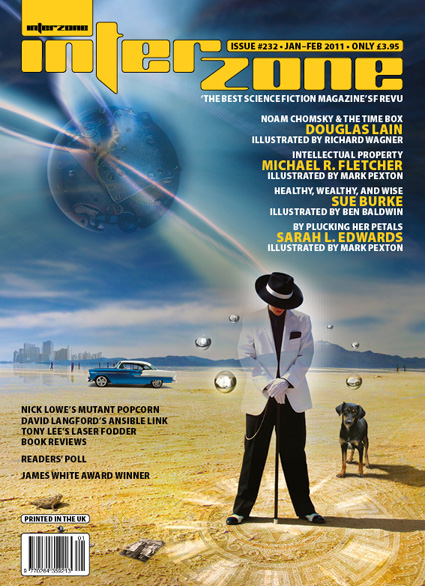
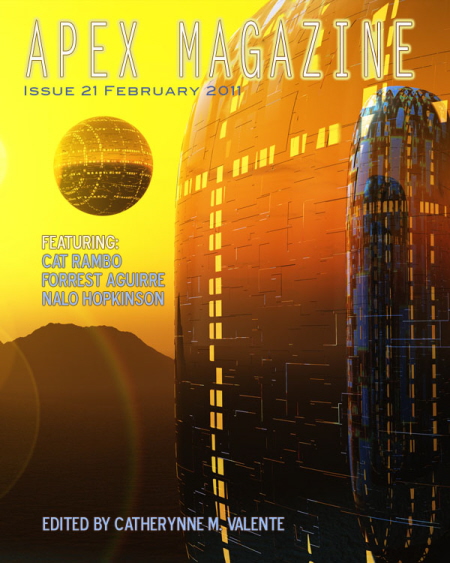
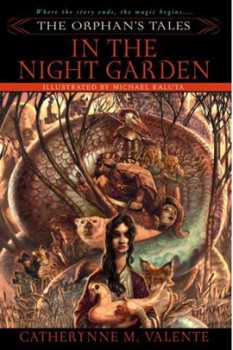 Back at around the turn of the century when I first started writing reviews for various SF/F on line publications, there was a lot of heated discussion about something called “
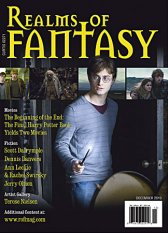 Well, with only about a week left to go in January, today I just received a copy of the December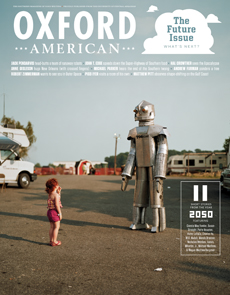
 I’ve contributed book reviews to the