New Review of Black Gate 13
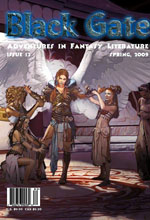 Luke Forney reviews the latest issue of Black Gate at his blog.
Black Gate kept my attention far better than any other fiction magazine… Almost all of the stories I found immediately wonderful, engaging, and very easy to lose oneself in. The quality was beyond impressive, and the extras (reviews sections) were brilliant.
Luke compares John C. Hocking to Robert E. Howard:
“The Face in the Sea” by John C. Hocking: This wonderful story tells of Viking-like people returning from a raid on their enemy’s stronghold to recover their princess, and one shaman’s all-out assault to stop them. A very well told story, reminiscent of Robert E. Howard. I’ll be looking for more by Hocking.
And was equally impressed by L. Blunt Jackson:
“Spider Friend” by L. Blunt Jackson: A brilliant fable-like tale, with an ending that I didn’t see coming, but that didn’t interrupt the wonderful style that Jackson worked throughout. One of the best “modern fables” I have read.
He also comments favorably on our non-fiction:
This issue also contained a number of comic strips, and two brilliant review sections. I have never seen a magazine have such a detailed, extensive reviews section that covered so many books. It was a wonderful surprise… The fiction reviews section was lovely, and covered far more than the large press magazines do.
He closes with a fine suggestion:
Anyone who is a fan of adventure or fantasy should immediately check out Black Gate… it contains a LOT of content (224 pages, full magazine size, not digest), good stories, interesting essays, wonderful departments, even an illustration for each story, which is a feature sadly missing in most other magazines. Grab issue 13 while you can, and keep your eyes peeled for the next issue!
You can read the complete review here.
 Long-time reader and professional writer Brent Knowles recently posted a review of Black Gate 13: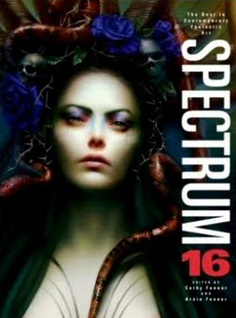
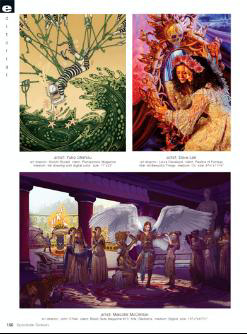 Spectrum 16, edited by Cathy and Arnie Fenner, was published this month by Underwood Books.
 In addition to eating, putting the finishing touches on BG 14, eating, writing my editorial, and eating, I’ll be stealing a few hours for leisure reading. Thanksgiving weekend usually involves at least a little travel (this year we’re celebrating in Madison, Wisconsin, three hours from our home in St. Charles, IL), so anything too long is out. I need something I can finish in short bursts, in between sequential naps in a big green recliner.
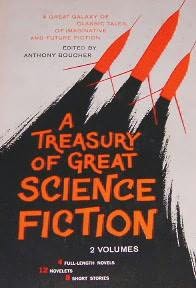 Volume One, From Poe to the Pulps, features Herman Melville, Robert W. Chambers, Edith Wharton, Robert E. Howard, H. P. Lovecraft, Clark Ashton Smith, Robert Bloch and many others. Volume Two, From the 1940s to Now, includes John Cheever, Charles Beaumont, Vladimir Nabokov, Harlan Ellison, Richard Matheson, John Crowley, Stephen King, Steven Millhauser, and over a dozen more.
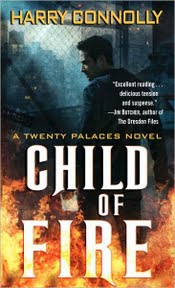 Harry James Connolly made his first fiction sale with “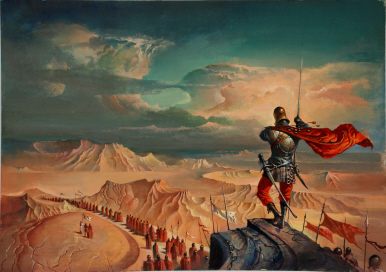
 Before he became a regular artist for Black Gate, Bernie Mireault was already something of a Renaissance man in the comics industry. He’s been a writer, artist, letterer, and highly acclaimed colorist, and worked with Matt Wagner (Grendel), Joe Matt, Mike Allred, and many others. His comics include Dr. Robot, Bug-eyed Monster, The Blair Witch Chronicles, and his masterpiece, The Jam.
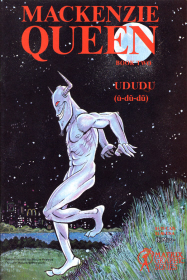 I say “first meeting that we know of” because Bernie and I were born in the exact same (and very small) place — a Canadian Air Force base in Marville, France — only a few years apart in the early 60s. Did we pass briefly as toddlers in the officer’s mess, and maybe compare our love for cartoons and comics while our fathers saluted each other over trays of french bread and beans? Probably not. But hey, man. It’s possible.
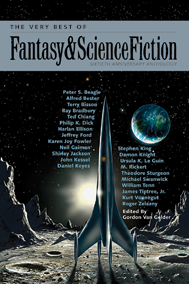 I’m a sucker for retrospective anthologies. And F&SF is one of my favorite magazines — and has been since I first discovered tattered copies in the tiny library of Rockcliffe Air Force base in Ottawa, Canada, in the late 70s. Editor Gordon van Gelder has assembled an imposing, 470-page collection spanning more than five decades, starting with Alfred Bester’s “Of Time and Third Avenue” (1951) and ending with Ted Chiang’s “The Merchant and the Alchemist’s Gate” (2007).