Browsed by
Author: John ONeill

Vintage Treasures: Witch Blood by Will Shetterly

Vintage Treasures: Witch Blood by Will Shetterly

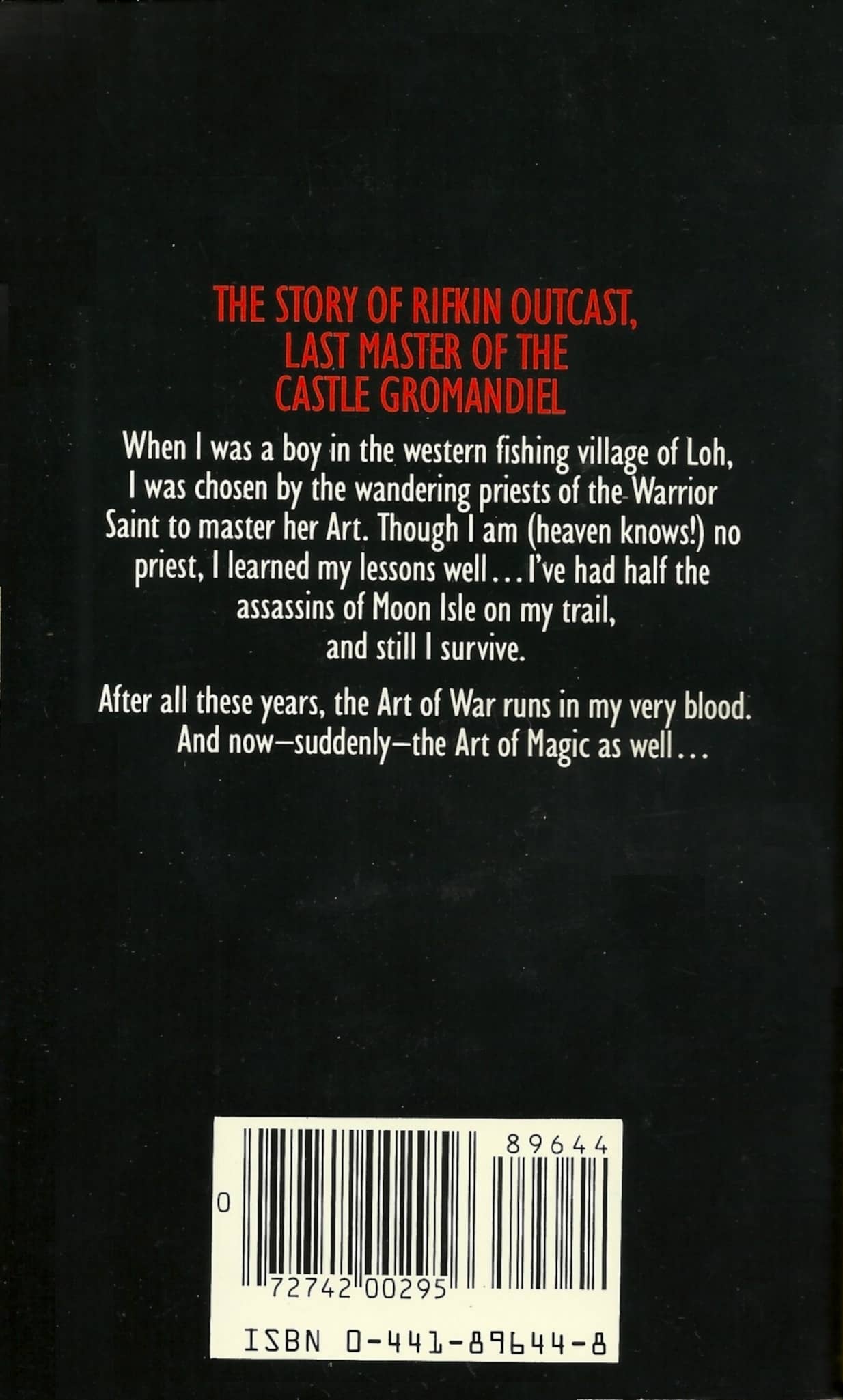
Witch Blood Will Shetterly-small Witch Blood Will Shetterly-back-small

Will Shetterly’s first novel Cats Have No Lord was published in 1985, the same year he launched his groundbreaking Liavek shared world anthology series, which he co-edited with his wife Emma Bull. Cats Have No Lord placed sixth in the annual Locus Poll for Best First Novel (losing to Tad Williams, Guy Gavriel Kay, Michael Swanwick, and Carl Sagan, but placing ahead of Geoff Ryman, Judith Tarr, Sheila Finch, and Dan Simmons — man, 1985 was a competitive year!)

Over the next few years Shetterly quickly established a solid reputation, with novels like The Tangled Lands (1989), Nevernever (1993), and especially Dogland (1997), the tale a of child growing up in a dog-themed amusement park. It was inspired by his early years at the Dog Land tourist attraction, which was owned by his parents. His novel Elsewhere (1991), part of Terri Windling’s shared universe The Borderland, won the Minnesota Book Award. He has largely given up writing since producing his last book, Midnight Girl, a self-published online novel, in 2009.

Witch Blood was his second novel; it was released as a paperback original by Ace in April 1986. It has never been reprinted, although Shetterly released a digital edition in 2012. When it was released Orson Scott Card called it “”A funny, exciting adventure story that delighted me from beginning to end.” Modern readers draw strong parallels to Steven Brust’s Vlad Taltos novels, which seems like a fair comparison. It’s not hard to find; I bought a copy last weekend at Half Price Books for $1.49. It is 197 pages, with a cover price of $2.95. The cover is by Penalva.

New Treasures: The City of Lost Fortunes by Bryan Camp

New Treasures: The City of Lost Fortunes by Bryan Camp

The City of Lost Fortunes-small The City of Lost Fortunes-back-small

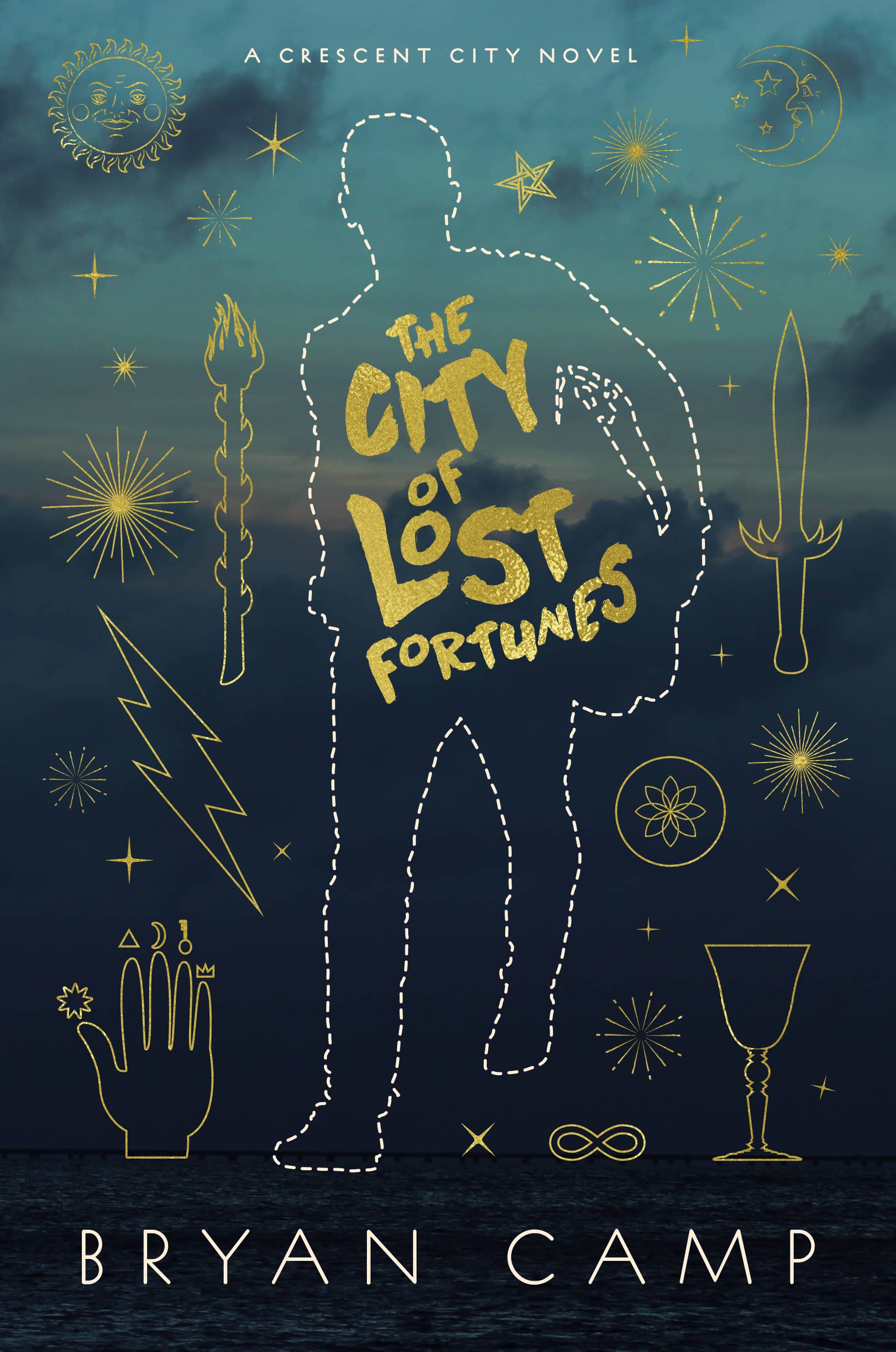
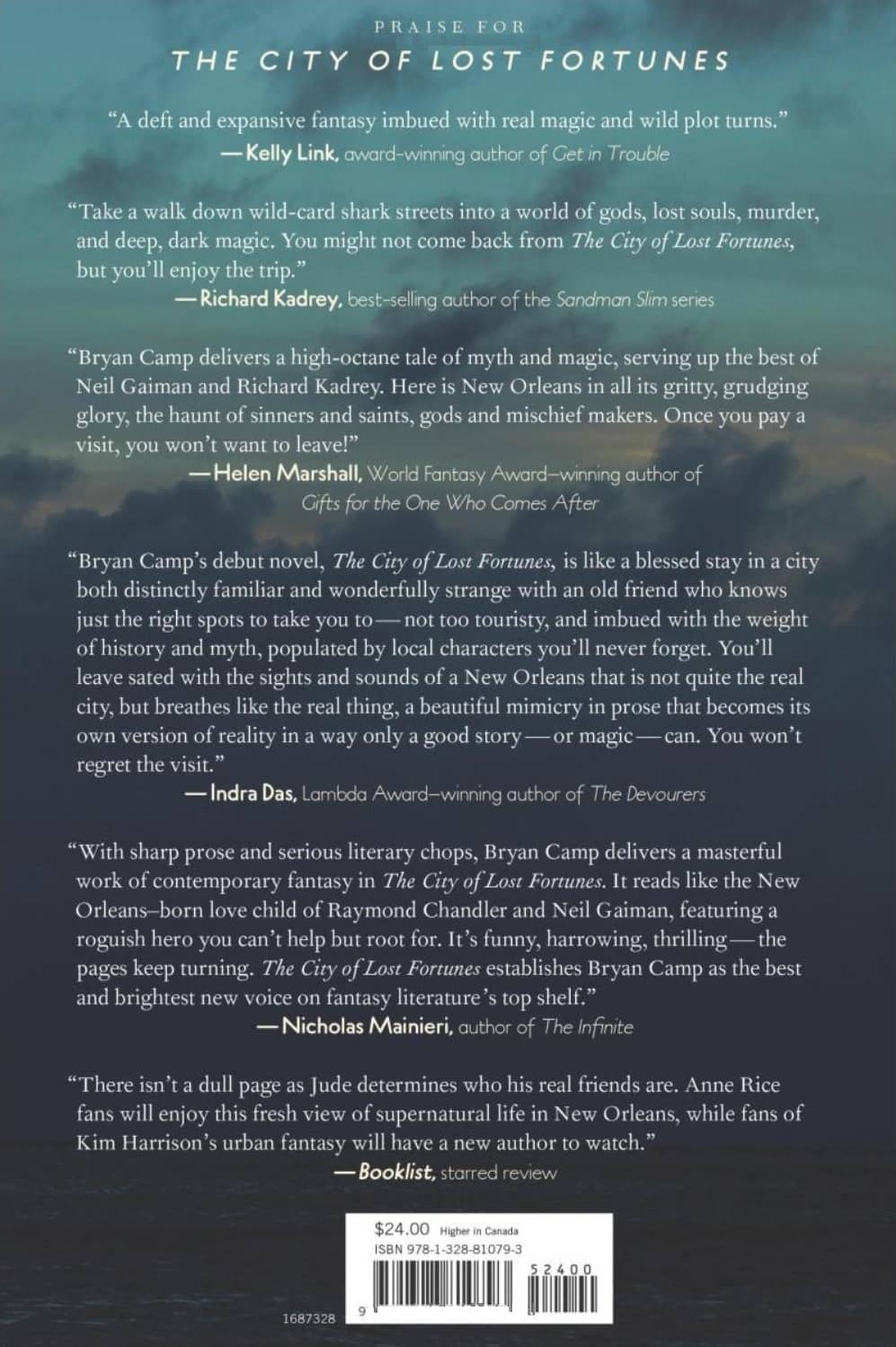
John Joseph Adams, the tireless editor of Lightspeed and Nightmare, also has his own imprint over at Houghton Mifflin Harcourt. John Joseph Adams Books has published several big names, including Carrie Vaughn, Molly Tanzer, and Hugh Howey, but John has also made his fair share of fresh-faced discoveries. One of the latter is Bryan Camp, whose debut fantasy arrives in hardcover next Tuesday. The City of Lost Fortunes is a novel of gods, games, and monsters, in which the fate of New Orleans rests in the hands of a wayward grifter with an unusual talent.

The post–Katrina New Orleans of The City of Lost Fortunes is a place haunted by its history and by the hurricane’s destruction, a place that is hoping to survive the rebuilding of its present long enough to ensure that it has a future. Street magician Jude Dubuisson is likewise burdened by his past and by the consequences of the storm, because he has a secret: the magical ability to find lost things, a gift passed down to him by the father he has never known — a father who just happens to be more than human.

Jude has been lying low since the storm, which caused so many things to be lost that it played havoc with his magic, and he is hiding from his own power, his divine former employer, and a debt owed to the Fortune god of New Orleans. But his six-year retirement ends abruptly when the Fortune god is murdered and Jude is drawn back into the world he tried so desperately to leave behind. A world full of magic, monsters, and miracles. A world where he must find out who is responsible for the Fortune god’s death, uncover the plot that threatens the city’s soul, and discover what his talent for lost things has always been trying to show him: what it means to be his father’s son.

The City of Lost Fortunes will be published by John Joseph Adams Books on April 17, 2018. It is 384 pages, priced at $24 in hardcover and $12.99 for the digital version. The cover is by Will Staehle. Read an excerpt at Bryan Camp’s website.

Are We Fans of a Dying Art Form? James Wallace Harris on Old Science Fiction Stories

Are We Fans of a Dying Art Form? James Wallace Harris on Old Science Fiction Stories

The-Best-Science-Fiction-Stories-1951-small The-Best-Science-Fiction-Stories-1951-back-small

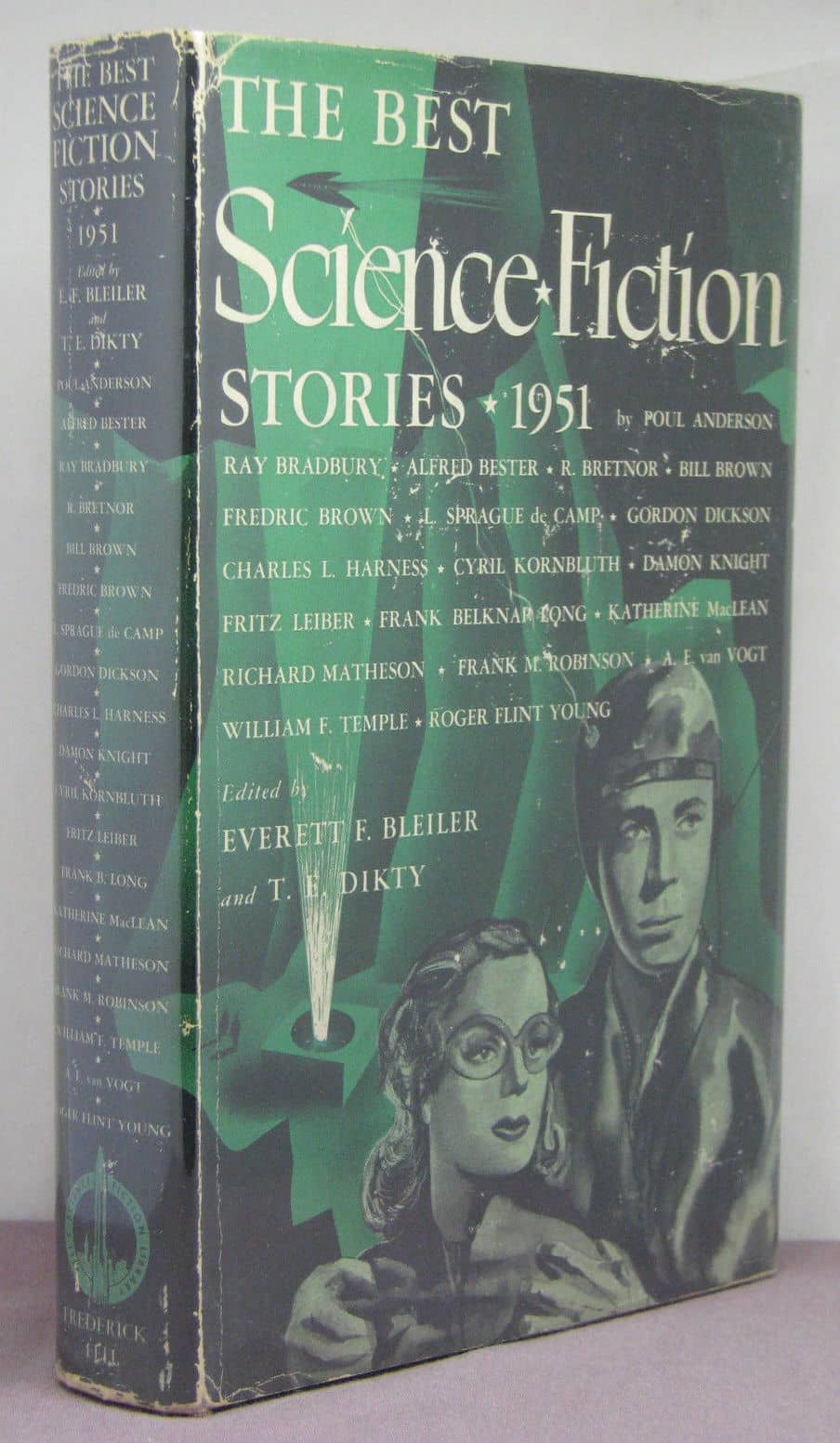
I’ve been enjoying James Wallace Harris’ blog Auxiliary Memory. Recent topics include A History of the SF Best-of-the-Year Anthology, a cover survey of the Del Rey Classic Science Fiction series and, a particular favorite of mine, his review of Isaac Asimov and Martin H. Greenberg’s The Great SF Stories 1 (1939). I think one of the reasons I enjoy his blog is that, like a few of us here at Black Gate, James particularly enjoys classic SF stories, which is kind of a speciality interest these days. Although James seems to worry more about declining readership than I do.

There are a handful of blogs that reflect a love for old science fiction short stories. That suggests we are the keepers of a very weak flame. I see many of the same names posting comments at these sites. Are we the fans of a dying art form? I don’t think science fiction is dying out, but I do think new science fiction gets most of the attention… There are more anthologies than ever collecting the best short science fiction of the year, including one from the prestigious Best American Series. And there’s plenty of places that publish new short science fiction. I believe the readership is smaller today than we I was growing up, but the science fiction short story is still going strong despite the overwhelming popularity of media science fiction.

Yes, new science fiction gets most of the attention — and that’s because it is blessed with talented newcomers producing terrifically exciting new work, like Lavie Tidhar, Linda Nagata, Sarah Pinsker, Kelly Link, Yoon Ha Lee, Charlie Jane Anders, C.S.E. Cooney, Rich Larson, Aliette de Bodard, and many others. And that’s exactly as it should be. There’s a word for a genre that focuses too much on the past: Dead. Science Fiction is not dead, it is very much alive and thriving. That’s takes nothing away from the great old SF we enjoyed decades ago — it’s still there waiting for readers of a new generation to discover. But first we have to win over that new generation of readers, and it takes modern writers to do that.

You can read the complete text of James’ rambly but entertaining post Remembering Old Science Fiction Short Stories here.

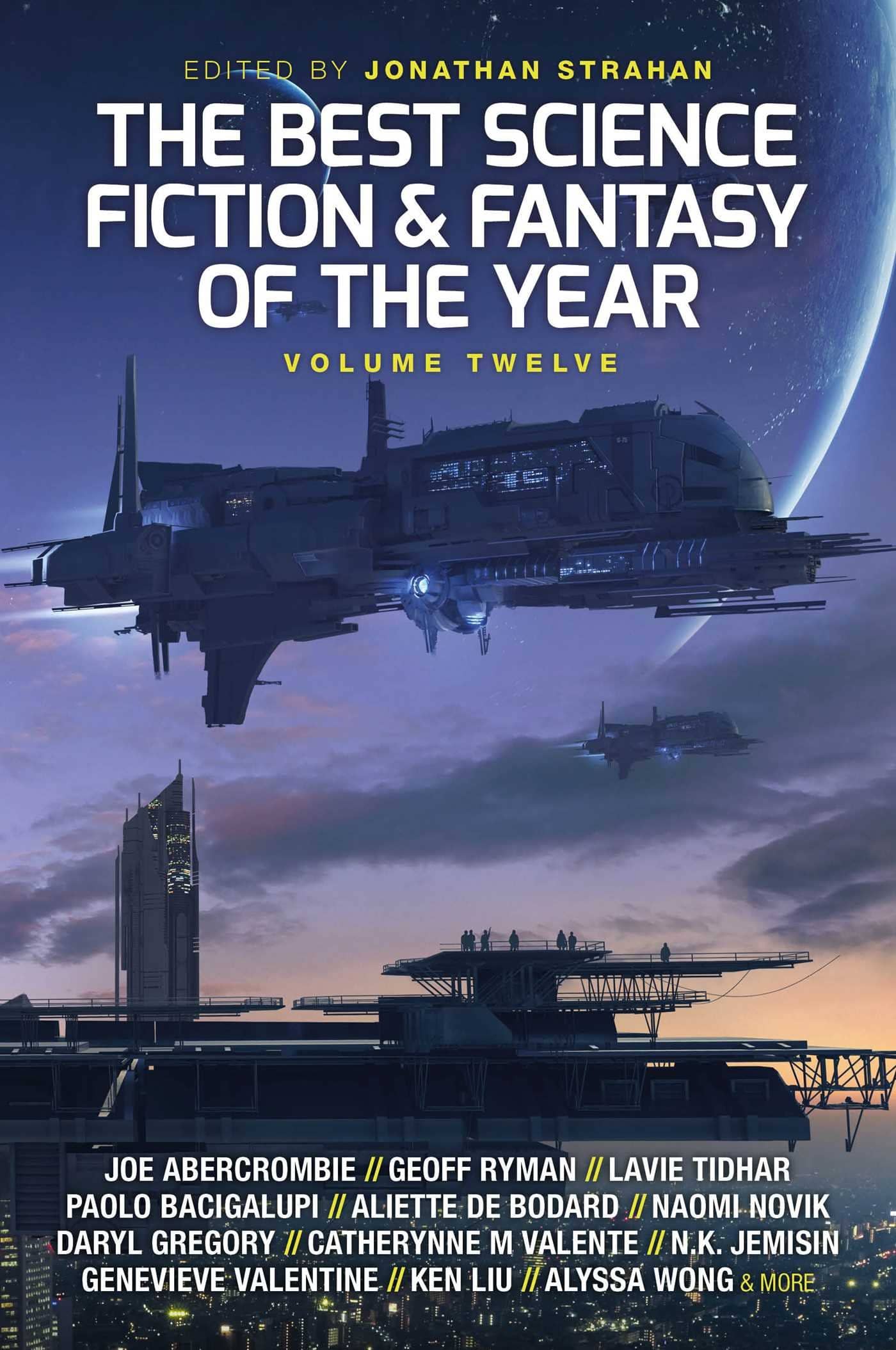
Future Treasures: The Best Science Fiction and Fantasy of the Year, Volume Twelve, edited by Jonathan Strahan

Future Treasures: The Best Science Fiction and Fantasy of the Year, Volume Twelve, edited by Jonathan Strahan

The Best Science Fiction and Fantasy of the Year Volume Twelve-smallI recently discovered the Coode Street Podcast, hosted by editor Jonathan Strahan and Chicago Tribune critic Gary K. Wolfe, and have been thoroughly enjoying it. They discuss a wide variety of topics of interest to SF and fantasy readers every week — everything from the Hugo nominations, the best debuts of the year, art in science fiction, Ursula K. Le Guin, conventions, upcoming releases, and so much more — and they’re both so articulate and knowledgeable, and so darn enthusiastic, that you can’t help coming away from each hour-long conversation with a lengthy list of brand new books you just have to check out.

I feel the same way about Jonathan Strahan’s annual Best Science Fiction of the Year. The latest volume makes it an even dozen, and each one has helped me discover a handful of delightful new authors. It’s a book I cherish every year, and this one — with stories by Samuel R. Delany, Yoon Ha Lee, Caroline M. Yoachim, Rich Larson, Indrapramit Das, Charlie Jane Anders, Linda Nagata, Theodora Goss, Greg Egan, Mary Robinette Kowal, Scott Lynch, Maureen McHugh, Alastair Reynolds, Karl Schroeder, Kai Ashante Wilson, and our very own C.S.E. Cooney — looks even more stellar than most.

It arrives in trade paperback from Solaris next week. Here’s the Table of Contents.

“The Mocking Tower,” Daniel Abraham (The Book of Swords)
“Don’t Press Charges and I Won’t Sue,” Charlie Jane Anders (Boston Review)
“Probably Still the Chosen One,” Kelly Barnhill (Lightspeed)
“My English Name,” R. S. Benedict (The Magazine of Fantasy & Science Fiction)
“Zen and the Art of Starship Maintenance,” Tobias Buckell (Cosmic Powers)
“Though She Be But Little,” C.S.E. Cooney (Uncanny)
“The Moon is Not a Battlefield,” Indrapramit Das (Infinity Wars)
“The Hermit of Houston,” Samuel R. Delany (The Magazine of Fantasy & Science Fiction)
“The Discrete Charm of the Turing Machine,” Greg Egan (Asimov’s Science Fiction)
“Crispin’s Model,” Max Gladstone (Tor.com)
“Come See the Living Dryad,” Theodora Goss (Tor.com)

Read More Read More

Military SF, Mystery, and Thriller all in one Package: The Central Corps Trilogy by Elizabeth Bonesteel

Military SF, Mystery, and Thriller all in one Package: The Central Corps Trilogy by Elizabeth Bonesteel

The-Cold-Between Bonesteel-small Remnants-of-Trust-Elizabeth-Bonesteel-small Breach of Containment-small

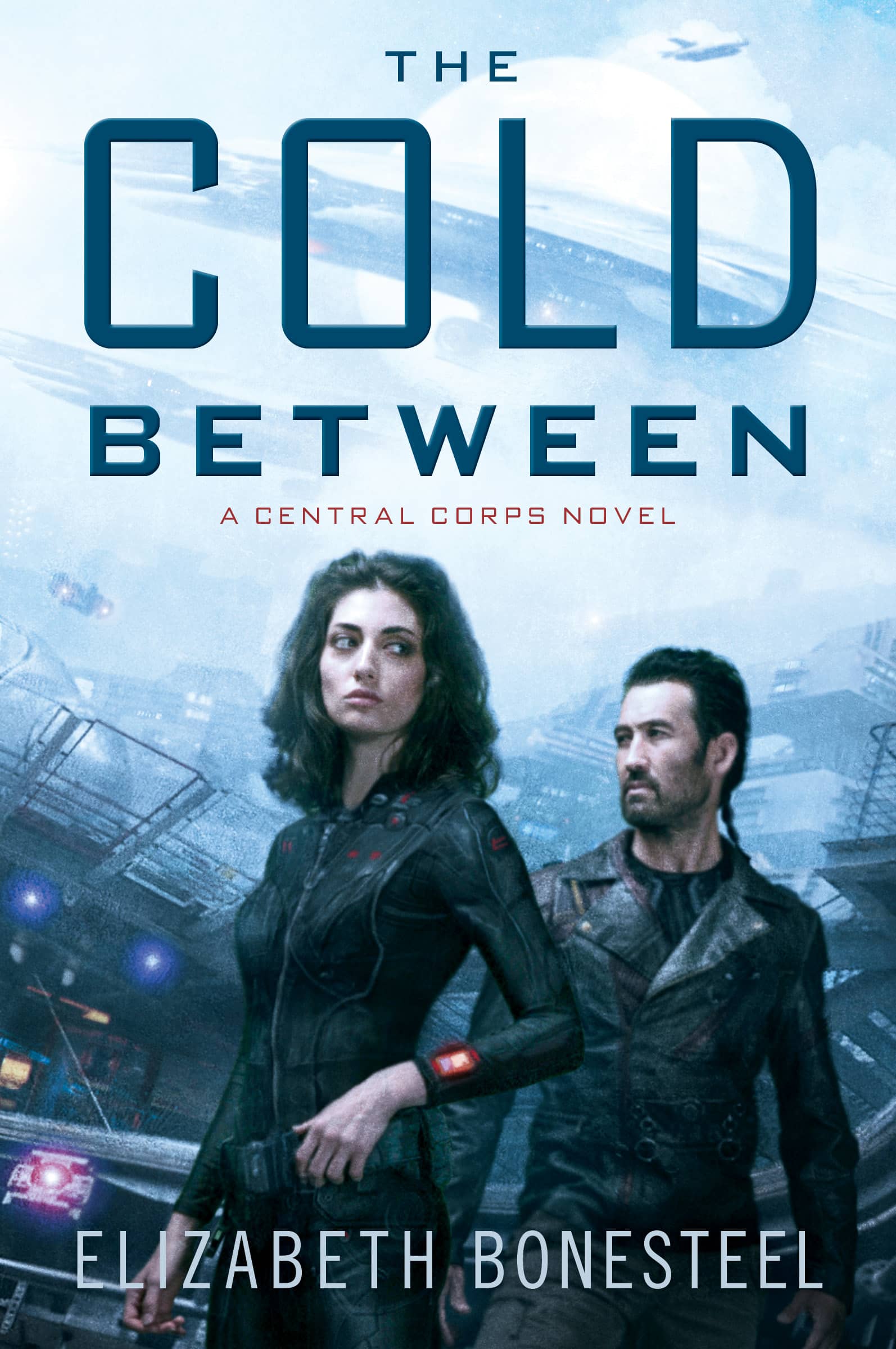
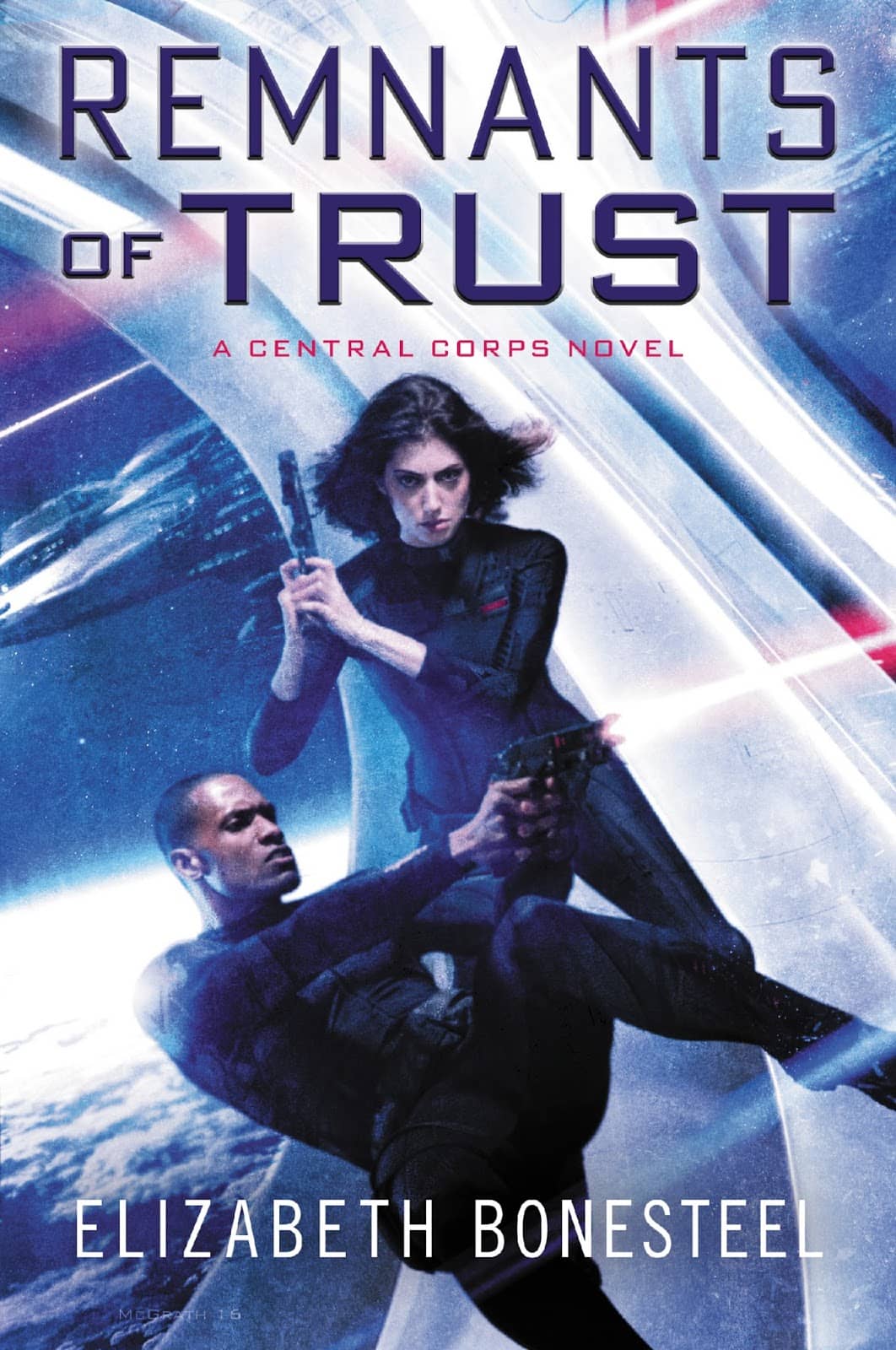
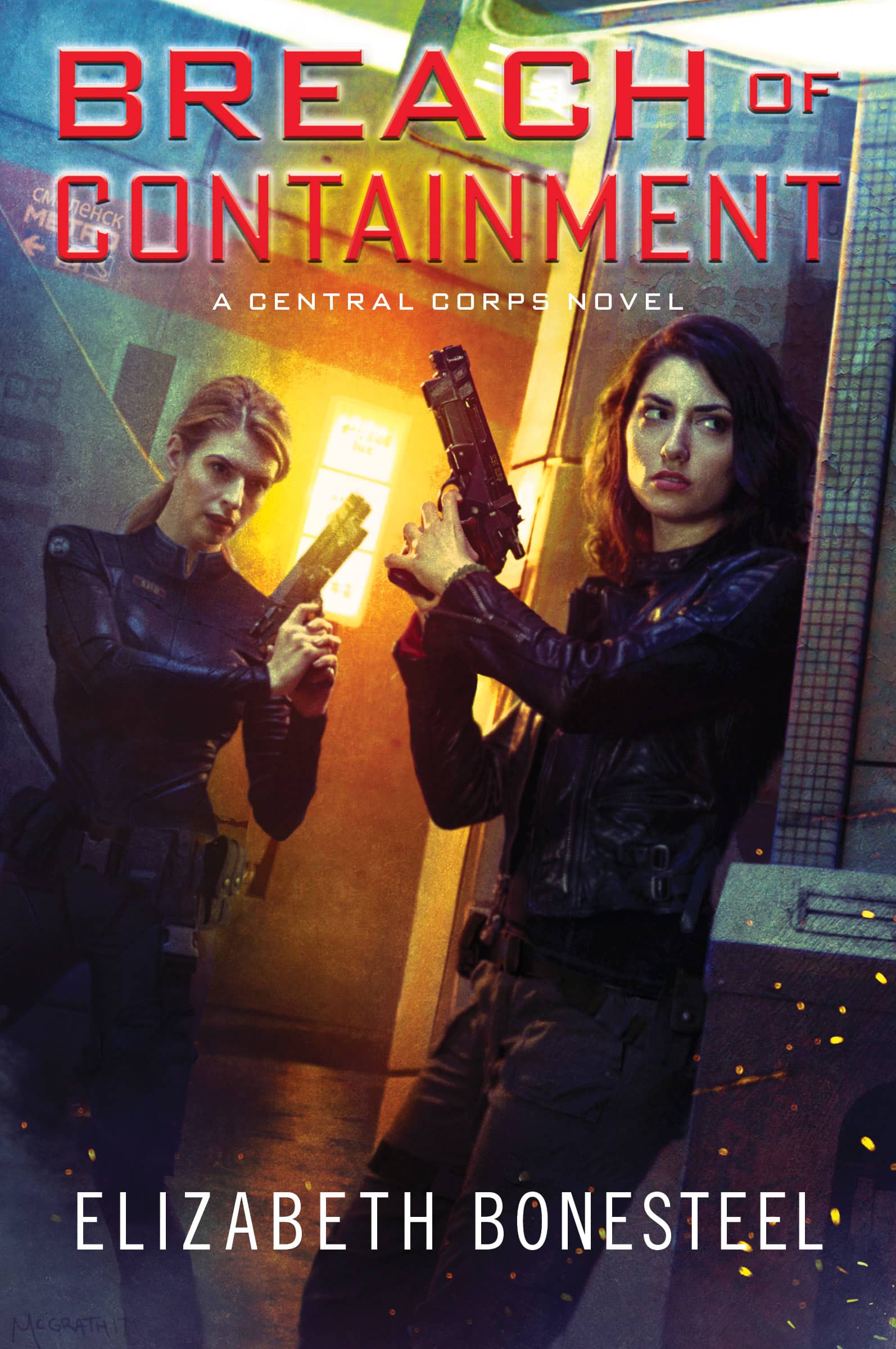
Elizabeth Bonesteel’s Central Corps trilogy began with The Cold Between in 2016, which SFF World called a “taut, space-based science fiction mystery.” John DeNardo selected the sequel, Remnants of Trust, as one of the Best Science Fiction and Fantasy Reads of November 2016, calling it “an engaging blend of military science fiction, mystery, and thriller.” The third installment, Breach of Containment, arrived last October. Man, I hope it’s not too late to jump on board. Here’s the description.

Space is full of the unknown… most of it ready to kill you.

When hostilities between factions threaten to explode into a shooting war on the moon of Yakutsk, the two major galactic military powers, Central Corps and PSI, send ships to defuse the situation. But when a strange artifact is discovered, events are set in motion that threaten the entire colonized galaxy — including former Central Corps Commander Elena Shaw.

Now an engineer on a commercial shipping vessel, Elena finds herself drawn into the conflict when she picks up the artifact on Yakutsk — and investigation of it uncovers ties to the massive, corrupt corporation Ellis Systems, whom she’s opposed before. Her safety is further compromised by her former ties to Central Corps — Elena can’t separate herself from her past life and her old ship, the CCSS Galileo.

Before Elena can pursue the artifact’s purpose further, disaster strikes: all communication with the First Sector — including Earth — is lost. The reason becomes apparent when news reaches Elena of a battle fleet, intent on destruction, rapidly approaching Earth. And with communications at sublight levels, there is no way to warn the planet in time.

Armed with crucial intel from a shadowy source and the strange artifact, Elena may be the only one who can stop the fleet, and Ellis, and save Earth. But for this mission there will be no second chances — and no return.

Breach of Containment was published by Harper Voyager on October 17, 2017. It is 576 pages, priced at $16.99 in trade paperback and $11.99 for the digital edition. The cover is by Chris McGrath. Get excerpts from all three novels at Bonesteel’s website.

Danger in Every Dark Alley: 40 Years of Adventuring in Lankhmar, Fritz Leiber’s Great Fantasy Metropolis

Danger in Every Dark Alley: 40 Years of Adventuring in Lankhmar, Fritz Leiber’s Great Fantasy Metropolis

Lankhmar Savage Worlds-small

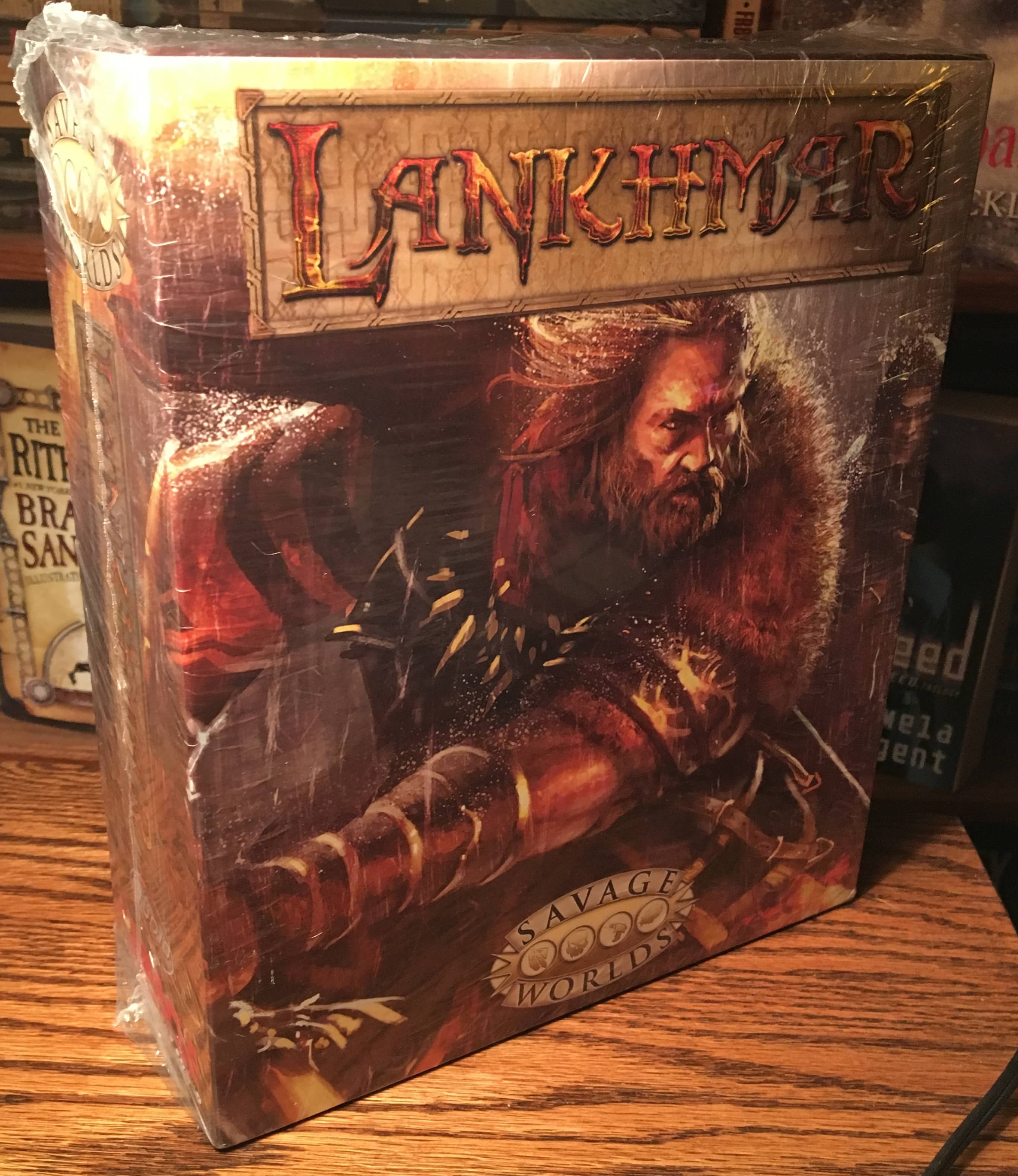
Back in October I splurged on the Lankhmar Collector’s Box Set, a massive collection of setting material for the Savage Worlds core ruleset from Pinnacle Entertainment Group. It was a $70 indulgence, but I ended up being very happy with it. Partly because it’s the size of a giant brick and looks stately and awesome there on my end table. I mean, just look at that thing.

I had to educate myself a little bit to understand what the heck I’d just purchased, though. I thought Savage Worlds was, you know, a role playing game, like Dungeons and Dragons and Dallas. Turns out it’s a lot more than that. According to the two hours of research I just did, Savage Worlds is the umbrella ruleset for all of Pinnacle’s roleplaying titles, like their supernatural pirate game 50 Fathoms and their SF setting The Last Parsec, as well as their classic game conversions, including Rifts, Deadlands, and Space 1889.

I’m not precisely sure how many settings and adaptations are out there are but, man, there’s a bunch. Here’s a partial list. Bring a snack, ’cause it’s going to take a while to get through it.

Read More Read More

Vintage Treasures: The Masters of Solitude by Marvin Kaye and Parke Godwin

Vintage Treasures: The Masters of Solitude by Marvin Kaye and Parke Godwin

The Masters of Solitude-small The Masters of Solitude-back-small

Marvin Kaye and Parke Godwin made a powerful combination in 1978. Kaye already had a growing reputation as an anthologist, with Fiends and Creatures (Popular Library, 1974) and Brother Theodore’s Chamber of Horrors (Pinnacle, 1974) under his belt; he would produce dozens more over the next 30 years, including Ghosts – A Treasury of Chilling Tales Old and New (Doubleday, 1981), Weird Tales, The Magazine That Never Dies (Doubleday, 1988), and The Fair Folk (Science Fiction Book Club, 2005). Parke Godwin was already an established novelist, with Darker Places (1973) and A Memory of Lions (1976); he would go on to win a World Fantasy Award for his 1981 novella “The Fire When It Comes,” and gained lasting recognition for his Firelord trilogy (the opening novel of which was also a World Fantasy Award nominee) and his Robin Hood novels Sherwood (1991) and Robin and the King (1993).

Their collaborative novel The Masters of Solitude was serialized in Galileo magazine in 1977/78, and published in hardcover by Doubleday in 1978. A postapocalyptic tale of two disparate cultures that are all that remains of humanity after a “great devastation,” it drew comparisons to Tolkien. It has been out of print since the 1985 Bantam paperback (above), but has a surprising 166 ratings on Goodreads, and some lively reviews.

Read More Read More

Future Treasures: The Rig by Roger Levy

Future Treasures: The Rig by Roger Levy

The Rig Roger Levy-smallRoger Levy is a British science fiction writer; his previous novels include Reckless SleepDark Heavens, and the ambitious space opera Icarus.

His upcoming The Rig, his first novel in a decade, has a fascinating premise: a lottery called AfterLife promises to randomly place people in suspended animation deep in the seas of the planet Bleak at the moment of death. Organic chips planted into their brains at birth record everything, and their lives are played back for billions of subscribers — who vote on whether or not they deserve a second chance. Everyone can be a judge, and anyone can be judged… or resurrected. Who needs God when you have social media?

On a desert planet, two boys meet, sparking a friendship that will change human society forever.

On the windswept world of Bleak, a string of murders lead a writer to a story with unbelievable ramifications.

One man survives the vicious attacks, but is left with a morbid fascination with death; the perfect candidate for the perilous job of working on a rig.

Welcome to the System. Here the concept of a god has been abandoned, and a new faith pervades: AfterLife, a social media platform that allows subscribers a chance at resurrection, based on the votes of other users.

So many Lives, forever interlinked, and one structure at the center of it all: the rig.

Adam Roberts calls The Rig “a tour de force: a darkly brilliant epic of life, death and huge drilling platforms.”

The Rig will be published by Titan Books on May 8, 2018. It is 464 pages, priced at $14.95 in trade paperback and $8.99 for the digital edition. The great cover was designed by Julia Lloyd.

New Treasures: The Hollow Tree by James Brogden

New Treasures: The Hollow Tree by James Brogden

The Hollow Tree-smallJames Brogden’s Hekla’s Children was one of the breakout horror novels of 2017. Tim Lebbon called it “Brilliant… full of great twists, beautifully drawn characters, exceptional writing, and some really startling ideas,” and Steven Savile said “There’s some dark, sinister magic going on in these pages. Brogdan’s… one of the most compelling new voices out there.” Here’s Mark Morris:

Hekla’s Children marks the emergence on to a vibrant horror scene of an exciting new talent. James Brogden offers us a compulsive and unpredictable page-turner in which the ancient and modern world clash with devastating effect. Engaging characters, mind-bending concepts and enthralling set pieces propel the reader through a story in which the stakes are high and nothing can be taken for granted. Terrific stuff!

His new novel The Hollow Tree is something very different, the tale of a woman pulled into our world from…. somewhere else.

After her hand is amputated following a tragic accident, Rachel Cooper suffers vivid nightmares of a woman imprisoned in the trunk of a hollow tree, screaming for help. When she begins to experience phantom sensations of leaves and earth with her missing limb, Rachel is terrified she is going mad… but then another hand takes hers, and the trapped woman is pulled into our world.

This woman has no idea who she is, but Rachel can’t help but think of the mystery of Oak Mary, a female corpse found in a hollow tree, and who was never identified. Three urban legends have grown up around the case; was Mary a Nazi spy, a prostitute or a gypsy witch? Rachel is desperate to learn the truth, but darker forces are at work. For a rule has been broken, and Mary is in a world where she doesn’t belong…

The Hollow Tree was published by Titan Books on March 13, 2018. It is 483 pages, priced at $14.95 in trade paperback and $8.99 for the digital edition. Read an excerpt at Dread Central.

Modular: Walk the Streets of Ancient Rome in Mythic Rome by Pete Nash

Modular: Walk the Streets of Ancient Rome in Mythic Rome by Pete Nash

Mythic Rome-small Mythic Rome-back-small

Almost exactly a year ago Chaosium announced a brand new edition of RuneQuest, one of the oldest and most acclaimed RPGs on the planet. While that was great news for many gamers, it did leave the folks at The Design Mechanism in the lurch — their lovingly crafted RuneQuest sixth edition, written by Pete Nash and Lawrence Whitaker, was the best version of the game in decades, and now they’d lost the license.

The Design Mechanism folks had also supported their version with some of the most exciting releases we’d seen in years, including the Book of Quests, Shores of Korantia, and especially the brilliant Monster Island. While I was curious to see what Chaosium would do with the property, I was chiefly concerned with how the announcement would impact them.

Of course, I needn’t have worried. You can’t keep an outfit as creative as The Design Mechanism down for long. Without missing a beat they released their own full-fledged RPG system, Mythras, which picked up and elaborated on the work they’d done with sixth edition RuneQuest, while simultaneously expanding the rules to accommodate more diverse game settings, from Sword & Sorcery to Science Fiction and Urban Fantasy Horror. They also revamped all of their existing back catalog — including the irreplaceable Monster Island — to bring it up to date with the new system. And best of all, they’ve continued to release top notch new products, like Pete Nash’s fabulous Mythic Rome.

Read More Read More