Browsed by
Author: Bob Byrne

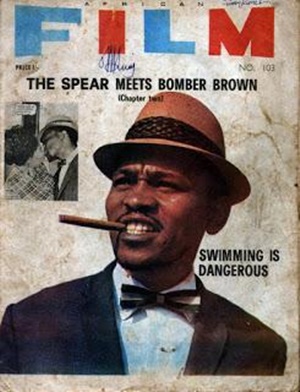
A (Black) Gat in the Hand: Paul Bishop on Lance Spearman – The Black James Bond

A (Black) Gat in the Hand: Paul Bishop on Lance Spearman – The Black James Bond

Spear_HeadShotEDITED“You’re the second guy I’ve met within hours who seems to think a gat in the hand means a world by the tail.” – Phillip Marlowe in Raymond Chandler’s The Big Sleep

(Gat — Prohibition Era term for a gun. Shortened version of Gatling Gun)

Paul Bishop wrote the very first entry for our Discovering Robert E. Howard series (covering REH’s fight stories). I knew he’d come up with another great piece for the return of A (Black) Gat in the Hand – and boy, did he! I had never even heard of the Lance Spearman books, but what a cool story! Pulp magazines fell by the way-side for pocket paperbacks and comic books. Topics related to the latter two groups will be sprinkled in to this series. And today, Paul is going to tell us about a third entry: the popular ‘Look Books’ Read on!

‘Lance Spearman, has a charming way with girls and a deadly way with thugs’

Look-books—a term coined for magazines featuring a mash up of action photographs accompanied by comic strip style captions (also known as photo books)—are relatively unknown in America. However, in many other parts of the world, this comic book hybrid of captioned action photographs had a rabid following from the ‘60s to the late ‘80s. In Africa, look-books served as surrogates for films—as a means to tell film-like stories— at a time when commercial African cinema was not yet invented.

African Film Magazine (AFM) was the most popular of the African look-books. Alternately called Spear Magazine, every bi-weekly issue had eager fans clamoring for it at their local newsstand. Created by James Richard Abe Bailey, the character of Lance Spearman shattered racist stereotypes of the uncivilized, uneducated, spear-carrying Africans as portrayed in most Western comic books of the era. Each issue of AFM contained thirty-one pages of action filled black and white captioned photographs edited in urbane cinematic style.

Read More Read More

The Public Life of Sherlock Holmes: Holmes on the Range

The Public Life of Sherlock Holmes: Holmes on the Range

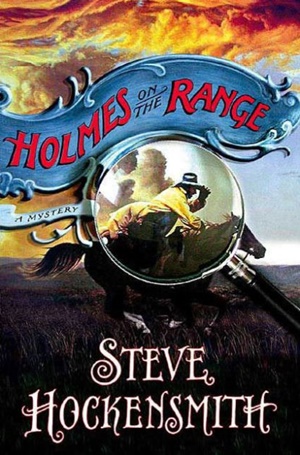
Hockensmith_HoRCoverEDITEDThat’s right: The Public Life of Sherlock Holmes is back! Well, for one week, anyways. A (Black) Gat in the Hand will resume next Monday. There were quite a few topics I never got around to covering during TPLoSH’ 156-ish week run. (Wow!) And one was Steve Hockensmith’s Holmes on the Range series. I recently got around to finishing the short story collection that I bought for my Nook back in 2011 (I’ve got a bit of a reading backlog, ok?!), and I decided I needed to finally write a post about it, before it got buried in the To Write list again. So, here we go!

There are a lot of ways to go about writing a Sherlock Holmes story. Some folks attempt to very carefully emulate Sir Arthur Conan Doyle’s own style, and turn out a tale that feels as if it might have been done by the creator of the great detective himself. Of course, success varies greatly. Hugh Ashton and Denis O. Smith are the best I’ve found in this regard. You can find stories ranging from pretty good to not suitable for (digital) toilet paper. I’ve had three of my own stories published with ‘meh’ results.

Some folks write whatever the heck they want, often with the name of Holmes being the only similarity to the famed detective. It is possible to find good Holmes stories that sound nothing like Dr. Watson’s narrative style, of course. And Holmes has been placed in different eras, and even worlds.

There have been Holmes parodies around for over a hundred years. I’ve written a couple myself, and they were fun!

There are Holmes-like successors out there, of whom August Derleth’s Solar Pons is the best. Yes, I’m aware that’s a subjective judgement, but it’s mine, and I’m the one writing this essay, so it stands. I’ve written about Pons more than once (here’s a good overview), and even contributed introductions and pastiches to anthologies.

But today I’m going to talk about one of Sherlock Holmes’ contemporaries; albeit, quite different and far away. Steve Hockensmith had been writing short stories for Ellery Queen’s Mystery Magazine Christmas issue, and wanted to sell more to the venerable magazine. EQMM does an annual Sherlock Holmes issue, so he figured that was the way to go. But he wanted to write more than just another Holmes story.

Read More Read More

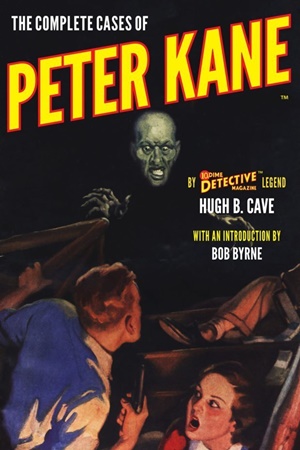
A (Black) Gat in the Hand: Hugh B. Cave’s Peter Kane

A (Black) Gat in the Hand: Hugh B. Cave’s Peter Kane

Cave_KaneCoverEDITED“You’re the second guy I’ve met within hours who seems to think a gat in the hand means a world by the tail.” – Phillip Marlowe in Raymond Chandler’s The Big Sleep

(Gat — Prohibition Era term for a gun. Shortened version of Gatling Gun)

Matt Moring of Steeger Books (and Altus Press, and Black Mask, and…) allowed me to write the introduction to Hugh B. Cave’s The Complete Cases of Peter Kane. Matt has kindly let me reproduce that intro as an entry here for A (Black) Gat in the Hand.

Hugh B. Cave was the last of the great pulpsters. From hundreds of short stories in the pulp magazines of the thirties, to his final novel in 2004, Cave wrote over a thousand shorts and over three dozen novels. He was also a war reporter and later even owned and managed a coffee plantation in Jamaica.

While H.P. Lovecraft, Clark Ashton Smith, August Derleth and Robert E. Howard are better remembered for weird menace/horror stories, Cave is worthy of standing alongside them. But early in his career, Cave also wrote extensively in the mystery field.

He was one of the few to write for the last three (named) editors of the king of mystery pulps, Black Mask: the legendary Joseph ‘Cap’ Shaw, Fanny Ellsworth and Kenneth S. White.

Black Mask’s major competition came in the form of Dime Detective Magazine, which touted itself as “twice as good – for half the price” (Black Mask cost 20 cents at the time; though the price would shortly drop to 15 cents, in part due to Dime Detective’s success at the cheaper cost).

Editor Kenneth White (the same mentioned above) was instructed to lure as many writers from Black Mask as he could, paying an extra penny a word as enticement. And with a going rate of one to two cents for pulp writers (Black Mask’s three cents a word was indicative of its standing and quality in the field), the four cent rate made a significant difference to writers. As the prolific Erle Stanley Gardner supposedly replied to observations that he always seemed to use his hero’s last bullet to knock off the story’s antagonist:

“At three cents a word, every time I say ‘Bang’ in the story I get three cents. If you think I’m going to finish the gun battle while my hero still has fifteen cents worth of unexploded ammunition in his gun, you’re nuts.”

Writers were forbidden from doing novel serializations (The Maltese Falcon was first a serial) and were also instructed to create their own characters, which could not appear elsewhere, for the magazine. The onslaught was successful, with many of the era’s most popular writers switching to Dime Detective. Carroll John Daly (who brought the iconic Race Williams with him), Erle Stanley Gardner, Frederick Nebel and Norbert Davis (whose humorous stories were frequently rejected by Shaw but who flourished at his new home) were among those lured to Dime Detective.

Read More Read More

A (Black) Gat in the Hand – II: Will Murray on Doc Savage

A (Black) Gat in the Hand – II: Will Murray on Doc Savage

Savage_Magazine1EDITED“You’re the second guy I’ve met within hours who seems to think a gat in the hand means a world by the tail.” – Phillip Marlowe in Raymond Chandler’s The Big Sleep

(Gat — Prohibition Era term for a gun. Shortened version of Gatling Gun)

Back in June, I posted that A (Black) Gat in the Hand was returning this summer. Last year, from May 14th through December 31st, every Monday morning featured a new hardboiled/pulp-related post – mostly by me, but with several friends who wrote some great stuff. I love hardboiled/PI stories and I’m as proud of that series as I am of the two Robert E. Howard ones I’ve helped coordinate here at Black Gate.

So, I called on some more friends this year, and I sought out some wider-ranging topics – the pulp magazines were FAR more than just mystery and detective-based. The Adventure Pulps were the dominant ones for years, with exciting tales of derring do and discovery. Even today, Doc Savage remains the best-known name among adventure heroes. And Will Murray, who is currently writing authorized Doc Savage novels (plus a LOT more), kicks off our series with a look at the Man of Bronze.

DOC FRANKENSTEIN

Doc Savage was not created so much as he was assembled in much the way Victor Frankenstein stitched together his infamous monster from unconnected charnel parts.

The year was 1932. At the Street & Smith publishing company, they had a surprise runaway success in a magazine called The Shadow. Inspired by a creepy radio voice used to promote their Detective Story Magazine, the mockingly laughing Shadow captured America’s imagination in that dark Depression year. The magazine kept selling out. S&S pushed author Walter B. Gibson into producing two novels a month so they could release the pulp periodical every other week. The Shadow Magazine kept selling.

Read More Read More

Going Postal with Terry Pratchett (and David Suchet)

Going Postal with Terry Pratchett (and David Suchet)

GoingPostal_PromoEDITEDI think that the late Terry Pratchett was an elite satirist. He used humor in a fantasy world as the vehicle, which probably causes many to dismiss how good he was at writing satire. I’m a huge fan of the Discworld books, and I’ve written a post on the City Watch, and one on Troll Bridge, a short story featuring Cohen the Barbarian. I think an overview of the Discworld series would be a worthy post here someday.

Moist Von Lipwig is the protagonist of three Discworld novels: Going Postal, Making Money, and Raising Steam. In his first appearance (Going Postal), Von Lipwig is a con man who is finally captured and hung. Actually, he was only hung to within half an inch of his life. Lord Vetinari, the Lord Patrician of Discworld’s biggest city, Ankh-Morpork, I think that Vetinari is one of the best fictional rulers ever created.

Vetinari wants to reopen the city’s Post Office; an establishment that had essentially collapsed under its own weight – and greed. He gives Lipwig the choice of walking out a door (which the nearly dead man discovers opens onto an almost bottomless pit) or reviving the post office. Lipwig, who figures he can con his way out of things, reluctantly takes the job. There are, of course, many hurdles, including a golem named Pump 13 who ensures that he is not going to run away.

The Clacks are network of semaphore towers, that is Discworld’s pre-eminent communications network, with some internet overtones. The post office is brought back to compete with the unreliable, monopolized Clacks.

That’s the groundwork, and from here on in I’ll discuss the miniseries, which does differ from the book a fair amount, though it’s still faithful to Pratchett’s work. The Clacks is run by Reacher Gilt, played deliciously by David Suchet, the personification of Agatha Christie’s fat Belgian detective, Hercule Poirot (who you read about HERE, of course…). With long hair, an eyepatch, and evil to the core of his larcenous heart, Suchet gets to have fun with the character. The character is a bit more serious in the book, but Suchet’s portrayal works for the movie.

Read More Read More

All Aboard! Building the Great Railroads with Railway Empire

All Aboard! Building the Great Railroads with Railway Empire

Click for full-size image

While I prefer fantasy games, and sometimes, shooters, I’m also a fan of strategy and simulations (sims). As is the case for many folks, SimCity was one of the first I really dove into. Now, you might have read my post on a show I really, really, liked: Hell on Wheels. It was a hard boiled, fictional take on the building of the Trans-Continental RailRoad. You should go read it now, if you haven’t already. I said, NOW! ?

A game that took up a lot of my time, when I wasn’t swinging a sword and hunting down dragons, was Railroad Tycoon, developed by the legendary Sid Meier. It’s been a while now, and I can’t recall if it was Tycoon 1, or it’s follow-up, Railroad Tycoon 2, which I sunk most of my time into. But regardless, I thoroughly enjoyed laying out routes and successfully completing scenarios. Even in open-ended RPGs, I’m very much a ‘check the box’ kind of player.

I didn’t play Railroad Tycoon 3, so I was done with railroad sims for over a decade. Then, a few months ago, I discovered Railway Empire, which came out in early 2018. And I found the love I had for railroad sims, rekindled. It’s from Kalypso, the folks behind the enjoyable and successful Tropico series. I played a couple of the earlier versions of that franchise, and I really liked being the dictator of a banana republic.

(I REALLY suggest you click on the images to see the details in this post. It helps sell the game)

The game is set in America, between 1830 and 1930, with a couple different play modes. The Campaign Mode has required goals to accomplish by specific dates, with additional optional goals. If you fail to accomplish any mandatory goals, you fail. Succeed, and you can move on to the next Campaign scenario. They do not build on each other. The Campaign itself is not interconnected. You ‘start over’ for each one. Which is fine, I guess. You jump back and forth in time. A connected campaign isn’t as important in a railroad sim, as it is in an RPG.

The Free Mode is more open world, with goals to accomplish by certain dates, but you don’t fail the entire thing if you miss one (or all!) of them. You can decide what order to tackle them in. Or, you can ignore them all together and just play. You still use money to buy resources. In Sandbox Mode, there’s no money and no restrictions. You just play however you want, however long you want to.

The map is divided into regions in which the Campaign scenarios take place. For example, in the third or fourth one, you start out in the South near the end of the Civil War. And the first scenario (which is the tutorial) takes you across the Great Plains. Downloadable content has added France, Germany, Great Britain and Ireland, Crossing the Andes, Mexico, and the Great Lakes.

Read More Read More

What I’ve Been Reading Lately: July 2019

What I’ve Been Reading Lately: July 2019

Cussler_DevilsGATEEditedSo, Hither Came Conan wrapped up last week. I mean, it’s really done this time. And A (Black) Gat in the Hand starts up next month, so I’ve got a couple weeks to fill with some meanderings. More aimless than my normal meanderings.

I’m wrapping up the most brutal month-long period of my work year, and I’ve been lining up hernia surgery in a couple weeks. So, I’ve been reading (and listening to audiobooks when I can) a ton for stress relief. I figure I’d talk about some of that reading for today’s column.

CLIVE CUSSLER

I’ve been reading Cussler for decades – from way back before he pieced off the writing of all his books. I used to grab each Dirk Pitt book when it came out. With the possible exception of Robert Ludlum, no one has ever been a ‘stay up late, page turning’ author for me, more than Cussler has.

Cussler’s adventure tales frequently involve water and sea exploits. Two of his heroes, Dirk Pitt and Kurt Austin, work for NUMA – the National Underwater Marine Agency. It’s a fantasy organization for Cussler, with unlimited funds and governmental support, to reclaim treasure, stop terrorists, Bond-like villains – anything. And The Oregon Files are about a fantasy crew on a super high-tech ship that does similar world-shaking missions for the CIA. Cussler books are exciting and fun.

My love of the Pitt books waned quickly with the introduction of his kids, Dirk (really – the SAME name?) and Summer. The shark was jumped in Valhalla Rising. I didn’t care for Trojan Odyssey, and when Cussler’s own son, Dirk became co-author, on Black Wind, I gave up on the series. There is far too much to read – including better books from the Cussler world, to read a ‘meh’ series. I have read 18 of the 25 Pitt books, and just re-read The Mediterranean Caper, while listening to the unabridged Black Wind. I have no desire to move forward on the seven books I haven’t read yet. I’m much more likely to re-read something.

Read More Read More

Hither Came Conan – The (Almost) Final Post

Hither Came Conan – The (Almost) Final Post

HIther_RoguesVallejoEDITEDEDITOR (ME, BOB)  SCREW UP – Our own Gabe Dybing brought to my attention that I forgot to run his post. He is correct! Entirely an oversight on my part. It will run next Monday morning, and I’ll update this ‘final’ listing afterwards. My fault. Sorry about that.

And so, Hither Came Conan comes to an end. Every Monday morning, from January 7th through today, July 14th, Black Gate brought you story insights from some of the most knowledgeable Robert E.  Howard writers around. And me. We covered all twenty-one completed Conan tales written by Howard: and even tossed in “Wolves Beyond the Border” for good measure!

In case you forgot, each story was randomly assigned to one essayist.  The most common comment I heard was some variation of “Thank goodness I didn’t get “Vale of Lost Women.” Unfortunately for Dave Hardy, he didn’t get to say that…

But while it’s natural that some stories are better than others, what I think this series showed, is that even a ‘bad’ story, contained some worthwhile elements. Whether it was a character, or an exciting scene, or some of his excellent prose, there’s always something worth reading in a Howard story. Or in this case, a Conan tale. Because, while he did write some stories that weren’t particularly good (“The Mirrors of Tuzun Thune” almost makes my eyes bleed) Robert E. Howard was an excellent writer.

I am a fan of William Bernhardt’s The Red Sneaker Writers Book Series. Bernhardt, author of the excellent Ben Kincaid legal thriller series, has written some terrific books to help writers. And one of them is Thinking Theme. Several writers mentioned Howard’s frequent depiction of the conflict between barbarism and civilization. That theme is a powerful engine for the Conan series. Decaying civilizations, and honor and justice, were also themes Howard used Conan to comment on. “Beyond the Black River,” “The Scarlet Citadel,” “Rogues in the House”: Howard’s strong belief in theme formed foundations for his tales.

Read More Read More

Hither Came Conan: Patrice Louinet on “Queen of the Black Coast”

Hither Came Conan: Patrice Louinet on “Queen of the Black Coast”

Hither_QueenWTCoverEDITEDRobert E. Howard wrote twenty-one tales of Conan, the mighty-thewed Cimmerian. And with today’s entry from Patrice Louinet, Hither Came Conan has looked at all of them: plus, we tossed in “Wolves Beyond the Border” as a bonus! We’ll wrap things up with a summary post. But read on as we close out our examination of the Conan Canon with  story that is generally considered to be in the top two or three – when it’s not ranked number one.

Robert E. Howard’s best Conan tale? Well, it’s a toss between “Beyond the Black River” and “Red Nails,” with a definite leaning for the latter. No way I can say otherwise: I have repeated this over and over, and it’s in print in many places.

And here I am today having to explain why “Queen of the Black Coast” is the best of the Conan tales. Had I been allotted “Vale of the Lost Women,” you would have known I was lying to you, but “Queen”? Luckily for me, “Queen of the Black Coast” is obviously one of the best Conan tales (general consensus), and it also happens to be one of my personal favorites. It contains some very memorable scenes – Conan and Bêlit’s discussion of the afterlife and the gods, most noteworthily – and it addresses in a powerful manner Howard’s theme of the cycle of civilizations:

Conan’s flight from the city to live a barbaric life of piracy only to sail right into the poisonous river that leads to the heart of darkness and the last degenerate survivor of a once-powerful civilization. Powerful stuff in a story that is replete with exquisite – if dark – imagery, and a tragic ending that no one can ever forget. So yes, easily one of the best Conan stories. But not “the best.”

I have been mulling this problem for a while now, and of course, I had the answer all along: “Queen of the Black Coast” is the best Conan tale to read if you have never read any before. In other words, it is the perfect story to discover the character, the Hyborian setting, and of course Howard’s talent.

One of the numerous problems that have plagued the perception of the Cimmerian by the general public is this idea that the tales represent as many steps in Conan’s so-called “biography,” though nothing in the series supports that notion. So, how do you understand a character and his motivations if you have no real biographical background? Well, think James Bond or Dirty Harry and read on.

Read More Read More

Hither Came Conan: Deuce Richardson on “Black Colossus”

Hither Came Conan: Deuce Richardson on “Black Colossus”

Hither_BlackRedPicEDITEDIt’s our second-to-last story essay here at Hither Came Conan. Deuce Richardson, who I’ve talked a lot of REH with, looks at “Black Colossus.” And he digs deep on this one. You absolutely should read on!

Robert E. Howard’s “Black Colossus” is the greatest Conan yarn ever written. Within it, Howard distilled–for the first and best time–nearly all the elements that Conan fans have loved over the course of the last nine decades. Saddle up, REH fans. This is going to be one wild and bloody ride.

The tale begins in the deserts of eastern Shem, a hundred miles northeast of Stygia. There we find Kuthchemes, the ruined and shunned city once ruled by the wizard-king, Thugra Khotan, in the days when the Stygian dominion marched all the way to the rugged uplands of eastern Koth.

Shevatas, master-thief of Zamora–itself the City of Thieves in a nation of thieves–has spent long years preparing to plunder the tomb of Thugra Khotan. Robert E. Howard describes him thus:

“This was Shevatas, a thief among thieves, whose name was spoken with awe in the dives of the Maul and the dim shadowy recesses beneath the temples of Bel, and who lived in songs and myths for a thousand years.”

Shevatas penetrates the ivory-domed sepulchre, achieving his life-long dream…and then dies “as no man has died in three thousand years.”

Here lies the first bit of genius within “Black Colossus.” Namely, REH gives his readers the last chapter of a fine sword-and-sorcery tale as the first chapter of his Conan yarn. The tale of Shevatas is a mini-epic in itself and it makes a perfect blood n’ thunder intro to the main story.

Not only does it serve up great action–mortal combat against that archetypical Howardian antagonist, a giant serpent–but it also introduces eldritch, Lovecraftian horror from the git-go, which is a well-nigh essential ingredient in great sword-and-sorcery tales.

Read More Read More