Return Home

Glenn Lord, Nov 17 1931 - Dec 31, 2011

Sunday, January 1st, 2012 | Posted by John ONeill

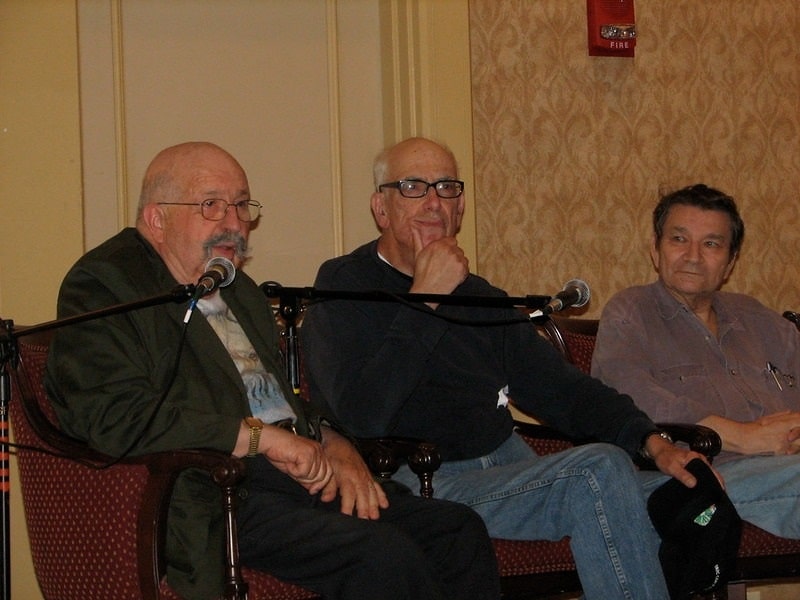
glenn-lordGlenn Lord, the Father of Robert E. Howard fandom, died yesterday.

Lord was born in 1931 in Louisiana. He first discovered the work of Robert E. Howard through his first Arkham House collection, Skull-Face and Others (1946). This began a life-long interest in Howard’s work, and in 1965 he became the literary agent for Howard’s heirs. The same year he purchased Robert E. Howard’s famous literary trunk, filled with tens of thousands of pages of unpublished stories, poems, and story fragments, from pulp writer E. Hoffmann Price.

The trunk, and Lord’s private collection of unpublished Howard fiction, provided a seemingly endless trove of new material for decades, published in places such as Fantastic Stories, Zane Grey Western Magazine, The Howard Review, The Magazine of Fantasy and Science Fiction, numerous anthologies, and in his own magazine, The Howard Collector. In 1977 he worked with Karl Edward Wagner to release three seminal Conan books through Berkley, The Hour of the Dragon, Red Nails, and The People of the Black Circle, the first Conan collections to present the unaltered text of Howard’s stories from Weird Tales.

Lord received the World Fantasy Convention Award in 1978, and was the Editor Guest of Honor at the World Fantasy Convention in Austin, Texas in 2006. He received The Cimmerian’s Lifetime Achievement Award in 2005.

Read a personal remembrance from Black Gate blogger Barbara Barrett, who attended a birthday party for Glenn Lord at the Monument Inn in LaPorte, TX in November, after the jump.

Read More »


R.I.P. Euan Harvey

Friday, December 9th, 2011 | Posted by John ONeill

euan-harveyIn the decade or so I’ve been editing Black Gate magazine, I’ve been blessed to cross paths with a wide variety of talented writers, artists, and creators.

One of the most talented was Euan Harvey, a terrific short story writer whose career was just beginning to take off. His work appeared in Realms of Fantasy, Aoife’s Kiss, and Heroic Fantasy Quarterly. I bought a story from Euan, “Kamaratunga’s Masterpiece,” and it is scheduled to appear next year in Black Gate.

In August 2009 Euan was diagnosed with metastatic cancer. He lived and taught in South East Asia for thirteen years, but that year he returned to the United Kingdom, where he lived just outside London with his wife and family.

Today his family posted the following announcement on his Facebook page:

To all of Euan’s friends who have been reading this. I am sorry to tell you all that his melanoma grew so fast that on Tuesday his state deteriorated and we were warned he might not have long. His brother and sister, cousin and parents were… all with him yesterday, and last night Alex and Fon stayed with him. He could hear but not talk. At 5.45 this morning [Friday 9th] his breathing changed, and he died very peacefully.

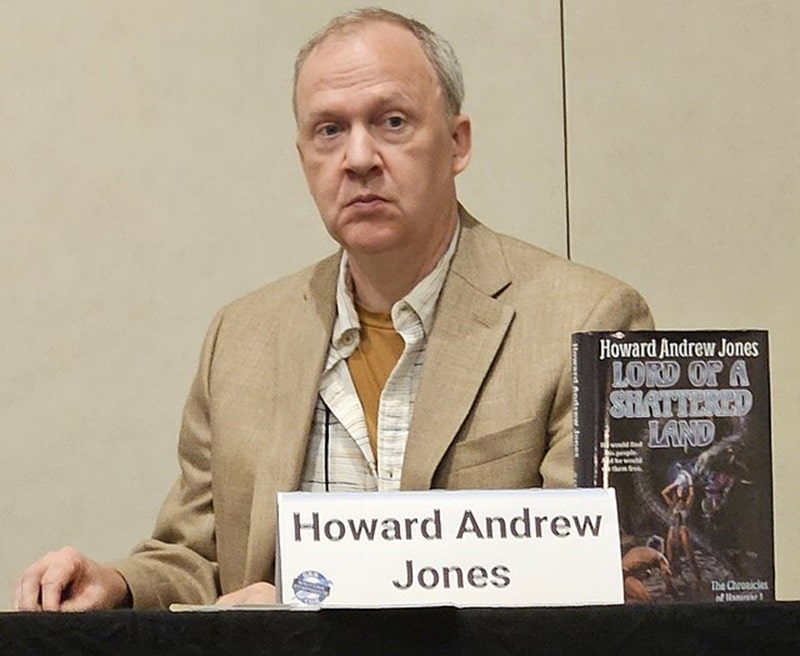
BG Managing Editor Howard Andrew Jones, who discovered and first introduced me to Euan while he was editing Flashing Swords magazine, said this about him:

Euan Harvey was a fine man and father, and an excellent writer. He gave me great novel feedback, and I have enjoyed his stories for years. I was proud to call him friend. I am stunned and saddened by this news.

Read More »


Anne McCaffrey, April 1, 1926 - November 21, 2011

Tuesday, November 22nd, 2011 | Posted by John ONeill

weyr-searchAnne McCaffrey, one of the most loved SF and fantasy writers of the 20th Century, died yesterday at her home in Ireland.

McCaffrey is probably best known for her Dragonriders of Pern novels, which began with the novella “Weyr Search” in Analog in October, 1967.

“Weyr Search” won the Hugo Award for Best Novella; its sequel “Dragonrider” (published in two parts in Analog in December 1967 and January 1968) was awarded the Nebula.  The two stories were collected as the first Pern novel Dragonflight, first published by Ballantine Books in July, 1968.

That was followed by an incredible 22 novels and two collections of short stories (some co-written with her son Todd), including The White Dragon (1978), the first hardcover SF novel to become a New York Times bestseller.

McCaffrey was a very prolific writer, with more than 100 books to her credit. Her first novel was Restoree (1967), and she had a real talent for series — including the Crystal Singer series, Freedom, Doona, Dinosaur PlanetBrain & Brawn Ship, Acorna, and many others. [I know -- crazy, right? The only comparable modern author I can think of who has nearly this many popular series  is L. E. Modesitt.]

I recently bought a collection of vintage Analog magazines, and came across the one above, with the “Weyr Search” cover by John Schoenherr. It reminded me that those were the days when genre magazines could catapult you to the very peak of the profession, something far more rare today. McCaffrey had published only a handful of stories and her first novel (barely) when ”Weyr Search” appeared… within a year she had won both the Hugo and Nebula, and published the first novel of a series that would make her a bestselling writer.

In addition to stellar sales, Anne McCaffrey was highly honored by fans and her fellow writers. She won the Robert A. Heinlein Award in 2007, became a SFWA Grand Master in 2005, and was inducted into the SF Hall of Fame in 2006.


Sara Douglass, June 2, 1957 — Sept 27, 2011

Thursday, September 29th, 2011 | Posted by John ONeill

wayfarer-redemptionSara Warneke, the Australian fantasy author who wrote under the name Sara Douglass, died of ovarian cancer on September 27, 2011, at the age of 54.

Sara wrote a total of 19 novels, beginning with the first book of what became The Axis Trilogy, BattleAxe, in 1995.

All told she wrote five major fantasy series: The Axis Trilogy, The Wayfarer Redemption, The Crucible, The Troy Game, and Darkglass Mountain.

Outside of Australia, The Axis Trilogy and The Wayfarer Redemption were combined into a single six-book series, called simply Wayfarer Redemption.

Sara also wrote Beyond the Hanging Wall (1996), Threshold (1997), The Devil’s Diadem (2011), and the non-fiction The Betrayal of Arthur. The Hall of Lost Footsteps, a collection of short stories, is due from Ticonderoga Publications this year.

Sara was born in Penola, South Australia, and attended Annesley College in Wayville. She became a registered nurse, and eventually completed her Ph.D. in early modern English History. She was a lecturer in medieval history at La Trobe University in Bendigo, where she completed her first novel, BattleAxe, in 1995.

Her Wikipedia entry, with a complete listing and links for her novels, is here.

She lived in Tasmania, and was first diagnosed with ovarian cancer in 2008. She underwent successful treatment that year, but the cancer returned in 2010.


Elwy Yost, July 10, 1925 – July 21, 2011

Saturday, September 10th, 2011 | Posted by John ONeill

elwy-yost1I know, I know.  You’ve never heard of Elwy Yost.

But you probably didn’t grow up in Ontario in the late 70s and early 80s. Those who did knew and loved Elwy Yost.

Elwy Yost was the host of TVOntario’s Saturday Night at the Movies from 1974–99 and, more importantly to me, the half-hour weekday show Magic Shadows, from 1974 until the mid-80s.

When I was 12 years old in 1976, my after-school ritual was well-established. Walk home from Sir Wilfred Laurier High School, finish homework, eat dinner, and then stretch out on the living room floor, lying on my stomach with my feet in the air, to watch Magic Shadows.

Magic Shadows presented classic Hollywood movies, cut into half-hour serials and introduced by Yost with erudite and infectious enthusiasm. Best of all, Yost had an unapologetic fondness for the occasional monster movie, including King Kong, Gorgo, and others. On those weeks when the main feature would wrap up by Thursday, Friday would feature an episode of a true film serial like The Adventures of Captain Marvel, Mysterious Doctor Satan, or Captain America.

For those who do remember, here’s the animated intro to Magic Shadows on YouTube, and a sample of classic Yost as he introduced the 1954 Marlon Brando pic Desirée. Watching these two clips brought me right back to the late 70s. [Thanks to my friend Todd Ruthman for sending them my way.]

In later years Elwy Yost was overshadowed by his son, Graham Yost, who moved to California to become a screenwriter (Speed, Broken Arrow) and writer/director (of the HBO miniseries The Pacific). Speed was the last movie Yost hosted before retiring from Saturday Night at the Movies in 1999. Elwy Yost wrote Magic Moments from the Movies and two young adult novels, Secret of the Lost Empire and Billy and the Bubbleship, and a mystery novel, White Shadows.

I would develop a lasting fondness for pulp fiction when I discovered pulp magazines later in high school. But it was Elwy Yost who showed me that the best adventure fiction — yes, even monster movies — deserved to be preserved and studied with the same loving attention as the finest cinema. He was a man who loved film, and who communicated that love to an entire generation of young Canadians.

I miss him already.


Martin Harry Greenberg (March 1, 1941 – June 25, 2011)

Monday, July 4th, 2011 | Posted by John ONeill

great-sf-17Martin H. Greenberg, one of the most prolific creators in the history of the genre, died last week.

Dr. Martin H. Greenberg received a doctorate in Political Science from the University of Connecticut in 1969, and taught at the University of Wisconsin, Green Bay, from 1975 until 1996. In 1974 he edited his first anthology (with Patricia Warrick): Political Science Fiction, intended as a teaching guide.

It was to be the first of literally thousands of books he published over the next 36 years, the vast majority of them science fiction and fantasy anthologies.

Greenberg’s specialty was copyright searches and handling author royalties, and he was famously adept at both. He founded book packager Tekno Books, which typically produced 150 titles per year, totaling over 2,300 books.

Shortly after he entered the field Greenberg discovered he shared a name with another famed SF anthologist: Martin Greenberg, publisher of Gnome Press, who edited some of the most influential science fiction anthologies of the 1950s, including Travelers of Space and Journey to Infinity (both 1951). In his autobiography Isaac Asimov, who worked extensively with both men, said he suggested that he call himself “Martin H. Greenberg” or “Martin Harry Greenberg,” which he did.

Greenberg frequently partnered with other editors such as Joseph D. Olander, Andre Norton, Robert Silverberg, and especially Asimov, with whom he co-edited a total 127 anthologies, including the 25-volume Isaac Asimov Presents the Great SF Stories.

alt-prezs1In recent years Greenberg, working chiefly with editors Jean Rabe, John Helfers, Kerrie Hughes and others at Tekno Books, produced 10 original anthologies per year for DAW books, often referred to as “the DAW magazine.”

Black Gate contributor Mike Resnick,  who edited 19 anthologies for or with Greenberg and sold him a total of 61 stories, shared this story of how their partnership started:

We’re eating lunch at the 1989 Boston worldcon, he asks what I’m working on, I say a Teddy Roosevelt alternate history novella, and as we’re getting up he says he’s off to sell our anthology. I say what anthology? He says Alternate Presidents, with Teddy Roosevelt in 1912 and a bunch of others. I say I didn’t know we were talking about one, and besides, this one’s unsaleable.

Three hours later he hunts me up: “We’ve sold it to Tor for a 5-figure advance, and you’re editing it.” I never doubted him again.

In 2009 Greenberg was the recipient of one of the first Solstice Awards presented by the Science Fiction and Fantasy Writers of America (SFWA) in recognition of his contributions to the field.

For a complete list of his titles (caution: it’s a big list), see his entry at the SF Encyclopedia.


The Warrior Lives: Remembering Rosenberg

Sunday, June 12th, 2011 | Posted by Theo

sleeping-dragonI was a fan of Joel Rosenberg’s work long before I ever met him, but I eventually came to admire him more as a man than as an author. I wasn’t a close friend of his, more the friend of a friend, but I did have the good fortune to get to know him over the last 15 years. It was a privilege for an SF/F fan, but more than that, it was a genuine pleasure. Growing up in Minnesota, which at the time felt rather like the cold side of the back of beyond, I had no idea that there were Real Live Writers living there, never being much inclined to read the author bios at the back.

Like many a teenage boy in the Eighties, I had dabbled in role-playing games such as AD&D, Gamma World, and Traveller in the Time Before Girls, and so The Guardians of the Flame were a real revelation to me. Rosenberg’s novels were gritty long before grit became fashionable; he made a distinct impression on a young reader by killing off a major character practically at the beginning of the first novel, then went himself one better by killing off the lead character in only the fourth book in the series.

I can’t recall being more shocked while reading fiction any time before or since. Karl Cullinane is dead? But… but what will happen to the series?

Read More »


Karl Cullinane Isn’t Coming Back

Friday, June 3rd, 2011 | Posted by Theo

not-for-gloryI am very sorry to report that Joel Rosenberg, the author of the Guardians of the Flame series and well-known Second Amendment advocate, died yesterday, June 2nd, of a heart attack at the age of 57.

He is survived by his wife, Felicia Herman, and his daughters, Judith and Rachel. He was a friend, a man who was always generous with his advice on writing and life, and an excellent shot.

If you have not had the pleasure of reading his fiction, I highly recommend his military sci-fi novel, Not For Glory.


Larry Tritten, 1939 - 2011

Friday, May 20th, 2011 | Posted by John ONeill

black_gate_9-2771Black Gate lost one of its own last month with the passing of noted short story writer Larry Tritten.

Larry began his lengthy career in 1968 with the story “West is West,” in Worlds of If magazine. He appeared in dozens of magazines such as The New YorkerFantasy and Science FictionAsimov’sTwilight Zone, and many others. In 2005 his story “It’s a Wonderful Con,” featuring a man who cons Santa Claus out of $200, appeared in Black Gate 9.

As much as I enjoyed his fiction, I was even more charmed with Larry’s letters, which related fascinating details of a writing life. I got his permission to include a few of those anecdotes in a sidebar that accompanied the story, and got more mail about that than about his fiction. The sidebar read, in part:

I was in the Mammoth Book of Future Cops a while back, with a Chandler parody set in future San Francisco, and not long ago I was the lone male (heterosexual) writer in the British anthology Va-Va-Voom – Red Hot Lesbian Erotica.  Just me and 32 Lesbian writers. I try to cover all territories.  Had a piece in Minnesota Parent a while back, though I am not a parent and have never been to Minnesota (except to change planes).  Had one in Range (but am not a cattle grower).  And so on.

The count is about 1500 pieces since the sixties, so I’ve had time to get around.  I’m probably one of the few writers to have published in both Hustler and The New Yorker.  I’m often astonishing younger writers with memories of the those early days.  For example, in December 1978 I made four or five sales (one to The New Yorker for, I think, about $1250), and the money added up to close to $5,000.  I was living in an apartment where the rent was $185 per month.  Rent for two years!  Hard to believe such times ever existed.  Today my rent and bills are about ten times what they were then, and just the next month’s rent always looms like the sword of Damocles.

F&SF editor Gordon van Gelder wrote:

He was a smart, talented, and funny writer. He was also the sort of professional writer that seems to be disappearing, the kind of professional who never met a market he didn’t like and had the versatility to tailor almost any work to meet the needs of any market.

He contributed a lot of funny stuff to F&SF over the years.

Larry died in April, 2011. A more complete obituary appears in the May issue of Locus.


Joanna Russ: February 22, 1937 – April 29, 2011

Saturday, April 30th, 2011 | Posted by John ONeill

female-man1Joanna Russ, acclaimed feminist writer and one of the most respected science fiction authors of the 20th Century, passed away yesterday at the age of 74.

Russ’s first SF story, “Nor Custom Stale,” appeared in F&SF in 1959. Numerous notable short stories followed, including Nebula Award winner “When It Changed” (1972), and Hugo Award winner “Souls” (1982). Altogether her fiction has been nominated for a total of nine Nebula and three Hugo Awards. Her short stories were collected in four volumes:  The Adventures of Alyx (1983), The Zanzibar Cat (1983), Extra(ordinary) People (1984), and The Hidden Side of the Moon (1988).

Her first novel Picnic on Paradise, the tale of a pleasure cruise that crash lands on a vacation planet with only enough food for a picnic, was nominated for a Nebula in 1968. It was collected with four additional stories featuring the resourceful protagonist Alyx as The Adventures of Alyx (1983). 

Her other novels include Nebula Award finalist And Chaos Died (1970), The Female Man (1975),  We Who Are About To… (1977), and The Two of Them (1978).

The Female Man, one of the most acclaimed SF novels of the decade, follows four women across four parallel worlds, all struggling against the restrictive role of the female sex, and what it truly means to be a woman. The character who bears Russ’s first name, “Joanna”  refers to herself early in the novel as the “female man” because she is convinced she must surrender her identity as a woman to be respected.

adventures-of-alyxAnnalee Newitz, in her terrific Russ retrospective at io9, calls it “Sliders as written by James Joyce. And it’s possibly the greatest book about what it’s like to be a woman in America that I’ve ever read.”

Russ went public as a lesbian later in her life, as her critical writing and other non-fiction became more noted — especially the landmark feminist work How to Suppress Women’s Writing (1984), and the Hugo-nominated To Write Like a Woman: Essays in Feminism and Science Fiction (1995).

Beginning in the late 1980s Russ began to cope with a growing number of physical ailments, especially back problems and  chronic fatigue syndrome, which all but ended her writing career. She entered hospice care earlier this month after suffering a number of strokes, and passed away on Friday, April 29.

A more detailed obituary can be found at Locus Online, and a complete list of her work is at her Wikipedia page.

If you’ve never read anything by this remarkable woman, I urge you to try The Adventures of Alyx, The Female Man, or any of her thought-provoking short fiction. You won’t be disappointed.


  Earlier Entries »

This site © 2004-2011 by New Epoch Press. All rights reserved.