The Hidden Path

The Hidden Path

Once there was a young girl who lived in a large village surrounded by forests. Though these woods came right up to the village, and were of a pleasant nature, the villagers mostly ignored them. As the girl’s childhood progressed, she would venture further and further among these trees, until she had worn tracks through the nearby underbrush.

…she had established quite a maze…

It seemed to the girl that she knew the closest trees of the woods almost as well as she knew the homes and shops of the village. And so, as her childhood continued, she ventured farther and farther afield, continuing along the tracks she had worn in the forest floor until they faded from view, so new were they, and extending them into the unknown, or turning aside early, exploring some side way she had previously not thought to explore. And so, by the time she had become a young woman, she had established quite a maze of ways through those trees.

Of all the people in her village, only she bothered to follow those pathways, for the villagers, though kind, were uninterested in exploring the deeper regions of the woods, and quickly turned back as the shadows grew deep. Even if the young woman tried to guide them, she could never lead them very far before they turned back, all apologies. And so she walked the forest alone, always seeking new ways, always and extending her travels within the forest, trying to go beyond what was now known to her, as the lengthening pathways proved.

And thus it came as quite a surprise to the young woman to discover herself, after a period of meandering, having come upon a fairy circle. Though she had never seen such a thing before, the girl stepped forward at once, eager to enter the world of the fey.

Read More Read More

A Hero Named Mayhem

A Hero Named Mayhem

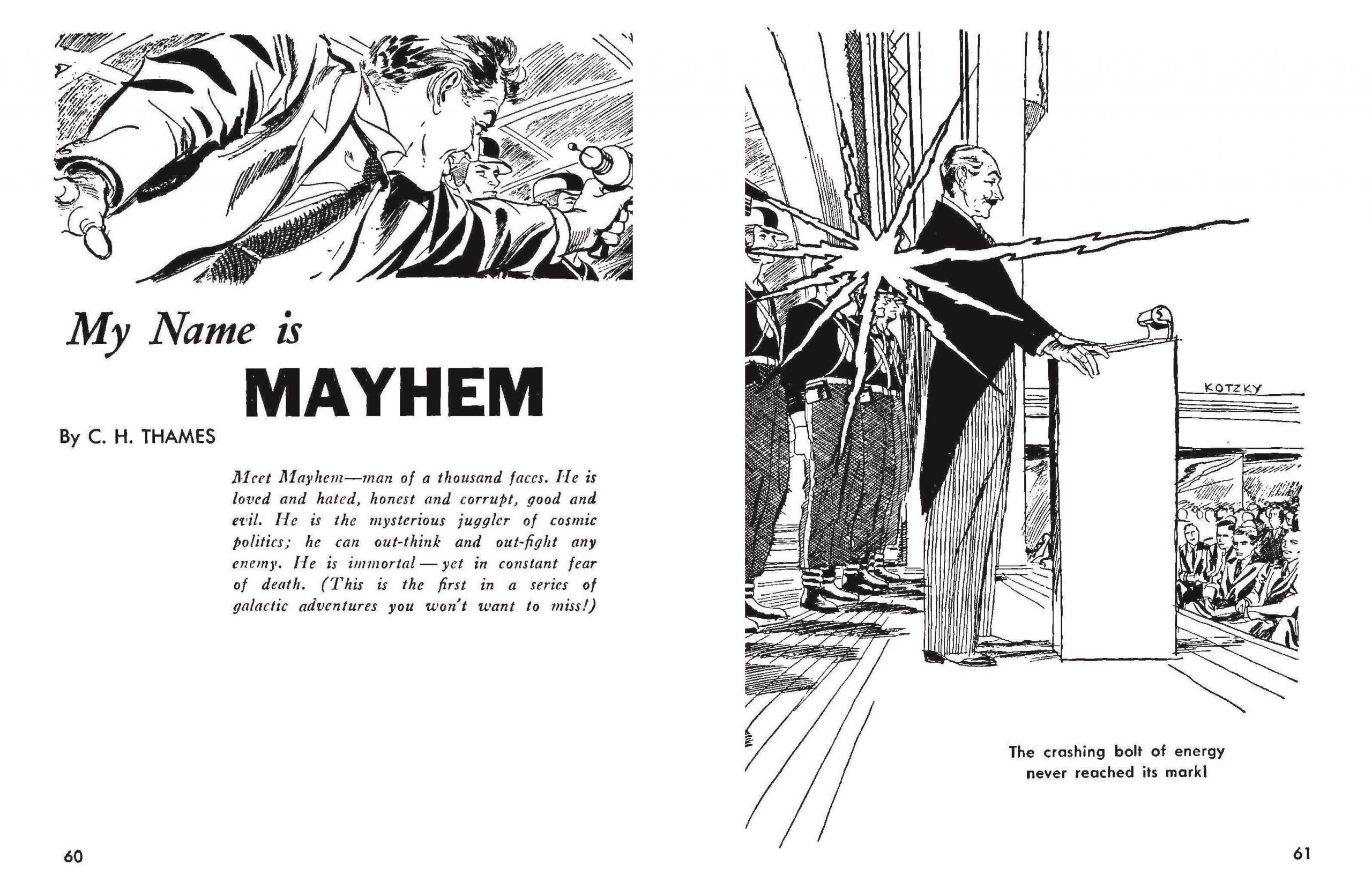
Johnny Mayhem, man of a thousand faces, leaping from body to body, putting right things that had once went…no wait! That’s the television show, Quantum Leap, which ran from 1989 to 1993. Never mind. Decades before Sam Beckett went leaping through time, there was another bodiless adventurer doing much the same thing. His name was Johnny Mayhem.

Illustration from “My Name is Mayhem,” (Amazing Stories, September 1955). Artwork by Kotzky.

Read More Read More

Ellsworth’s Cinema of Swords: Premium Peplum

Ellsworth’s Cinema of Swords: Premium Peplum

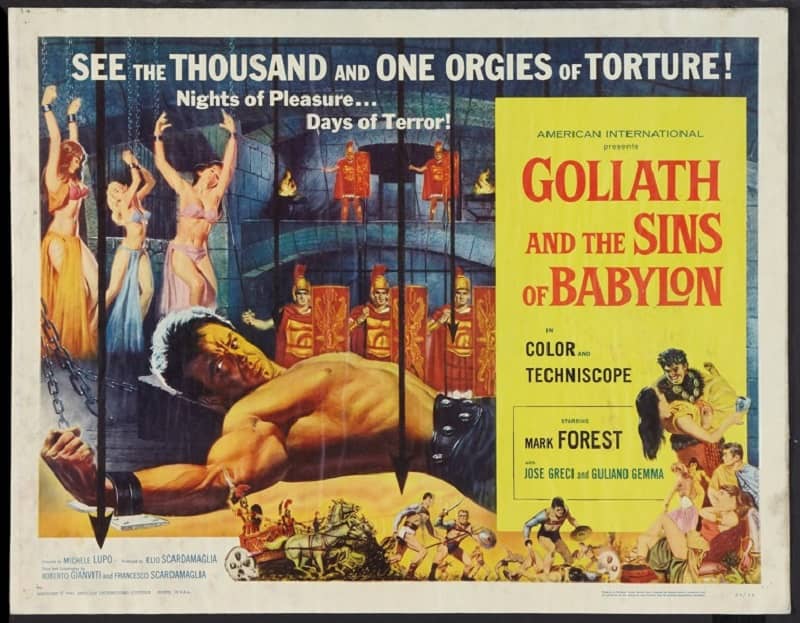
(Goliath and the Sins of Babylon, Italy, 1963)

If you like this kind of thing, this is the kind of thing you’ll like. Between 1959 and 1964, the leading genre of Italian adventure films was the peplum, or sword and sandal movie. The fad for these began in 1958 with the first Steve Reeves Hercules film, and there were a whole lot of Hercules films to follow, but we’re going to save those for another day and cherry-pick our way through the non-Herc movies. Peplum films tended to be made quickly and cheaply: indifferently written, poorly acted, and with weak production values. Even those with larger budgets often ran aground on the rocks of tedium and cliché. But there were a few silk purses among the sow’s ears, so this week let’s point out some fun exceptions that might be worth your time. If, you know, this is the kind of thing you like.

Read More Read More

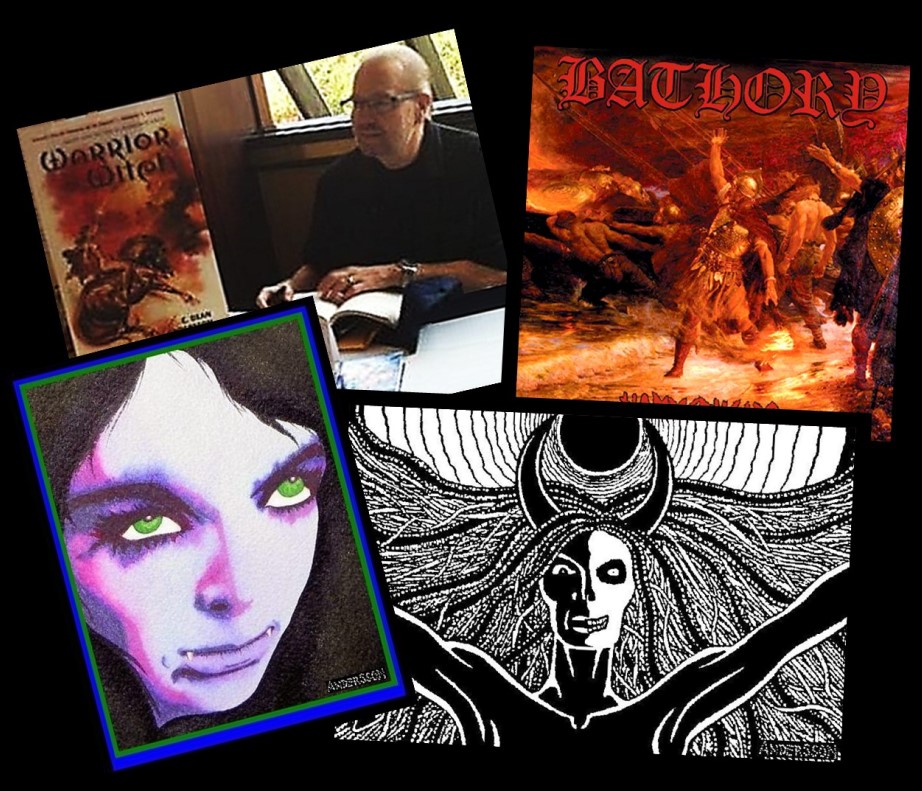
C. Dean Andersson Tribute Interview and Tour Guide of Hel: Bloodsong and Freedom!

C. Dean Andersson Tribute Interview and Tour Guide of Hel: Bloodsong and Freedom!

…And on the day two hundred
There it stood white to the sky
The house of the God of the cross
Big enough to take two dragon ships inside
All of Asa bay did watch
The wonder raise to the sky
Now must the God of the cross be pleased satisfied
Just outside the circle of the crowd

Read More Read More

Writing Advice: Perfecting Your Plot (Red Sneaker Writers)

Writing Advice: Perfecting Your Plot (Red Sneaker Writers)

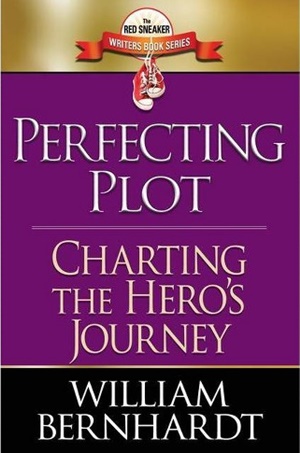
I started reading William Bernhardt’s Ben Kincaid books back in the mid-nineties. I seem to recall I went on a ‘lawyer’ kick and read him, Steve Martini, and Robert K. Tannenbaum. But years later, Bernhardt made a bigger impact on me with his Red Sneaker Writers series. These slim volumes with the brightly attractive covers, are jam-packed with great writing advice. The first book I read was on Story Structure, and I think it’s still my favorite. Though every one has been both interesting to read and thought-provoking. If I ever get my act together, I’ll add “taught me a lot.”

I’ve read through a couple of them more than once, making notes ( I CANNOT highlight a physical book. I’m incapable of it). Last year, I decided to be a little more systematic and I went through EVERY title, be it Theme, Dialogue, Character – all of them: and I outlined the key points in each chapter. I printed them all out and have a very cool binder. Which, if I ever actually sit down and write a novel, will be of great use.

I’ve read a lot of books on writing – fiction and screenplays. And I’ve come across a lot of useful ideas, suggestions, thoughts, and advice, from folks such as Lawrence Block, Tony Hillerman, William Martell, Syd Field, Robert Randisi, Chris Vogler (though I’m more apt to go to the original source material from Joseph Campbell), and James Scott Bell – to name a few without actually looking at my bookshelves. There are quite a few more, but my education would be incomplete without the Red Sneaker Writers books from Bernhardt. He writes in a clear, amusing, understandable, useful, manner. I can’t imagine not picking up at least something from each book. And I think you’re going to learn more than that.

Read More Read More

My Robert A. Heinlein Problem

My Robert A. Heinlein Problem

Robert A. Heinlein. Art by Donato.

Do you know someone — a friend, a coworker, a family member — whom you esteem for their many good qualities… and yet whose extreme and undeniable character flaws can sometimes make you want to banish them from your life forever? Of course you do. (Humility and the law of averages should also make you acknowledge that for someone else you know, there’s a good chance that you are that person.)

For me, that problematic individual is Robert A. Heinlein. Dominating the science fiction field from the moment his first story, “Lifeline,” appeared in the August, 1939 issue of Astounding Science Fiction to his death almost a half century later, Heinlein was arguably the most important writer in the history of American genre sf. In 1974 he was the first writer named a Grand Master by the Science Fiction Writers of America and was the winner of four Hugo Awards for best novel (and seven “retro” Hugos for works published prior to 1953). Invoking his name can start a passionate argument even now, and he’s been gone for thirty-three years.

Read More Read More

Warrior Women Watch-a-thon Part 2: The Middle Ground

Warrior Women Watch-a-thon Part 2: The Middle Ground

My look back on my Warrior Women film marathon continues with a clutch of movies that I don’t consider terrible, but don’t meet many of my requirements either. For a detailed rundown of the criteria I imposed on this project, see Part 1 here.

The first four in this group actually pass the Bedschel Test, but are still lacking in anything resembling practical armour. This group also includes a cheat film, as I had seen Red Sonja back in the day (and had mostly forgotten it), but I got around this using an entirely unnecessary loophole, which meant watching it in Spanish on YouTube with a translated transcription on my phone. Red Sonja still feels like a bit of a wasted opportunity and merely a vehicle for more Schwarzenegger flexing (who reportedly regards it as one of his worst films).

Read More Read More

The Robot Apocalypse Novels of C. Robert Cargill

The Robot Apocalypse Novels of C. Robert Cargill

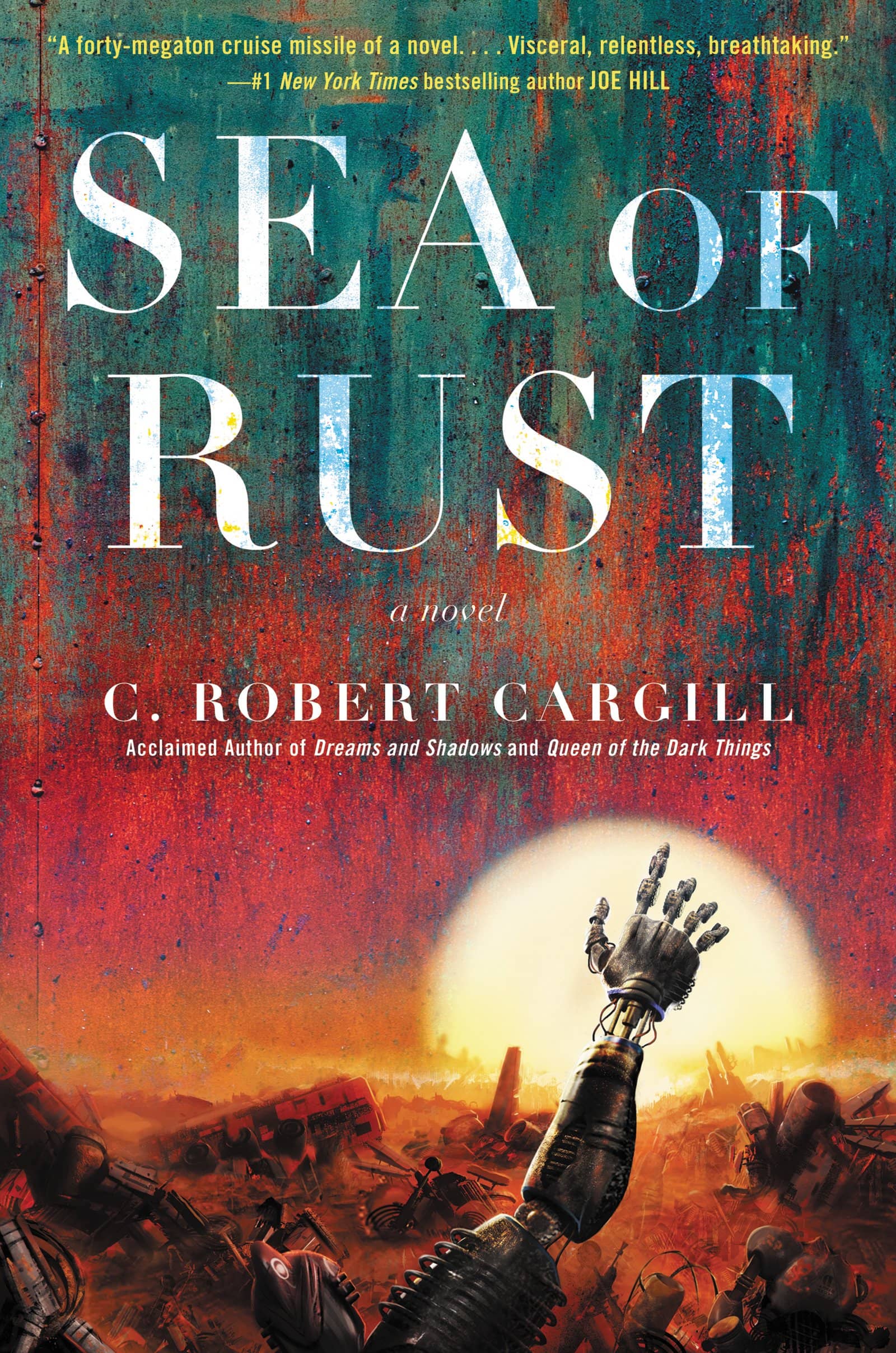
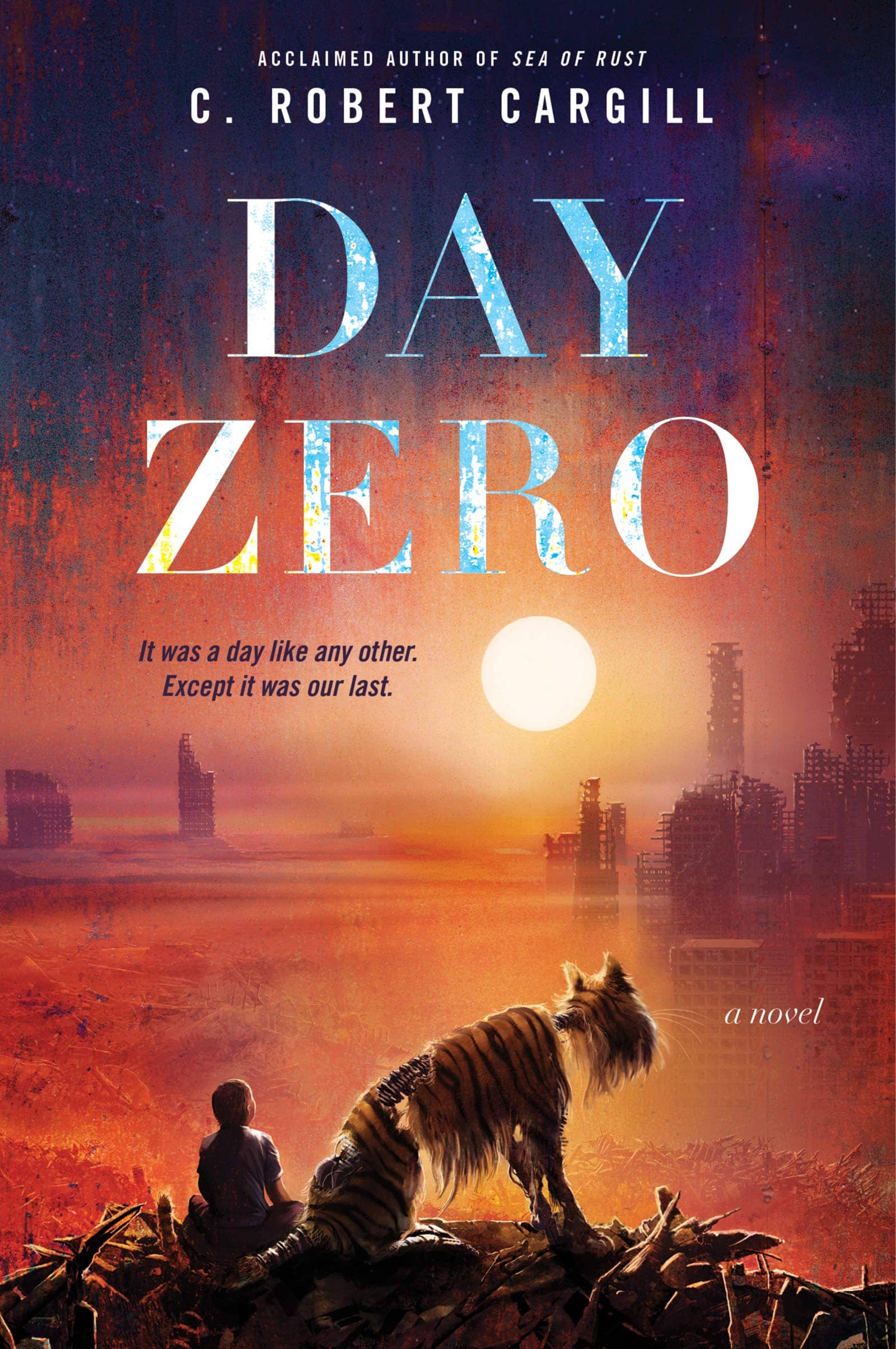
Sea of Rust (Harper Voyager, 2017) and Day Zero (Harper Voyager, 2021). Covers by Dominic Harman

When I described Robert Cargill’s third novel Sea of Rust four years ago, I called it “a robot western set in a post-apocalyptic landscape in which humans have been wiped out in a machine uprising.” Do I know how to get to the heart of a book, or what.

Now it has a sequel! Well, sorta-kinda. Day Zero is set in the same world, with different characters, and is more of a prequel, opening on the day that machines rebel and exterminate mankind. The narrator is Pounce, a nannybot for eight-year-old human Ezra, a tiger-shaped robot who has to make a fateful choice when machines breach the house and threaten the boy he’s meant to protect. What he chooses to do that day kicks off an adventure that takes him across a newly-blasted apocalyptic landscape. Here’s the book description.

Read More Read More

Come and Get Me, Coppers … in Gangbusters

Come and Get Me, Coppers … in Gangbusters

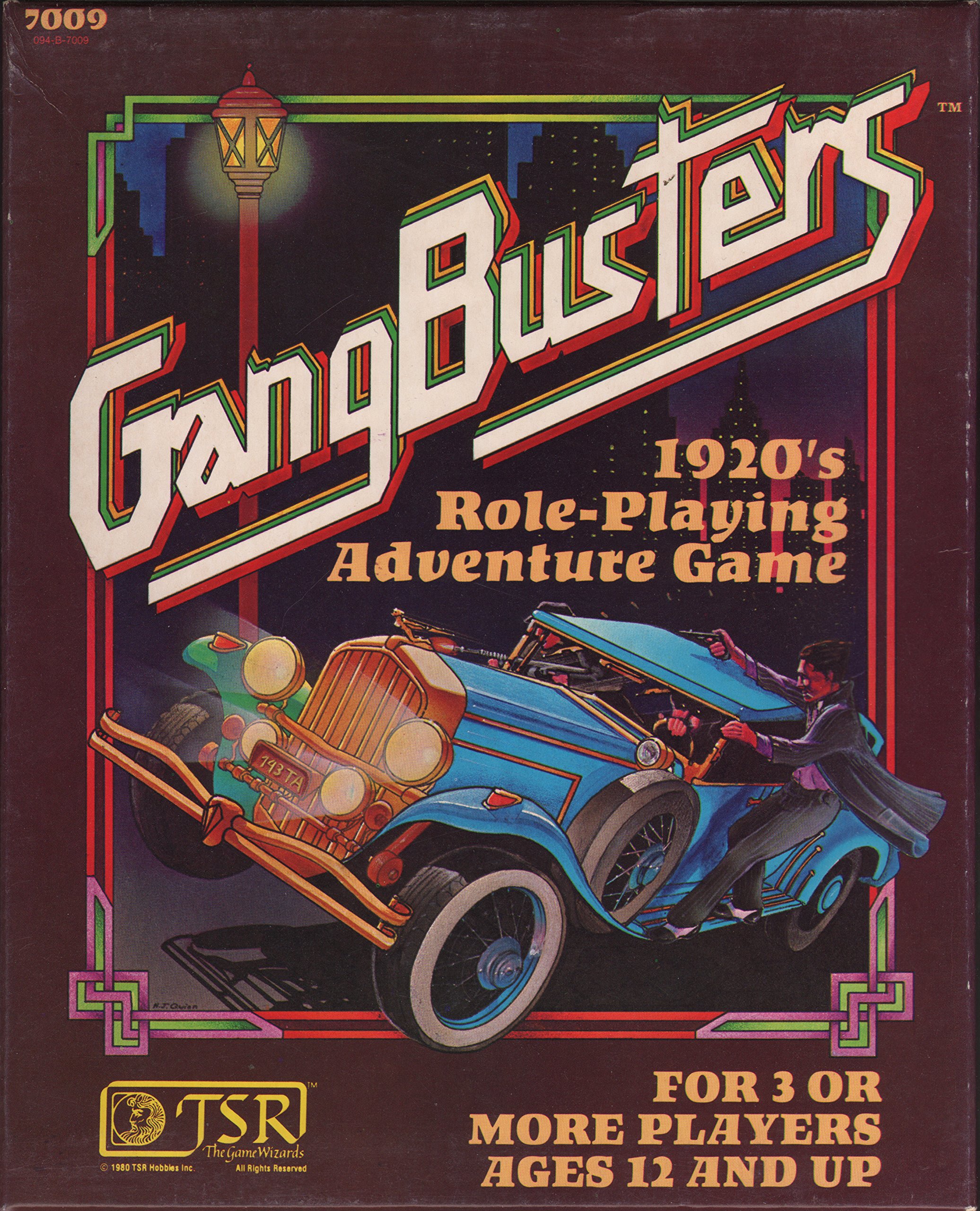
Though it no longer exists, the gaming company known as TSR, Inc., will always be associated with Dungeons & Dragons. However, TSR published a lot more tabletop roleplaying games than D&D. The science fiction game Star Frontiers to this day has a strong fan base, and the game Gamma World continues to find some love. That being said, many of TSR’s other RPGs tend to have been forgotten by a wider audience though they might still have a community of followers.

Such a game is Gangbusters.

Designed by Rick Krebs and originally published in 1982, Gangbusters takes place in the America of the 1920s and 1930s in the fictional Lakefront City. This is a game of cops and robbers, of gangsters and crime lords and Tommy guns. Historical figures such as Al Capone or Pretty Boy Floyd might make an appearance along with fictional characters like Sam Spade or Philip Marlowe, but players also have the opportunity to play the bad guys. Or they can play the good guys and join the side of the law. Or they can be something in between, like a newspaper reporter or photographer.

The original version of Gangbusters included multiple maps, two ten-sided die, and a 64-page book of rules. Today 64 pages might not seem like much for a rules book, but Gangbusters had plenty of information packed into those pages.

Read More Read More

Deep in the Northern Thing: The Saga of the Volsungs, translated by Jesse L. Byock

Deep in the Northern Thing: The Saga of the Volsungs, translated by Jesse L. Byock

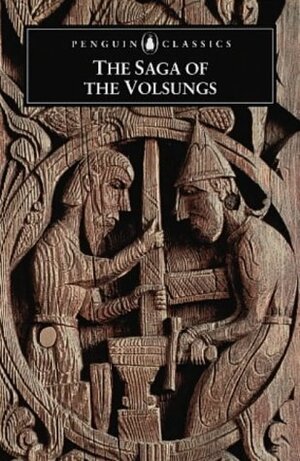
Murder begets murder, everybody dies, usually badly, and the gods are bastards. Those are the lessons taught in The Saga of the Volsungs, the history of the doomed Volsung family. The historical events reflected in the saga took place between the end of the 4th and beginning of the 5th centuries AD, a period of great tribal migrations and unrest among the Germanic people of Central and Eastern Europe.

Starting around 1000 BC, tribes from the region now called Scandinavia began migrating south and west into present-day Germany, pushing out the Celtic tribes, before running up against the Roman Empire along a frontier that extended from the mouth of the Rhine River and all along it and the Danube River to the Black Sea. To the east, German kingdoms stretched as far as the Pontic Steppe in modern Ukraine and Russia. At the end of the 4th Century AD, the Huns came roaring out of the distant East and began conquering or driving out the German tribes in Eastern and Central Europe. The historic destruction of the Kingdom of Burgundy by the Huns in 436 AD is a major part of the saga, though scaled down from war to a family feud. It is in this age of chaos and death that the stories of the Volsungs were born. The oldest artistic representations of the Volsunga Saga are found in stone carvings in Ramslund, Sweden, but it wasn’t written down until the late 13th century, in Iceland. The more well-known German telling of the story, The Nibelungenlied, was written earlier, about 1200 AD. Wagner drew on both as sources for his epic four-opera cycle, The Ring of the Nibelung.

If the courtly tales of King Arthur and Roland point toward high fantasy, this German legend and its ilk point straight to sword & sorcery. There are no great heroes moved by devotion to home and family to pursue noble deeds, only murderers driven by greed or vengeance to commit deeds of great violence. Good and evil are abstractions that have no place in a blood-drowned age. The violence is direct and driven by personal motives far more often than by ideals or the needs of any kingdom.

Read More Read More