Obits and Chicks
By now, you probably have heard of the passing of Ricardo Montalbán and Patrick McGoohan. I was never into Fantasy Island, which struck me as the usual lame TV schtick. But Montalbán notably helped resurrect the Star Trek franchise with The Wrath of Khan, perhaps the best of all the Star Trek movies. This was all the more remarkable because it followed the disastrous muck of Star Trek: The Motion Picture, which was, well, a lame amalgamation of the lame schtick that characterized much of the original television series. (Please don’t send me any nasty notes; after the first season, which borrowed from actual science fiction stories and had some interest, everything just got a bit silly. The only thing sillier is people who dress up like the characters and invest pseudo-philosophical religious significance in the whole pointy ear thing.) Supposedly in real life, Montalbán was just as classy a guy as he seemed on the screen. Here’s hoping they line Ricardo’s coffin with fine Corinthian leather, he more than deserves it.
Now, what was decidedly not the usual lame television dross was McGoohan’s contributions as the star and creative force of The Prisoner, which I noted in my inaugural post to this blog. (Of course, it’s coincidental that McGoohan died shortly thereafter, though this isn’t the first time this sort of thing has happened to me. As a fledgling journalist during the height of the jogging craze in the late 1970s, I did a story about a man who had taken up marathon running after suffering a number of heart attacks. The day the story ran, the guy dropped dead of a massive coronary. And, yes, while running. Though I can only think of only one other better way of going.) Like the character of Number Six, McGoohan seemed to be someone who lived by his principles, regardless of what what was more popularly embraced by the masses, and there’s something we don’t seem to hear much of these days. In addition to turning down the chance to play James Bond, McGoohan also refused to depict any kind of physical relationship on screen with a woman, evidently for moral reasons, which is kind of funny in light of The Prisoner’s seeming celebration of 1960’s countercultural values. Also, according to one remembrance, McGoohan turned down the screen roles of Gandalf and Dumbledore! He would have been perfect for both.
…
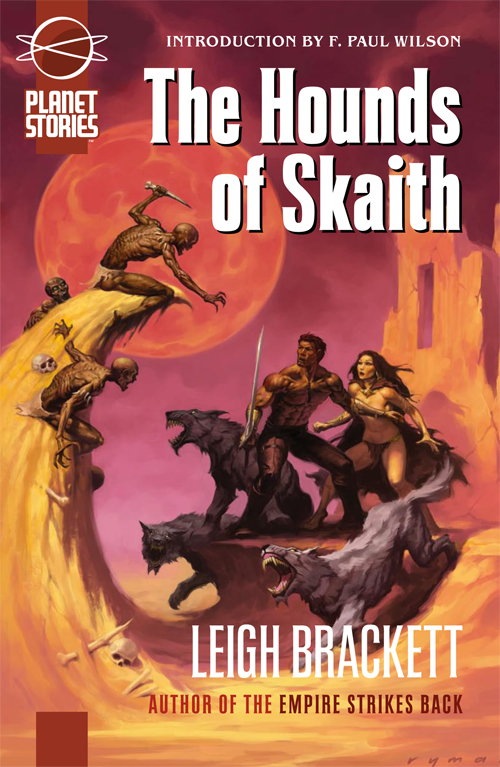
 I’m not what you’d call a comics guy — I don’t have a set of first editions in acid-free bags in the closet, I couldn’t tell you who the Fantastic Four are, or even distinguish between Marvel and DC (though I’m pretty sure Spiderman is in one camp, and Batman in the other). But I’ve always liked and respected the medium, and the rise of the graphic novel has made sampling the best of what comics has to offer convenient for casual fans like me. So, when I spotted a recommendation in an online forum for Planet Hulk, a graphic novel in which the big green superhero takes on the role of John Carter in a sword and planet epic, I was intrigued, and made an impulse purchase. I’m glad I did.
 Certainly not, but that really may be the central genre-defining element. I was thinking about this while reading Justina Robson’s excellent
 “So just what is science fiction?” asks editor Lou Anders in the preamble to his second and latest volume of Fast Forward, an annual collection of original genre stories (you can find my review of the first edition
 Clint Eastwood never starred in or directed a sword-and-sorcery or heroic fantasy movie, and since he’s declared his retirement from acting with 2008’s Gran Torino, chances are he never will. That’s too bad, since the leathery, iconic actor might have made a nice fit into certain dark fantasy worlds. Michael Moorcock thought he would have made an excellent Eric John Stark; I agree. But Eastwood as a performer and director was more interested the realistic American landscape, and he never got near the world of the overtly fantastic.