Novel-Boosting Movie Scenes
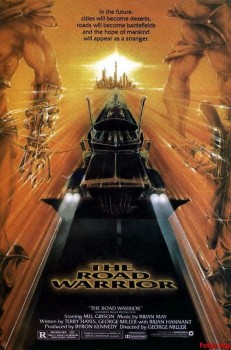 Right before I begin writing any major-length work, I do some important “stretching” exercises. No, not writing exercises; I do those nearly every day of the year regardless of what other projects I’m working on. This exercise is picking some DVDs off my shelves and queuing up a few key scenes that get me in the mood to tackle writing a novel. I don’t watch the whole movie (I usually don’t have the time), only a specific scene that does something to the synapses in my brain and makes me want to charge at the word processor and start slugging.
My list of favorite “inspiration scenes” has grown over the years, adding new films and picking up fresh selections from older ones. Most of these scenes are action pieces (considering what I like to write, this makes sense, but any sort of energy is beneficial for a writer) with a few odd bits mixed in.
Here are the scenes I have turned to over the last few years during the crazy days before I typed “Chapter One”:
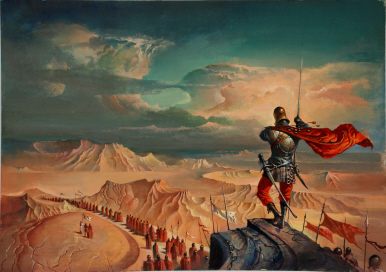
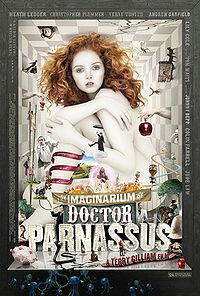 Very much looking forward to
 When people ask me what I like to read I usually answer with a simple ‘everything,’ but of course that’s not strictly true. I don’t read trigonometry textbooks or Romance novels, celebrity memoirs or cookbooks, monographs on the evolution of sheep shearing or anything by Dan Brown (in fact, just give me that thing on sheep first). But when I say ‘everything’ I’m being figuratively if not literally honest, because my tastes — especially when compared to the average reader — are very broad. I don’t read only one kind of thing. I’m a generalist.
 I finally saw Spike Jonze’s Where the Wild Things Are a few days ago (because I’m never the first to see anything, as a matter of policy) and I thought it was pretty good. Some people have reacted with shock and horror to the violence and the scary bits, and maybe I’m over-reacting against them, but there wasn’t anything scarier in the movie than a regular kid might have to face in an average week. Which may, itself, be rather scary, but more so for adults and their illusions than for kids.
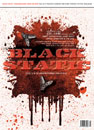 In the mail today, just in time for Halloween, is the blood-spattered graphic of the October/November
 cover of Black Static magazine, the horror and dark fantasy counterpart that alternates monthly appearances with Interzone science fiction published by the folks at
  In a few days, the clock will click over from October 31st, Halloween, and pass into November 1st, a day usually associated with the major retailers of North America vomiting out as much Winter Holiday displays they can. (Once they waited until the day after Thanksgiving, but now I think they are prepared to creep into mid-October as well, before the pumpkins are even carved.)
 For this edition of my irregular review of the latest (more or less) short fiction, I thought I’d try something a little different. Usually I try to focus on the stories that worked the most for me, with maybe some attention on those that didn’t and why; at the same time, I also try to convey a flavor of everything else, if only just to alert you that an author is in the publication without, for any number of reasons, wanting to get into discussing the story to any great length. Note the use of the word “try.” One of the challenges here is to provide some substantive, possibly even useful, discussion to an audience that I’m assuming hasn’t already read the material. As
  I’ve been guest-blogging (with fellow Pyr author
 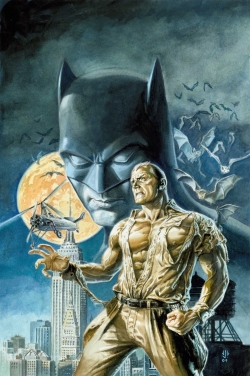 The comic book superhero was born in the late 1930s, during the time when the dominant form of popular culture reading was the pulp magazine. During the next decade, the pulps would start their slow demise: wartime paper shortages that forced the publishers to cut back on the more risky material to focus on the steady sellers, the paperback influx competed on the genre scene and were popular with soldiers overseas, and the rise of the comic book took away much of the younger readers. That the comic book should play such a large part in the end of the pulp magazine industry is an ironic reversal, since the hero pulps fueled the creation of those first four-color superheroes. No Batman without the Shadow. No Superman without Doc Savage.