A Look at Matthew Sturges’ Midwinter
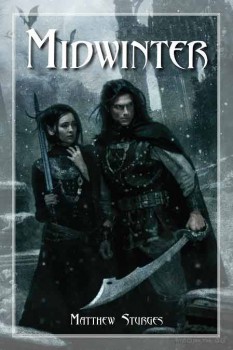 Midwinter
Matthew Sturges
Pyr (345 pages, Trade Paperback, March 2009, $15.98)
Reviewed by Bill Ward
Midwinter is the debut novel from comics writer Matthew Sturges, and it has elves in it. In fact, it’s all about elves, taking place as it does in the land of faerie. But these elves, dear reader, are not your Daddy’s elves — or, more to the point, they are not the sort of derivative elves that tend to find their way into the fiction of writers who have trouble thinking outside their last D&D campaign. Midwinter’s Fae, in all their variety, are much more reminiscent of the Sidhe of Celtic myth that is clearly Sturges’ jumping off point, perhaps with a bit of Tolkien and Moorcock thrown in for good measure. Those who can’t stand heavily derivative fantasy need not worry — in fact, it’s Sturges’ willingness to play with tropes and inject his tale with the unexpected that is the main attraction of his world.
For an example of one of those ‘sit up on the edge of your seat and take notice’ turns, we have an event that occurs early in the book. The premise of the quest is established quickly, and this ‘dirty dozen with elves,’ as Sturges has described the book, kicks off in much the expected direction. We are introduced to disgraced Guard Captain Mauritane, in prison, as well as his despised enemy — a Fae who conspired to bring him down in the first place. The quest is laid out (though not explained — the revelation of the true purpose of the quest isn’t provided until the end), and Mauritane’s team of fellow prisoners assembled. But just when you think the direction of things is all mapped out, Mauritane, seemingly as an aside, ends up traveling back in time (!) and participating in an episode the significance of which is only shown later. Throughout the novel Sturges shows a willingness to make a hard right without taking his foot of the gas — leaving some rubber on the road and, just maybe, making a few white-knuckled passengers uncomfortable — in a way that reminded me of the more daring and fluid fantasies of the past.
 How to Train Your Dragon (2010)
 Most pulp writers of the 1930s were itching to break into the hardcover book market. Since reprints of pulp stories in book form were rare at the time, these writers did not expect that their work for the newsstands would survive past an issue’s sell-date. They felt comfortable re-working and expanding on them to create novels. Raymond Chandler famously called his process of novelizing his already published work as “cannibalizing.” He welded together different short stories, often keeping large sections of text intact with only slight alterations. Other authors took ideas that they liked, or else felt they could do more justice to in the novel format, and enlarged them into books without text carry-over. Robert E. Howard used “The Scarlet Citadel” as a guide for The Hour of the Dragon. And Cornell Woolrich turned many of his short stories into novels. “Face Work” became The Black Angel. “Call Me Patrice” became I Married a Dead Man. “The Street of Jungle Death” became Black Alibi. And “Speak to Me of Death” became Woolrich’s most depressing novel (which is really saying something), Night Has a Thousand Eyes.
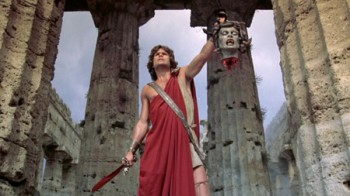 On April 2nd, “Titans Will Clash!” Which is perhaps the worst tag-line I’ve seen since “The Story That Won’t Go Away” for JFK. I wonder why the tag-line on director Louis Lettier’s previous film wasn’t “This Summer, The Hulk Is Incredible!”
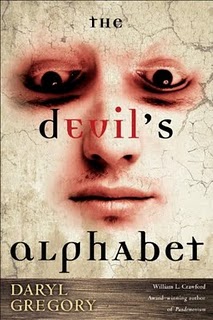 Paxton Martin has come home to Switchcreek, Tennessee, to attend the funeral of a childhood friend. He drove in from Chicago, pulling an all-nighter, because he could not decide until the last minute if he wanted to go back. He’d been living in Chicago since running away from Switchcreek, 13 years ago, after everything changed.
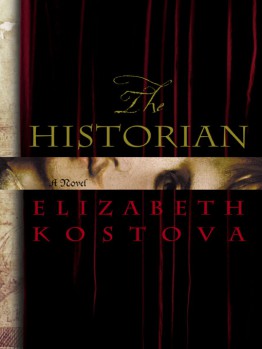 I don’t have a dislike for the vampire in general. I’ve repeatedly reminded myself about this even as I cringe at the saturation in our culture of mediocre work based on supernatural bloodsuckers. (Do I really have to name the book and movie series at the center of this creative blood drain? Of course I don’t.) Vampires are everywhere today, and this visibility has reduced their effectiveness for me, no matter what “new” spin the artists claim they’re putting on the legend. Exceptions are out there—for example the action-packed novels of certain contributor to Black Gate—but today I actively avoid horror and dark fantasy and especially parodies using vampires. I want more werewolves and phantasms and cosmic weirdness. Specifically werewolves. I love werewolves.
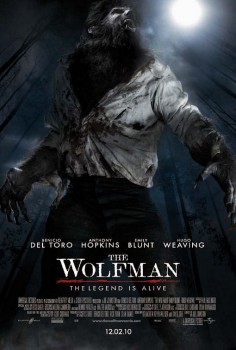 The Wolfman (2010)
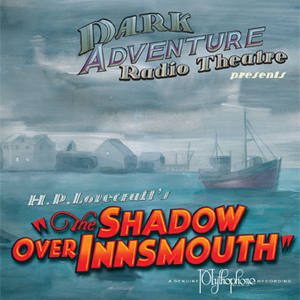 I work for a small software company in Champaign, Illinois. I live in St. Charles, about three hours away. I spend a lot of time in the car. I’ve learned to love audio books.
 The