Browsed by
Category: New Treasures

Future Treasures: Fog Season, Book II of Tales of Port Saint Frey by Patrice Sarath

Future Treasures: Fog Season, Book II of Tales of Port Saint Frey by Patrice Sarath

The Sisters Mederos Patrice Sarath-small Fog Season Patrice Sarath-small

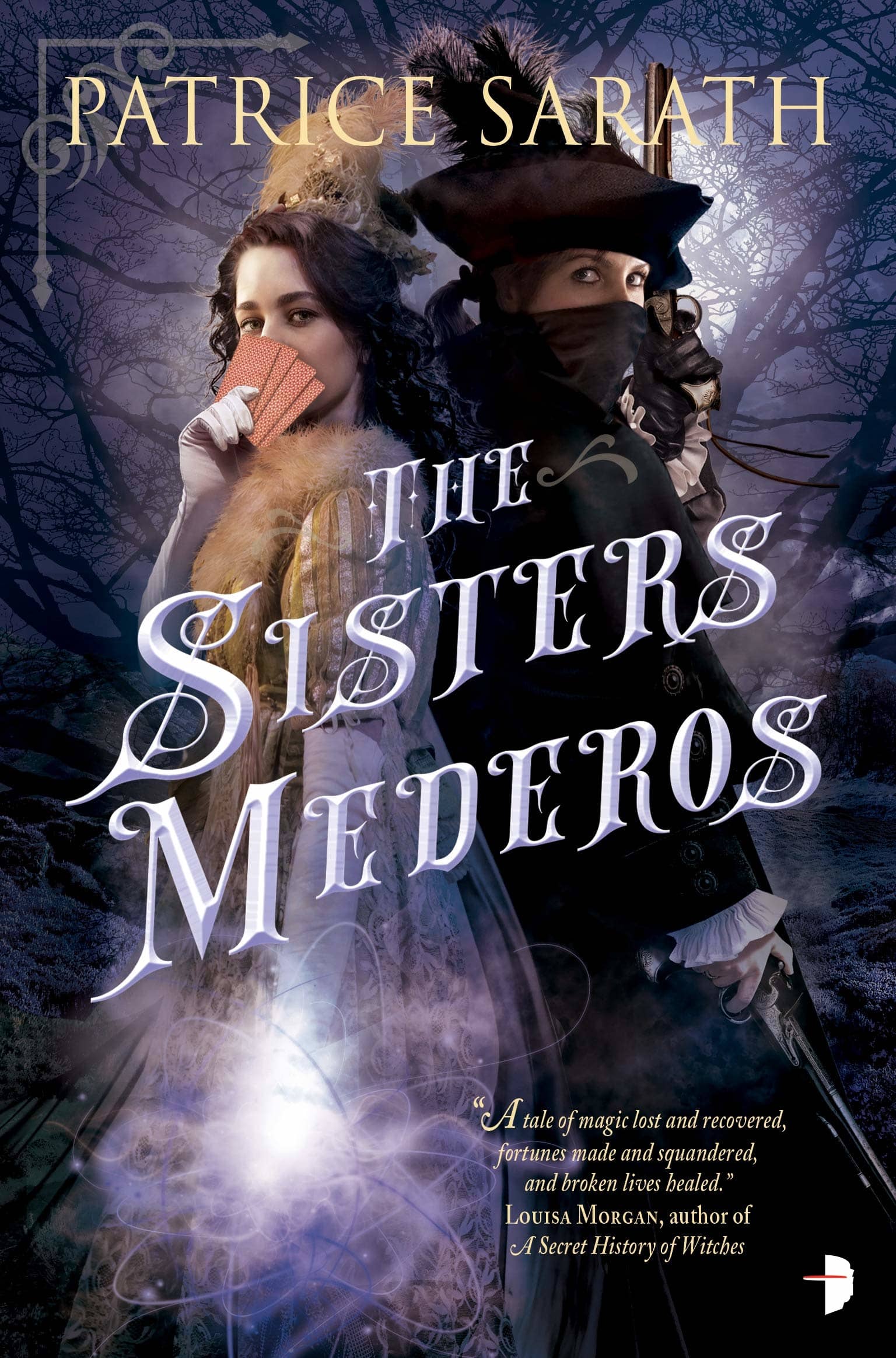
I was proud to publish Patrice Sarath’s short story “A Prayer for Captain LaHire” in Black Gate 4, and see it reprinted in Year’s Best Fantasy 3 (2003). She turned to novels with the popular Gordath Wood trilogy (Gordath Wood, Red Gold Bridge, and The Crow God’s Girl). But her real breakthrough came last year with her first release from Angry Robot, The Sisters Mederos, the tale of a once-great family fallen on hard times, and the two sisters — one a masked bandit, and another with secret supernatural powers — who reverse their family’s downfall. Louisa Morgan (A Secret History of Witches) called it:

A colorful Dickensian fantasy that leads the reader on an unpredictable path of murder, intrigue, and mystery… It’s a tale of magic lost and recovered, fortunes made and squandered, and broken lives healed, all of it engineered by Yvienne and Tesara, two resourceful and delightful protagonists, in the company of some charming and often dangerous sidekicks.

Publishers Weekly gave it a rousing review saying,

The young women, newly returned from boarding school to a fantasy version of a preindustrial European port city, are determined to restore their family’s fortune and revenge themselves on the corrupt Merchant’s Guild, whose machinations lie behind House Mederos’s downfall. Yvienne, “the smartest girl in Port Saint Frey,” provokes through newspaper editorials, takes a governess job as an entrée into the houses of the powerful, and eventually discovers the excitement of committing armed robbery. Tesara, who conceals supernatural powers that she blames for the shipwreck that ruined her family, ingratiates herself with the upper classes at gambling tables… [The] heroines are entertaining company, and the dynamic between the two sisters — occasionally contentious, often secretive, always loving — is the most enjoyable part of this effervescent tale.

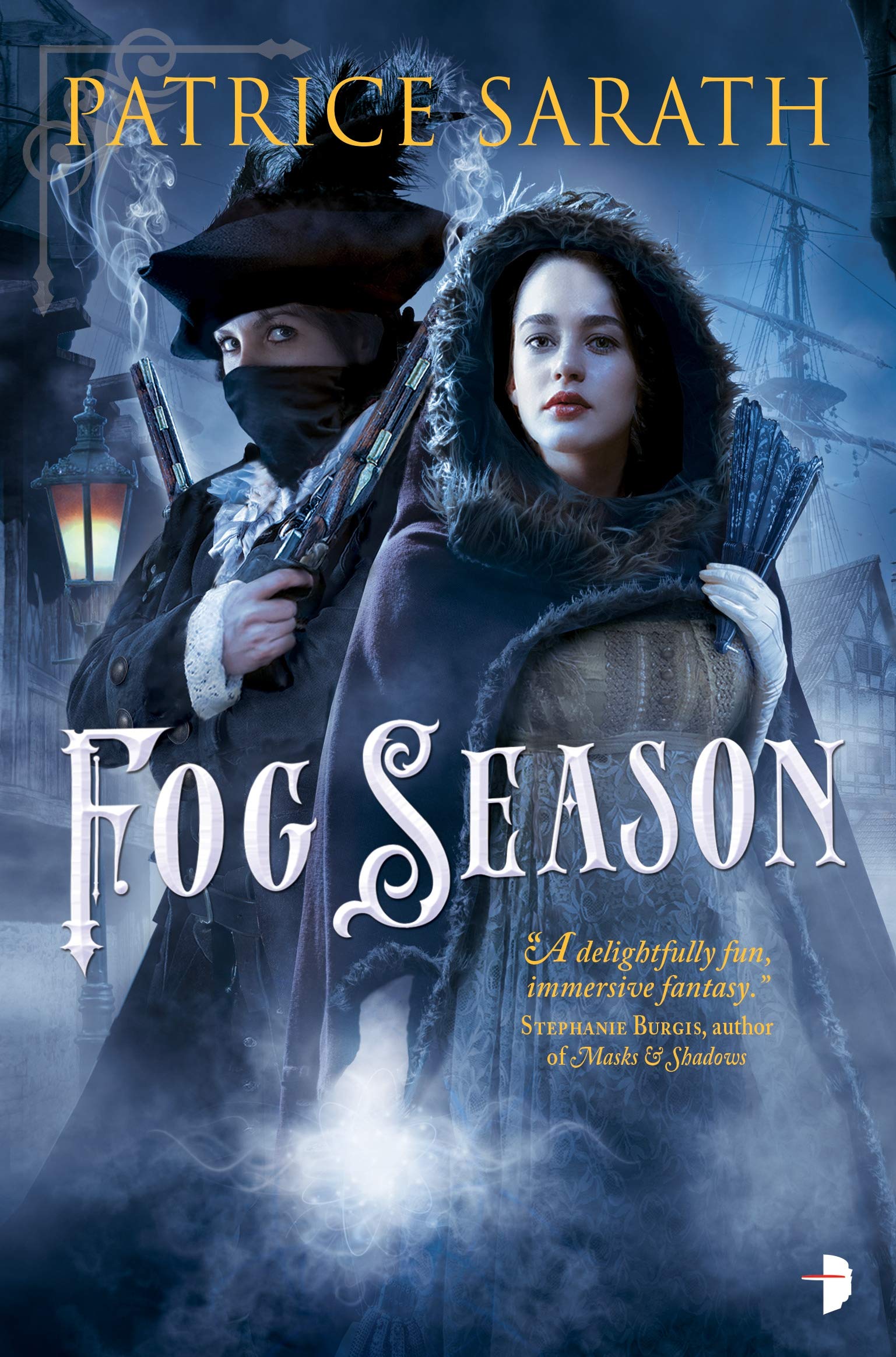
I’m delighted to see the sequel, Fog Season, scheduled to arrive February 5, less than a year after the release of the first, and I hope it’s the sign of more to come. Here’s the description.

Read More Read More

A Gritty Medieval Fantasy of Battles, Treachery, and Monsters: The Tales of Durand by David Keck

A Gritty Medieval Fantasy of Battles, Treachery, and Monsters: The Tales of Durand by David Keck

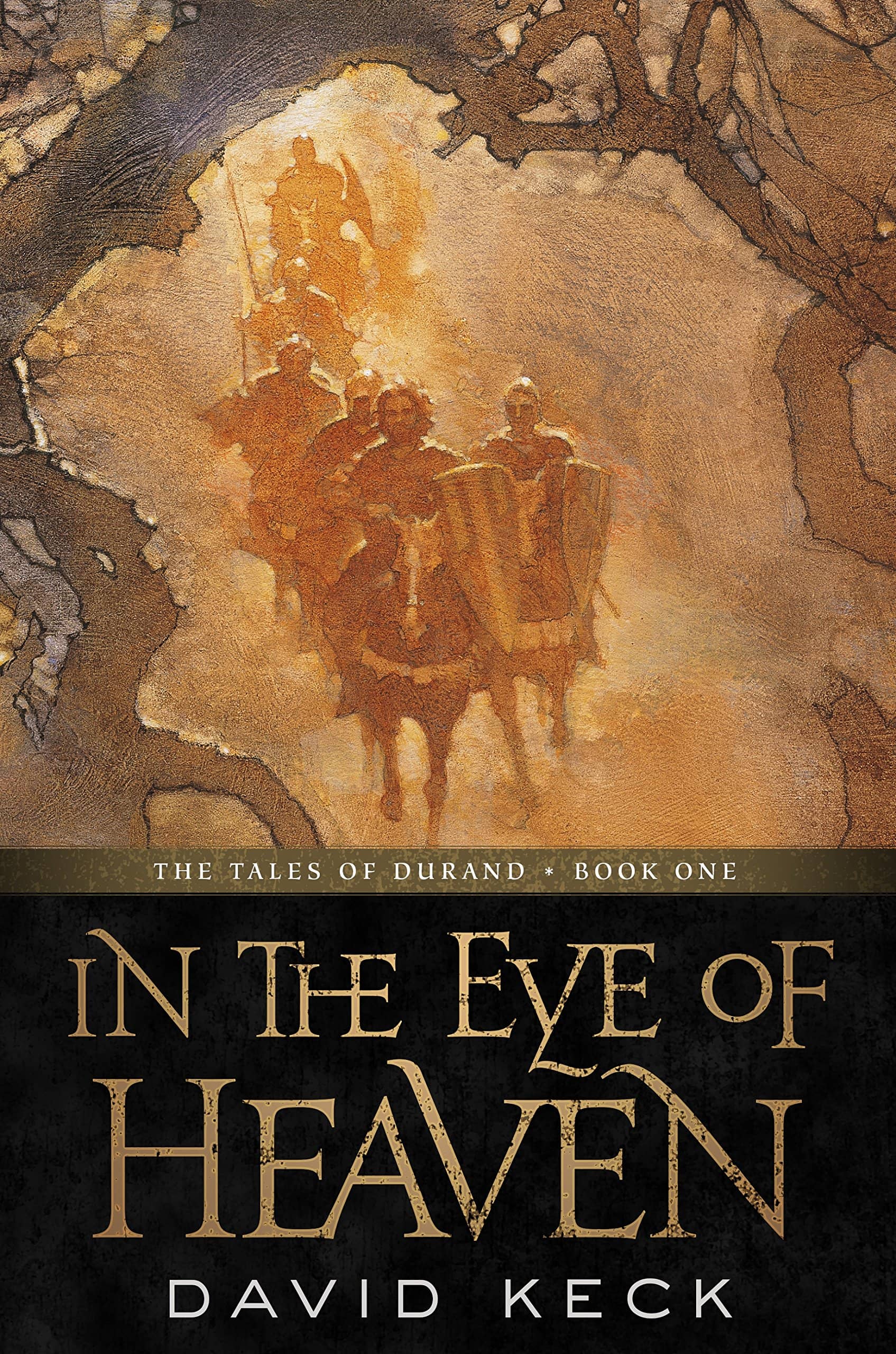
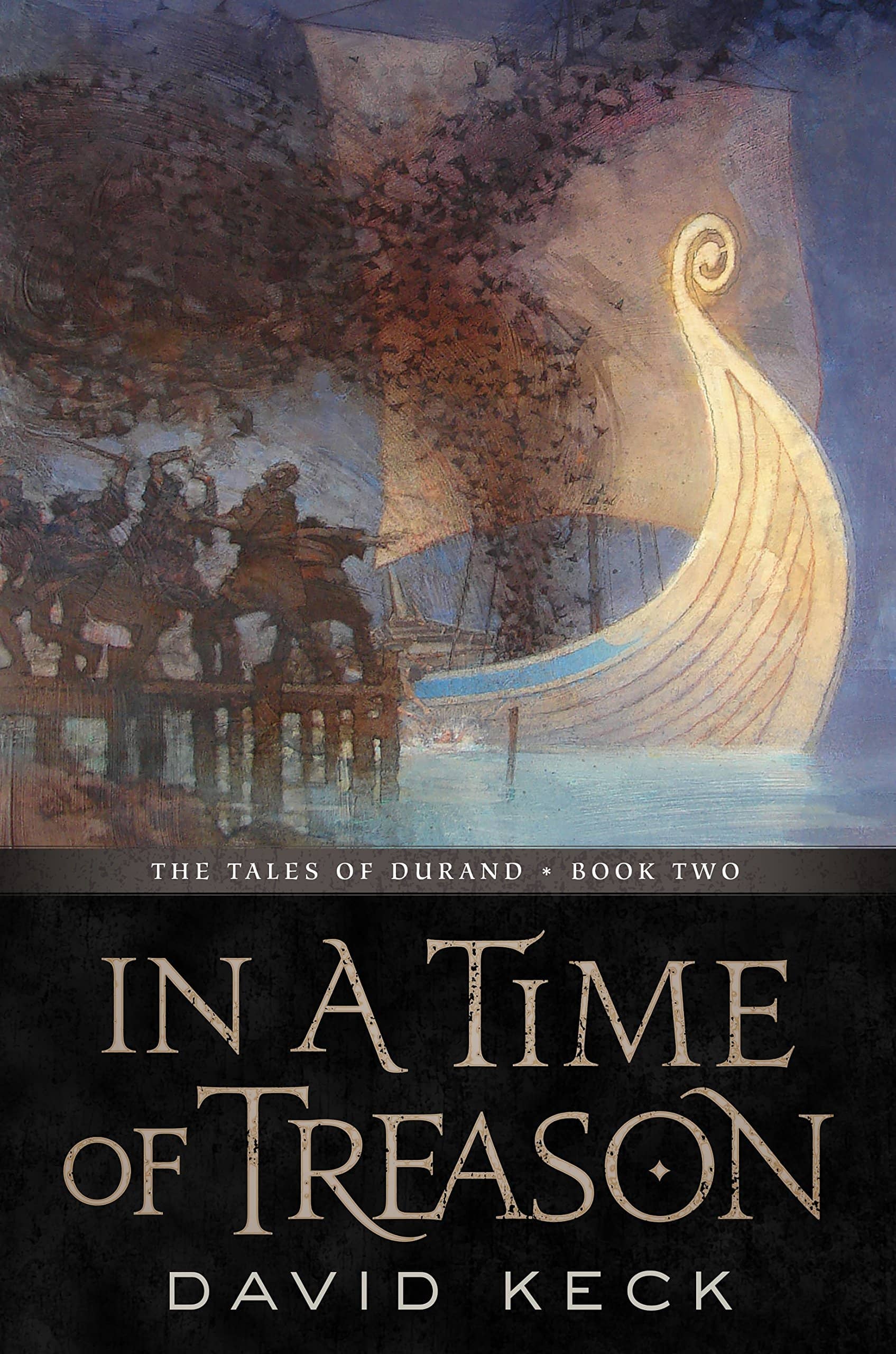
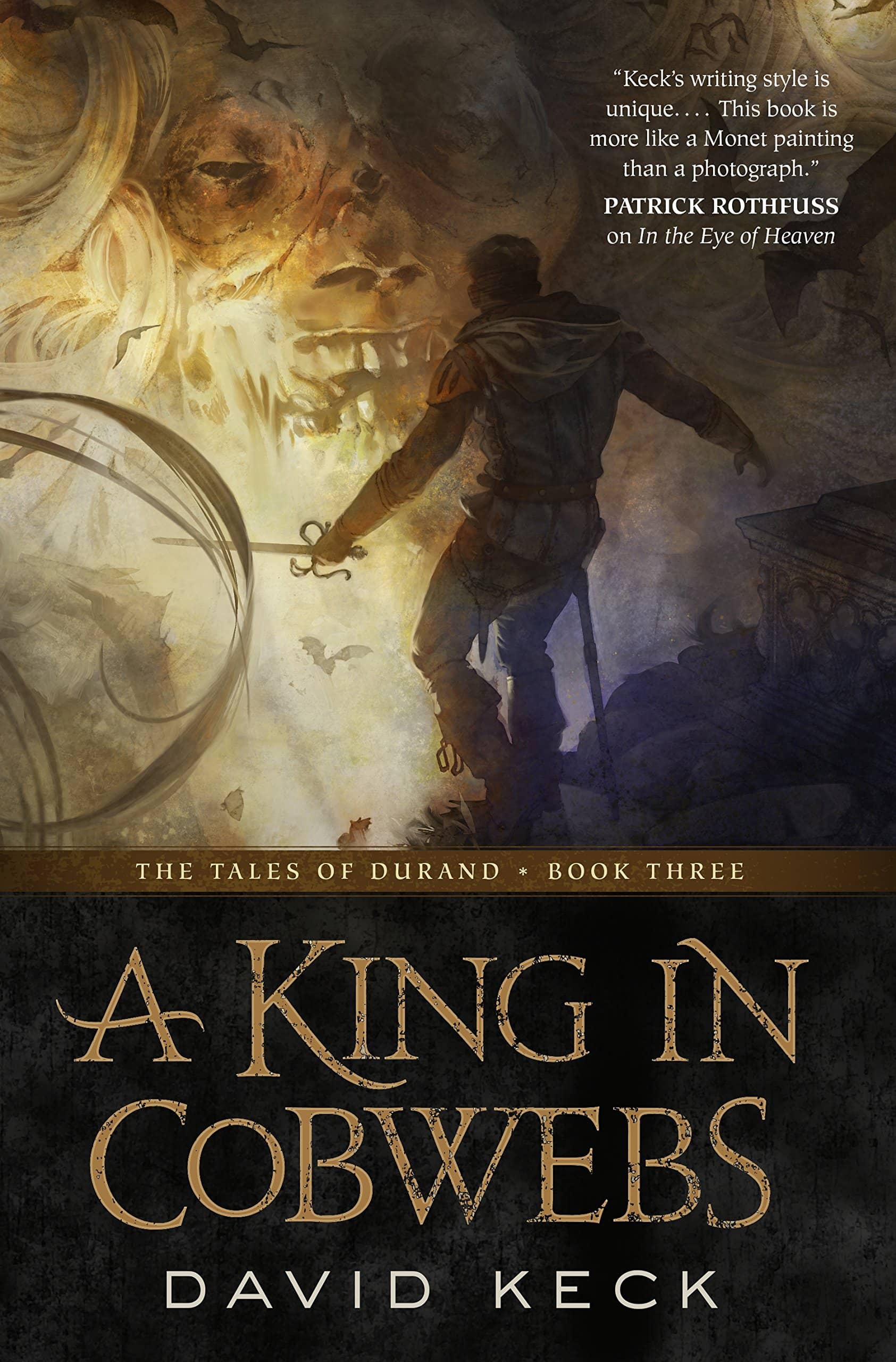
In the Eye of Heaven-small In a Time of Treason-small A King in Cobwebs-small

The Christmas break, traditionally my longest reading holiday of the year, is over, and it’ll be a month or two at least before I can contemplate tackling another epic fantasy trilogy. But it’s not too early to start stacking by my bedside in preparation.

I’ve already picked out a promising series to start the new stack: David Keck’s Tales of Durand. Publishers Weekly praised the first book, In the Eye of Heaven (2006) as a “winning debut, a gritty medieval fantasy full of enchantment… deftly told,” and called the sequel, In a Time of Treason (2008) “grand-scale storytelling.” But they reserve their strongest praise for the long-awaited concluding volume A King in Cobwebs, saying

Keck concludes his Tales of Durand trilogy with this superlative fantasy epic, which sees the warrior Durand Col take his place among battles and treachery that threaten the kingdom of Errest the Old. Durand stands as champion to Abravanal, Duke of Gireth and holder of the Duchy of Yrlac. Although the Yrlacies are restless under Abravanal’s rule, the duke is commanded to ride with his household to the Fellwood Marches by his unhinged king, Ragnal. Yrlaci rebels harry the soldiers of Gireth on the road to the Fellwood, and, once there, they are chased by the inhuman host of maragrim, “hideous in their innumerable deformities.” … Keck sends the stalwart Durand through darkness and a lost land, facing terrors and beset by the dead. Human politics and dreadful foes are combined in this tale that stands with the very best fantasies.

A King in Cobwebs was published by Tor Books on December 4, 2018. It is 444 pages, priced at $28.99 in hardcover, $17.99 in trade paperback, and $9.99 for the digital edition. The cover is by David Grove. Read an excerpt from In the Eye of Heaven here, and see all our recent coverage of the best in new fantasy series here.

New Treasures: Occupy Me by Tricia Sullivan

New Treasures: Occupy Me by Tricia Sullivan

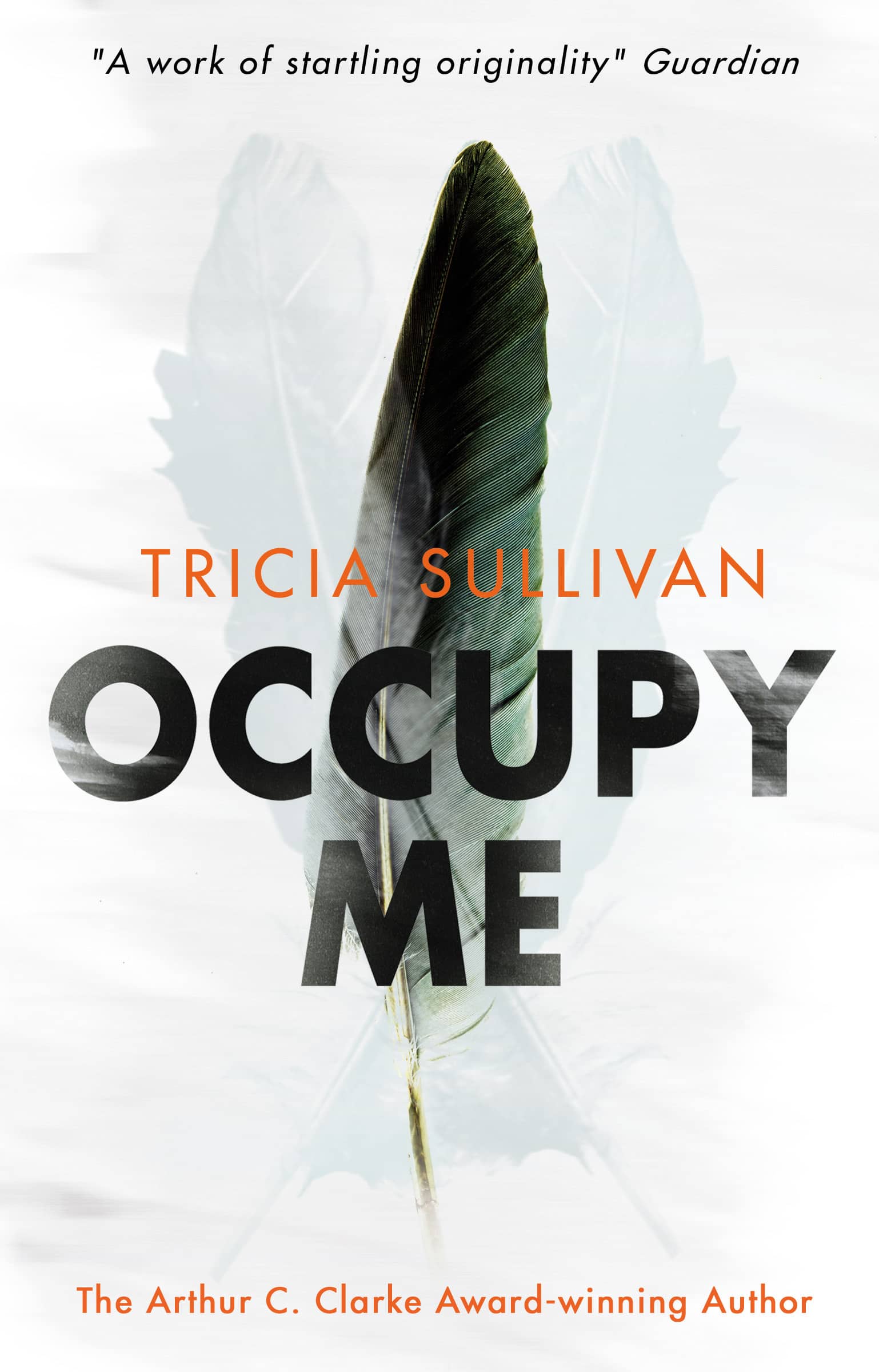
Occupy Me-smallTricia Sullivan is the author of Lethe (1995), a Locus Award nominee for Best First Novel, Someone to Watch Over Me (1997), and the Clarke Award-winning Dreaming in Smoke (1998). Her latest novel is something different — the tale of an angel on Earth who gets caught up in a tale of international intrigue, and much more. Here’s the description.

A woman with wings that exist in another dimension. A man trapped in his own body by a killer. A briefcase that is a door to hell. A conspiracy that reaches beyond our world. Breathtaking SF from a Clarke Award-winning author.

Tricia Sullivan has written an extraordinary, genre defining novel that begins with the mystery of a woman who barely knows herself and ends with a discovery that transcends space and time. On the way we follow our heroine as she attempts to track down a killer in the body of another man, and the man who has been taken over, his will trapped inside the mind of the being that has taken him over.

And at the centre of it all a briefcase that contains countless possible realities.

It was Mahvesh Murad’s Tor.com review of the original Gollancz UK edition that first intrigued me. Here’s the money quote.

Occupy Me is full to bursting with intriguing ideas and concepts, philosophy and complex physics. It’s high concept and heady. It’s also got a lot of humour… Sullivan takes the whole ‘strong female protagonist’ to a literal level too, giving Pearl massive physical strength (she can lift a truck!), the ability to fly and pure, brute will to survive and make things right. She’s a likeable character, easy to relate to even though her origins are mysterious and shrouded.

Occupy Me is… clever and complex and forces you to think outside of your comfort zone. It’s a thriller, complete with international hijinks, corporate corruption and an evil megalomaniac. What it isn’t is a standard paranormal fantasy featuring angels — it’s much more compelling in its originality.

Occupy Me was published by Titan Books on September 4, 2018. It is 361 pages, priced at $14.95 in trade paperback and $8.99 in digital formats. The cover is by Sidonie Beresford-Browne. See all our recent New Treasures here.

The Silent Garden: A Journal of Esoteric Fabulism is a Beautiful New Fantasy Magazine

The Silent Garden: A Journal of Esoteric Fabulism is a Beautiful New Fantasy Magazine

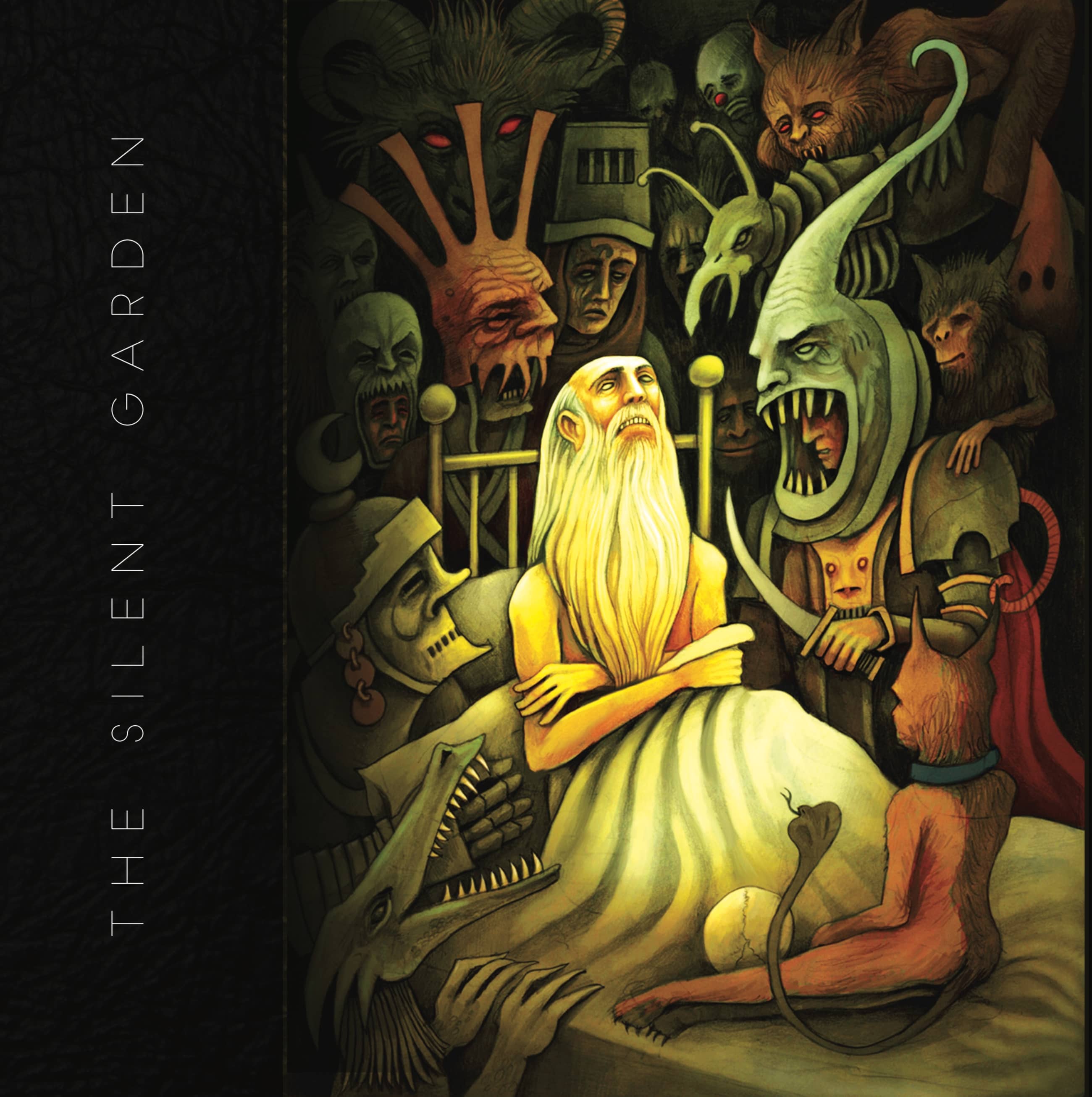
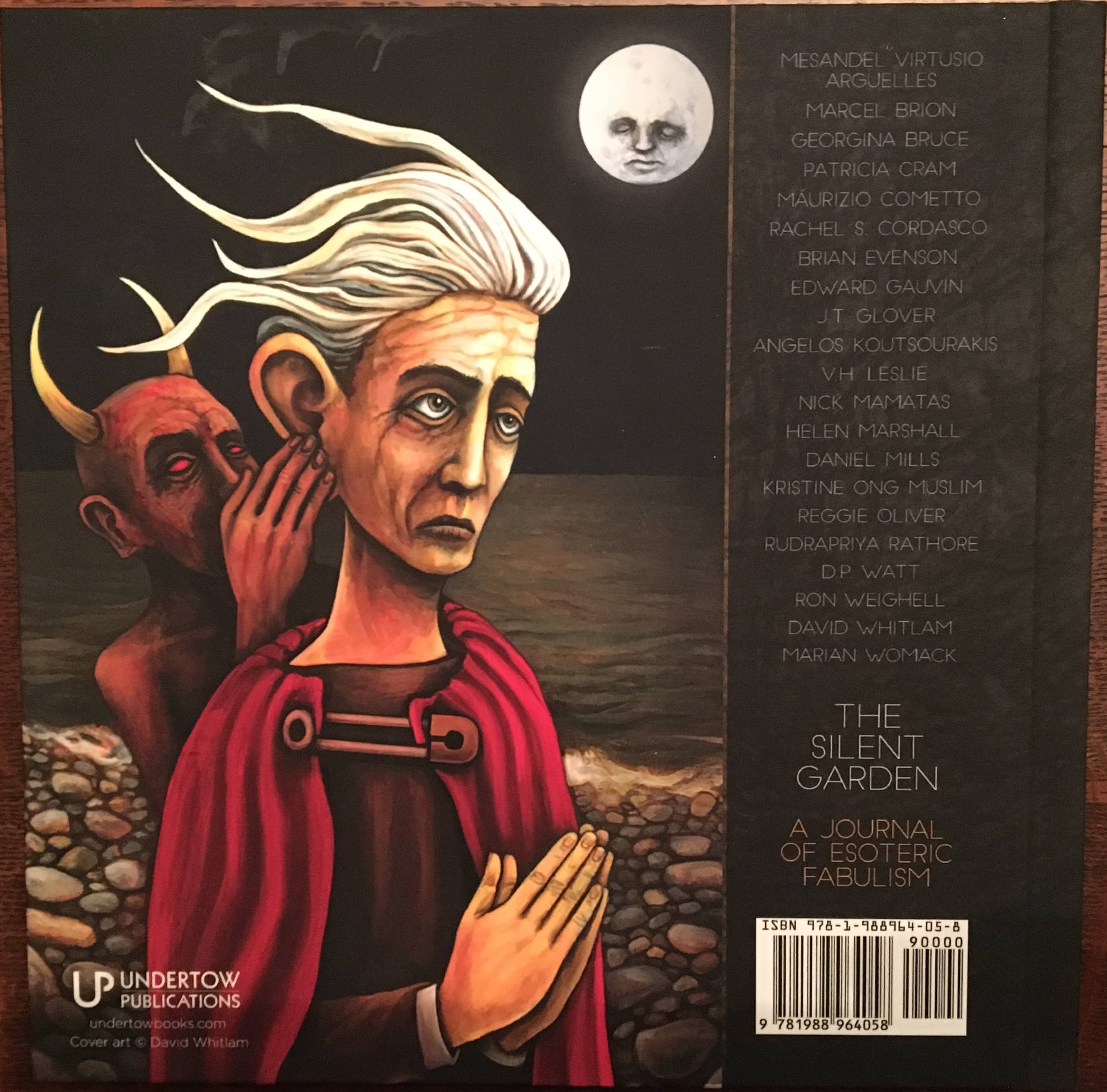
The Silent Garden-small The Silent Garden-back-small

I don’t usually buy books or magazines sight unseen. But I made an exception for the inaugural volume of The Silent Garden, a beautiful new “Journal of Esoteric Fabulism.”

Part of the reason was the publisher. Mike Kelly’s Undertow Publications has produced some of the most memorable dark fantasy and horror of the past few years, including the anthology Aickman’s Heirs, Simon Strantzas’s new collection Nothing is Everything, and five volumes of Year’s Best Weird Fiction. To be honest the list price, $50 for a deluxe full color hardcover on 70lb. paper, gave me sticker shock, but the list of contributors — V.H. Leslie, Nick Mamatas, Helen Marshall, Brian Evenson, D.P. Watt, and many more — and the discounted 4-volume “The Year in Weird” bundle pricing on their website eventually won me over.

I’m very glad it did. At 249 pages, there’s a whole lot of content crammed into this journal, including eleven short stories, poems, book reviews, articles, and a 24-page full-color gallery devoted to the work of Manchester artist David Whitlam. But just describing the contents doesn’t do it justice. The real strength of The Silent Garden is its top-notch design. It looks fantastic, and every piece is accompanied by at least one striking visual or full-color work of art. Here’s a few pics of the gorgeous interiors.

Read More Read More

Solving Crimes in a War-Torn Tokyo: Ninth Step Station, created by Malka Older

Solving Crimes in a War-Torn Tokyo: Ninth Step Station, created by Malka Older

Ninth Step Station-small

Serial Box is one of the most exciting new genre publishers to arrive on the scene in the past few years. They’ve brought a very old concept — serialized fiction — into the 21st Century, and attracted an incredible line-up of top-notch writers to give it new life. So how does it work? Serial Box offers multiple stories in a rich variety of genres, and they release new episodes every week. Each serial typically runs for a “season” of 10-16 weeks, and each is written by a team of talented writers. Just check out this list of contributors: Max Gladstone, Amal El-Mohtar, Ellen Kushner, Delia Sherman, Ian Tregillis, Michael Swanwick, Mary Robinette Kowal, Brenda Clough, Michael R. Underwood, Marie Brennan, Alyssa Wong, Paul Cornell, Paul Tremblay, Christopher Golden, Yoon Ha Lee, Becky Chambers, and many, many more. The stories are easy to jump into, individual episodes are standalone (but contribute to a larger story arc), and each episode is available in ebook and audio formats, and takes about 40 minutes to enjoy.

Their newest serial Ninth Step Station launches this week. Created by Malka Older and written by Older, Fran Wilde, Jacqueline Koyanagi, and Curtis C. Chen, Ninth Step Station is the tale of two unlikely partners in a future Tokyo who solve a series of murders. Here’s the description.

A local cop. A US Peacekeeper. A divided Tokyo.
In the future, two mismatched cops must work together to solve crimes in a divided Tokyo.

Years of disaster and conflict have left Tokyo split between great powers. In the city of drone-enforced borders, bodymod black markets, and desperate resistance movements, US peacekeeper Emma Higashi is assigned to partner with Tokyo Metropolitan Police Detective Miyako Koreda. Together, they must race to solve a series of murders that test their relationship and threaten to overturn the balance of global power. And amid the chaos, they each need to decide what they are willing to do for peace.

Ninth Step Station is only one of the many offerings from Serial Box. Here’s a few of the others.

Read More Read More

New Treasures: Figures Unseen by Steve Rasnic Tem

New Treasures: Figures Unseen by Steve Rasnic Tem

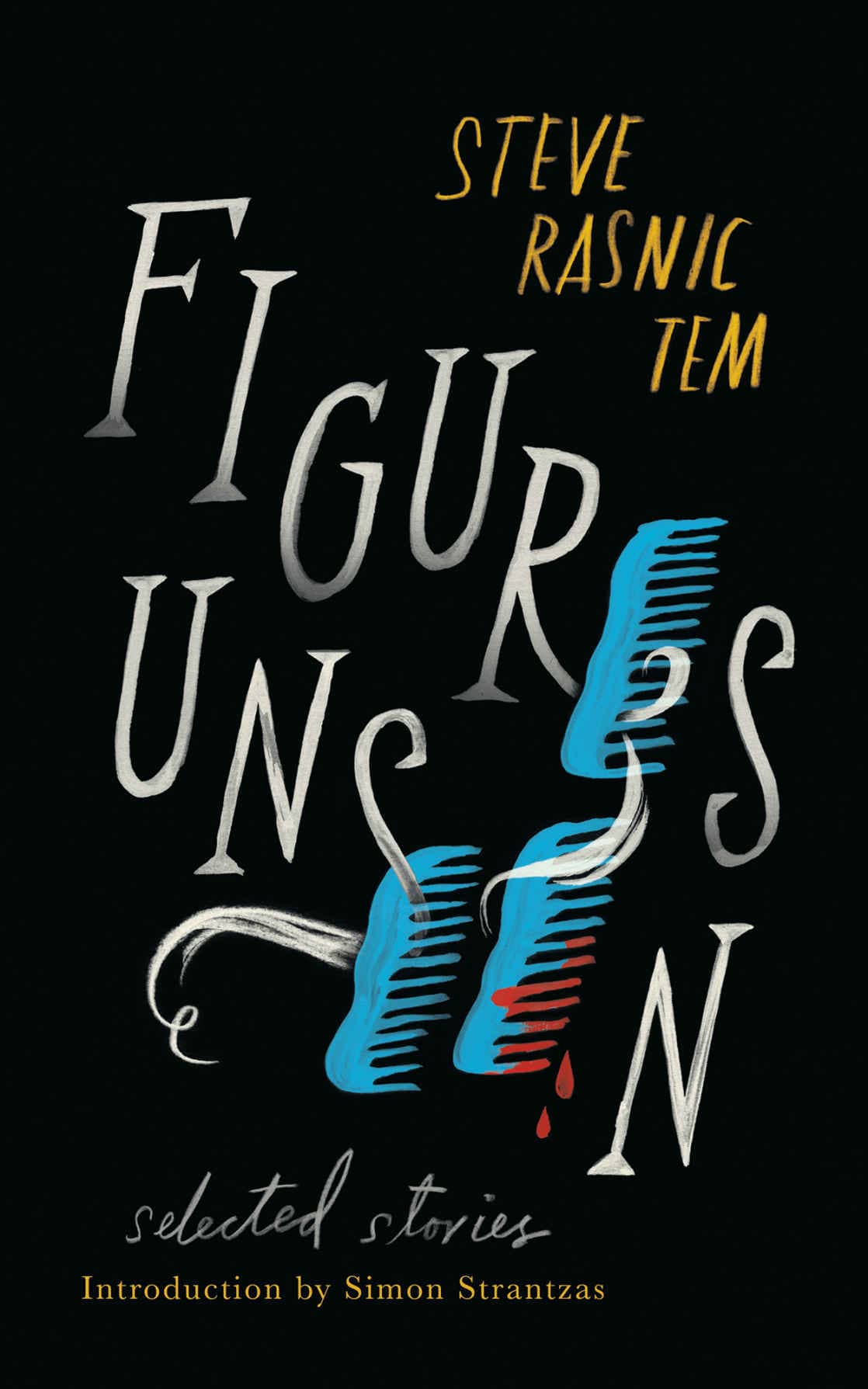
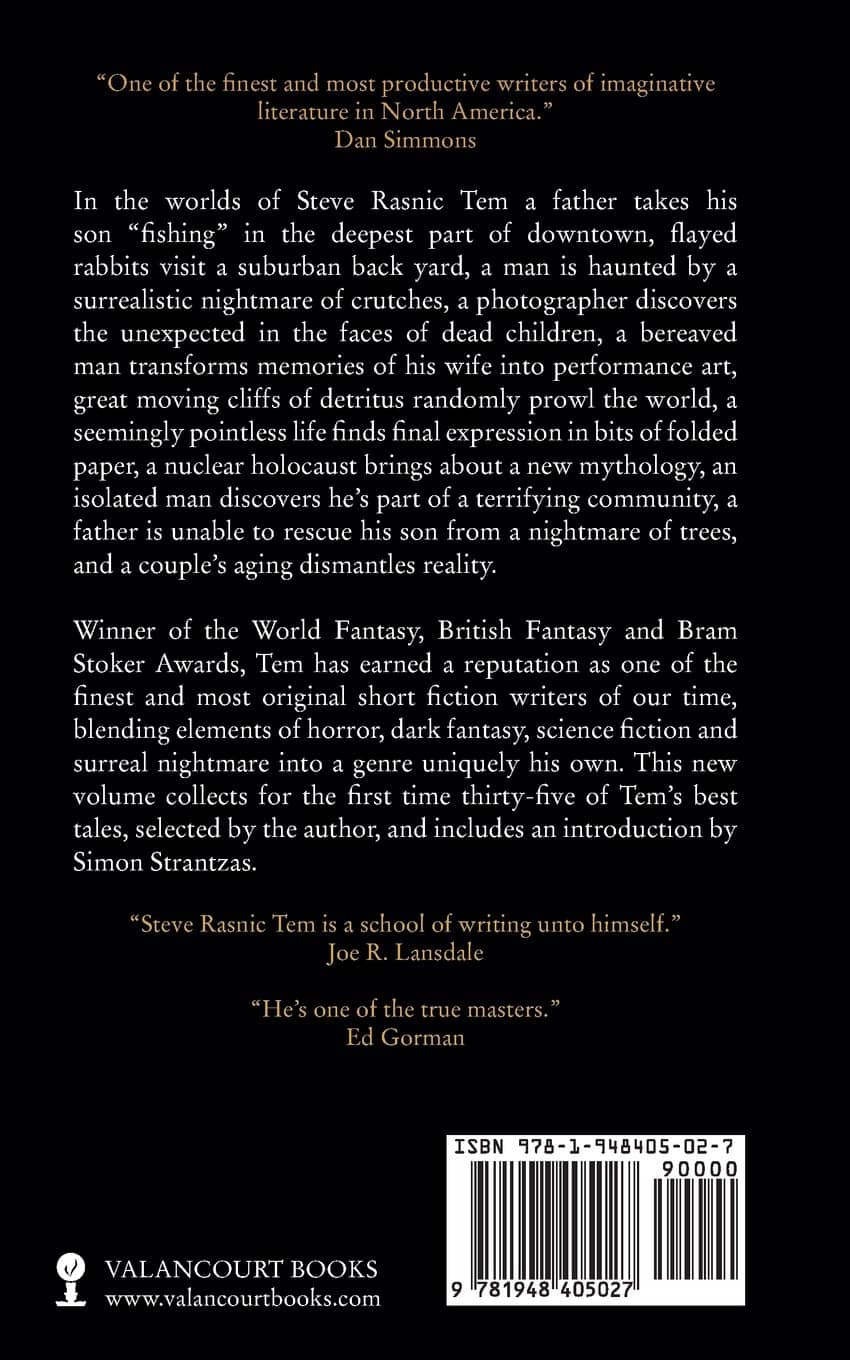
Figures Unseen Steve Rasnic Tem-small Figures Unseen Steve Rasnic Tem-back-small

I’m still sorting through all the books I brought back from the World Fantasy Convention this year (which is kinda par for the course — it usually takes me 4-8 months to unpack from that con). Based on reading time and enjoyment over the past few months, my most productive period of the entire convention was the 10 minutes I spent in the Valancourt Booth.

I’ve already talked about several of the books I purchased there, including Michael McDowell’s The Complete Blackwater Saga and Harry Adam Knight’s The Fungus. But I haven’t yet mentioned Steve Rasnic Tem’s new book Figures Unseen, a fabulous collection of 35 of his best tales, as selected by the author.

In his long career Tem has received the World Fantasy, British Fantasy and Bram Stoker Awards. His novels include Excavation (1987), The Man on the Ceiling (2008, with Melanie Tem) and Blood Kin (2014), and his many collections include City Fishing (1999), The Far Side of the Lake (2001), Celestial Inventories (2013), and Out of the Dark (2016). Dan Simmons calls Tem “One of the finest and most productive writers of imaginative literature in North America,” and this collection is the perfect place to start if you want to sample some of his finest work. It includes many of my favorites — including the brilliant “City Fishing,” the tale of a father who takes his son on a very unusual fishing trip in the heart of an ancient city.

Figures Unseen also includes a fine introduction by Simon Strantzas, which I think explicates the effectiveness of Tem’s work better than anything else I’ve read. Here’s a small excerpt.

Read More Read More

Future Treasures: Shadow Captain by Alastair Reynolds

Future Treasures: Shadow Captain by Alastair Reynolds

Revenger-Alastair-Reynolds-medium Shadow Captain Reynolds-small

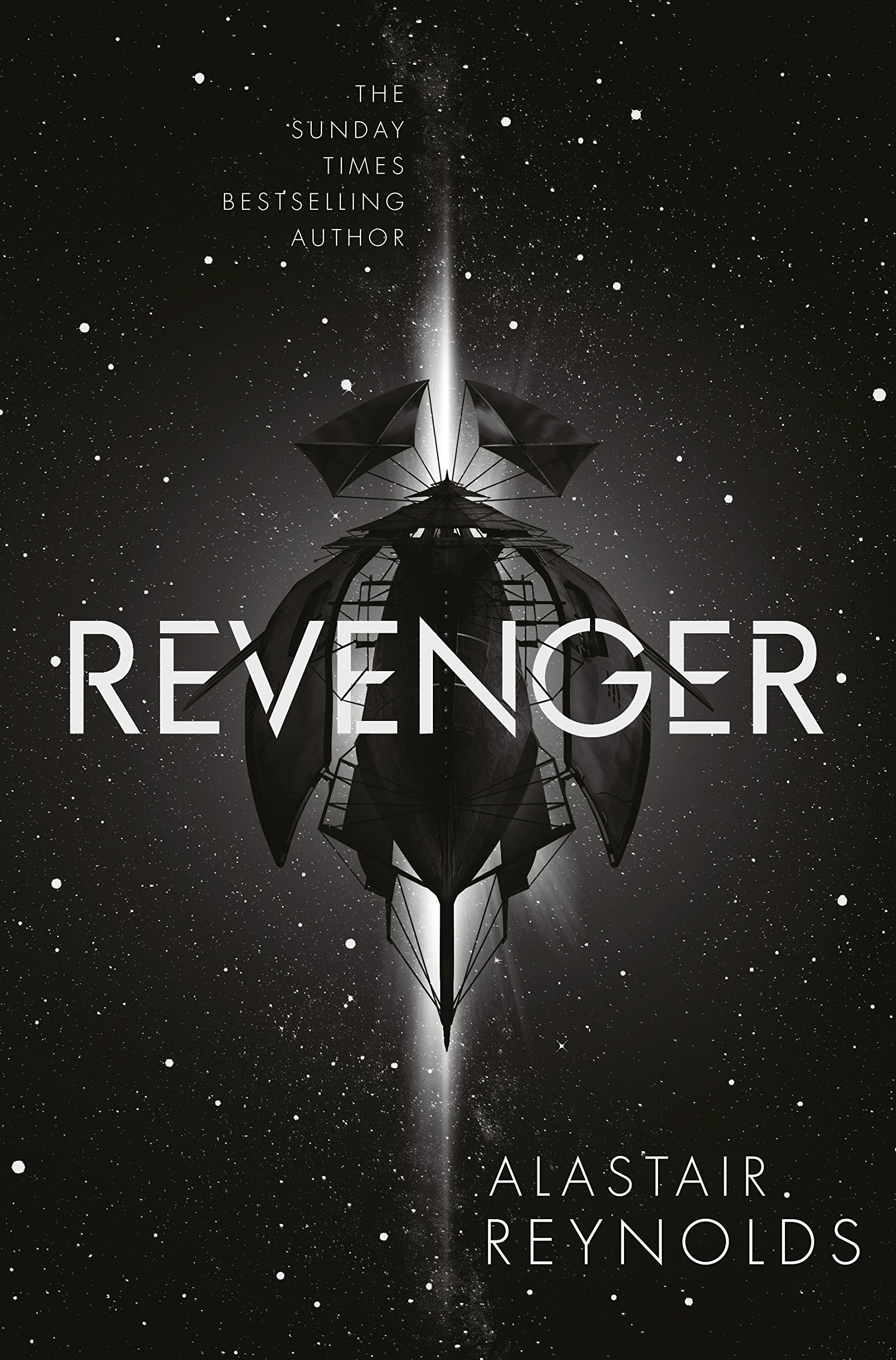
Alastair Reynolds’ Revenger was one of the most acclaimed SF novels of 2016. It was a finalist for the Philip K. Dick Award, and won the Locus Award for Best Young Adult Book. SFX called it “By far the most enjoyable book Reynolds has ever written,” and The Guardian labeled it “”A swashbuckling thriller — Pirates of the Caribbean meets Firefly.” In his enthusiastic review for Black Gate, Brandon Crilly said:

Reynolds’ work is always fast-paced and interesting, weaving the detailed science with just enough of the fantastic to add that sense of wonder and a perfect balance of action and character work. Revenger, for example, has the pacing of Firefly or Star Wars, so that even as he’s explaining the steampunkiness (is that a word?) of the starships and personal technology in the novel, you’re never mired in an info-dump or bored by too much scientific description, just to understand how everything works.

Revenger is particularly good because it’s a very human story: it focuses on two sisters who want to escape their homeworld and sign on with a starship crew not for pure escapism like Luke Skywalker, but specifically to earn money to help their father’s struggling business. What begins as a story of adventure and wild-eyed wonder as these sisters get to know their very first crew becomes a dark and harrowing tale almost immediately, as Reynolds takes his protagonists through multiple twists and unexpected locales.

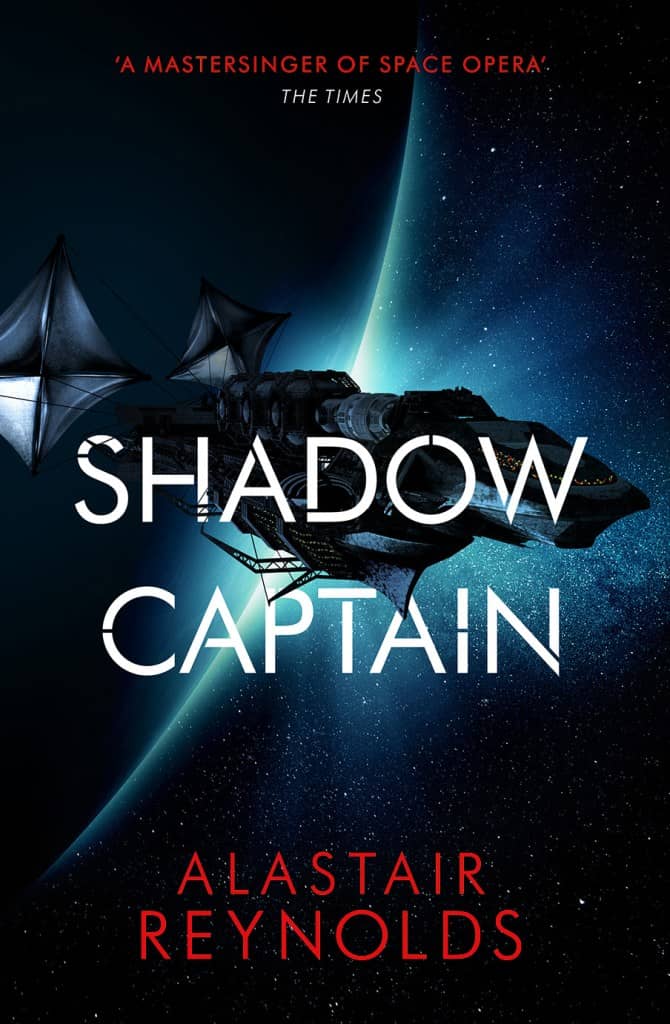
The long-awaited sequel Shadow Captain will be published by Orbit on January 15, 2019. It is 448 pages, priced at $15.99 in trade paperback and $9.99 in digital formats. Get more details and read the complete first chapter here.

A Bible-Sized Bildungsroman: Strange the Dreamer by Laini Taylor

A Bible-Sized Bildungsroman: Strange the Dreamer by Laini Taylor

Strange the Dreamer-smallNone of the other orphans at the monastery want to go anywhere near Brother Cyrus. Babbling nonsense, he grabs them by the wrists and holds them for hours.

But foundling Lazlo Strange volunteers to take the monk all his meals. That’s because, in the midst of his babble, Brother Cyrus tells stories. He speaks of an Unseen City, a magical place tiled in lapis lazuli where tame white stags pace the streets beside beautiful women with long black hair, and giant lizards float in the canals.

Strange is a dreamer, so these stories work on him like a baited hook. He yearns to visit the Unseen City, even though he knows he never can. Foreigners are caught at the front gate and executed. No one who tries to go ever returns. And two hundred years ago, even the caravans from the Unseen City stopped circulating, as though the civilization disappeared completely.

Once, while Lazlo is playing, some strange feat of magic strips the Unseen City’s true name from his mind. In its place is a new name:

Weep.

Growing up and becoming a young man, Lazlo escapes the monastery to work at a library, where he can surround himself with stories all day. Even during his free time, he plunges into the tales, looking for clues about Weep. Painstakingly, he writes his findings down, filling volumes with his own accounts of life in the Unseen City. Over the course of seven years, he teaches himself their language, assembling sounds, words, and phrases from book-keeping receipts and other fragments.

In the course of his studies, he stumbles across the secret to turning lead into gold. But instead of taking credit for this discovery himself, he quietly passes the information to the queen’s godson, Thyon Nero, who runs an alchemical laboratory.

Rather than being thankful, however, Nero considers killing Lazlo to preserve the secret of alchemy, as well as to ensure his own continued fame as an alchemist.

Read More Read More

New Treasures: Clarkesworld Year Nine, Volumes One & Two, edited by Neil Clarke and Sean Wallace

New Treasures: Clarkesworld Year Nine, Volumes One & Two, edited by Neil Clarke and Sean Wallace

Clarkesworld Year Nine Volume One-small Clarkesworld Year Nine Volume Two-small

It’s hard to believe Clarkesworld magazine launched over a decade ago (in October 2006, believe it or not). I remember when Neil Clarke announced it, as sort of a side project/marketing scheme for his online Clarkesworld bookstore. I was already a regular customer — Clarkesworld was far and away the best source for small press magazines, and they sold a lot of the print edition of Black Gate — and I was curious to see what he could do with it.

The rest, as they say, is history. The bookstore shut down a few years later, but the magazine exploded. Last time I counted it had a World Fantasy Award, three Hugo Awards, a British Fantasy Award, and in 2013 it received more Hugo nominations for short fiction than all the leading print magazines combined. Clarkesworld keeps getting bigger and more ambitious every year… although, in one way at least, things haven’t changed much since 2006: I’m still intensely curious to see where Neil and Sean will take it next.

I don’t have time to read every issue, so I greatly appreciate their tradition of producing an annual print volume every year collecting a complete year of fiction under a single cover. Last year’s Year Eight was a huge 448 pages and, given how much the magazine has grown in the past year, I was looking forward to seeing just how big Year Nine would be. When I finally set eyes on it (at the Clarkesworld booth at the World Fantasy convention) I wasn’t disappointed. For the first time it’s been broken into two books, both over 300 pages.

Read More Read More

The Omnibus Volumes of Sean Russell: Moontide and Magic Rise

The Omnibus Volumes of Sean Russell: Moontide and Magic Rise

Sea Without a Shore Sean Russell-small World Without End Sean Russell-small Moontide and Magic Rise-small

Art by Braldt Bralds and Shutterstock

Canadian fantasy writer Sean Russell produced three popular paperback series with his publisher DAW in the 90s, each exactly two books long:

Initiate Brother (The Initiate Brother, 1991, Gatherer of Clouds, 1992)
Moontide and Magic Rise (World Without End, 1995, Sea Without a Shore, 1996)
The River into Darkness (Beneath the Vaulted Hills, 1997, The Compass of the Soul, 1998)

These were all handsome volumes, and I collected them enthusiastically. By the early 2000s Russell had switched publishers, to Avon Eos (where he produced the Swan’s War trilogy), and after that he exited the fantasy genre entirely. He’s currently writing an ongoing series of novels about the HMS Themis, a Royal Navy frigate at the time of the French Revolution, under the name Sean Thomas Russell.

Over the last few years DAW has been collecting Russell’s 90s fantasy in large-size omnibus editions. The first, The Initiate Brother Duology, appeared in 2013, and The River Into Darkness was released just three months ago (and we covered it here as part of our look at the Best Sci-Fi and Fantasy Books of October 2018). And just a few weeks ago I stumbled on Moontide and Magic Rise at Barnes & Noble, a hefty 820-page tome released in May, collecting World Without End and Sea Without a Shore.

Read More Read More