Browsed by
Category: Essays

Ars Magica and the Specificity of Setting
Ars Magica and the Specificity of Setting

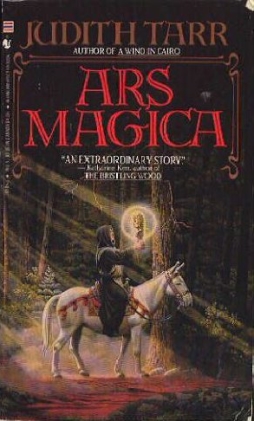
Ars MagicaFantasy fiction is very often set either in the European Middle Ages, or in lands that are intentionally highly reminiscent of the Middle Ages in terms of technology and social structure. It is true that the use of European medieval settings is less common now than it has been, and also true that there have always been counter-examples. But it seems that much fantasy still relies on the European Middle Ages to define itself, one way or another. Sadly, one often has a sense that these backgrounds are not wholly thought-through; not realised as completely as they might be. The setting in a lot of fantasy, particularly I think in commercial fantasy fiction, seems to be a very generic Middle Ages in which medieval stereotypes mix with unexamined modern assumptions.

(Historian and fantasy writer Kari Sperring had an excellent blog post not long ago in the course of which she decried ‘theme park’ fantasy; fantasy set in a world which has the trappings of medievalism but which lives on stereotypes about the past. Fiction that does not approach the Middle Ages as a distinctive culture — or, more properly, set of cultures — but rather as a way of reflecting some culture of the present day, with a few period trappings.)

In fact it’s a mistake to talk of ‘the Middle Ages’ as a single thing; between the sack of Rome and the advent of the Renaissance was a full thousand years, and different areas of Europe experienced those times very differently. It is wrong to imagine the Middle Ages as stagnant or unchanging or uniform. Technology changed, the arts changed, the understanding of the world changed. There were multiple Middle Ages, which varied with time and place; good fiction, I feel, understands this. Which is to say that good fiction, for the most part, understands the historical material it’s working with, and draws inspiration from the specifics of its background. History is an attempt at a record of human affairs, which means that it lends itself to drama and intensely human stories.

All of which brings me around to Judith Tarr’s 1989 novel Ars Magica, the story of a wizard a thousand years ago who became Pope.
Read More Read More

Being in the Nature of an Anniversary: Ruminations on Fantasy

Being in the Nature of an Anniversary: Ruminations on Fantasy

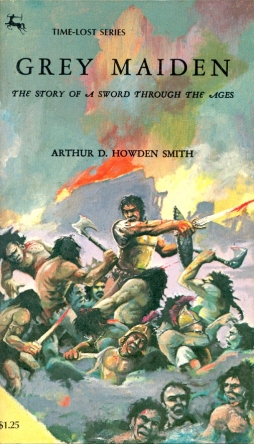
Grey MaidenIf I’m counting right, this marks my fifty-second post on Black Gate, which means this is effectively an anniversary. At any rate, it’s a good point to pause and reflect, I think. Writing here’s been a blast, from my first piece about Howden Smith’s collection of historical adventures Grey Maiden, up through last week’s essay on the origin story of Steve Ditko’s Doctor Strange. I’m eager to keep going, too; I feel like I’ve gotten better as a writer and critic from posting on this site, and I feel like I’ve begun to understand certain things about the nature of fantasy. I have to thank John O’Neill for inviting me to join his team, and Claire Cooney for her editing work; both John and Claire are accessible and generous with their time, and make posting here easy and fun. I also want to thank all the other bloggers who make this site, I feel, one of the best places on the web for fantasy fans. And especially I want to thank everyone who’s read and commented on my posts over the past year; I’ve been impressed with the level of responses I’ve seen, on my posts and others’, and fascinated by the conversations that’ve developed.
Lately, I find myself coming back to a question I started out with in one of my early columns. Mostly because I think I may actually have begun to figure out a few answers. In a post I wrote by way of an introduction to myself, I mentioned that I wanted to figure out what it was about fantasy that attracted me as a reader, and as a writer. What did it give me, in all its different forms, that no other kind of writing did? I felt that ‘escapism’ was an insufficient answer to explain the power of fantasy; I’d add that ‘wish fulfillment’ didn’t, and doesn’t, seem to cover it, either.

It’s a question that’s begun to seem especially pressing. On June 1 I started an online fantasy serial, The Fell Gard Codices. It’s been a powerful experience, and aesthetically rewarding. There’s no doubt that it takes up a good chunk of time; and yet it feels, paradoxically, liberating. I’m getting back something I couldn’t have gained in any other way.

Is what I’m gaining as a writer the same as what I get from fantasy as a reader? I think so, yes. But just what is it, in either case?

Read More Read More

The Nightmare Men: “The Diehard”

The Nightmare Men: “The Diehard”

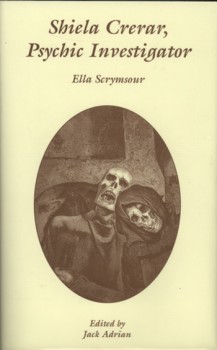
crerarShiela Crerar, psychic investigator and adventuress, first burst into public view in the pages of The Blue Magazine in 1920 with “The Eyes of Doom”. The obscure creation of the intriguingly enigmatic Ella Scrymsour, Crerar battled ghosts, werewolves and gibbering ghouls of all types from May of 1920 to October of that same year, appearing in a grand total of six stories which vanished into the literary ether when The Blue Magazine folded not long after. Luckily for aficionados of occult sleuths, Ash Tree Press released a lovely collection in 2006, marking the first time these stories were collected or reprinted in any form.
Beginning with the aforementioned “The Eyes of Doom”, in which Crerar confronted the eponymous vengeful spirit, the series progressed with “The Death Vapour”, “The Room of Fear”, “The Phantom Isle”, “The Werewolf of Rannoch”, and “The Wraith of Fergus McGinty”. Unlike her masculine counterparts in the occult detective business, Crerar is a two-fisted phantom fighter, wading into supernatural situations with little more than guts, brains and a distinct lack of fear bolstered by harsh economic necessity. Not for her the remote recordings of Dr. Hesselius or the psychical solutions of John Silence. Instead she pounced willy-nilly on lycanthropes and luminescent manifestations, sinking her teeth into matters both mundane and malevolent with equal determination.

Say hello to Shiela Crerar, the Scottish terrier of the psychic set.

Read More Read More

Gen Con 2011: Day 2 Recap – Revenge of the Sith

Gen Con 2011: Day 2 Recap – Revenge of the Sith

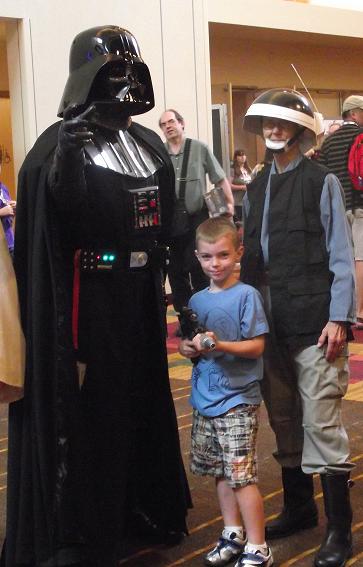
darthelijahThe force is strong with this one, it seems. Yes, that’s my beloved son, taking his first steps toward a larger, more gamer-filled world, as he becomes a temporary apprentice to Lord Vader. (Don’t ask me why the Rebel Alliance officer is standing near them. It just doesn’t fit continuity!)
The second day of Gen Con was our family day, as I took my son and wife to the convention with me. This day is was lot more leisurely paced than yesterday, because we spent more time being selective and sitting down to demo games, because with a six-year-old, you really have to be a bit more picky. He’ll lose patience if you’re chatting up designers about setting specifics. He wants some action, and if he doesn’t get it, there will eventually be a meltdown. With summer ending, we’ve been in meltdown territory for the last couple of weeks anyway, so it was touch and go, but we found enough games for him to get up to speed on quickly that it kept him highly engaged.

One game that we found very interesting, though not particularly fantastic (in the narrative sense of being fantasy-driven) was Bears! from Fireside Games. This dice-based game aims to simulate a bear attack during a camping trip … so, you know, it teaches helpful life lessons, as well. Depending on different die combinations, the players are able to escape the rampaging bears by shooting them, running away, or sleeping contentedly in their tents. However, if there are more bears left over when this is all done, then those sleeping in tents get eaten and lose points instead of gaining them.

Read More Read More

Gen Con 2011: Day 1 Recap

Gen Con 2011: Day 1 Recap

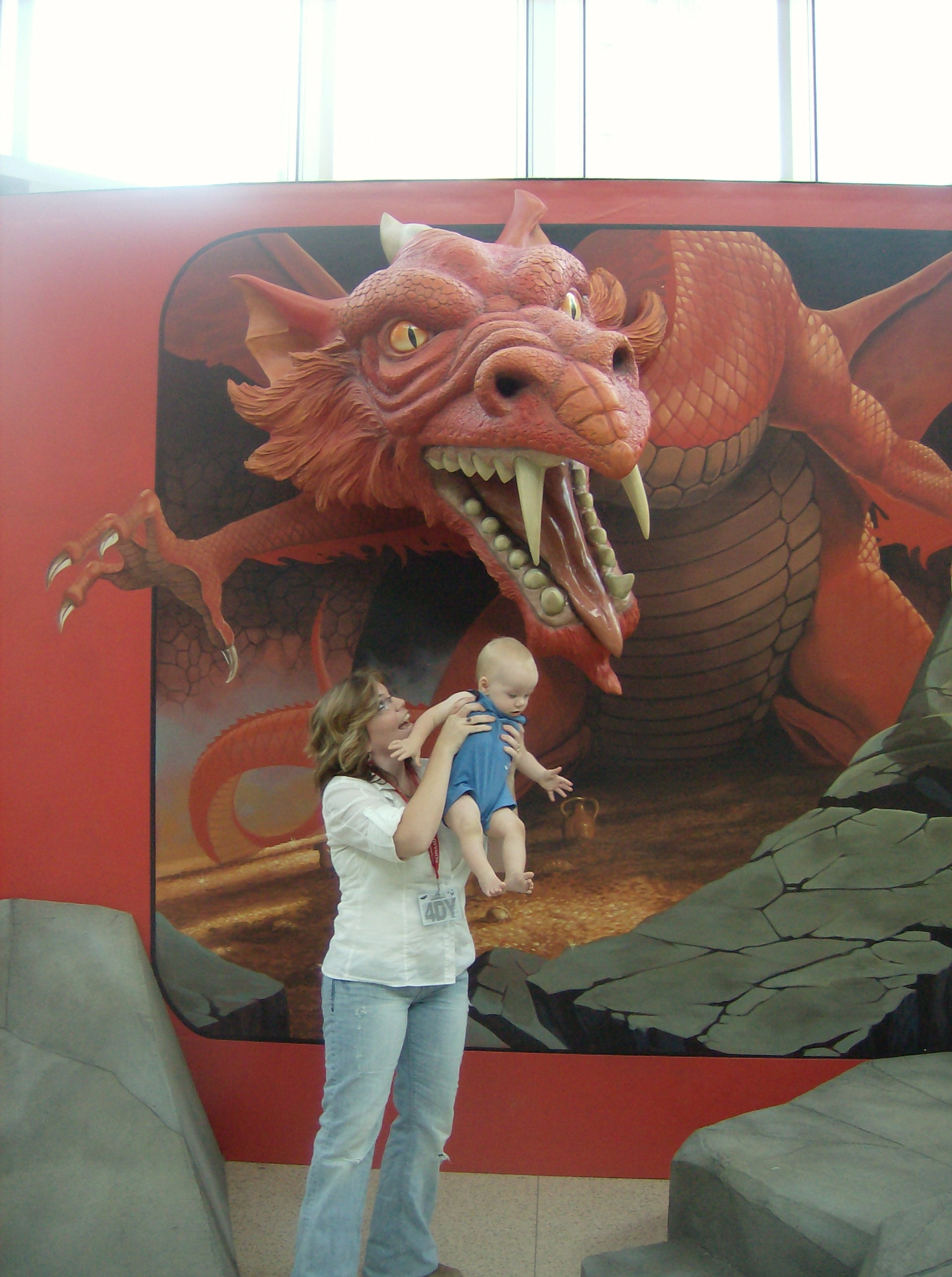
Did I say I was an unapologetic geek? My wife, Amber, offered our son to a dragon at GenCon!

It’s that time of the year again, when all the good little gamers gather in Indianapolis to explores the exhibitor’s booths and discover treasures, new and old. I speak, of course, of Gen Con Indianapolis, the “Best Four Days in Gaming.”

If you recall from last year’s report (see Gen Con 2010 Reflections if you don’t recall), I had a lot of fun last year, mostly because I now have a family to take and with whom I could share the experience.

They also prove useful bait for dragons. (Just kidding. No infants were harmed in the making of this blog!)

Today, however, was all about me. I trekked into Indianapolis to experience the first day of the convention on my own, basically blasting through the Exhibit Hall and trying to look at every booth to find if there was anything interesting for me to report back on.

Read More Read More

Steve Ditko and The Start of Something Strange

Steve Ditko and The Start of Something Strange

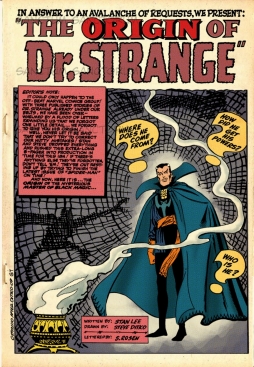
Origin SplashOne of my favourite Marvel Comics characters, certainly my favourite of all their big names, is Doctor Strange. Like most established Marvel characters, he’s been handled a lot of different ways over the course of time. I’d like to look back, and look closely, at one of the early tales that defined him most clearly — specifically, his origin story.

Doctor Strange first appeared in Strange Tales 110, in which he investigates a man’s recurring bad dreams and battles an old enemy, Nightmare, master of the Dream Dimension. Strange is a kind of occult detective, a figure in the tradition of Martin Hessselius or John Silence (or, more closely, Mandrake or Zatara). Unlike them, though, he’s more magician than detective. Although we meet him here for the first time, he’s clearly an experienced wizard — “Never again shall you thwart me!” claims Nightmare. We don’t discover in this five-page story how Strange came to have his powerful magical amulet, or who his mysterious mentor is.

The next month’s story gives us a bit more background, introducing another archenemy who has a history with the good doctor — Baron Mordo, a former student of Strange’s mentor and master. We get a sense of Strange’s power, too, as he has a battle of astral forms with Mordo. The next two issues didn’t have a Doctor Strange story, then issue 114 presented another battle with Mordo. It was with the next story, in issue 115, that we finally learned who this man of mystery really was.

Read More Read More

A Beautiful Trilogy – Uglies Film Announced

A Beautiful Trilogy – Uglies Film Announced

ugliesScott Westerfeld has posted on his blog a press release announcing upcoming film adaptations of his popular Uglies trilogy, set in a post-apocalyptic future where everyone, at age 16, is made “pretty” through an intense surgical procedure. When everyone is Pretty, the idea is, everyone is equal and happy, so there’s no reason for discord.
Why the Books Rock

Uglies is a powerful book which features some of the best of science fiction. It has action, but also deep thematic elements. It has social context, without being preachy. It has deeply realized characters and very human conflicts between them. It is a rich world that grows more complex with each book.

And, of course, being a modern young adult series, it also features a love triangle. (A couple of them, actually.)

The story of the first book, Uglies, starts with the main character, Tally Youngblood, who is nearing 16 (and her surgery) with anxious anticipation. One great thing about this book is Tally, because she’s not your typical hero. She’s fairly selfish and certainly short-sighted. It often doesn’t occur to her, especially in the first book, that she should take into account much beyond her own immediate wants and desires … which makes her a perfect teenage protagonist.

Read More Read More

Ruminations on Ice and Fire

Ruminations on Ice and Fire

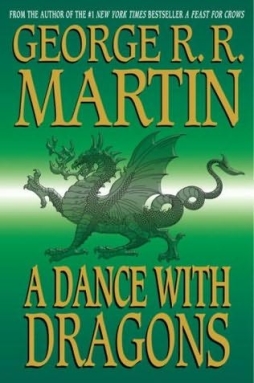
A Dance With DragonsI recently had the chance to review George R.R. Martin’s A Dance With Dragons for my hometown newspaper, The Montreal Gazette. Looking at both the new volume and the previous four installments in his Song of Ice and Fire series, I found myself wondering what it is that makes the books work so well both with critics and a mass audience.

A Dance With Dragons reached the top of the best-seller lists in its first week of release, and had the highest first-day sales of any fiction book this year. The initial wave of reviews were widely positive, with glowing praise from Jeff VanderMeer and Lev Grossman among others (I liked it, too). There have been some dissenting opinions, though, one example of which is Theo’s post from earlier today. Oddly, it seems many of the people most disenchanted with the book have been (some) long-standing fans.

Perhaps it’s not so odd. It’s been six years since the last book in the series came out, and another five years since the book before that. Because of the way Martin structured these books, that means fans have been waiting to read about some of their favourite characters for eleven years. That’s quite a while; longer than the gap between the cancellation of the original Star Trek TV series and the premiere of Star Trek: The Motion Picture, for example. Expectations had to have been running high. But this only brings me back to what I was wondering before: why have people been waiting so fervently for the book?

Read More Read More

The Nightmare Men: “Physician Extraordinary”

The Nightmare Men: “Physician Extraordinary”

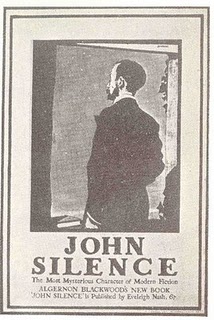
john-silence

‘Rich by accident and a doctor by choice, John Silence took only those cases which interested him.’

The above is from “A Psychical Invasion” (1908), the first of Algernon Blackwood’s stories to feature Dr. John Silence, the ‘psychic doctor’.  Blackwood chronicled six of Silence’s cases, though only five appear in the initial collection, John Silence (containing “A Psychical Invasion”, “Ancient Sorceries”, “The Nemesis of Fire”, “Secret Worship”, and “The Camp of the Dog”; “A Victim of Higher Space”, the sixth story, was included in later collections) released in 1908 (then re-issued in 1942). Even if you can’t get your hands on one of the many reprint collections (or on the 1942 re-issue as I was lucky enough to do), you can rest easy…Blackwood’s work is in the public domain and is freely available from a variety of electronic sources.

The stories themselves are in the inimitable Blackwood style, seen at its most effective in “The Wendigo” and “The Willows”, and display the author’s interest in the occult. The horrors that Silence faces are nebulous things, at once more vast than the horizon and smaller than the inside of a cupboard. They range from nightmare assaults out of deep time to unrequited yearnings gone impossibly savage, originating in both human action as well as from events far outside of human understanding. Time and space are suggestions at best, and as in the works of Hodgson and Lovecraft, reality itself comes under assault from outside entities which seek to impose themselves on their victims.

Enter John Silence, MD.

Read More Read More

Why I Love Harry Potter (and J.K. Rowling)

Why I Love Harry Potter (and J.K. Rowling)

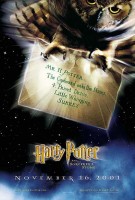
hpteaserI remember walking through a movie theater and seeing a teaser poster for the first Harry Potter film. It showed an owl carrying a card addressed to Harry, in the cupboard under the stairs. There it is, to the right.

I was not a Harry Potter fan at the time, so I reacted to this much the same way I would react to a Living with the Kardasians film: annoyance and disgust.

See, being a fan of science fiction and fantasy is supposed to be outside the norm. I’d built my entire life around the idea that I was different from everyone else. (More on my crisis of geekdom in an upcoming essay.)

And here was this stinking boy wizard turning everyone into a fantasy geek. People who had never even heard of Narnia, Krynn, or Middle Earth, who wouldn’t know a Balrog from a Chromatic Dragon, rambled on and on about Hogwarts and He Who Must Not Be Named.

What about him so transfixed everyone?

Oh, I would learn.

Read More Read More