Browsed by
Category: Books

After Every Deep Breath, the Long Exhale: A Quiet Afternoon 2, edited by Liane Tsui and Grace Seybold
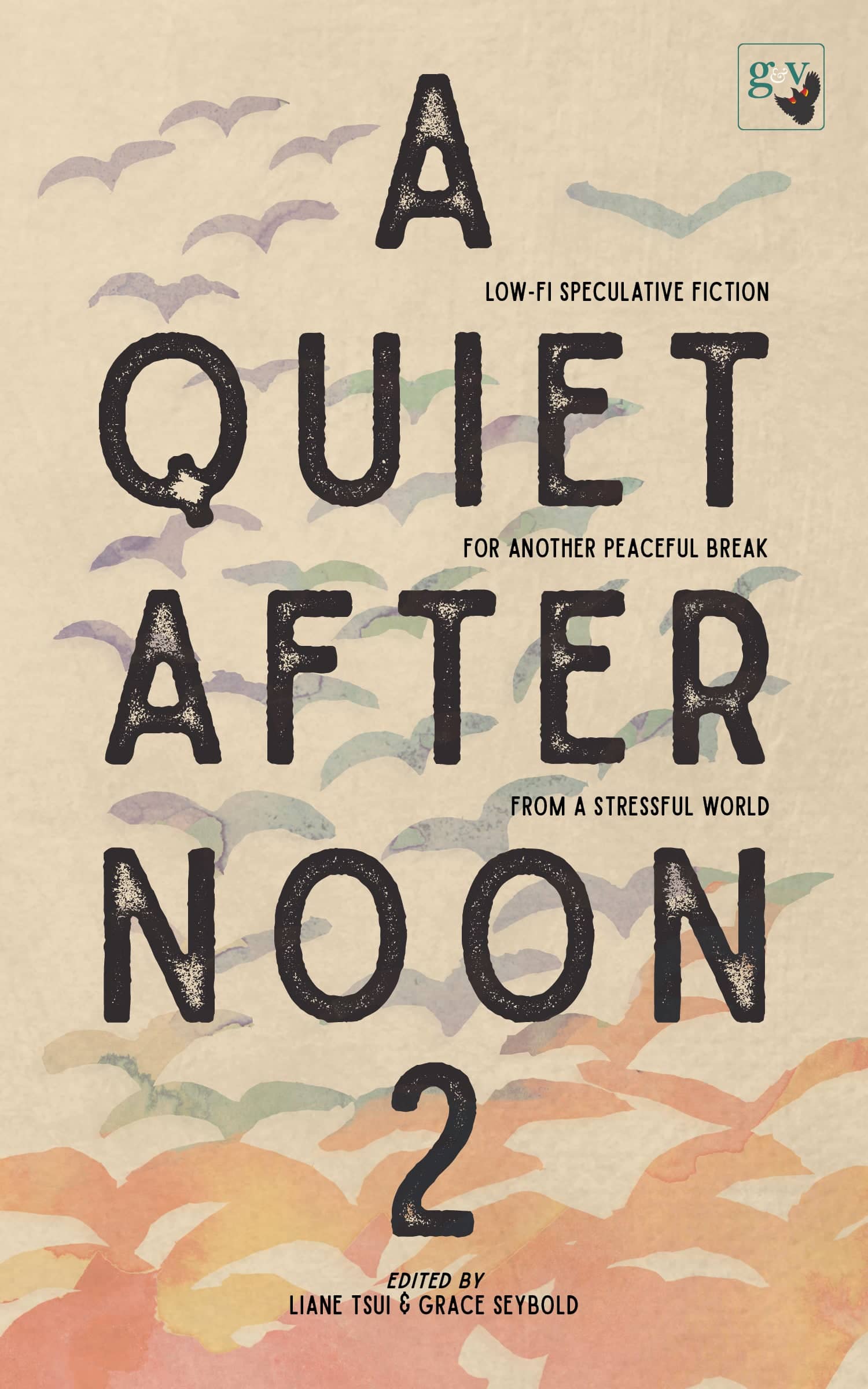
After Every Deep Breath, the Long Exhale: A Quiet Afternoon 2, edited by Liane Tsui and Grace Seybold

One of my favorite anthologies from last year was A Quiet Afternoon, edited by the Canadian duo of Liane Tsui and Grace Seybold and published by Grace & Victory Publications. So I was very pleased to see an ambitious follow-up arrive this month, packed with 27 stories by Stewart C. Baker, Gabrielle Bleu, L. Chan, Jessica Cho, and many others.

What’s it all about then? Here’s Laura DeHaan, from her introduction.

We are tried and overstimulated and wrung out. The real world is presenting us with more than enough actual life-or-death struggles that we frequently feel powerless to affect. We don’t need to read more of that in our escapist literature. Instead, we take comfort in stories featuring manageable goals and which celebrate small victories.

There are, of course, bittersweet tales as well: broken hearts, lost recipes, forgotten words. Even so, there are triumphs, That which is broken can be fixed, the lost found, the forgotten remembered. After every small deep breath is the long exhale.

In, out.

An anthology dedicated to low-stakes speculative fiction is welcome and oh-so timely. Filled with tales of talking cats, home-cooked meals, robots, cryptids, weather magic, haunted houses, aliens, and knitting, A Quiet Afternoon 2 is waiting with a warm cup of tea to comfort and entertain you.

Here’s the publisher’s description and the complete contributor list.
Read More Read More

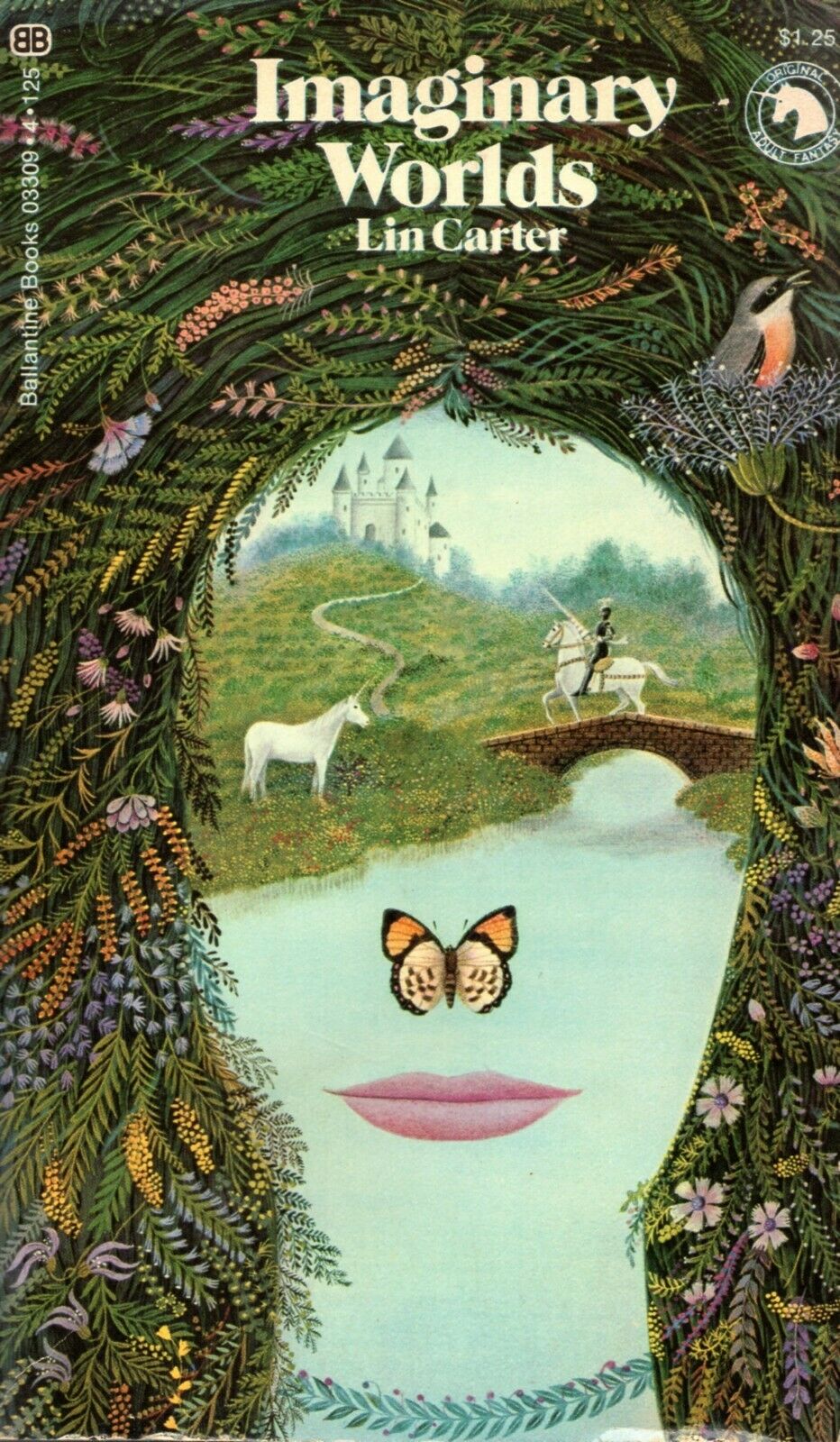
Lin Carter’s Imaginary Worlds #3: Tricks of the Trade and Reflections

Lin Carter’s Imaginary Worlds #3: Tricks of the Trade and Reflections

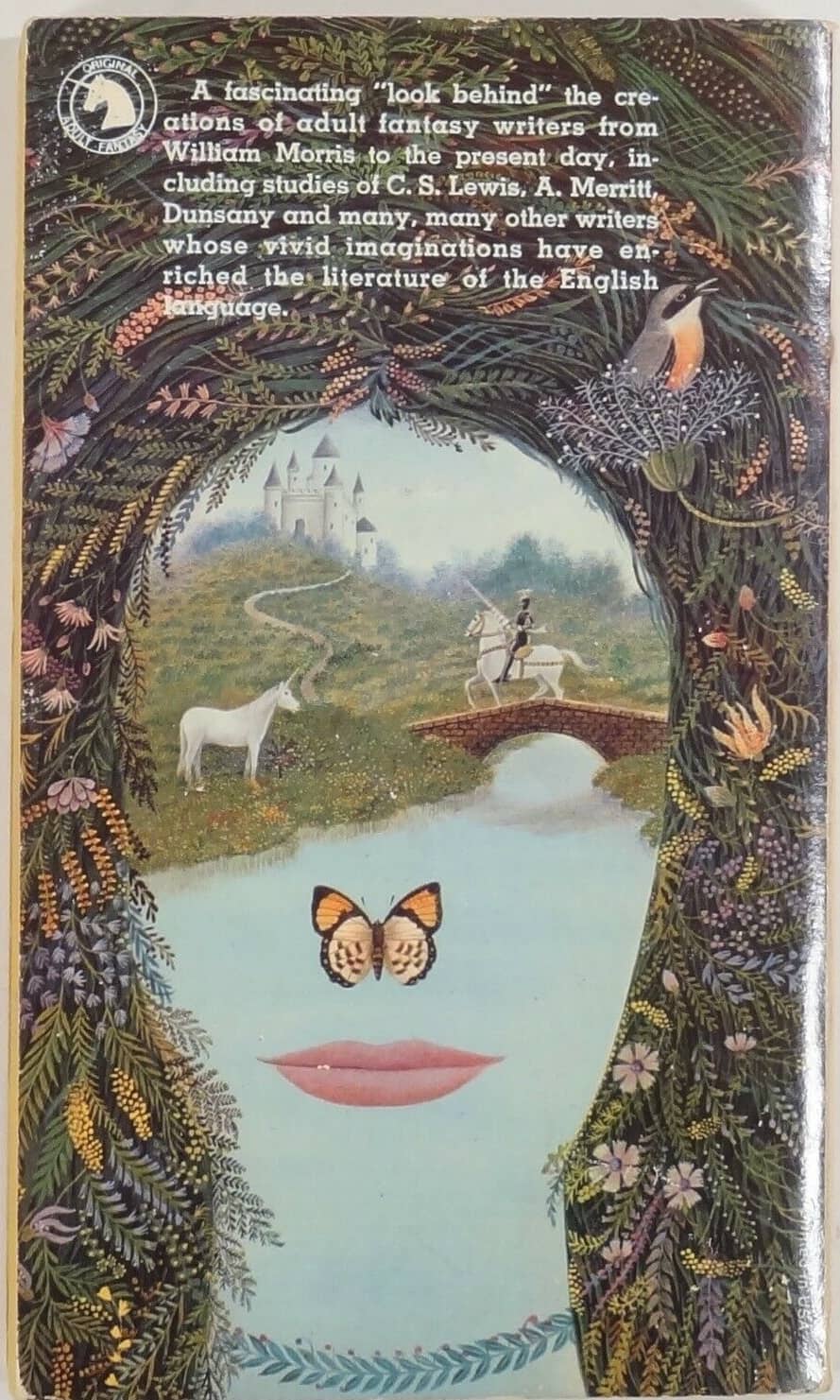
I’m doing a deep dive into Lin Carter’s Imaginary Worlds (first article), and I’ve finally gotten to his last chapter in which he gives advice to writers:

When a writer first begins evolving in his imagination and his notebooks, the raw materials that he intends to shape into an imaginary world, he should think through the problem through to its logical ramifications.

Because…

…despite the convictions of occultists and the religiosi of the several faiths, in the actual world magic simply does not work… and an invented world, therefore, that includes the super natural element must be–has to be–very different from his own. Any writer…. should think through all its implications.

If you’ve just tuned in, Lin Carter was a Fantasy author and editor who flourished roughly from the 50s to the 70s. He was a far better editor than author, however his stories are reliable comfort reads, and compensate for lack of depth with fast pacing and unconstrained imagination. No surprise, then, that his thoughts  on Fantasy worlds are worth reading. He gives them in X entertaining secions.

Read More Read More

In 500 Words or Less: Three Seeking Stars by Avi Silver

In 500 Words or Less: Three Seeking Stars by Avi Silver

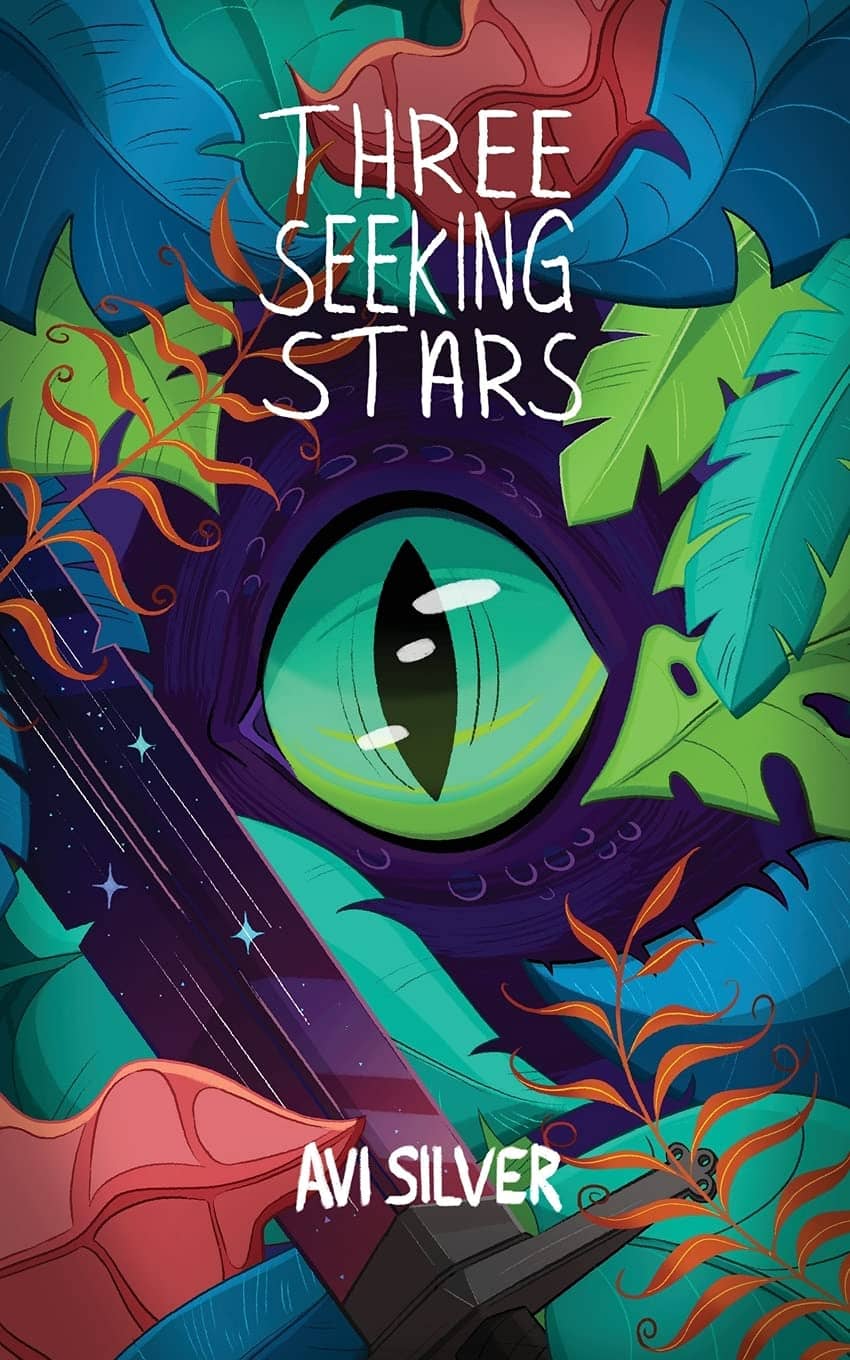
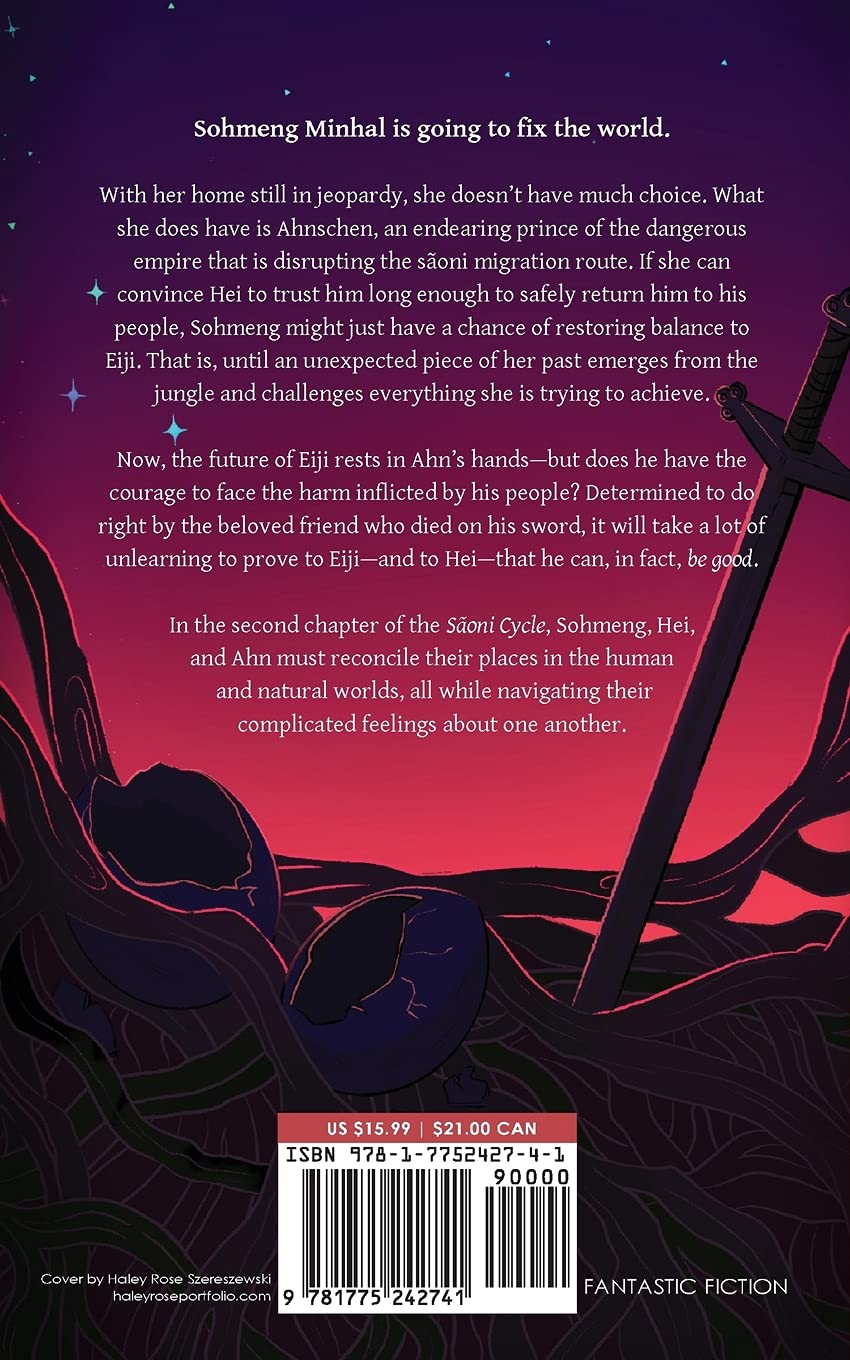
Three Seeking Stars (The Sãoni Cycle #2)
By Avi Silver
Molewhale Press (368 pages, $15.99 paperback/$3.99 eBook, July 13, 2021)
Cover and interior illustrations by Haley Rose Szereszewski

I’ve said it before, and I’ll likely say it again (before this column dies the hero of Black Gate or lives long enough to become its villain): I love a novel that’s about conflict resolution through words.

Read More Read More

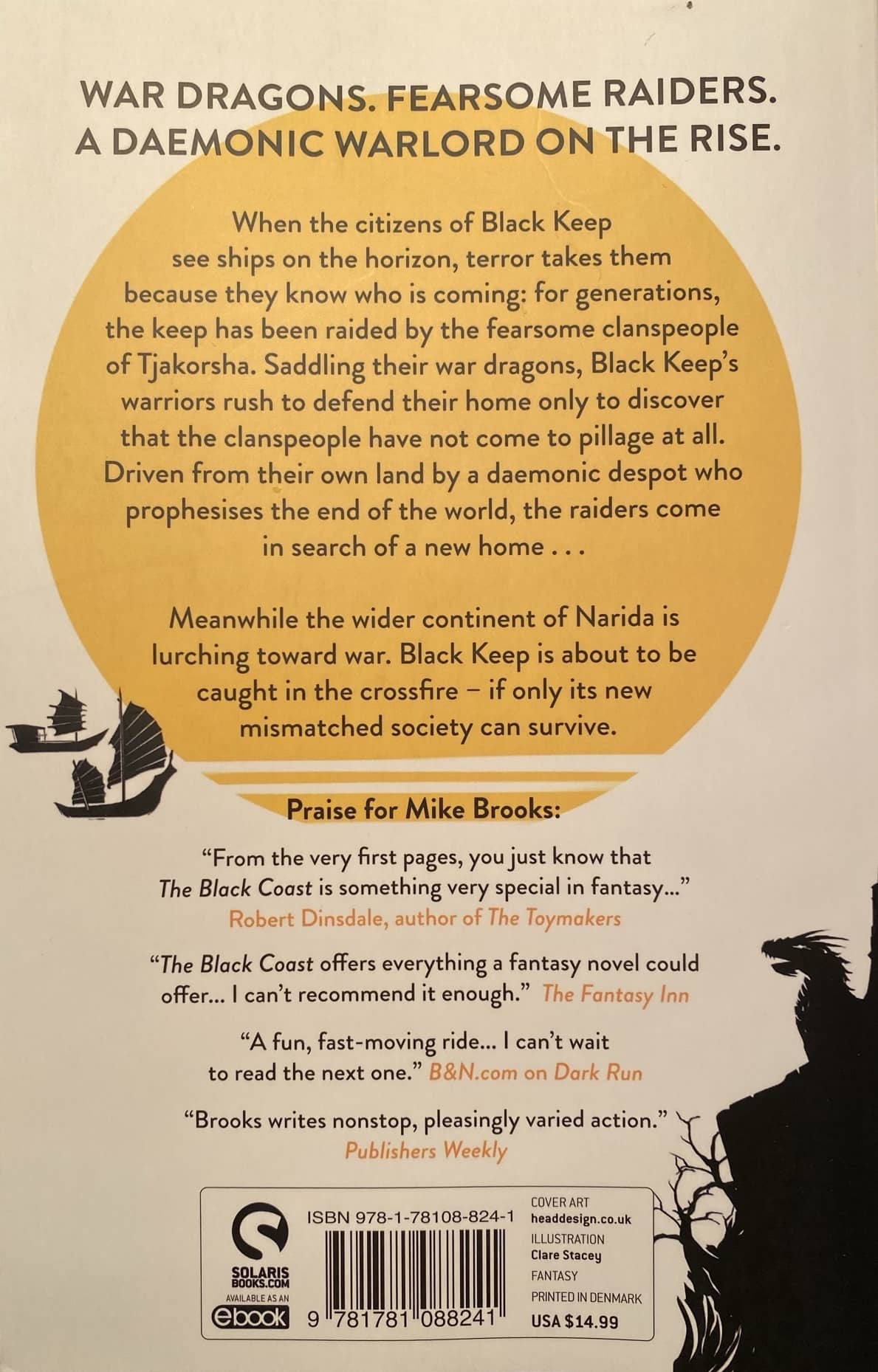
New Treasures: The Black Coast by Mike Brooks

New Treasures: The Black Coast by Mike Brooks

Mike Brooks’ Dark Run space opera trilogy was published in 2016/17, and was warmly received. Kirkus Reviews called it an “old-fashioned space Western… an entertaining page-turner,” and Andrew Liptak at the B&N Sci-Fi & Fantasy Blog said it “deserves to be this year’s break out. A space opera in the rollicking tradition of Timothy Zahn [and] John Scalzi…”

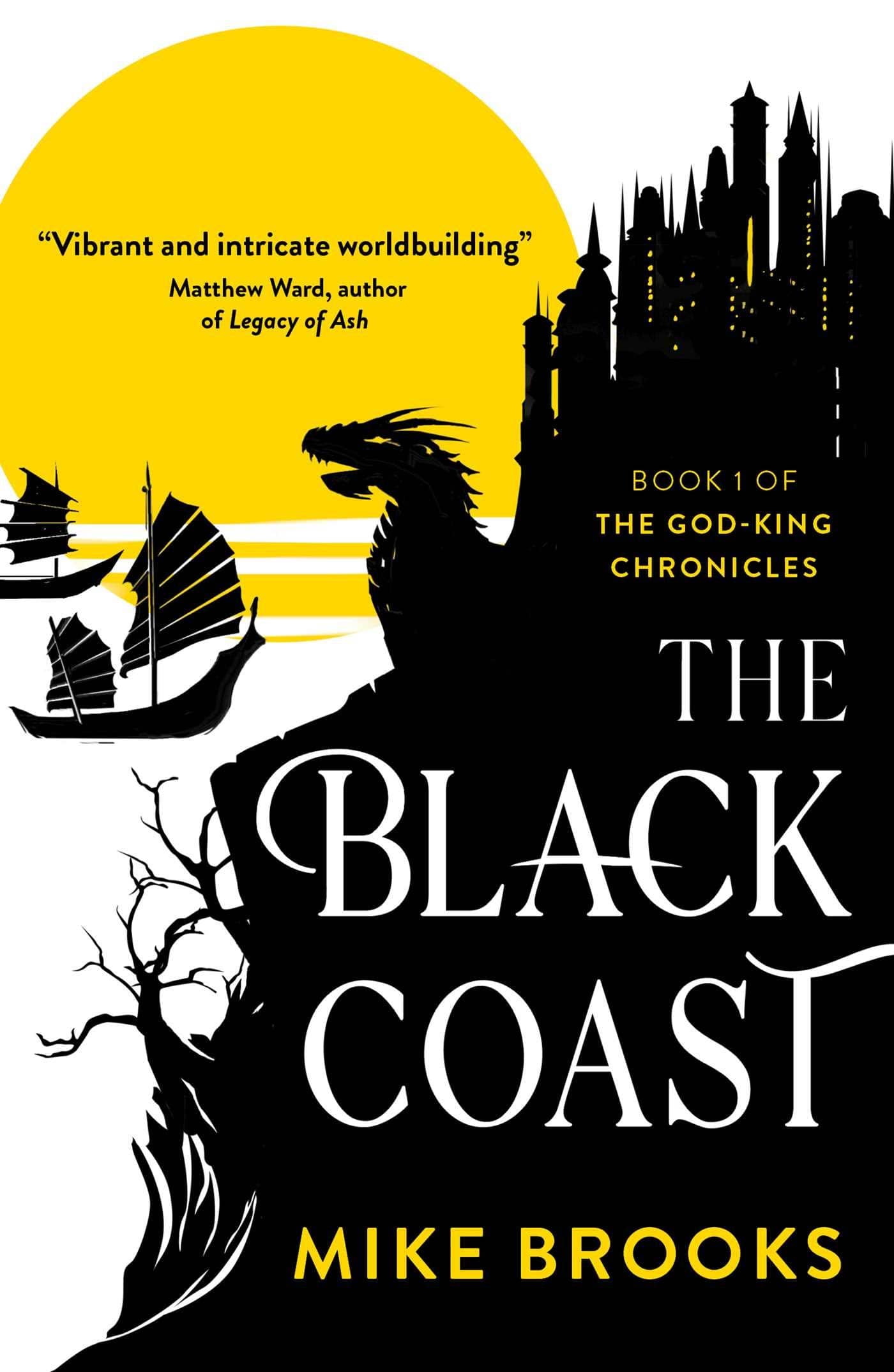
For the past few years Brooks has been playing around in the Warhammer 40,000 universe, writing novels like Rites of Passage and Brutal Kunnin’. This spring he re-invented himself again, this time as an epic fantasy novelist, kicking off The God-King Chronicles series with the novel The Black Coast. It was named an Amazon Editors’ Pick for Best SFF in February, and Publishers Weekly gave it a starred review. Here’s a snippet from their enthusiastic review.

Read More Read More

The Return of a Small Joy

The Return of a Small Joy

Image by Ulrike Leone from Pixabay

When I was a young(er) person, I was a voracious reader. I blew through books all the time. Once, during a school reading challenge, I read so many books that I ran out of books to read, and ended up doubling up on some titles. I read so many books, my teachers didn’t believe me. They thought I made up the lot. Reading so much, and loving every minute I got to dive into another world; that I got to escape my reality for a little bit is in no small part of why I’m a writer now.

But I will admit, that I’ve been struggling to read of late. A combination of a time-consuming job, several side-hustles, and the added stress of a global pandemic, and all the stupidity of (some) folks regarding it, losing a long-time flatmate and having to move…. It’s all added up. The result was that I could barely pick myself up, let alone a book.

Read More Read More

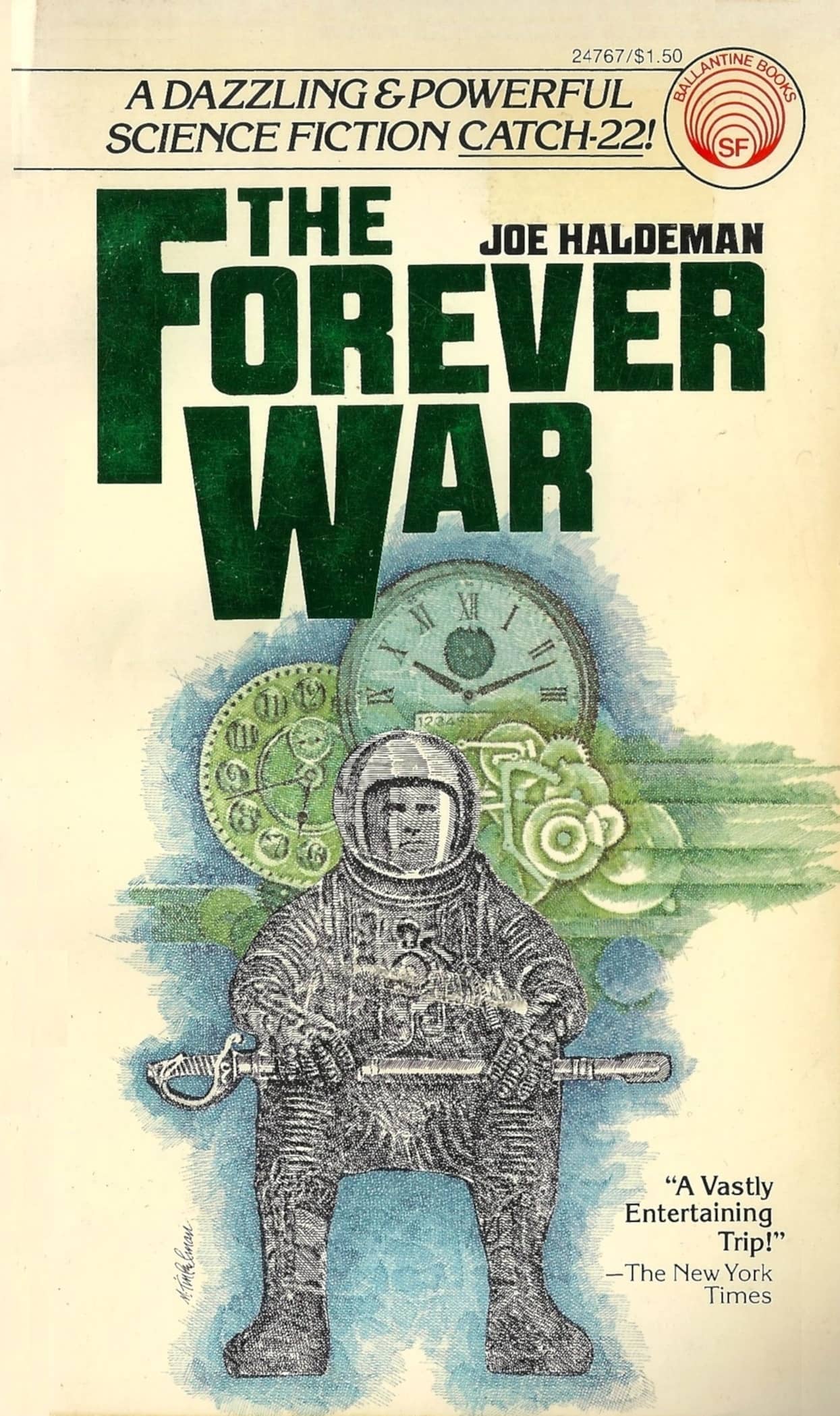
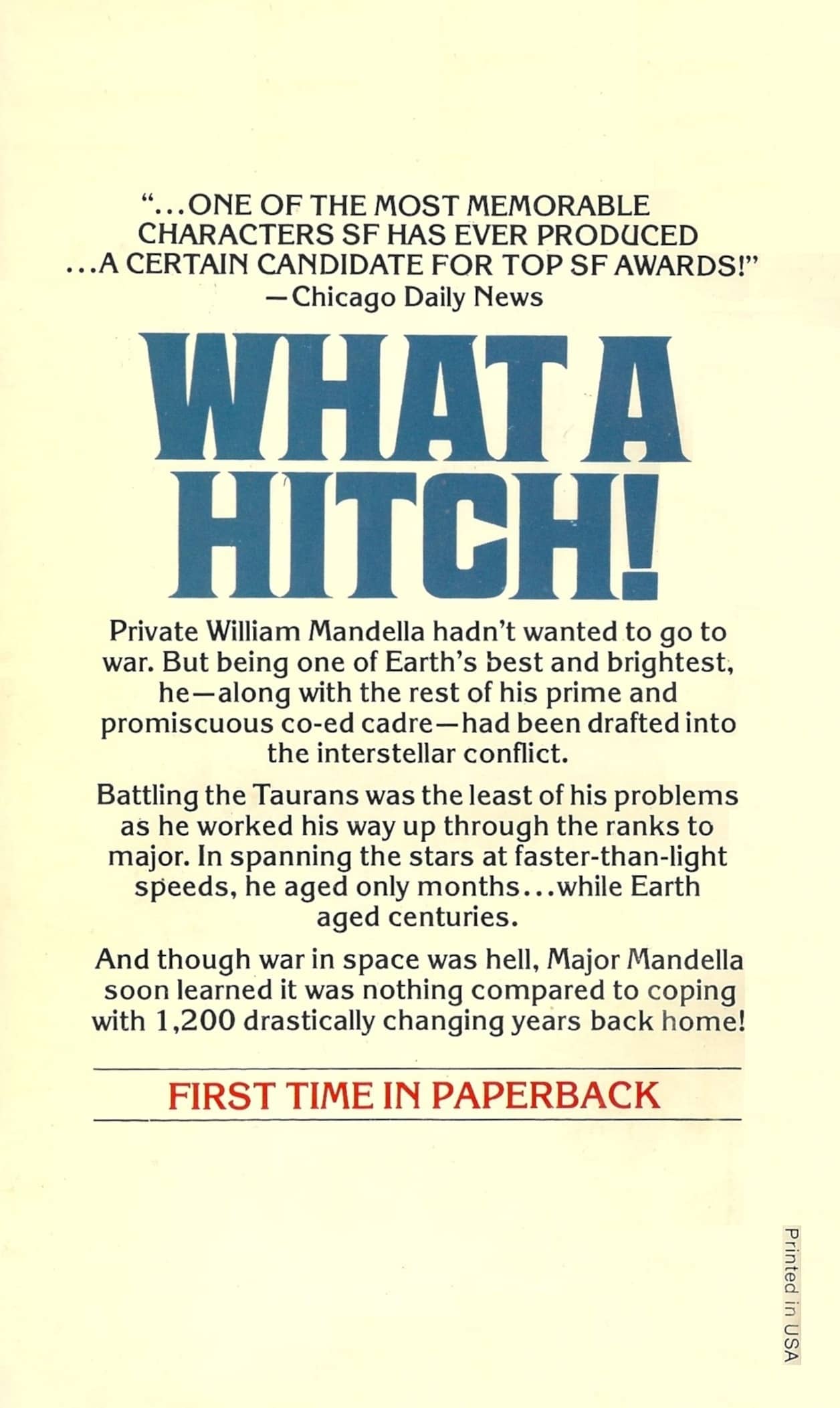
Vintage Treasures: The Forever War by Joe Haldeman

Vintage Treasures: The Forever War by Joe Haldeman


The Forever War (Ballantine Books, 1976). Cover by Murray Tinkelman

Joe Haldeman’s The Forever War is one of the most honored science fiction novels of all time. First published by St. Martin’s Press in 1975, it swept every major SF Award, including the Hugo, Nebula, and Locus awards. A decade later, in 1987, it placed 18th on Locus’ list of All-Time Best SF Novels, ahead of The Martian Chronicles, Starship Troopers, and Rendezvous with Rama.

Unlike many SF classics, its reputation has grown steadily over the decades. It’s been widely praised by critics, from Thomas M. Disch (“It is to the Vietnam War what Catch-22 was to World War II, the definitive, bleakly comic satire”) to contemporary authors such as Pulitzer Prize winner Junot Diaz.

Read More Read More

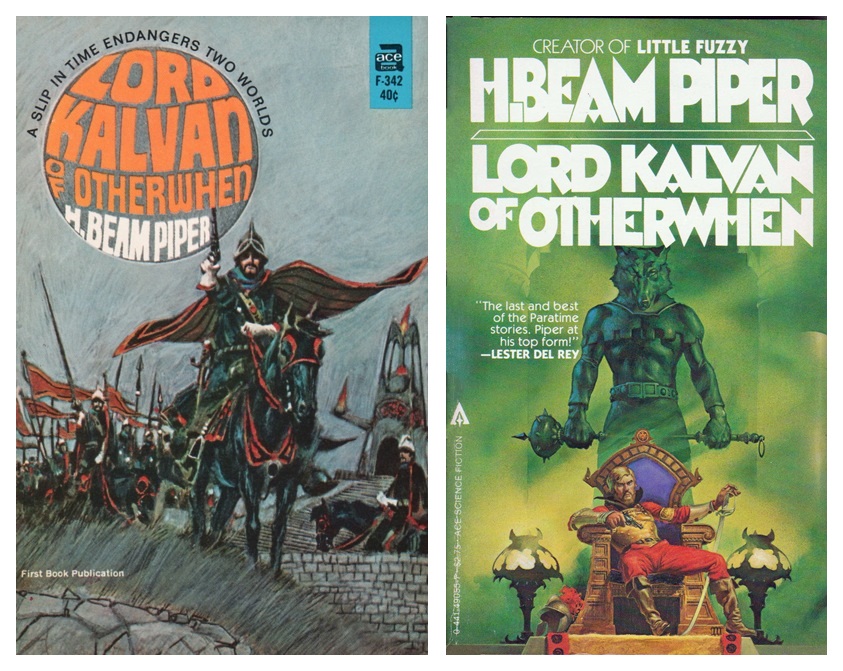
Lord Kalvan of Otherwhen: Piper’s Connecticut Yankee Tale

Lord Kalvan of Otherwhen: Piper’s Connecticut Yankee Tale

Lord Kalvan of Otherwhen (1965), Ace, cover art by Jack Gaughan (left)
Lord Kalvan of Otherwhen
(1984), Ace Science Fiction Books, cover art by Michael Whelan (right)

I think most people are familiar with Mark Twain’s A Connecticut Yankee in King Arthur’s Court (1889). (Certainly, there’s a delightful musical from 1948 featuring Bing Crosby that I loved as a kid.) Twain’s hero is an engineer from Connecticut who receives a blow to the head and is somehow transported in time and space to King Arthur’s England. Although the story is a social satire, it celebrates homespun ingenuity and democratic values, among other things. Although not a satire, Lord Kalvan of Otherwhen (1965) by H. Beam Piper, similarly celebrates good old American ingenuity and values, but takes place on an alternate 20th century timeline instead of the far past. It’s Piper’s last work and part of his Paratime universe.

In this article I’m going give you six (relatively) spoiler-free reasons to read the book, and one reason that has a spoiler, but that I think will only enhance your enjoyment of the work.

Read More Read More

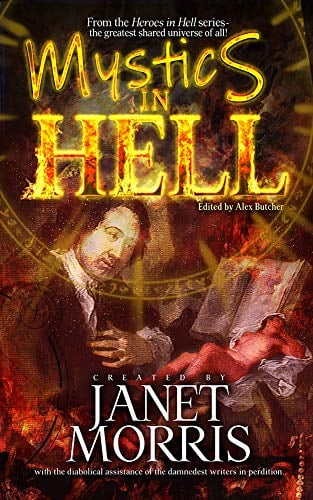
Panic at the Inferno: MYSTICS IN HELL, published by Perseid Press

Panic at the Inferno: MYSTICS IN HELL, published by Perseid Press

Mystics in Hell, published by Perseid Press. Copyright © 2021, Janet Morris  
Book design, A.L. Butcher. Cover design, A.L. Butcher and Roy Mauritsen. Edited by, Janet Morris and A.L. Butcher. Cover painting: Portrait of Sir Francis Dashwood, 11th Baron le Despenser, by William Hogarth, 1764. Oil on canvas. Mystics in Hell cover image, copyright © Perseid Press, 2021

“It’s just because I have picked a little about mystics that I have no use for mystagogues. Real mystics don’t hide mysteries, they reveal them. They set a thing up in broad daylight, and when you’ve seen it it’s still a mystery. But the mystagogues hide a thing in darkness and secrecy, and when you find it, it’s a platitude.” ― G. K. Chesterton

After a few unforeseen delays, Mystics in Hell has finally arrived. This is the latest edition in the long-running, shared-universe series, Heroes in Hell. The gathering of real people from across our historical timeline, and the casting of fictional characters born of myth and legend, folklore and literature, is what makes this such a unique and fun series. Now, for those of you unfamiliar with the series or for those readers who may wish to be brought up to date, once again I’ll do my best to recap what’s been happening in our favorite Afterlife. 

Mystics in Hell follows on the hot hooves of Lovers in Hell and the two volumes preceding it. The plagues which first manifested themselves in Doctors in Hell are evolving and mutating. In Pirates in Hell, disastrous floods swept through Hell, leaving behind wrack and ruin, and new islands and coastlines. The damned sought the help of pirates and other seafarers, seeking refuge and passage, hoping to escape to dry land and whatever safe harbor they could find. But there is no such thing as a safe harbor in Hell, and there is no escape. 

Read More Read More

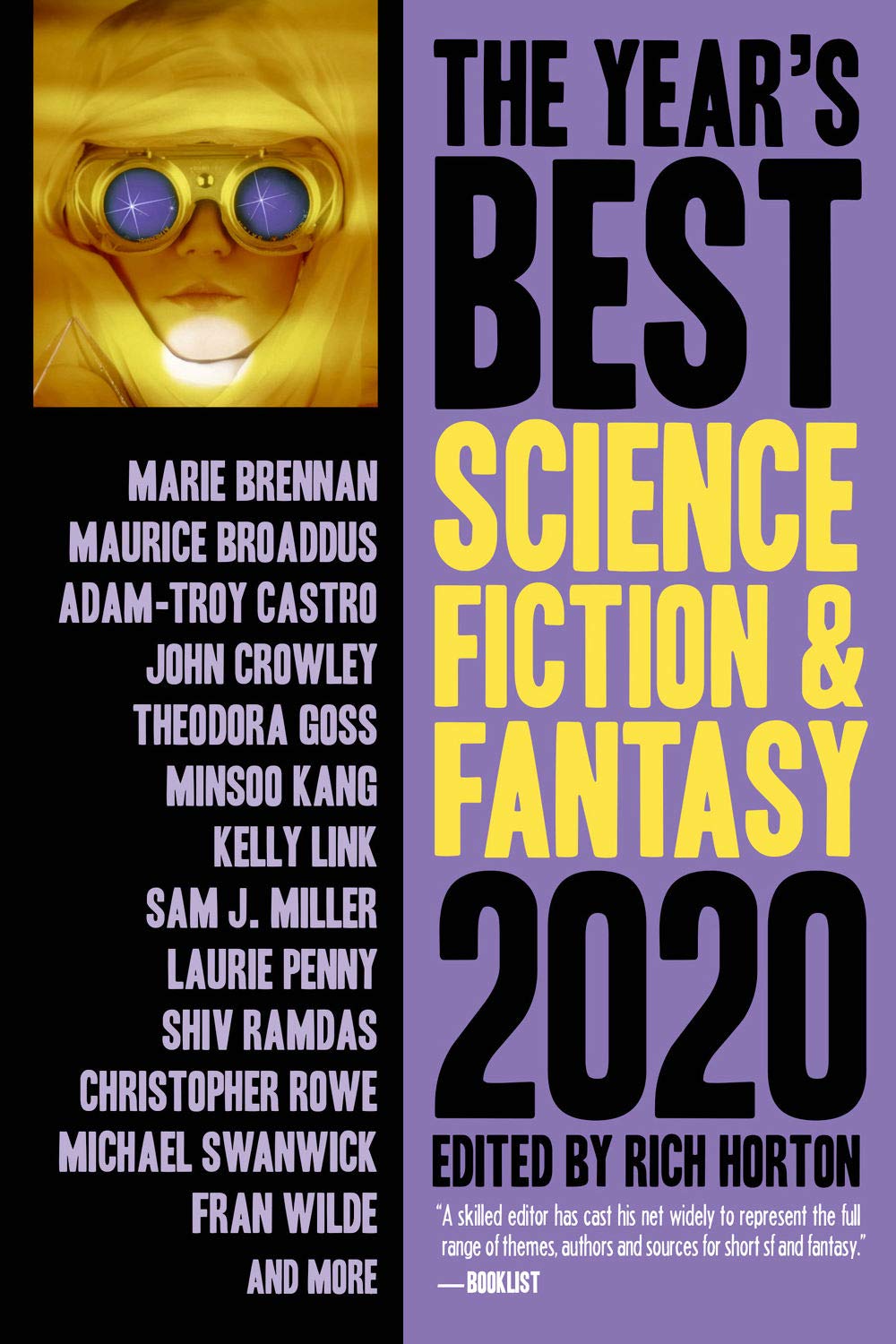
Future Treasures: The Year’s Best Science Fiction & Fantasy 2020, edited by Rich Horton

Future Treasures: The Year’s Best Science Fiction & Fantasy 2020, edited by Rich Horton

The Year’s Best Science Fiction & Fantasy 2020,
edited by Rich Horton (Prime Books, June 2021). Cover by Argus

The print version of Rich Horton’s 12th Year’s Best volume was delayed roughly six months by the pandemic, and it finally arrives next week. The delay was a little frustrating for those of us who look forward to this book every year, but considering how deeply the pandemic impacted the publishing world overall, I figure it could have been a lot worse. (The digital version has been available since December, but I remain stubbornly a print guy.)

Rich’s introductions to the early volumes belonged to the get-out-of-the-way-and let-the-fiction-do-the-talking school, but over the years they’ve loosened up a bit, and this year’s is one of his best, a lively and thoughtful look at the impact of this very eventful year on science fiction, and some thoughts on famous genre pandemic fiction. Here’s part of his comments on the tales within.

Read More Read More

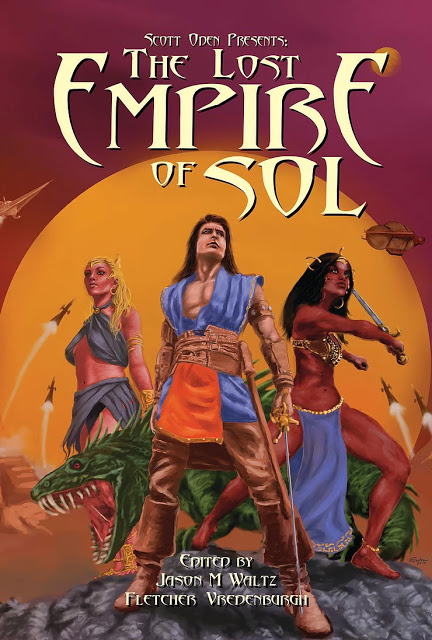
Sword & Planet is Back! Scott Oden Presents: The Lost Empire of Sol, edited by Jason M Waltz and Fletcher Vredenburgh

Sword & Planet is Back! Scott Oden Presents: The Lost Empire of Sol, edited by Jason M Waltz and Fletcher Vredenburgh

Cover art by M. D. Jackson

This reviews Scott Oden Presents: The Lost Empire of Sol brought to you by the Rogue Blades Foundation. This is a fine collection that certainly achieved its mission of inserting a jolt into Sword & Planet offeringsWith its interesting premise and cast of authors, The Lost Empire of Sol is destined to become a historic Sword & Planet anthology.

It is edited by two who are well known to the Black Gate community. Firstly, Jason M. Waltz, champion of Rogue Blades Entertainment and the Rogue Blades Foundation, is notorious for rounding up contemporary authors in themed anthologies (perhaps most well known for the 2008 Sword & Sorcery classic Return of the Sword …. and most currently known for Robert E. Howard Changed My Life releasing ~now (appropriately on June 11th, REH’s anniversary of passing). And we also have Fletcher Vredenburgh, well known for his outstanding reviews, who provides the “Foreword”: he explains how discussions on Facebook with Scott Oden (adored author of historical fiction, Conan pastiche, and the Grimnir series) escalated into this collection.  Also, to dimension the genre and set the stage for a revival is the esteemed John O’Neill (our esteemed chief editor of Black Gate Magazine) provides an introductory essay “Sword & Planet is the Genre We Need.” 

Read More Read More